

Get Out (2017): Sunken Place & Coagula Explained: What They Mean, Is Sunken Place a Real Psychological State & Hidden Details
Have you ever felt completely trapped inside your own body? You want to scream, but your mouth won’t move. You want to run, but your legs feel like lead.
If you have watched Jordan Peele’s groundbreaking 2017 thriller, Get Out, that exact terrifying sensation likely gave you chills. Undoubtedly, this movie completely changed the landscape of modern horror. It wasn’t just about jump scares. Instead, it weaponized social commentary, history, and deep psychological dread.
However, even years after its release, viewers are still unpacking its dense mythology. Specifically, people are constantly searching for answers about two massive concepts. What exactly is the Sunken Place? Furthermore, what is the horrifying medical procedure known as the “Coagula”?
Today, we are diving deep into the Armitage family’s twisted world. Grab a cup of tea (but maybe skip the silver spoon), because we are breaking down the ending, the real world psychology, and the mind blowing hidden details you definitely missed.
What is The Sunken Place? (The Literal and Metaphorical Meaning)
In the film, photographer Chris Washington (Daniel Kaluuya) travels to upstate New York to meet his white girlfriend’s parents. Very quickly, things get deeply weird. Eventually, Chris meets Missy Armitage (Catherine Keener), a psychiatrist who uses hypnosis.
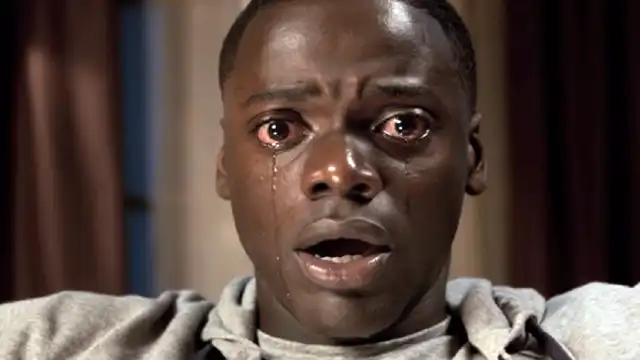
During a late night session, Missy aggressively stirs her tea. She asks Chris about his childhood trauma regarding his mother’s death. Suddenly, he is paralyzed. He physically drops into a dark, endless void. He can see the real world shrinking into a tiny television screen above him, but he cannot interact with it.
Welcome to the Sunken Place.
The Literal Movie Mechanics
Within the plot of the movie, the Sunken Place is a hypnotic state. Missy uses it to completely subdue a victim’s consciousness. Consequently, this prepares the victim for a horrifying brain transplant. Once a new brain is put into the victim’s body, the original person’s consciousness is trapped in the Sunken Place forever. They are merely passengers in their own bodies.
The Metaphorical Meaning
However, Jordan Peele did not just invent a scary magical void. Metaphorically, the Sunken Place represents the systemic silencing of marginalized voices.
Peele famously tweeted in 2017: “The Sunken Place means we’re marginalized. No matter how hard we scream, the system silences us.”
Throughout history, minority groups have often been forced to watch society operate from the background. They are present, but their voices are entirely stripped of power. Therefore, the Sunken Place is a brilliant, visual representation of cultural suppression. You are there, but you are not in control.
Is the Sunken Place a Real Psychological State?
Here is where the movie shifts from fictional horror to terrifying reality. Yes, the Sunken Place mirrors a very real psychological condition.
While you won’t physically float in a black void, the human brain frequently creates its own version of the Sunken Place to survive severe trauma. In psychology, this is known as Dissociation.
1. Depersonalization-Derealization Disorder
According to the American Psychological Association (APA), dissociation is a mental process where a person disconnects from their thoughts, feelings, memories, or sense of identity. Specifically, a condition called Depersonalization makes people feel like they are outside observers of their own bodies.
If you experience this, you might feel like you are controlling a robot or watching a movie of your own life. Ultimately, this perfectly matches Chris’s view of looking through a tiny screen while someone else controls his physical form.
2. The Freeze Response and Sleep Paralysis
Furthermore, the Sunken Place perfectly mimics the biological “Freeze” response. When humans face intense fear, we don’t just fight or flee. Sometimes, our nervous system completely shuts down.
Additionally, sleep paralysis causes a similar sensation. During a sleep paralysis episode, your brain wakes up, but your body remains asleep. You cannot move, speak, or cry out. Consequently, this creates a feeling of absolute, crushing helplessness. Peele masterfully took these real world neurological glitches and weaponized them for the screen.
What is “The Coagula” Procedure Explained?
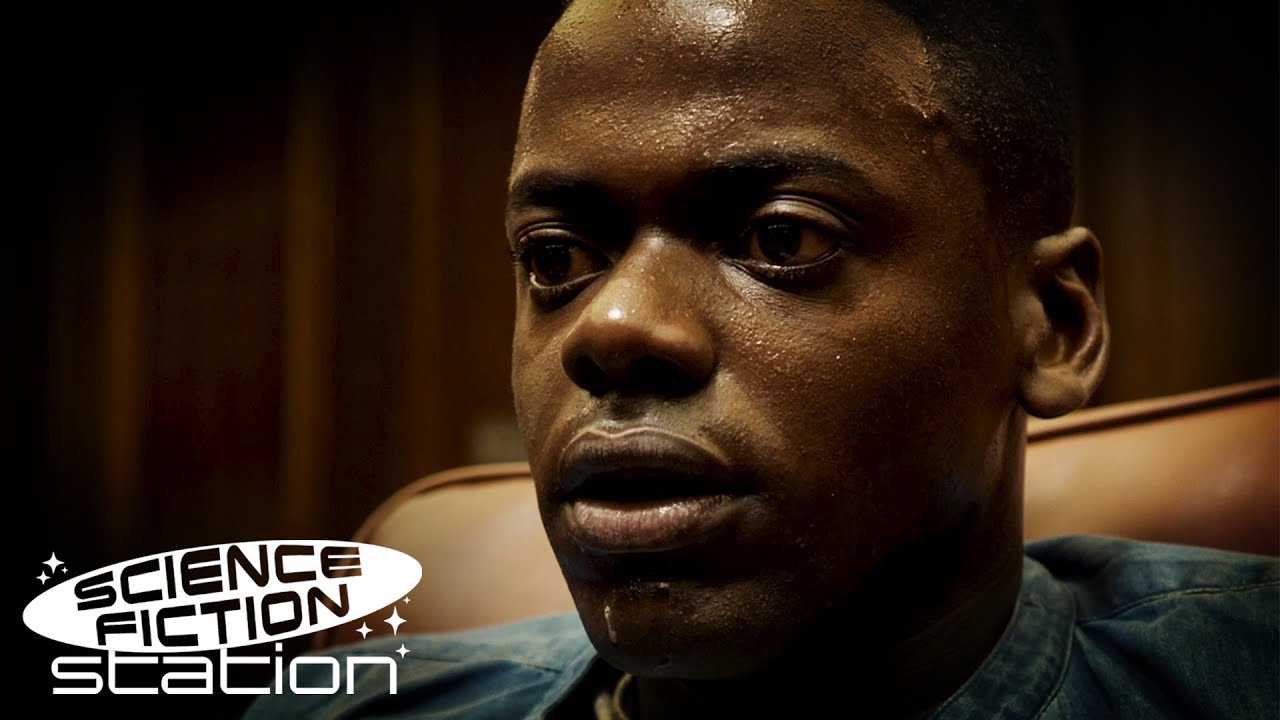
Now, let’s talk about the villains. The Armitage family runs a secret society called The Order of the Coagula. Their ultimate goal is terrifyingly simple: they kidnap young, healthy Black people and surgically implant the brains of older, wealthy white people into their bodies.
But what does “Coagula” actually mean? Let’s break down the history and the science behind the horror.
The Alchemy Connection
The word “Coagula” is not a random medical term. It originates from an ancient Latin alchemical phrase: Solve et Coagula.
In classical alchemy, this phrase means to “dissolve and coagulate.” First, you must break a substance down into its most basic elements (Solve). Second, you build it back up into something entirely new and better (Coagula).
This is exactly what the Armitage family does to their victims:
- Solve (Break Down): Missy uses hypnosis to break down the victim’s mind. She literally dissolves their free will and sends them to the Sunken Place.
- Coagula (Rebuild): Dean Armitage (the father) and his surgical team open the skull. They transplant the brain of the paying customer into the host. They rebuild a “new” person.
The Three Steps of the Procedure
To fully understand the movie’s climax, you must understand how the Coagula procedure works. A vintage instructional video in the film explains the three distinct phases.
- Phase 1: The Hypnosis. The victim is placed into a permanent suggestive state.
- Phase 2: The Mental Preparation. The buyer and the host are psychologically linked.
- Phase 3: The Transplantation. A partial brain transplant occurs. Crucially, they leave a tiny sliver of the original host’s brain intact.
Why leave a piece of the original brain? Because the new occupant needs the host’s physical attributes, motor skills, and visual cortex. The host remains alive, trapped in the Sunken Place, helplessly watching someone else live their life. It is a fate far worse than death.
Mind Blowing Hidden Details You Missed
Get Out is essentially a giant, cinematic puzzle box. Every single prop, line of dialogue, and wardrobe choice holds a deeper meaning. Even if you have watched it five times, you probably missed these incredibly clever Easter eggs.
1. The Real Reason Chris Picks Cotton

During the climax, Chris is strapped to a leather chair in the basement, waiting for his brain surgery. He desperately needs to block his ears so he cannot hear Missy’s hypnotic teacup stirring.
What does he do? He digs his fingernails into the leather chair, pulls out the cotton stuffing, and shoves it into his ears.
This is not just a convenient escape method. Historically, enslaved Black Americans were forced to pick cotton under brutal, life threatening conditions. In a brilliant reversal of history, Chris literally picks cotton to save his own life and free himself from white captors. It is one of the most powerful visual metaphors in modern cinema.
2. The Teacup and the Silver Spoon

Missy’s primary weapon is a delicate floral teacup and a silver spoon. This specific choice of weapon screams absolute privilege. The phrase “born with a silver spoon in your mouth” denotes extreme wealth and entitlement. Therefore, Missy uses the ultimate symbol of upper class white privilege to literally control and silence Chris.
3. The Deer and the “Black Buck” Stereotype
Early in the film, Chris and Rose hit a deer with their car. Later, Dean Armitage aggressively rants about how much he hates deer. He says they are taking over and need to be eradicated.
On the surface, it sounds like a weird dad rant. However, historically, defiant Black men were often subjected to a racist caricature known as the “Black Buck.” When Dean says he wants to destroy the deer (bucks), he is subconsciously revealing his true, sinister intentions toward Chris. Ultimately, Chris kills Dean using the mounted deer antlers from the wall. The “buck” fights back.
4. Jesse Owens and Roman Armitage
Why did the Armitage family start this horrifying operation in the first place? The grandfather, Roman Armitage, competed in the 1936 Olympics in Berlin. He lost the qualifying running race to Jesse Owens, the legendary Black track star.
Roman could not handle the fact that a Black man was physically superior to him. Consequently, this crushing defeat sparked a twisted obsession. He wanted the physical advantages of Black bodies while maintaining his own mind. Interestingly, you can see Roman (who took over the body of the groundskeeper, Walter) sprinting through the yard at night, still desperately trying to run faster than Jesse Owens.
5. Rose Eating Froot Loops Separately
Rose Armitage (Allison Williams) is a master manipulator. But her true psychopathic nature is revealed through her snacks. Late in the movie, she is sitting in her bedroom browsing the internet for her next victim. She is eating dry, colorful Froot Loops, while drinking milk from a separate glass through a straw.
Why? Because she refuses to mix the colors with the white milk. It is a subtle, visual nod to segregation and her deeply ingrained racism.
6. The “Obama” Comment
When Chris first meets Dean, the father awkwardly volunteers a specific piece of information. He says, “I would have voted for Obama for a third term if I could.”
This line is intentionally hilarious and deeply unsettling. It highlights performative activism. Dean tries to use his political leaning as a shield to prove he isn’t racist. Meanwhile, he is literally auctioning off Black bodies in his backyard. It perfectly skewers the concept of the “white liberal ally” who harbors dangerous biases behind closed doors.
The Alternate Ending

Did you know Get Out originally had a completely different ending?
In the theatrical release, Chris is choking Rose on the road. Suddenly, police sirens wail. Red and blue lights flash. The audience naturally assumes Chris is going to be arrested or killed by the cops, adding a final layer of intense racial anxiety. However, the door opens, and it’s his best friend, Rod, driving a TSA vehicle. The theater erupts in cheers.
However, Jordan Peele originally shot a much darker conclusion.
In the alternate ending, real police officers arrive. They immediately arrest Chris. The scene cuts to Rod visiting Chris in prison. Chris is wearing an orange jumpsuit. He simply tells Rod, “I’m good. I stopped it.” Chris accepts his life sentence because he knows he dismantled the Coagula operation.
Why did Peele change it? He realized that the real world was already dark enough. During the editing process in 2016, a string of highly publicized police shootings involving unarmed Black men dominated the news. Peele felt the audience desperately needed a hero to win. They needed a triumphant release of tension, rather than a bleak documentary of reality.
Modern Masterpiece
Ultimately, Get Out is much more than a scary movie about a weird family. It is an incredibly tight, purposeful narrative that explores the horrors of cultural appropriation, systemic silencing, and the commodification of Black bodies.
The Sunken Place is terrifying because it feels real. The Coagula procedure is horrifying because it mirrors historical exploitation. By blending real world psychology with classic horror tropes, Jordan Peele crafted a film that demands to be watched, re watched, and studied for generations.
Frequently Asked Questions
What does the blind man (Jim Hudson) actually want?
Unlike the other party guests who fetishize physical attributes, Jim Hudson (the blind art dealer) buys Chris for his artistic “eye.” Hudson lost his vision and wants to steal Chris’s photographic talent and sight. He claims he doesn’t care about race; he only cares about aesthetic vision. However, participating in the brutal system makes him just as evil.
Who was the man who yelled “Get Out” at the party?
That was Andre Hayworth (played by Lakeith Stanfield). He was a jazz musician who was kidnapped six months prior. He had already undergone the Coagula procedure and was possessed by an older white man. When Chris took a photo of him with the camera flash on, the intense light temporarily broke the hypnosis, allowing the real Andre to surface and warn Chris to flee.
Did Rose actually love Chris at any point?
No. Rose never loved Chris. From the very beginning, she was a sociopathic honey trap. Her entire role in the family business was to isolate targets and bring them home. The photos Chris finds in her closet prove she has been doing this flawlessly for years.
Why does Missy scratch the teacup?
The specific scraping sound of the silver spoon against the porcelain teacup acts as a neuro linguistic trigger. It bypasses Chris’s conscious mind and instantly throws his brain into a dissociative state, directly dropping him into the Sunken Place.
Is there going to be a Get Out 2?
Currently, Jordan Peele has no official plans for a sequel. He has stated in multiple interviews that the story feels complete. However, he has also jokingly mentioned that the Get Out universe has plenty of untold stories regarding the larger Order of the Coagula network.
What was the most mind blowing detail you noticed in the movie? Did the cotton picking scene completely shock you, or did you figure out Rose’s sinister plot before the big reveal? Drop your thoughts in the comments below, and share this breakdown with a friend who needs to rewatch this masterpiece!

