

Is Texas Chainsaw Massacre Based on a True Story? Ed Gein vs Leatherface Explained
Have you ever watched The Texas Chain Saw Massacre through the gaps in your fingers and wondered if a chainsaw wielding cannibal actually roamed the backroads of the Lone Star State? You are definitely not alone. When Tobe Hooper’s grimy, low budget masterpiece hit theaters in 1974, it opened with a chilling text crawl claiming the ensuing events were completely real. Consequently, audiences were absolutely terrified. But was it actually true?
Honestly, the short answer is a resounding no. However, the real inspiration behind the cinematic bloodshed is arguably much more disturbing than anything shown on the silver screen. In fact, the true story involves a quiet Wisconsin handyman, a deeply toxic family dynamic, and a genuine house of horrors. Therefore, grab a snack preferably something vegetarian and settle in. We are about to separate historical fact from Hollywood fiction.
Key takeaways
- The Marketing Myth: The Texas Chain Saw Massacre (1974) is a fictional story. The “true story” angle was simply a brilliant marketing gimmick to sell more tickets.
- The Real Inspiration: Leatherface is heavily inspired by Edward Theodore Gein, a notorious grave robber and murderer from Plainfield, Wisconsin.
- Different Weapons: Ed Gein never revved up a chainsaw. Instead, he primarily used a .22-caliber rifle to commit his horrific crimes.
- No Cannibal Family: Unlike the fictional Sawyer clan, Gein lived entirely alone after the death of his deeply controlling mother.
- Massive Legacy: Besides Leatherface, Gein’s gruesome crimes directly inspired Norman Bates in Psycho and Buffalo Bill in The Silence of the Lambs.

The biggest lie in horror history
Why do so many true crime enthusiasts still believe Leatherface was a living, breathing person? First and foremost, we have to blame the movie’s phenomenal marketing campaign. Back in October 1974, director Tobe Hooper released the film on a shoestring budget of roughly $140,000. Surprisingly, it went on to gross over $30 million domestically. This massive success was partly due to an ingenious, yet entirely deceptive, opening narration.
Specifically, the film boldly claimed that the tragedy you were about to witness was a factual account. Furthermore, it explicitly stated that these bizarre events befell a group of five unlucky youths. Naturally, pre internet audiences bought it hook, line, and sinker. They couldn’t just pull out their smartphones to fact check the lore. As a result, panic spread rapidly through word of mouth.
Interestingly, Hooper didn’t just invent this tactic out of thin air. He was directly reacting to the tense political climate of the 1970s. During that era, the Watergate scandal and the Vietnam War had left the American public feeling deeply lied to by authorities. Therefore, Hooper decided to flip the script. If the government could confidently lie to the public, why couldn’t an independent filmmaker? Ultimately, this bold move birthed one of the most enduring urban legends in pop culture history.
Who was the real “Leatherface”?
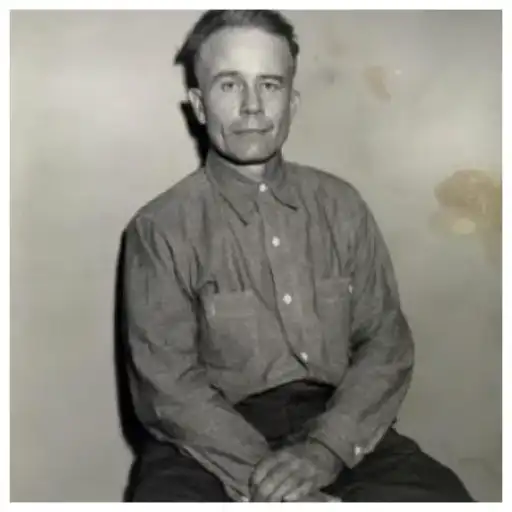
To truly understand the roots of Leatherface, we must leave the blistering heat of Texas. Instead, let’s travel to the freezing, isolated landscapes of Plainfield, Wisconsin. Here, a man named Ed Gein lived a quiet, deeply disturbed life. Born on August 27, 1906, Gein certainly did not grow up in a nurturing environment. Rather, his childhood was a psychological nightmare.
Toxic upbringing
His father, George, was an abusive alcoholic who struggled to support the household. Meanwhile, his mother, Augusta, was a fanatically religious woman who constantly preached about the inherent sins of humanity. She essentially isolated Ed and his older brother, Henry, on a remote 195 acre farm. Consequently, Ed developed a severely unhealthy attachment to his mother.
Tragedy eventually struck the Gein family in rapid succession. First, George died of heart failure in 1940. Then, Henry died under highly suspicious circumstances during a brush fire in 1944. Although the coroner ruled Henry’s death an asphyxiation accident, investigators found bruises on his head. Consequently, many historians suspect Ed might have actually committed his very first murder that afternoon. Finally, Augusta passed away in December 1945, leaving Ed completely unmoored.
The descent into madness
Suddenly, Ed was left entirely alone in the world. As a result, his fragile mental state rapidly deteriorated. He completely sealed off the rooms his mother used, preserving them as a bizarre, dusty shrine. Conversely, he lived in absolute squalor in the remaining areas of the farmhouse. Without Augusta’s strict control, his darkest compulsions fully took over. Consequently, he began visiting local graveyards late at night. Shockingly, he dug up the corpses of middle aged women who physically resembled his late mother.
Real-life house of horrors
Did Ed Gein just stop at grave robbing? Unfortunately, no. Eventually, he escalated from desecrating corpses to taking actual human lives. On November 16, 1957, a local hardware store owner named Bernice Worden mysteriously vanished. Because Gein was the absolute last person seen in her shop, police visited his dilapidated farm.
What they discovered inside permanently altered the landscape of criminal psychology. Honestly, the official police report reads like a script for a terrifying slasher flick. They found Worden’s decapitated body hung upside down, eerily dressed out like a deer. Additionally, investigators uncovered the remains of another missing woman, tavern owner Mary Hogan, whom Gein had murdered in 1954.
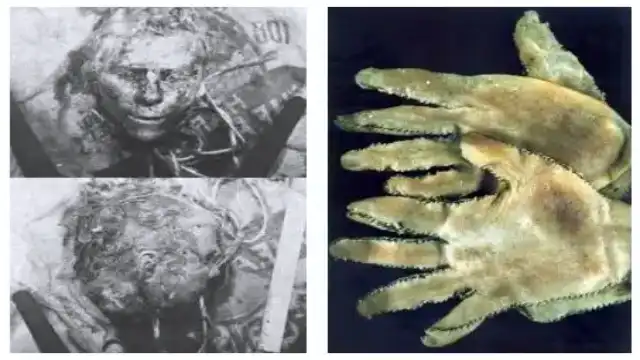
However, the murders weren’t the most shocking part of the investigation. Specifically, the police found a gruesome collection of macabre “crafts.” Gein had actively used human skin and bones to create household items. Among the horrifying artifacts documented by authorities were:
- Bowls seamlessly made from human skulls.
- Chairs upholstered with actual human skin.
- A wastebasket fashioned from flesh.
- Belts decorated with carved off body parts.
- Masks made entirely from the skin of female heads.
Undoubtedly, that last item is the undeniable bridge between the real life Butcher of Plainfield and the fictional Leatherface. Gein was immediately arrested, diagnosed with schizophrenia, and deemed legally unfit to stand trial initially. Later, in 1968, he was tried and found guilty of Worden’s murder, but declared not guilty by reason of insanity. He spent the remainder of his life in a psychiatric hospital until his death from respiratory failure in 1984.

Ed Gein vs Leatherface
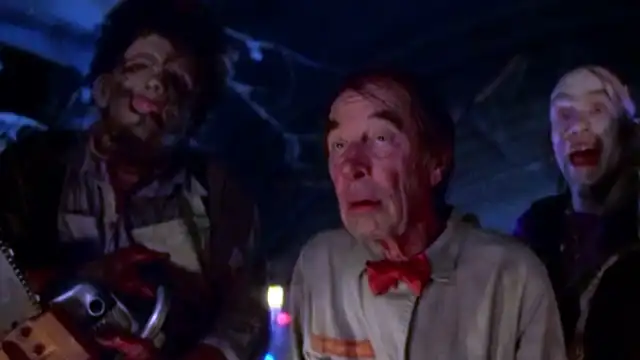
So, how much of The Texas Chain Saw Massacre actually aligns with reality? Let’s break down the major differences between the historical facts and Tobe Hooper’s cinematic nightmare.
1. Chainsaw vs Rifle
Obviously, Leatherface is world famous for wielding a roaring, gas guzzling chainsaw. It is literally in the title of the franchise. Conversely, Ed Gein never chased anyone through the woods with heavy power equipment. Instead, he relied on a standard .22-caliber rifle to quietly shoot his victims. Using a chainsaw was purely a Hollywood invention designed to maximize on screen terror. After all, a buzzing blade tearing through a metal door is much louder and scarier than a single, distant gunshot.
2. Texas heat vs Wisconsin snow
The movie completely suffocates the audience with the sweltering, sticky heat of rural Texas. In stark contrast, Gein’s gruesome timeline unfolded in the freezing, snow covered environment of Plainfield, Wisconsin. The deep theme of rural isolation is shared, but the climates couldn’t be more fundamentally opposite.
3. Cannibalism vs Psychological obsession
In the film, the deranged Sawyer family kills wayward teenagers to turn them into barbecue and chili. They are driven by a sick form of economic survival and cannibalism. Ed Gein, however, was absolutely not a cannibal. His motives were deeply tied to his psychological obsession with his deceased mother. He desperately wanted to create a “woman suit” so he could literally crawl inside and become her.
Furthermore, Leatherface kills out of a childlike fear of outsiders. According to the late actor Gunnar Hansen, Leatherface canonically had an IQ of 67 and was terrified of his own family’s abusive wrath. Gein, meanwhile, possessed an average intelligence and acted entirely on his own twisted, solitary desires.
4. The clan vs The loner
Leatherface acts as the obedient muscle for a highly dysfunctional, terrifying family unit. He takes brutal orders from his older brother and cooks for his mummified grandfather. Alternatively, Gein was the ultimate lone wolf. Following his mother’s death in 1945, he lived in absolute, echoing solitude. There was no chaotic family dinner table in the Gein household just a deeply lonely man surrounded by his unspeakable creations.


Where fact meets fiction
Despite the massive narrative differences, Hooper definitely borrowed very specific elements from Gein’s horrific spree. How exactly did reality influence the movie?
First, there is the iconic, skin crawling mask. Just like Bubba Sawyer, Gein genuinely fashioned masks out of human faces. He casually wore them around his property, which is a detail so grim it naturally fit perfectly into a horror script. Second, the disturbing interior design of the Sawyer house is a direct visual nod to Gein. When the movie’s teens walk into the farmhouse, they find furniture made of bones and a room filled with terrifying trinkets. This perfectly mirrors the exact crime scene photos taken in Plainfield. Finally, the brutal sequence where Leatherface hoists a victim onto a meat hook was directly inspired by the exact condition of Bernice Worden’s body when the police finally found her.
Ed gein’s massive hollywood legacy
Interestingly, The Texas Chain Saw Massacre is not the only legendary piece of media birthed from this specific tragedy. Because Gein’s case was so psychologically complex, it essentially spawned a whole subgenre of cinema.
Did you know that Norman Bates from Alfred Hitchcock’s Psycho (1960) was the very first major character based on Gein? Author Robert Bloch lived just 35 miles away from Plainfield when the infamous arrest happened. He actively used Gein’s obsessive mother complex to create the Bates Motel killer. Decades later, author Thomas Harris utilized Gein’s desire to craft a “skin suit” as the primary inspiration for Buffalo Bill in the 1991 Oscar winner, The Silence of the Lambs.
So, is it a true story?
Let’s wrap this up simply. Is Texas Chainsaw Massacre based on a true story? No, it is a work of fiction. There was never a chainsaw wielding cannibal in Texas named Leatherface. However, the character’s terrifying habit of wearing human skin masks and decorating his house with bones was heavily inspired by a real life murderer named Ed Gein, who operated in Wisconsin during the 1950s.
Final verdict
Ultimately, the boundary between true crime and horror cinema is surprisingly thin. Tobe Hooper took the darkest, most unfathomable parts of a real tragedy, sprinkled in some Texas grit, and created an absolute cinematic masterpiece. It just goes to show that sometimes, reality is stranger and much darker than fiction.
Are you a die hard horror fan or a true crime junkie? Drop a comment below and let us know which horror movie origin story you want us to uncover next! Make sure to share this article with that one friend who still insists Leatherface was a real guy. Stay safe out there!

