

Unsolved: The Monster With 21 Faces True Crime
In 1984, a mysterious group calling themselves “The Monster with 21 Faces” terrorized Japan’s largest candy companies. First, they kidnapped the CEO of Glico. Subsequently, they laced supermarket candy with deadly cyanide. Despite leaving massive clues and taunting letters, the culprits simply vanished. Ultimately, the case remains one of the world’s most baffling unsolved mysteries, changing how food is packaged globally.
Key takeaways
- A Brazen Kidnapping: The terror started when masked intruders abducted Glico CEO Katsuhisa Ezaki from his home.
- Cyanide on the Shelves: The extortionists laced Morinaga brand candy with deadly poison, explicitly warning consumers with custom labels.
- Taunting the Authorities: The group mailed over 100 letters to newspapers, actively mocking the police force’s inability to catch them.
- The Fox-Eyed Man: Police almost caught a prime suspect during a cash drop, yet he slipped away into a crowded train station.
- A Tragic End: The intense public pressure drove a high-ranking police superintendent to take his own life.
- Permanent Industry Changes: This crisis forced global snack companies to adopt tamper evident packaging.
Have you ever grabbed a chocolate bar off a store shelf without a second thought? Naturally, we all do. However, in 1980s Japan, that simple act transformed into a terrifying game of Russian roulette.
Imagine finding a warning sticker on your favorite snack casually stating the food inside might kill you. Furthermore, imagine the police being completely powerless to stop it. This wasn’t a movie plot. Instead, it was a real life reign of terror orchestrated by a shadowy syndicate known as “The Monster with 21 Faces.”
For nearly two years, this bizarre extortion ring crippled major corporations. Consequently, they caused millions in damages. Yet, nobody ever caught them. Grab a seat. We are diving deep into the Glico-Morinaga case a true crime puzzle that still baffles investigators today.

The kidnapping that started it all
Everything kicked off on March 18, 1984. Specifically, the setting was Nishinomiya, a quiet city in Hyogo Prefecture. Katsuhisa Ezaki, the president of the massive Japanese snack corporation Ezaki Glico, was relaxing at home.
Suddenly, two masked men armed with a rifle and a pistol stormed into his house. First, they tied up his wife and children. Next, they dragged Ezaki from his bathroom, threw him into a car, and sped off into the night.
The kidnappers demanded an astronomical ransom. They wanted one billion yen (about $4.2 million at the time) and 100 kilograms of solid gold bars. Understandably, the nation panicked. Glico was a beloved household name. Thus, an attack on its leader felt like an attack on everyday Japanese culture.
Fortunately, Ezaki managed to break free. After three days in a cold, dark warehouse, he kicked down a door. Subsequently, he flagged down a passing train guard for help. You might think his escape would end the nightmare. On the contrary, the terror was merely warming up.
Enter “The monster with 21 faces”
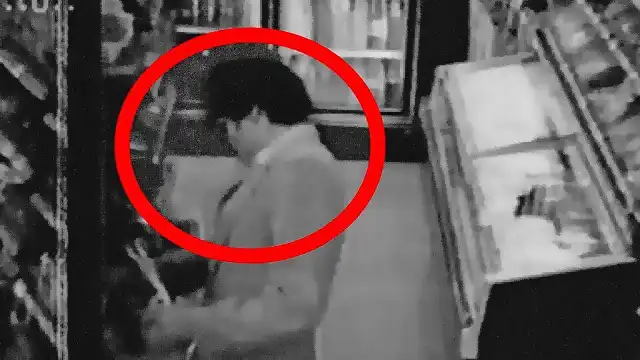
A few weeks after Ezaki’s escape, mysterious letters began arriving at local news stations. The senders proudly claimed responsibility for the kidnapping. More importantly, they gave themselves a chilling nickname: Kaijin Nijuichi Men, which translates to “The Monster with 21 Faces.”
If that name sounds dramatic, that is because it was stolen from fiction. The criminals borrowed the alias from a famous villain created by Edogawa Ranpo, Japan’s legendary mystery writer.
These were not typical ransom notes. In fact, they were incredibly arrogant. The writers mocked the police. They joked about their crimes. For instance, one letter taunted the authorities directly:

“Are the police stupid? If they need a clue, we will give them one… We are the Monster with 21 Faces.”
Meanwhile, the group escalated their attacks. They set fire to cars parked at Glico’s headquarters. Afterward, they sent a threat stating they had laced Glico candies with poison. Consequently, Japanese grocery stores frantically pulled millions of dollars worth of Glico products off their shelves.
Sales plummeted overnight. Glico lost roughly $130 million. Eventually, the monster sent a letter saying they “forgave” Glico. However, they simply moved on to their next victim.
Poisoned candy hits the shelves
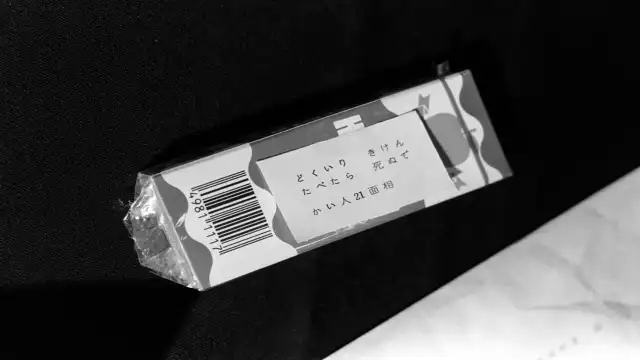
By autumn of 1984, the group targeted Morinaga, another massive candy corporation. Unlike their empty threats toward Glico, this time they were not bluffing.
The extortionists demanded 100 million yen from Morinaga. When the company refused to pay, the monster retaliated fiercely. Specifically, they warned the public that 21 boxes of Morinaga candy had been laced with a lethal dose of sodium cyanide.
Panic swept across Japan. Authoritative reports from the era detail how thousands of police officers scrambled to check supermarket aisles. Sure enough, they found the tainted boxes.
Astonishingly, the culprits had placed warning labels right on the packaging. The stickers cheerfully read: “Danger: Contains Toxins.”
Why would they leave a warning? Frankly, they didn’t want to murder random citizens. Their ultimate goal was extortion. By scaring the public, they destroyed Morinaga’s reputation and tanked their stock prices. It was corporate sabotage at its most ruthless.
How did they pull it off?
Think about the logistics. Sneaking poisoned candy into stores across multiple cities requires intense coordination. Therefore, investigators quickly realized they weren’t dealing with a lone wolf.
Instead, this was a highly organized syndicate. They had access to typewriters, vehicles, and deadly chemicals. Additionally, they deeply understood corporate supply chains. Who were these people?
Infamous Fox-eyed man
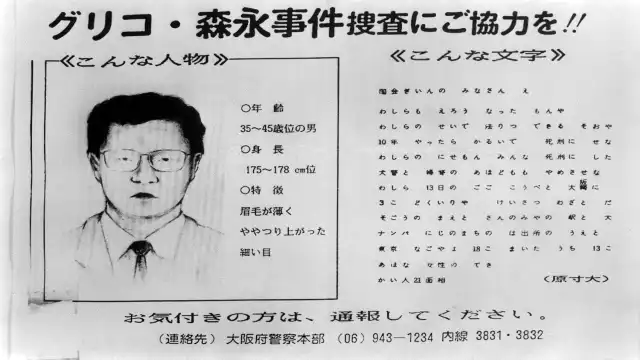
Police finally got a solid lead in June 1984. The monster had targeted another company, Marudai Food. They demanded a ransom drop.
Undercover officers disguised themselves as Marudai employees and headed to the drop location on a local train. During the ride, an investigator noticed something chilling. A man was watching him.
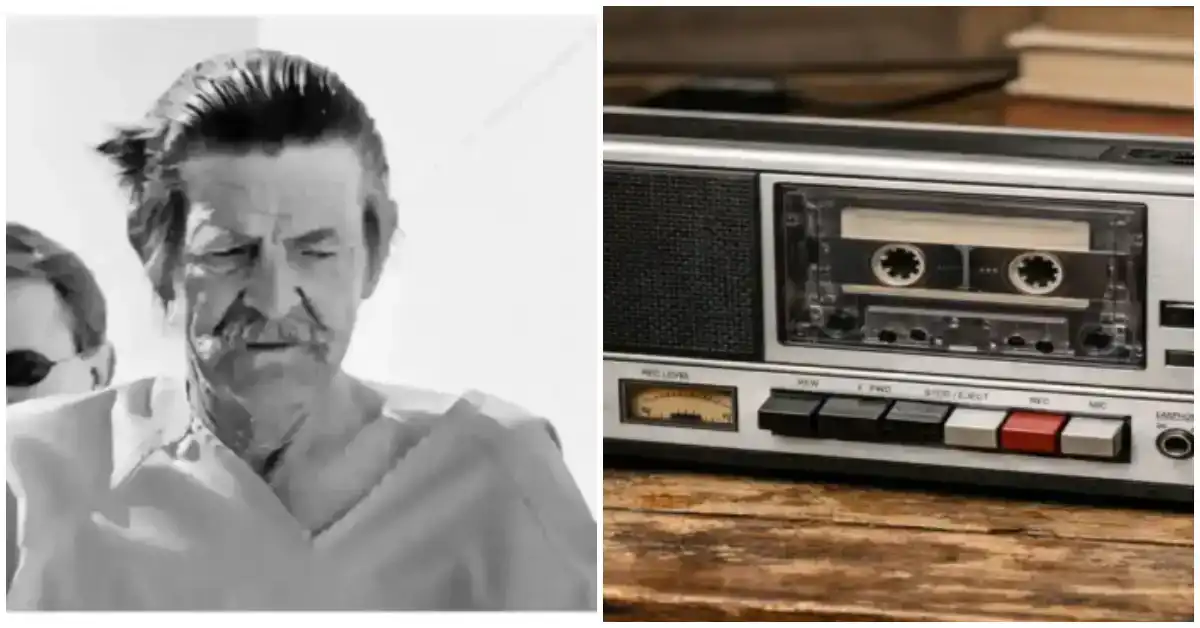
The suspect was described as tall and muscular. Most notably, he had short hair and distinct, slanted eyes. The Japanese press later dubbed him the “Fox-eyed Man.”
When the train stopped, the undercover cop dropped the cash. Simultaneously, the Fox-Eyed Man exited the train but completely ignored the money. He kept walking. Unfortunately, the police lost him in the crowded Kyoto station.
Incredibly, this happened again. Months later, another ransom drop was arranged. Police spotted a suspect matching the Fox-Eyed Man’s description in a station wagon. However, an officer lost sight of the vehicle. They found the car abandoned shortly after. Inside, they discovered a police scanner. The criminals had been listening to the cops the entire time!
Police superintendent’s choice
By 1985, the Japanese public was furious. A full year had passed. Millions of yen were lost. The police had completely failed to capture the culprits.
In Japanese culture, leadership is heavily tied to honor and accountability. Consequently, the constant failure weighed heavily on the shoulders of Shoji Yamamoto, the Superintendent of the Shiga Prefecture police.
In August 1985, unable to bear the shame of letting the Fox-Eyed Man escape his jurisdiction, Yamamoto made a heartbreaking decision. He went to his backyard, poured a flammable liquid over himself, and ended his own life.
It was a profound tragedy. Moreover, it proved how deeply this case had wounded the nation’s psyche. The police force was shattered.
Monster vanishes
Yamamoto’s tragic death shifted everything. Five days after his suicide, the Monster with 21 Faces sent their final letter.
It was entirely different from their usual mocking tone. Instead, it was shockingly reflective. The letter addressed the superintendent’s death directly.
“Yamamoto of Shiga Prefecture Police died. How stupid of him… We are bad guys. That means we’ve got more to do than bully companies. It’s fun to lead a bad man’s life. Monster with 21 Faces.”
With those parting words, the group announced they would no longer target food corporations. True to their word, the letters stopped. The poisonings ceased. Inexplicably, the Monster with 21 Faces vanished into thin air.
Top theories: Who was behind the mask?
Despite millions of man-hours and thousands of suspects, the police never made an arrest. The statute of limitations for the crimes completely expired in 2000. Legally, even if the culprits confessed today, they cannot be prosecuted.
So, who did it? Let’s explore the leading theories.
1. The Yakuza Connection
Many suspect the Japanese mafia, known as the Yakuza, orchestrated the scheme. Undoubtedly, they possessed the manpower and resources to coordinate nationwide extortion.
- The Problem: The playful, taunting letters do not fit the traditional, honor-bound operations of the Yakuza. Furthermore, local Yakuza bosses publicly condemned the poisonings.
2. North Korean Operatives
During the Cold War era, North Korean agents frequently infiltrated Japan. Therefore, some intelligence experts believe this was a state-sponsored attack meant to destabilize the Japanese economy.
- The Evidence: The sophisticated use of cyanide and radio scanners suggests military-grade training. However, concrete proof remains elusive.
3. A Disgruntled Insider
Did someone inside the candy industry seek revenge? Certainly, the criminals knew exactly how to hurt these companies. They understood delivery routes, stock market manipulation, and manufacturing flaws.
- The Motive: A fired executive or rival could have used the extortion plot to bankrupt competitors or short their company stocks.
4. Left-Wing Extremists
In the 1970s and 80s, Japan had several violent anti-capitalist groups. Perhaps the Monster with 21 Faces was a radical political faction attempting to humiliate massive corporations. After all, their letters constantly criticized corporate greed.
Why this case still haunts japan
You might wonder why a case from 1984 still matters. Simply put, it changed how we buy food forever.
Before the Monster with 21 Faces, Japanese snacks were packaged in simple cardboard boxes. You could open them, slip something inside, and close them without anyone noticing. Because of this crisis, the food industry was forced to innovate.
Companies worldwide began using tamper-evident packaging. Today, when you struggle to peel the plastic seal off a jar of peanut butter, you are experiencing the legacy of this case. Much like the Tylenol murders in the United States, this tragedy permanently altered consumer safety standards.
Unsolved legacy
The Monster with 21 Faces pulled off the perfect crime. They terrorized a nation, extorted millions, and outsmarted the police at every turn. Ultimately, they walked away cleanly.
Were they brilliant masterminds? Were they lucky amateurs? We will likely never know. Nevertheless, their chilling taunts remain etched in true crime history. The Fox-Eyed Man could be walking the streets of Kyoto right now, carrying the ultimate secret to his grave.
What do you think happened to the Monster with 21 Faces? Do you believe it was the Yakuza, or an insider with a grudge? Drop your favorite theories in the comments below! If you loved diving into this mystery, please share this article with your fellow true crime fans and subscribe to our newsletter for more deep dives into history’s darkest unsolved cases.

