

Dick Gregory Explained: His Life, Activism, and Cultural Influence
Have you ever wondered who paved the way for modern, politically sharp stand-up comedy? Long before today’s late-night hosts roasted politicians, one man literally risked his life to tell jokes that mattered. Enter Richard Claxton Gregory. He wasn’t just a guy with a microphone. Instead, he was a ferocious intellectual who used humor as a weapon against systemic oppression.
In the early 1960s, American comedy was largely safe and sanitized. Meanwhile, the streets were boiling over with racial tension. Dick Gregory decided to bridge that massive gap. Consequently, he changed the entertainment industry forever. But his legacy goes so much deeper than late-night punchlines. From marching alongside Dr. Martin Luther King Jr. to running for President of the United States, his life reads like an action-packed history book.
Are you ready to explore the incredible Dick Gregory biography? how a skinny kid from St. Louis transformed into a towering figure of civil rights, political activism, and holistic health.
Key takeaways
- A Trailblazing Comedian: He became the first Black comic to successfully perform for mainstream white audiences, using sharp satire to expose racial hypocrisy.
- Frontline Civil Rights Activism: Gregory routinely left lucrative gigs to march, protest, and face arrest alongside heavyweights like Martin Luther King Jr. and Medgar Evers.
- A Political Maverick: In the late 1960s, he ran for Mayor of Chicago and later campaigned for the U.S. Presidency, demanding systemic change.
- Pioneering Health Activism: Long before veganism was trendy, he promoted plant-based diets and fought to improve the life expectancy of African Americans through better nutrition.
- A Prolific Author: He penned over a dozen books, including his uncompromising 1964 autobiography, which famously reclaimed a racial slur for its title.
Early days
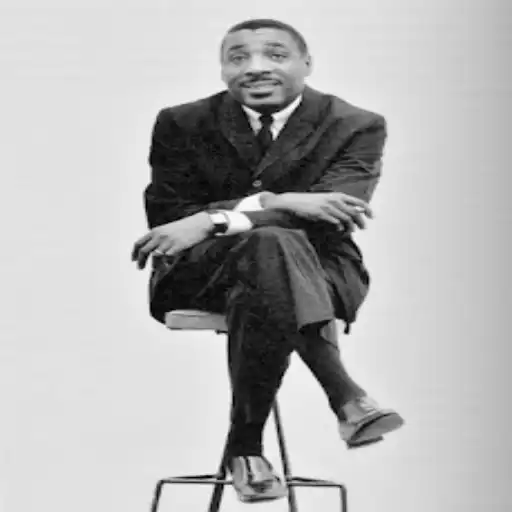
Before he ever touched a comedy club stage, Richard Claxton Gregory understood struggle. Born on October 12, 1932, in St. Louis, Missouri, he grew up in crushing poverty. His mother, Lucille, worked tirelessly as a house cleaner to support six children. Naturally, a young Dick needed an outlet. He found it on the running track.
At Sumner High School, his blazing speed caught everyone’s attention. Subsequently, he earned a track scholarship to Southern Illinois University (SIU) in 1951. There, he set records as a middle-distance runner. In fact, SIU named him their outstanding student-athlete of the year in 1953. Yet, destiny had a different route planned.
The U.S. Army drafted him in 1954. Interestingly, military life actually kickstarted his entertainment career. Whenever he wanted to escape grueling kitchen duty, he told jokes. His commanding officers noticed his quick wit and placed him in military talent shows. After his discharge in 1956, he briefly returned to college before heading to Chicago. He wanted to make people laugh professionally.
Breakthrough at the playboy club
Breaking into the industry wasn’t easy. During the late 1950s, Black performers were typically restricted to the “Chitlin’ Circuit.” White clubs rarely booked them for mainstream crowds. However, everything shifted dramatically in January 1961.
Hugh Hefner’s famous Chicago Playboy Club suddenly needed a replacement act. A desperate club manager called Gregory. When the young comic arrived, management almost turned him away. Why? A large group of white Southern executives had rented the room. They assumed a Black comedian would bomb entirely.
Gregory grabbed the mic anyway. He leaned into the tension. By delivering calm, brilliant satire about segregation, he completely won the hostile room over. Because of that single night, he earned a six-week contract. Furthermore, Time magazine profiled him, and he landed a spot on The Jack Paar Show. Almost overnight, Dick Gregory the comedian became a household name.
Dick gregory and racism
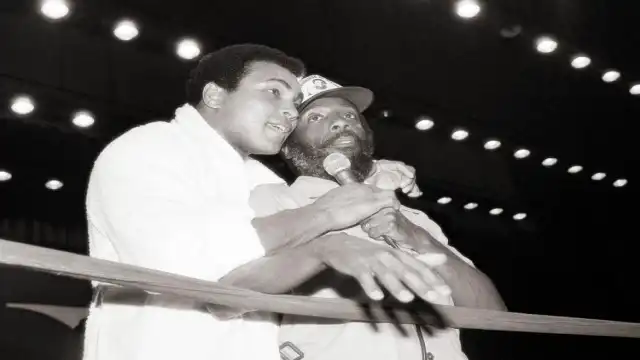
How exactly did he make hostile audiences laugh at their own prejudice? He used a totally new style. Audiences dubbed him the “Black Mort Sahl” because of his cool, cerebral, and highly political delivery. Instead of doing slapstick or singing, he stood still, smoked a cigarette, and dropped intellectual bombs.
For example, he would casually mention going to a segregated restaurant. “The waitress said, ‘We don’t serve colored people here,'” he joked. “I said, ‘That’s all right, I don’t eat colored people. Bring me a whole fried chicken.'”
Through simple logic, he highlighted the absolute absurdity of American racism. His comedy albums, such as In Living Black and White (1961), flew off the shelves. Ultimately, his success proved that humor could penetrate the deepest cultural divides.
Dick gregory 1960s activism
Fame and fortune usually make people comfortable. For Dick Gregory, money was simply a tool to fund his real passion: freedom. As the civil rights movement intensified, he couldn’t just watch from the sidelines. He aggressively put his body and career on the line.
He formed tight friendships with icons like Medgar Evers, Malcolm X, and Dr. Martin Luther King Jr. According to the Martin Luther King, Jr. Research and Education Institute at Stanford, King personally wrote to Gregory in 1965. In that letter, Dr. King stated the movement would “always remain indebted” to him.
Putting his body on the line
What did his on-the-ground activism look like? It was gritty, dangerous, and relentless.
- Greenwood, Mississippi (1963): When the local government cut off food relief to punish Black residents for registering to vote, Gregory chartered a plane. He personally delivered 14,000 pounds of food to the starving community.
- Birmingham Jail (1963): He marched alongside MLK during the intense Birmingham protests. Consequently, police arrested him. He spent five grueling days in a jail cell.
- Freedom Summer (1964): He toured heavily to raise critical funds for the Student Nonviolent Coordinating Committee (SNCC).
- Selma to Montgomery (1965): He performed at the massive freedom rally on the final night of the historic voting rights march.
His relentless dedication to Dick Gregory civil rights efforts meant he frequently canceled high-paying nightclub gigs. He knew that true liberation mattered more than a paycheck.
Dick gregory political activism
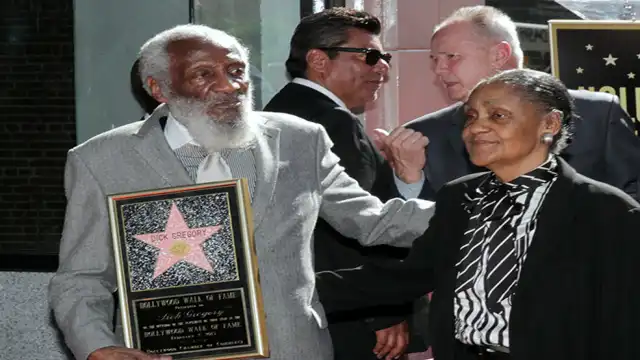
By the late 1960s, marching alone didn’t feel like enough. The system needed a massive shock from the inside. Therefore, Gregory decided to take his fight directly to the ballot box.

In 1967, he launched a campaign for Mayor of Chicago against the powerful incumbent, Richard J. Daley. Although he didn’t win, the campaign energized marginalized voters across the city. It also set the stage for an even wilder political stunt.
The 1968 presidential campaign
Yes, Dick Gregory ran for President of the United States. In 1968, the Freedom and Peace Party nominated him as a write-in candidate. His platform was radical for its time. He demanded an immediate end to the Vietnam War, sweeping civil rights protections, and radical economic reforms.
To promote his campaign, he printed fake dollar bills with his face on them. Fans affectionately called them “Gregory bills.” Interestingly, the government actually seized some of these bills, claiming they resembled real currency too closely! In the end, he garnered nearly 47,000 votes. While he didn’t capture the Oval Office, his campaign forced mainstream politicians to address issues they previously ignored.
Dick gregory health activism
Most people associate the 1960s with protests and politics. Yet, Gregory was lightyears ahead of his time regarding another massive issue: personal wellness. Today, we call it holistic health. Back then, people thought he was crazy.
In 1965, his commitment to nonviolence sparked a massive lifestyle change. If he refused to harm a human, he reasoned, why should he harm an animal? Consequently, he became a strict vegetarian. Later, he transitioned into a vocal vegan and animal rights advocate.
Fasting for a cause
Whenever a major injustice occurred, Gregory stopped eating. He went on dozens of intense hunger strikes throughout his life. He fasted to protest the Vietnam War, police brutality, and the failure of the Equal Rights Amendment. In the early 1980s, he even traveled to Tehran and fasted during the Iran hostage crisis. These fasts naturally led him to study human nutrition deeply.
Empowering the black community
Dick Gregory health activism was highly strategic. He noticed a grim statistic: African Americans suffered from a significantly lower life expectancy than white Americans. He blamed poor nutrition, systemic poverty, and substance abuse.
To combat this, he founded Health Enterprises, Inc. in 1984. Shortly after, he introduced the Slim-Safe Bahamian Diet, a nutritional weight-loss powder. He famously went on television talk shows to help morbidly obese individuals reclaim their health. Long before the wellness industry became a multi-billion-dollar juggernaut, Gregory preached that physical health was a crucial form of political resistance.
Books by dick gregory
If you really want to understand his genius, you have to read his words. He was a prolific writer, authoring over a dozen books. His bibliography captures the evolution of a brilliant, restless mind.
Here are a few absolute must-reads if you want to explore his literary catalog:
- Nigger: An Autobiography (1964): Co-written with Robert Lipsyte, this book sold over a million copies. The title was intentionally provocative. In the dedication to his mother, he wrote, “Whenever you hear the word ‘nigger,’ you’ll know they’re advertising my book.” It remains a masterpiece of American literature.
- From the Back of the Bus (1962): A hilarious, biting collection of his early comedy routines and social observations.
- The Shadow That Scares Me (1968): A deep dive into the moral decay of American society and the urgent need for systemic reform.
- No More Lies: The Myth and the Reality of American History (1971): Here, he actively dismantled the whitewashed versions of history taught in public schools.
- Dick Gregory’s Natural Diet for Folks Who Eat: Cookin’ With Mother Nature! (1973): This fascinating text outlined his philosophy on fasting, vegetarianism, and holistic healing.
- Defining Moments in Black History: Reading Between the Lies (2017): Published shortly before his death, this final book offers a razor-sharp, essay-style reflection on crucial moments in African American history.
Through these books, he ensured his voice would survive long after he left the stage.
Legacy that cannot be erased
Dick Gregory passed away from heart failure on August 19, 2017, in Washington, D.C. He was 84 years old. However, his spirit undeniably lives on.
When you look at modern comedians tackling racial injustice, you are seeing his direct influence. Whenever you see an athlete taking a knee or a celebrity using their platform for a humanitarian cause, they are walking the path he cleared. He sacrificed millions of dollars in potential earnings because his conscience demanded action.
He wasn’t just a funny guy. He was a marathon runner who literally ran across the country to protest hunger. He was a father of 11 children. He was a truth-teller in an era of massive deception. Above all, he proved that you don’t need a gun to fight a war; sometimes, a microphone and an unbreakable spirit are more than enough.
Did you know about Dick Gregory’s massive impact on both the civil rights movement and the modern vegan lifestyle? Which of his incredible life phases fascinates you the most? Drop your thoughts in the comments below! If you found this biography eye-opening, please share this article with your friends, family, and fellow history buffs. Let’s keep his incredible legacy alive!
Sources help:
- https://www.britannica.com/biography/Dick-Gregory
- https://kinginstitute.stanford.edu/gregory-dick
- https://scholarworks.indianapolis.iu.edu/server/api/core/bitstreams/64626d47-72b4-4f7b-8635-1610324b4c2e/content
- https://rediscovering-black-history.blogs.archives.gov/2017/08/21/dick-gregory-civil-rights-activist-and-comedic-legend/
- https://en.wikipedia.org/wiki/Dick_Gregory

