

Passenger Pigeon Extinction: How the most abundant bird on earth disappeared
Have you ever looked up and watched a flock of birds fly quietly past? Now, imagine that exact flock blocking out the sun completely. Picture a massive, swirling river of feathers so gigantic that it takes three full days to pass over your head. Honestly, this isn’t a dramatic scene from a dystopian science fiction movie. Actually, it was a totally normal Tuesday in 19th century North America.
Welcome to the mind boggling true story of the passenger pigeon (Ectopistes migratorius). Unquestionably, these creatures were the undisputed kings of the American skies. Scientists estimate that their historical population hovered somewhere between 3 and 5 billion birds. Let that sink in for a second. At their peak, they accounted for nearly 40% of the entire bird population in North America! Yet, fast forward just one century, and they were completely wiped off the map.
How on earth does a species go from billions to absolutely zero? Consequently, this question has haunted naturalists for generations. To understand this historic tragedy, we need to peel back the layers of human greed, rapid industrialization, and catastrophic habitat loss. So, grab a cup of coffee and settle in. Let’s dive deep into how humanity managed to erase the most abundant bird on the planet.
Key takeaways
- Astounding Numbers: The passenger pigeon population once reached up to 5 billion, making it the most populous bird in North America.
- Rapid Decline: Within just a few decades during the late 1800s, ruthless commercial hunting entirely decimated the species.
- Technological Impact: Surprisingly, the invention of the telegraph and the expansion of railroads served as the ultimate death knell for these majestic birds.
- Martha’s Legacy: The very last passenger pigeon, affectionately named Martha, died in captivity at the Cincinnati Zoo on September 1, 1914.
- Future Hope: Today, ambitious scientists are actively exploring controversial de extinction technologies to potentially resurrect the species.
The Skies that turned black
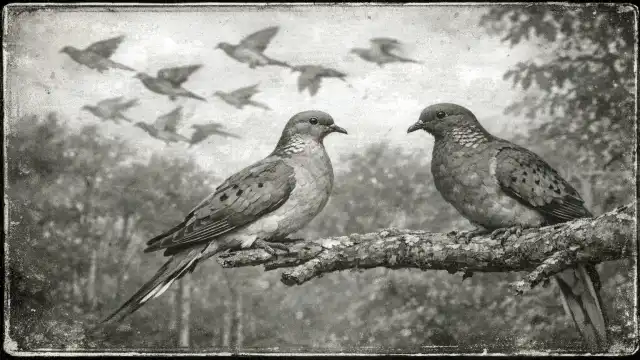
Try to imagine a biological phenomenon so vast that it literally defies modern logic. Back in the early 1800s, eastern North America featured untouched, sprawling hardwood forests. Naturally, these massive woodlands provided the perfect playground for nomadic passenger pigeons.
Unlike your average city pigeon fighting over a discarded French fry, these wild birds were built for pure speed and endurance. They possessed sleek, aerodynamic bodies that allowed them to cruise at an astonishing 60 miles per hour. Furthermore, their rich, slate blue backs and fiery rust colored breasts made them visually stunning.
However, their sheer numbers remain the most shocking detail. Famous wildlife artist and naturalist John James Audubon famously documented a massive flock in 1813. While traveling to Louisville, Kentucky, he noted that the sky grew unnervingly dark. “The light of noon day was obscured as by an eclipse,” Audubon wrote in his journals. Furthermore, he noted that “the dung fell in spots, not unlike melting flakes of snow.” According to historical records preserved by the Smithsonian, this specific flock continued roaring overhead for three consecutive days.
Can you even wrap your head around that? It was a living, breathing hurricane of feathers. Consequently, the deafening buzz of billions of beating wings could easily drown out the sound of a galloping horse.
Ecosystem engineers of the eastern forests

Beyond just looking spectacular, passenger pigeons played a crucial role in maintaining local ecosystems. In ecological terms, they were heavyweight “disturbance engineers.”
Whenever a mega flock decided to roost for the night, chaos immediately ensued. Millions of birds would aggressively cram into the branches of oak, beech, and chestnut trees. Unsurprisingly, the immense, collective weight of these birds would snap thick tree limbs like fragile toothpicks. In some extreme cases, entire trees simply uprooted and collapsed.
Although this sounds highly destructive, it was actually brilliant for the forest. By breaking open the thick, leafy canopy, the birds allowed vital sunlight to hit the dark forest floor. Moreover, their accumulated droppings added thousands of tons of nutrient rich fertilizer directly to the soil. As a result, new plant life exploded in the wake of a pigeon roost.
In short, they were Mother Nature’s ultimate landscaping crew. They continuously refreshed the woodland habitats of the Appalachian Mountains and the Great Lakes basin. Without a doubt, the forest heavily relied on their chaotic, beautiful destruction.
The Myth of inexhaustibility
Because the birds were so ridiculously plentiful, early settlers made a fatal assumption. They mistakenly believed the passenger pigeon was a completely inexhaustible resource. To the pioneers, the flocks seemed as permanent and endless as the water flowing in the ocean.
Whenever a flock descended, locals would casually grab whatever weapons they had lying around. People literally swung long poles in the air to knock down low flying birds for a quick, easy dinner. For a while, this small scale, localized hunting barely made a tiny dent in the overall population. The massive flocks effortlessly replaced their minor losses each spring.
Unfortunately, everything drastically changed in the mid 19th century. America was rapidly industrializing, and hungry cities needed cheap meat. Suddenly, the passenger pigeon wasn’t just a convenient local dinner anymore. It morphed into a highly lucrative commercial commodity. The unbridled slaughter had officially begun.
Telegraphs and Railroads
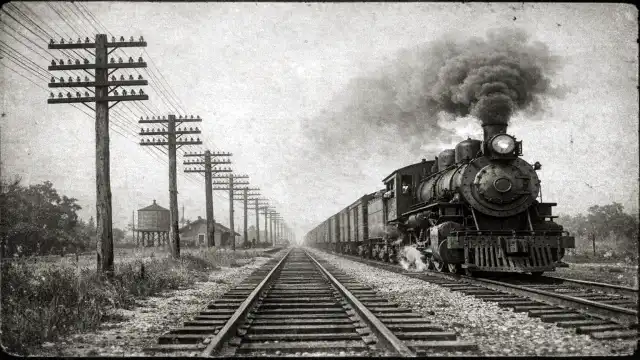
If you want to pinpoint the exact moment the passenger pigeon was doomed, look directly at technology. Specifically, two major inventions drove the species straight off a cliff: the telegraph and the railroad.
Prior to the telegraph, massive flocks could easily vanish into the deep woods before commercial hunters could assemble. The birds were nomadic, meaning they unpredictably chased food sources across thousands of miles. However, the telegraph completely changed the game. Whenever a massive nesting colony was spotted, stationmasters would instantly tap out a frantic message. Within hours, hundreds of professional hunters known as “pigeoners” would abruptly swarm the area.
Then, the railroads delivered the final, crushing blow. Before refrigerated boxcars existed, dead birds would rot before reaching major markets. Railroads brilliantly solved this logistical nightmare. Millions of freshly killed pigeons were quickly packed into massive barrels filled with ice. Subsequently, trains whisked them away to fine dining restaurants in New York, Boston, and Chicago.
As detailed by the Audubon Society, these birds were tragically sold for pennies. They were literally the cheapest source of protein available in urban America. Ultimately, this hyper efficient, industrialized supply chain sealed the fate of the entire species.
Horrific harvesting methods
How exactly did professional hunters kill billions of birds? Prepare yourself, because the specific methods were genuinely brutal and ruthlessly efficient.
Hunters rarely wasted expensive ammunition on individual birds. Instead, they cleverly targeted the densely packed nesting colonies where the pigeons were most vulnerable. Here are some of the popular, devastating tactics they employed:
- Netting: Trappers would throw massive, weighted nets over open feeding grounds, instantly trapping thousands of panicked birds at once.
- Smoking Out: Pigeoners routinely lit toxic sulfur fires directly beneath nesting trees. Consequently, the noxious smoke forced gasping chicks and adult birds to tumble helplessly to the ground.
- Tree Felling: In order to harvest the fat squab chicks, loggers simply chopped down entire trees holding hundreds of delicate nests.
- The Stool Pigeon: Have you ever heard someone call an informant a “stool pigeon”? This colloquial phrase actually originates right here! Hunters would literally sew a live pigeon’s eyes shut and tie it tightly to a stool. As the blind bird helplessly fluttered its wings, it tricked overhead flocks into landing perfectly inside a trap.
Because the hunters mercilessly targeted breeding colonies, the pigeons couldn’t reproduce. You can’t exactly sustain a population if an entire generation of chicks is violently slaughtered before they ever learn to fly.
Habitat loss
While commercial hunting was undeniably the primary assassin, habitat destruction gladly held the weapon. After the American Civil War, the nation’s timber and agricultural industries exploded.
Settlers rapidly cleared millions of acres of pristine Eastern deciduous forests to build sprawling farms and growing towns. Suddenly, the passenger pigeon’s primary food sources acorns, chestnuts, and beechnuts began to vanish rapidly.
To survive, these massive, energy hungry flocks absolutely required endless, unbroken tracts of mature forest. They were highly social creatures that simply refused to nest in small, fragmented woods. Therefore, as the rich forests shrank, the birds were tragically forced into smaller, highly concentrated areas. This forced concentration merely made it even easier for commercial hunters to track them down and wipe them out. It was truly a perfect storm of ecological disaster.
Final countdown
The collapse of the passenger pigeon happened with terrifying, whiplash inducing speed. In the 1870s, enormous flocks still darkened the skies. Yet, by the late 1880s, the wild population had completely crashed.
One of the last massive slaughters occurred in Petoskey, Michigan, in 1878. A nesting colony covering over 100,000 acres was ruthlessly decimated. Historians estimate that up to 50,000 birds were systematically killed and shipped out every single day for nearly five months. Clearly, no biological species can survive that level of extreme, sustained trauma.
By the time state governments finally realized the impending tragedy, it was far too late. A few desperate laws were hastily passed to restrict hunting during nesting seasons. Unsurprisingly, local enforcement was practically non existent. By 1890, you couldn’t find a wild passenger pigeon anywhere. The most abundant bird on earth had quietly disappeared into the shadows.
Meet Martha: Last passenger pigeon
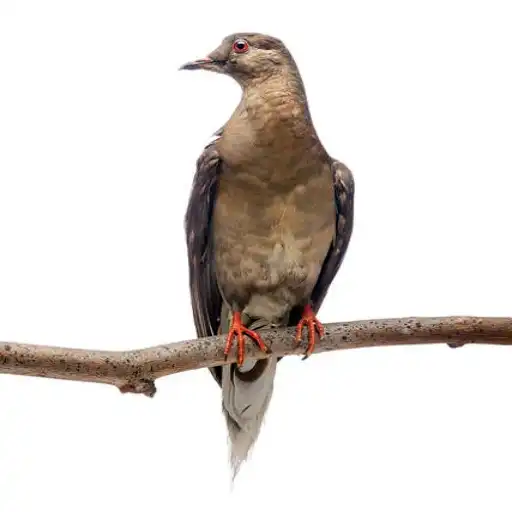
When the wild flocks vanished, only a handful of captive birds remained scattered across a few Midwestern zoos. Eventually, these isolated captive populations dwindled down to a single, lonely survivor.
Her name was Martha.
Named affectionately after George Washington’s wife, Martha lived in a comfortable enclosure at the Cincinnati Zoo. For years, she was a quiet, melancholy celebrity. The zoo even desperately offered a massive $1,000 reward (a true fortune back then) to anyone who could find a living male mate for her. Sadly, nobody ever claimed that prize.
Martha lived a solitary existence until September 1, 1914. On that fateful afternoon, zoo keepers found the 29 year old bird lying lifeless on the bottom of her cage. With her final breath, an entire, majestic species that once numbered in the billions officially went extinct.
Her body was immediately encased in a gigantic block of ice. Following protocol, officials shipped her directly to the Smithsonian Institution in Washington, D.C. Today, if you visit the museum, you can still see Martha carefully preserved and mounted in a display case. She serves as a heartbreaking, silent monument to humanity’s reckless impact on nature.
Can science bring them back? (The De-Extinction Dream)
What if the tragic story of the passenger pigeon doesn’t actually end with Martha? What if we could hit the ultimate undo button?
Welcome to the cutting edge, highly controversial realm of de-extinction. Today, ambitious biotechnology organizations like Revive & Restore are actively working to bring the passenger pigeon back to life. But how exactly do you resurrect a bird that hasn’t existed for over a century?
Scientists aren’t using Jurassic Park style amber. Instead, they are analyzing preserved DNA extracted directly from museum specimens like Martha. By carefully mapping the extinct pigeon’s genome, geneticists can identify the specific traits that made it unique. Next, they plan to use advanced CRISPR gene editing technology to tweak the DNA of the band tailed pigeon, the passenger pigeon’s closest living genetic relative.
If successful, they could theoretically engineer a hybrid bird that looks, acts, and flies exactly like the original. Proponents argue that reintroducing these “proxy” birds could help magically restore the health of modern Eastern forests.
However, this bold plan sparks intense, heated debates. Critics firmly ask a vital rhetorical question: Even if we can bring them back, should we? Our modern world looks incredibly different than it did in 1850. The endless, sweeping hardwood forests they once required no longer exist. If we release billions of hungry, nomadic pigeons today, would they just become a catastrophic agricultural pest?
Regardless of where you personally stand on the ethics, the underlying science is unquestionably fascinating. According to recent papers published on Google Scholar, functional de-extinction could become a shocking reality within our lifetimes.
Lessons learned for modern conservation
The heartbreaking loss of the passenger pigeon wasn’t completely in vain. Actually, this glaring, preventable tragedy served as a massive wake up call for global environmentalism.
Pioneering conservationist Aldo Leopold eloquently wrote about the species’ demise, stating, “For one species to mourn the death of another is a new thing under the sun.” The utter shock of losing such a prolific animal directly inspired the passage of vital, historic wildlife protection laws. The momentous Lacey Act of 1900 and the Migratory Bird Treaty Act of 1918 were passed specifically to stop the unregulated commercial slaughter of wildlife.
Today, these crucial laws protect thousands of vulnerable species from suffering the exact same fate as our sky darkening friends. The passenger pigeon ultimately died so that the bald eagle, the whooping crane, and the brown pelican could live.
Takeaway
We must never forget the profound lesson of the passenger pigeon. No living species is ever too abundant, too powerful, or too common to fail. Whenever humanity assumes that natural resources are infinite, we set the stage for total disaster.
Our planet’s biodiversity is a delicate, tightly woven tapestry. If we casually pull too many strings, the entire beautiful picture unravels entirely. We hold an immense, terrifying power to shape the biological future of our planet. Therefore, we must choose to wield that power with incredible respect, sustainable caution, and deep scientific understanding.
What do you personally think? Should scientists actively use gene editing to bring the passenger pigeon back from the dead, or should we strictly focus our money on saving species that are currently endangered? Drop your thoughts, share this article with your favorite nature lover, and let’s keep this vital conservation conversation alive!

