

Extinction Theory and Jefferson’s Moose: The Strange Story of America’s Mastodon
Long before scientists believed species could vanish, people assumed the natural world stayed fixed forever. Fossils? Neat, sure but mysterious. Many folks said they were leftover oddities from floods or mythic beasts. Nobody thought they pointed to something as dramatic as extinction.
Then giant bones turned up across early America. Huge teeth. Massive tusks. Leg bones bigger than anything alive. These finds didn’t just puzzle early naturalists they challenged the belief systems of entire continents.
And strangely enough, this messy pile of fossils became part of a global argument about whether the New World was inferior to Europe. Even Thomas Jefferson stepped in, determined to defend America’s honor with… a moose. And a mastodon.
The whole story gets kinda wild. but to understand how we got there, we need to back up a bit.
Aristotle and Pliny: Brilliant Minds, Wrong Assumptions
Ancient thinkers like Aristotle and Pliny the Elder shaped early science. Their works collected information on animals, plants, minerals – basically early encyclopedias. But they worked with one big assumption:
Species do not disappear. Ever.
If the world was created perfectly, why would anything go extinct? So when fossils appeared, explanations slid into myth, religion, or symbolism. Bones of giant animals? Maybe from ancient heroes or biblical giants.
Pliny wrote enthusiastically about strange creatures, but never questioned whether some might be gone forever. That idea was simply off the radar.
So for centuries, extinction wasn’t just unlikely it was unthinkable.

Buffon and the Degeneracy Debate: Europe Throws Shade at America
Jump to the 1700s. Enlightenment science is booming. Naturalists are classifying species, mapping continents, and comparing climates.
Then French naturalist Georges-Louis Leclerc, Comte de Buffon drops a claim that rattles the young United States:
He argues that American animals even people are smaller, weaker, and basically “degenerate” compared to their European counterparts.
Ouch.
According to Buffon, North America’s cold, wet climate made everything scrawny. He even suggested that animals brought from Europe shrank after spending time in America.
This didn’t sit well with Americans trying to build national identity. They wanted proof their continent was vibrant and impressive not a biological downgrade.
So who stepped up to fight back?
Yep. Thomas Jefferson, and he didn’t just argue with words. He used giant fossil bones.
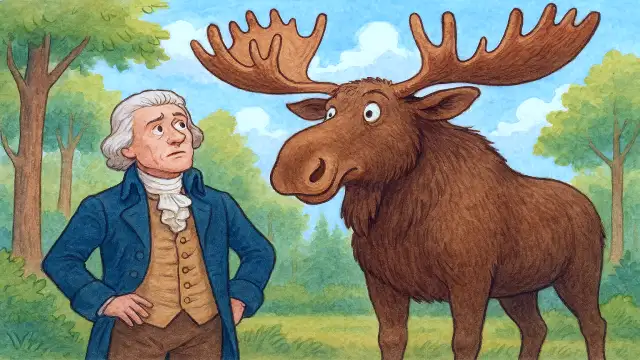
Jefferson’s Moose and the Search for American Giants
Jefferson believed America had its own mega-animals maybe even still roaming the western frontier. To counter Buffon’s claims, he sent the Frenchman an enormous moose carcass, antlers and all. A bold move.
But that was just the warm-up.
Jefferson became fascinated with large fossils found in Kentucky, New York, and the Ohio River Valley. These bones clearly belonged to animals far bigger than any living American species.
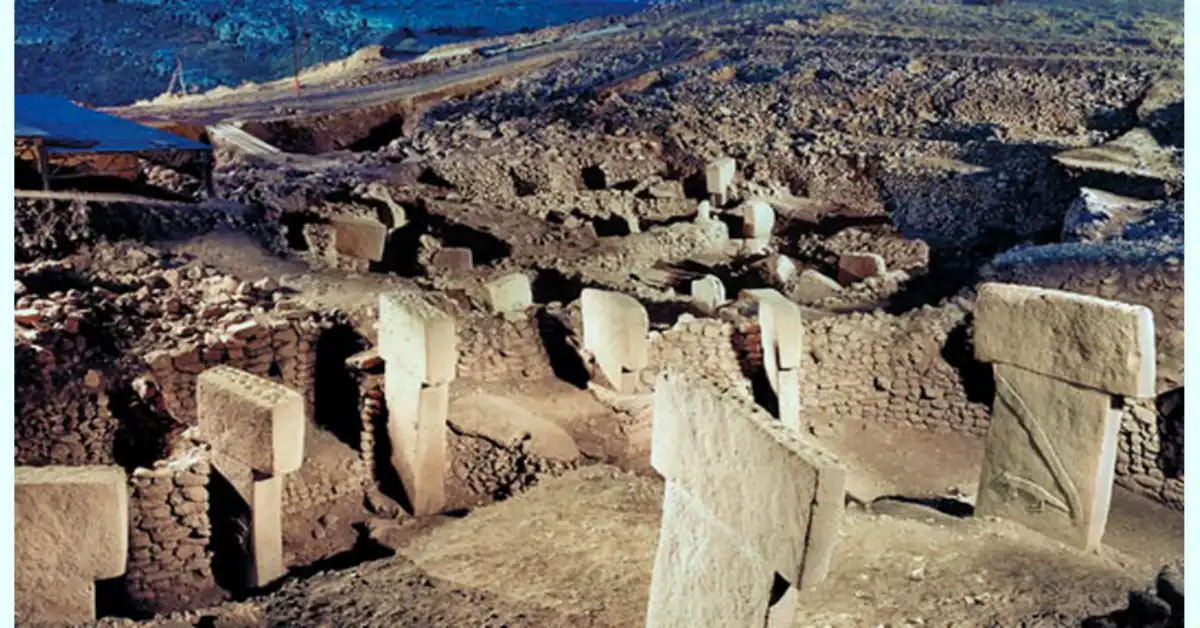
So Jefferson argued:
“Look at these bones! This continent produces giants.”
In his book Notes on the State of Virginia, he even speculated that these unknown creatures then called the American incognitum might still be alive somewhere out West.
Did he believe that scientifically? Hard to say. But politically? It worked.
He wanted America to be seen as powerful, not puny.
And those fossils were perfect ammunition.
Colonial Science and National Identity: Fossils Become Patriotism
It’s surprising, but early Americans weren’t just digging fossils for science. They were digging to prove a point. A new nation wanted cultural authority. Natural history became a battleground.
Big fossil finds turned into bragging rights. America could rival Europe not only in government or ideals but also in natural wonders.
And these bones weren’t subtle. People found:
- tusks longer than a person
- molars as big as fists
- femurs weighing enough to strain a wagon
- jawbones unlike any living creature
Naturalists didn’t know what they were looking at, but they knew it was extraordinary.
This was no cow or elephant. This was something else.
The American Incognitum: Mysterious Beasts from the Mud
The “incognitum” earned its name honestly nobody had a clue what it was. Some thought it was a giant carnivorous elephant. Others pictured a monstrous hippo. Some even imagined it was a still-living predator hidden in the unexplored West.
In 1801, artist-scientist Charles Willson Peale excavated an almost complete skeleton in New York. He assembled it in his museum a massive structure towering over visitors. People lined up to see it. Newspapers covered it like a celebrity appearance.
This was early American science turning into a public spectacle.
And it worked. The incognitum became a national icon.
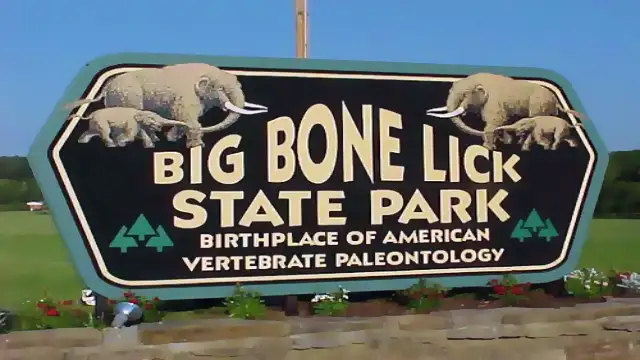
Big Bone Lick: America’s Fossil Hotspot
If you wanted giant Ice Age bones in the 1700s or early 1800s, Big Bone Lick (present-day Kentucky) was the place to be.
Why so many bones ended up there:
- mineral salt lured animals
- muddy ground trapped them
- centuries layered bones on bones
- erosion revealed massive skeletons
Native communities had known the site for centuries. European explorers stumbled onto it in the 1730s and were stunned by the scale.
Soon, Big Bone Lick became:
- a fossil goldmine
- a tourist attraction
- a scientific wonder
- a piece of American cultural identity
Expeditions carted bones to Philadelphia, Paris, London, and beyond. The site connected American fossils to global scientific debates.
Cuvier Steps In: Extinction Becomes Real
Here’s where the story shifts from patriotic drama to scientific revolution.

French naturalist Georges Cuvier, studying bones shipped from America and Siberia, compared them to modern elephants. Something didn’t match.
The teeth.
The jaw shape.
The proportions.
These weren’t elephants.
And here was the bombshell:
Cuvier realized these animals no longer existed. They were extinct.
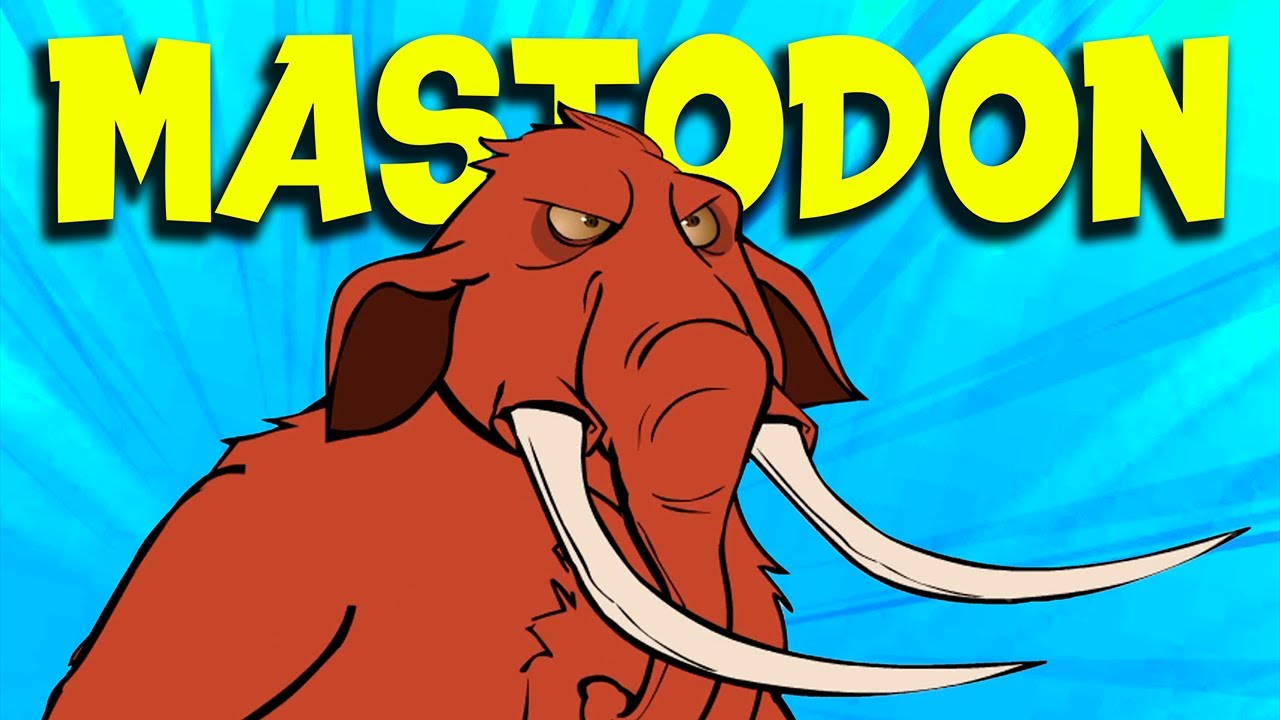
This idea flipped science upside down. Species could disappear. Nature was not fixed. The world had a deep, changing history.
Cuvier named the creature mastodon (“breast-tooth”), referring to the cone-shaped cusps on its molars.
At this moment, the incognitum finally had a scientific identity.
And extinction theory was born.
Mastodon vs Mammoth: What’s the Difference?
People mix them up constantly. But mastodons and mammoths were very different animals.
Here’s the quick breakdown:
| Feature | Mastodon (genus Mammut) | Mammoth (genus Mammuthus) |
|---|---|---|
| Time range | Late Miocene–Late Pleistocene (peaked earlier; extinct – 10,000 – 12,000 years) | Pliocene–Holocene (woolly mammoth survived in places until – 4,000–6,000 years ago.) |
| Geographic range | Primarily North & Central America (some relatives elsewhere) | Africa, Eurasia, North America |
| Skull & head shape | Lower, flatter skull | High, peaked skull with a bony knob |
| Tusks | Straighter, shorter; sometimes small lower “chin” tusks | Long, strongly curved tusks that can cross |
| Teeth (molars) | Cone-shaped cusps (nipple-like) adapted for browsing woody plants | Ridged, plate-like molars adapted for grazing grasses |
| Diet | Browser (twigs, leaves, shrubs) | Grazer (grass, tough steppe vegetation) |
| Body & coat | Stockier, shorter legs; generally less specialized for cold (some hairy) | Often larger; woolly species had thick fur and fat humps for cold climates |
| Relationship to modern elephants | More distantly related to modern elephants | More closely related to modern elephants (same family Elephantidae) |
| Typical size | Generally smaller/shorter than largest mammoths | Often larger (varies by species; some mammoths very large) |
| Notable fossils / examples | American mastodon (Mammut americanum) | Woolly mammoth (Mammuthus primigenius), Columbian mammoth |
In simple terms:
Mastodons were the browsers.
Mammoths were the grazers.
And the mastodon not the mammoth was Jefferson’s pride.
Extinction Meets Evolution: Darwin Picks Up the Thread
By the time Charles Darwin entered the scene, Cuvier’s extinction concept was widely accepted. But Darwin wanted to understand why species vanished and how new ones appeared.
Fossils like mastodons helped him see a pattern:
- species rise
- species adapt
- species disappear when environments shift
This rhythm became a cornerstone of evolutionary theory. Darwin often referenced giant fossil mammals as evidence that Earth had cycled through worlds we could barely imagine.
Extinction wasn’t a weird exception anymore. It was part of nature’s plan.
Modern Museums, Tin Boxes, and Cultural Memory
Over the last two centuries, mastodon fossils traveled the world. Some ended up in elegant European galleries. Others settled in American museums. A few remain boxed in storage sometimes literally in metal tins waiting for research teams to reopen them.
These fossils appear in:
- natural history museums
- traveling exhibits
- educational programs
- documentaries
- genetics labs attempting DNA extraction
Whenever you see a mastodon skeleton today, you’re looking at a creature that once shaped scientific revolutions.
These bones didn’t just tell us about the past; they helped create modern paleontology.
Why This Story Still Matters Today
You might wonder: “Cool history, but what’s the takeaway for our world now?”
A lot, actually.
1. Extinction isn’t abstract – it’s real, and it happens.
If ancient giants vanished due to climate shifts and ecological pressure, modern species face similar challenges.
2. Science grows through debate and curiosity.
Jefferson vs Buffon, Cuvier vs tradition progress came from disagreement paired with evidence.
3. National identity and science often overlap.
America used fossils to show it belonged on the world stage of knowledge.
4. Deep time changes how we see ourselves.
Mastodons remind us that humans are newcomers in Earth’s story.
5. Fossils spark imagination.
They inspire kids, researchers, museumgoers anyone who wonders what the world was like before humans.
Curiosity Is Still Our Best Tool
From Aristotle’s early mistakes to Jefferson’s competitive spirit and Cuvier’s sharp observations, one thing fueled every discovery: curiosity.
A strange tooth.
A giant rib.
A jaw pulled from a Kentucky swamp.
Each clue pushed someone to ask, “What is this? And what does it mean?”
That simple spark built extinction theory, fueled debates about evolution, and shaped how we understand life on Earth.
So whenever you stand in front of a mastodon skeleton, remember: it’s not just a fossil. It’s a reminder that science moves forward every time someone decides to follow a weird question all the way to the end.
Frequently Asked Questions
1. Were mastodons and mammoths alive at the same time?
Yes. They overlapped during the Ice Age but lived in different habitats.
2. What killed off the mastodons?
Likely a mix of climate warming, habitat loss, and pressure from early human hunters.
3. Why did Jefferson care so much about mastodon fossils?
He wanted to prove America wasn’t biologically inferior to Europe and believed the continent supported giant species.
4. Where can I see mastodon fossils today?
Many museums worldwide, including the American Museum of Natural History and the Smithsonian.
5. What makes mastodons scientifically important?
They helped prove extinction was real and pushed naturalists to rethink Earth’s history.

