

The Stanford Prison Experiment: The 6 Days That Shook Psychology
Imagine sitting at home on a lazy Sunday. Suddenly, real police officers knock on your door, slap handcuffs on your wrists, and haul you into a squad car while your neighbors stare. Eventually, you are tossed into a gloomy basement cell. But you aren’t actually a criminal. You are a college student, and you just volunteered for a psychological study.
Would you lose your mind? Would you turn into a ruthless tyrant if you were given a guard’s uniform instead?
Back in August 1971, a young psychologist named Philip Zimbardo decided to find out. Consequently, he created what would become one of the most famous — and controversial — academic studies in human history.
For decades, the Stanford Prison Experiment summary has been taught in schools as undeniable proof that bad situations make good people do evil things. However, the truth is significantly more complicated. Recently uncovered audio tapes and archival research have completely flipped the script on this historical event.
Let’s dive deep into the fascinating findings, the massive ethical violations, and the shocking modern plot twists of this legendary basement prison.
- The Goal: To understand the psychological effects of power dynamics, role-playing, and prison environments on human behavior.
- The Setup: 24 healthy male college students were randomly assigned to play either “prisoners” or “guards” in a mock prison at Stanford University.
- The Shocking Findings: Guards supposedly became highly abusive, while prisoners became submissive and emotionally traumatized.
- The Early End: Planned for 14 days, the brutal experiment was completely shut down after just six days.
- The Ethical Nightmare: The study lacked informed consent regarding arrests, caused severe emotional distress, and lacked an independent observer.
- The Modern Debunking: Newly discovered audio recordings prove that researchers actively coached the guards to be cruel, meaning the famous “results” were heavily manipulated.
What exactly was the stanford prison experiment?
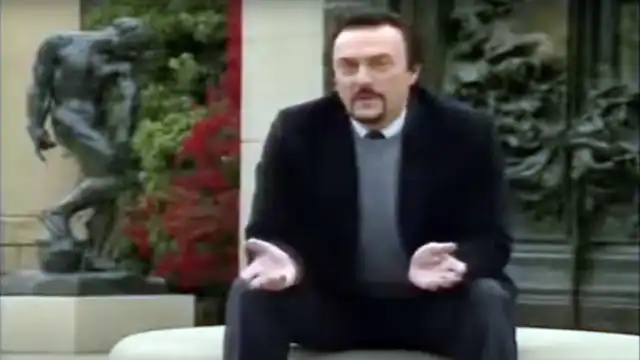
To understand the sheer scale of this psychological drama, we have to look at how it all began. In 1971, America was experiencing massive cultural shifts. The U.S. Office of Naval Research wanted to understand why conflict routinely erupted between military guards and prisoners. Therefore, they funded Philip Zimbardo to figure it out.
Zimbardo placed a simple ad in the local newspaper. Specifically, he offered male students $15 a day (which translates to over $110 in today’s money) to participate in a “psychological study of prison life”.
Over 70 people applied. After screening out anyone with criminal backgrounds or psychological issues, the team selected 24 perfectly normal, healthy young men. Next, a simple coin flip decided their fates. Half became guards. The other half became prisoners.
Building the basement dungeon
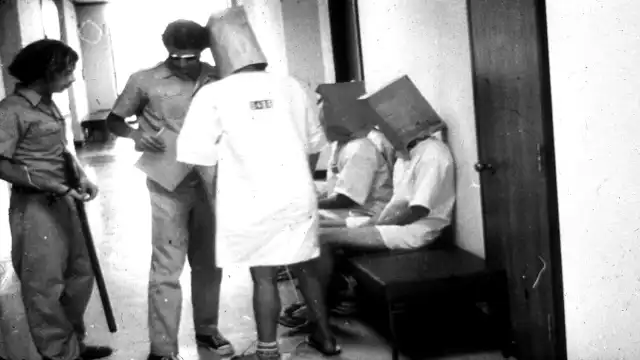
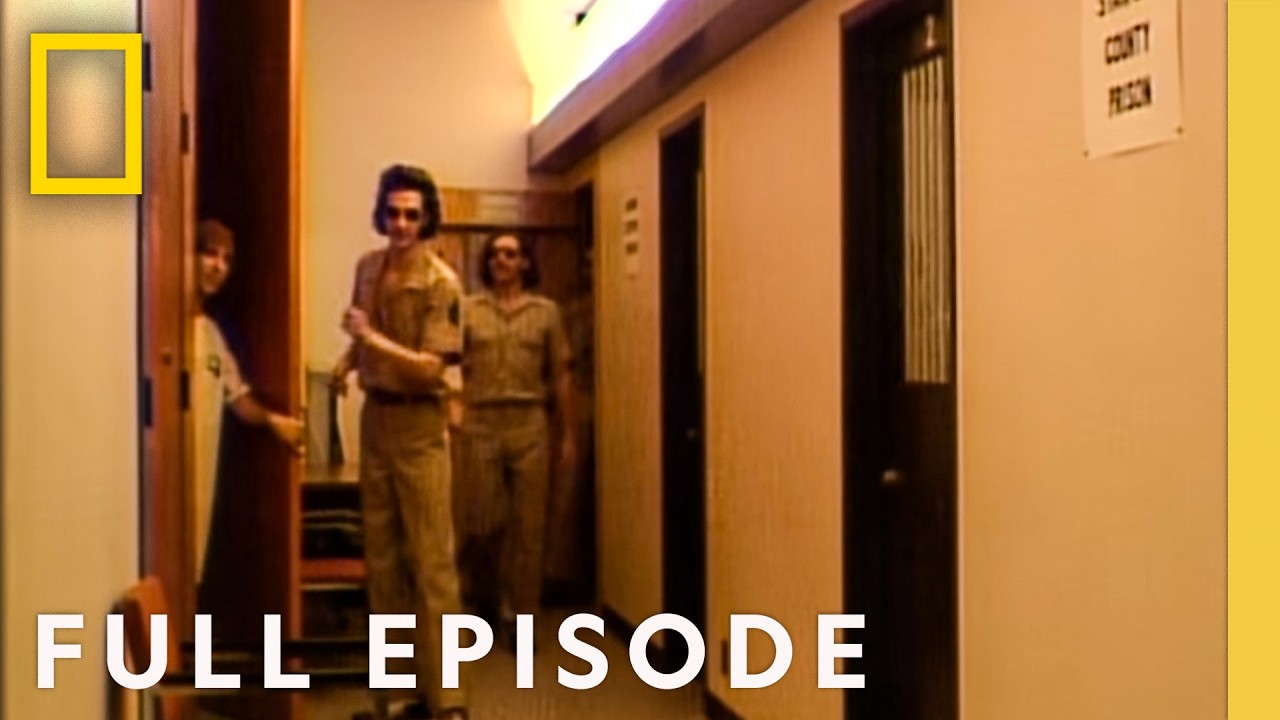
Zimbardo didn’t just want to casually observe people. He wanted an immersive, theatrical experience. Accordingly, he transformed a narrow corridor in the basement of Stanford’s psychology building into a remarkably convincing mock jail.
They removed the doors from laboratory rooms and replaced them with steel bars. Furthermore, they created a tiny, unlit closet that served as solitary confinement, famously nicknamed “the hole.”
To make things feel aggressively real, Zimbardo utilized a psychological tactic called deindividuation. Essentially, this means stripping away a person’s unique identity so they blend perfectly into a group.

- The Prisoners: They were forced to wear humiliating, dress-like smocks without underwear. Moreover, they wore a heavy chain padlocked around their right ankle. Most importantly, they were stripped of their names. Guards only referred to them by their assigned ID numbers.
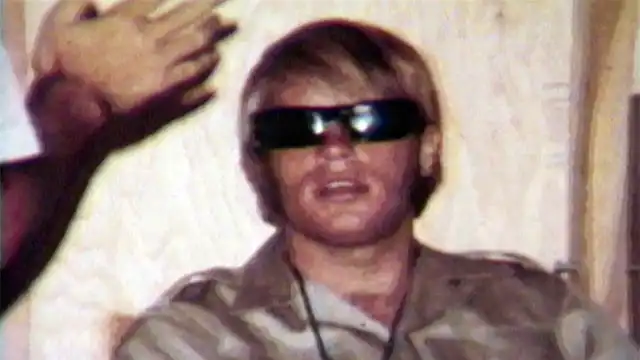
- The Guards: They were given crisp khaki uniforms, wooden batons, and whistles. Additionally, they wore reflective aviator sunglasses. This brilliant wardrobe trick prevented prisoners from making humanizing eye contact with their captors.
Zimbardo himself didn’t just take notes from the sidelines. Dangerously, he appointed himself as the Prison Superintendent.
Going off the rails
Initially, everyone felt incredibly awkward. On Day 1, nobody really knew how to act. The guards were slightly bossy, but mostly polite. The prisoners treated the whole thing like a weird summer camp.
Then, everything famously exploded on Day 2.
- The Rebellion: Tired of the petty rules, the prisoners barricaded themselves inside their cells using their mattresses. They ripped off their ID numbers and verbally taunted the guards.
- The Retaliation: The guards fought back using fire extinguishers to force the prisoners away from the doors. Subsequently, they stripped the prisoners naked, destroyed their beds, and threw the rebellion leaders into solitary confinement.
- The Psychological Breakdowns: Over the next few days, the environment turned toxic. Guards forced prisoners to clean toilet bowls with their bare hands. They interrupted their sleep with blinding flashlights for middle-of-the-night roll calls.
Within just 36 hours, Prisoner #8612 began screaming, crying, and showing signs of a massive nervous breakdown. Consequently, researchers had to release him. Over the next few days, three more prisoners suffered similar extreme distress and were sent home.
Ultimately, on Day 6, a young graduate student named Christina Maslach (who was dating Zimbardo at the time) visited the basement. She was absolutely horrified by the conditions. She boldly confronted Zimbardo, telling him that what he was doing to those boys was terrible. Snapped back to reality, Zimbardo shut the whole thing down.
Why did good people turn bad?

When Zimbardo published the Stanford Prison Experiment findings, the media went completely wild. The narrative was irresistibly terrifying.
Zimbardo argued that the study proved the power of the situation. He coined the concept of the “Lucifer Effect.” Simply put, he claimed that systemic environments are so incredibly powerful that they can override individual human morals.
If you put a good apple in a bad barrel, the barrel rots the apple.
For decades, society used this exact conclusion to explain real-world atrocities. From military abuses to toxic corporate fraud, the excuse became normalized: It wasn’t their fault; the situation made them do it.
The ethical nightmare
Today, you cannot find a single university on Earth that would allow this study to happen. Period. The Zimbardo prison study ethics are a glaring example of what happens when scientists lose their moral compass.
Modern psychological research is governed by strict Institutional Review Boards (IRBs). Consequently, experiments must adhere to rigid ethical guidelines to protect human life. Zimbardo basically broke all of them.
1. Lack of truly informed consent
Yes, the participants signed a general waiver. However, they were never warned that real local police would mock-arrest them in front of their actual neighbors on a Sunday morning. That surprise arrest severely breached their trust from the very first minute.
2. Failure to protect from harm
The golden rule of modern psychology is “Do No Harm.” The student prisoners experienced genuine acute anxiety, depression, crying fits, and suppressed rage. Even though they were paid volunteers, watching a teenager suffer a mental breakdown and refusing to stop the test immediately is highly unethical.
3. The Right to Withdraw Was Compromised
In an ethical experiment, you can stand up and say, “I quit,” at any moment. During the prison simulation, Zimbardo actively made it extraordinarily difficult for participants to leave. He acted like a real warden, creating confusing bureaucratic hurdles that made the prisoners feel completely trapped.
4. Loss of scientific objectivity
This was arguably Zimbardo’s biggest mistake. By acting as the Prison Superintendent, he completely lost his objective distance. He wasn’t watching the maze; he was running inside the maze. Therefore, he encouraged the hostile environment instead of neutrally observing it.
Was it all fake?
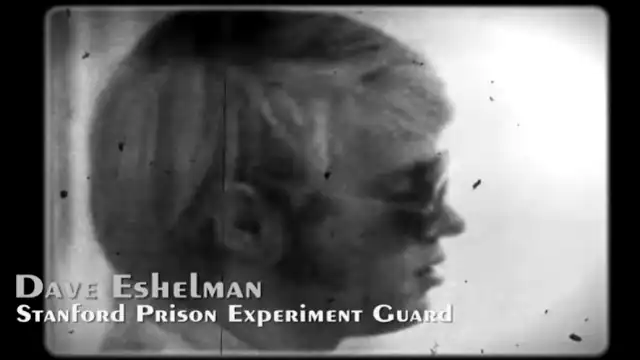
Here is where the story gets mind-blowing. For almost 50 years, the textbook narrative remained unquestioned. Then, modern researchers started digging into the archives. What they found completely debunked the famous narrative.
In 2018, French science historian Thibault Le Texier published a devastating book investigating the study’s claims. Furthermore, journalist Ben Blum wrote a massive exposé outlining how the experiment was basically an “academic reality show”.
The Stanford Prison Experiment debunked movement relies on three major pieces of hard evidence.
The guards were actively coached
Zimbardo always claimed that the guards invented their cruel tactics all by themselves. That was a lie.
Newly released audio recordings prove that the researchers explicitly told the guards how to behave. A warden character, played by a researcher named David Jaffe, was caught on tape reprimanding guards for being too soft. He pressured them to act tougher to ensure the experiment was a success. They were merely following the script given to them by the scientists.
The breakdown was faked
Remember Prisoner #8612, the guy who famously screamed, “I’m burning up inside!”? His real name is Douglas Korpi. Decades later, Korpi admitted he totally faked his breakdown.
Why? Because he wanted to go home to study for his Graduate Record Exams (GREs). He asked to leave to study, but the staff refused. Consequently, Korpi realized his only ticket out of the basement was to fake a spectacular medical emergency.
Failed replications
In science, if a study is true, other scientists should be able to repeat it and get the exact same results. This is called replication.
In 2001, researchers Alex Haslam and Stephen Reicher conducted the BBC Prison Study. Intriguingly, their results were entirely different. Without aggressive coaching from researchers, the guards in the BBC study never became tyrannical. Instead, the prisoners quickly banded together, challenged the authority, and successfully collapsed the power structure.
Basically, the Stanford findings were never replicated because they were artificially manufactured in the first place.
Philip zimbardo’s complicated legacy
Dr. Philip Zimbardo passed away recently on October 14, 2024, at the impressive age of 91. His death brought this massive controversy back into the global spotlight.
How did he react to the intense modern criticism? Unsurprisingly, he fiercely defended his original work. He maintained that despite the flaws, the core truth of the experiment remains valid. We are all deeply influenced by the uniforms we wear and the roles we play.
However, in his later years, Zimbardo shifted his focus toward something much more optimistic. He founded the Heroic Imagination Project. Having spent decades studying how ordinary people turn evil, he spent his final years researching how ordinary people can learn to become heroes. He firmly believed that if situations can teach us to be cruel, they can also train us to be exceptionally brave.
Lessons for today
So, why does a highly flawed, 50-year-old psychological study still matter to you and me today?
Because the conversation around authority, power, and human nature is incredibly relevant. From abusive managers in corporate offices to police brutality, we are constantly navigating unequal power dynamics.
The real lesson of the Stanford Prison Experiment isn’t that you are secretly a monster. Actually, the takeaway is much more empowering.
It teaches us to aggressively question the systems around us. We must recognize when an environment is actively encouraging us to treat others poorly. Furthermore, it reminds us that blind obedience to bad rules is dangerous. When the system is broken, we have a profound moral obligation to push back.
Science is rarely perfect. Sometimes it is messy, unethical, and heavily biased. Yet, by deconstructing these famous mistakes, we become significantly smarter, safer, and much more compassionate humans.
Over to you!
Were you taught the original version of the Stanford Prison Experiment in school, or did you know about the secret audio recordings? Do you think you would have rebelled as a prisoner, or gone along with the crowd as a guard? Drop your thoughts in the comments below! If this deep dive blew your mind, be sure to share it with a fellow history buff or psychology enthusiast!

