

Japanese Unit 731: History, Experiments, and Summary Explained
Have you ever heard of a military secret so dark that even the winning side wanted to bury it? Most of us learn extensively about the horrifying concentration camps in Europe during World War II. However, far fewer people know about a highly secretive, heavily guarded facility tucked away in Northeast China. It was officially called the Epidemic Prevention and Water Purification Department. Unofficially, it was known as Unit 731.
- The Facility: Unit 731 was a covert biological and chemical weapons program operated by the Imperial Japanese Army from 1936 to 1945.
- The Mastermind: The operation was led by General Shiro Ishii, a brilliant but ruthlessly ambitious doctor who wanted to perfect modern biological warfare.
- The Victims: Thousands of innocent people — mostly Chinese civilians and prisoners of war — were murdered in brutal medical experiments. Tragicly, there were no documented survivors inside the camp.
- The Cover-Up: Shockingly, the United States government gave the leading scientists full immunity from war crime trials in exchange for their biological research data.
If you are a history buff or a true crime enthusiast, this story will completely challenge your understanding of post-war justice. Let’s break down the history, the controversial experiments, and the geopolitical cover-up of Japan’s most notorious wartime laboratory.
Who was Shiro Ishii?
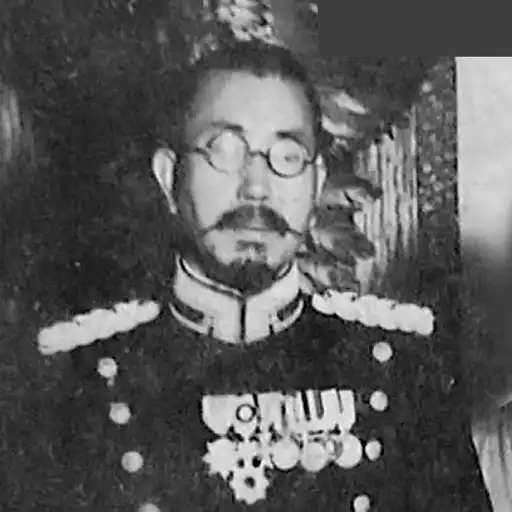
To understand this tragedy, we must first look at the man who started it all. Shiro Ishii was born in 1892 and quickly became a rising star in the Japanese medical field. After graduating from Kyoto Imperial University, he joined the Army Medical Corps. He was incredibly intelligent but notoriously arrogant.
Interestingly, the global political climate directly inspired his darkest ideas. In 1925, the Geneva Protocol officially banned the use of biological and chemical weapons in warfare. For most nations, this was a massive step toward peace. For Ishii, it was a giant flashing billboard. He reasoned that if these weapons were dangerous enough to be universally banned, they must be highly effective. Consequently, he relentlessly pushed the Japanese military to fund a biological weapons program.
Eventually, he gained the favor of top military brass by inventing a highly effective water purification filter. This invention actually saved Japanese soldiers from waterborne illnesses. Thus, Ishii secured massive government funding and was sent to occupied China to begin his real work.
Rise of unit 731: Disguises and Deception
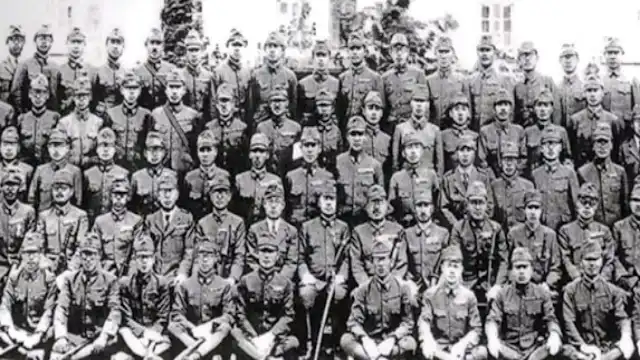
Let’s set the scene in the early 1930s. The Japanese military had violently invaded Manchuria, a large region in Northeast China. First, Ishii set up a small testing facility. However, his sick ambitions rapidly outgrew the space.
By 1936, Emperor Hirohito officially authorized the expansion of Ishii’s covert research. Therefore, the military constructed a massive, sprawling complex in the Pingfang district of Harbin. It consisted of roughly 150 buildings and housed over 3,000 personnel.
How do you hide a giant biological weapons factory in plain sight? Simply put, you lie. The military disguised the facility as a local lumber mill and public health department. Consequently, the staff developed a deeply disturbing code word for their human test subjects. They referred to the prisoners as maruta, which literally translates to “logs” in Japanese.

This dehumanizing slang allowed the scientists to detach themselves emotionally. They weren’t murdering humans; they were just chopping down logs. The victims were primarily Chinese civilians, but the population also included Russians, Koreans, and captured prisoners of war. Furthermore, women, children, and pregnant mothers were routinely targeted for these sick trials.
What were the experiments?
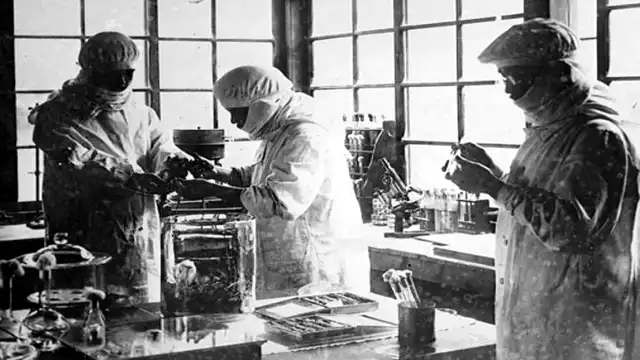
So, what exactly did the researchers do behind those heavily guarded walls? The reality is incredibly grim. Essentially, Ishii wanted to push the boundaries of human endurance to create better combat strategies for his soldiers. Moreover, he needed to observe how deadly diseases tore through a living host.
Although the details are inherently upsetting, they are vital to the historical record. Here are the primary categories of their clinical research:
Frostbite and Exposure tests
Japan fully anticipated fighting the Soviet Union in the brutally freezing winters of Siberia. Therefore, the army desperately needed to understand how to treat frostbite. To test this, guards forced prisoners outside into the bitter cold during the dead of winter. Next, they completely drenched the victims’ bare limbs in icy water. Scientists casually stood by and timed exactly how long it took for the human tissue to freeze solid. Afterward, they tested various thawing methods, often resulting in severe gangrene.

Hypobaric chambers and extreme pressure
What happens to a fighter pilot who ejects at a massive altitude? To find out, researchers forcefully shoved individuals into sealed hypobaric chambers. These are specially designed metal rooms that simulate high-altitude atmospheres. Slowly, they sucked the oxygen out of the room. They coldly monitored the subjects until they collapsed from the intense atmospheric pressure changes.
Surgeries without anesthesia
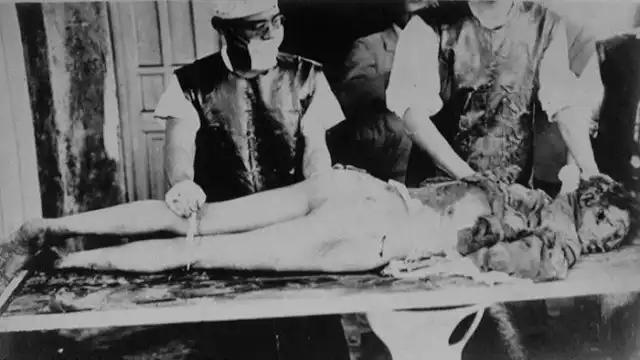
Perhaps the most universally condemned actions were the horrific medical procedures. Doctors frequently performed vivisections — which are invasive surgeries conducted on living, breathing subjects — without using any anesthesia. Why would medical professionals do this? Surprisingly, the researchers argued that administering pain medicine could artificially alter the body’s biological data. Therefore, they cut into fully conscious victims just to satisfy their clinical curiosity.
Field tests
Above all, Unit 731 focused heavily on unleashing infectious diseases. Inside the labs, Ishii’s team purposefully infected healthy people with deadly pathogens. These illnesses included bubonic plague, cholera, anthrax, and typhoid.
However, they didn’t just keep these diseases locked inside the laboratory. Actually, the Japanese military aggressively weaponized them for live combat. They developed special porcelain bombs designed specifically to hold thousands of plague-infected fleas. Because porcelain shatters easily, it was the perfect delivery method to spread the tiny, deadly insects over a wide area.
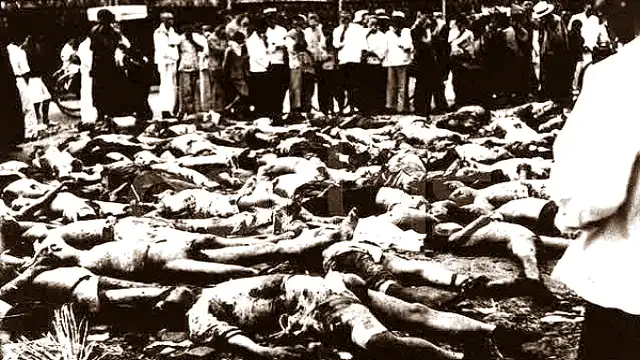
Later, airplanes dropped these bio-bombs over major Chinese cities, including Ningbo and Changde. Furthermore, the military deliberately poisoned local wells and dropped contaminated wheat from the sky. Consequently, local populations suffered massive, devastating outbreaks. Historians officially estimate that between 200,000 and 300,000 innocent people died from these specific field experiments. It was widespread biological terrorism.

Destroying the evidence
Fast forward to August 1945. World War II is finally drawing to a close. Following the atomic bombings of Hiroshima and Nagasaki, Japan quickly realizes the war is entirely lost. Meanwhile, the Soviet Union had just invaded Manchuria, rapidly closing in on the Harbin facility.
Panic immediately swept through Unit 731. Shiro Ishii knew exactly what would happen if the Allies captured his compound. Frantically, he ordered his men to completely destroy the evidence. They systematically executed every single remaining prisoner to ensure there were no living witnesses. Afterward, they blew up the buildings using explosives.
Finally, Ishii and his top doctors fled back to Japan on special trains. He even faked his own death briefly to evade capture. He thought he could simply disappear into the shadows. Unfortunately, the long arm of international law was about to make a highly questionable compromise.
Why was there a Cover-up?
If you are feeling deeply frustrated right now, that is a completely normal reaction. The sheer scale of the cruelty is difficult to process. But here is the part that makes historians truly angry. Almost nobody involved faced real justice.
When the Allies won World War II, the famous Nuremberg Trials aggressively prosecuted Nazi war criminals in Europe. Yet, Shiro Ishii and his closest colleagues totally escaped the hangman’s noose. Why did this happen? It all boiled down to emerging Cold War politics.
The United States was gearing up for a massive, tense standoff with the Soviet Union. As a result, the American military desperately wanted exclusive access to Japan’s biological warfare data. They knew they couldn’t legally or ethically conduct these types of human experiments themselves. General Douglas MacArthur, who led the US occupation of Japan, made a highly controversial strategic decision.
He formally offered Ishii and his top scientists full political immunity. In exchange, the Japanese doctors simply handed over their detailed research files, pathology slides, and autopsy reports. Essentially, the United States government bought the bloody data and swept the horrific crimes completely under the rug. Furthermore, declassified documents later revealed the US even paid thousands of yen in stipends to these former researchers.
The Khabarovsk Trials
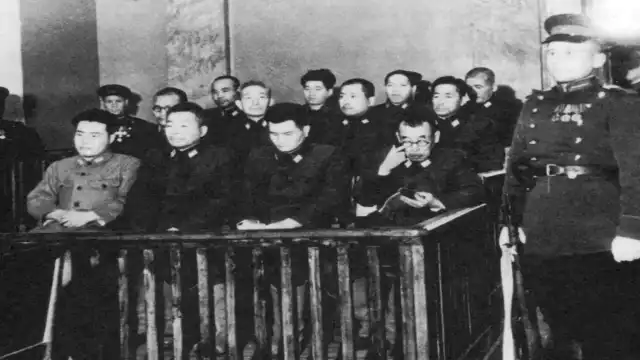
Did anyone at all pay for these crimes? Yes, but only a small fraction. While the Americans protected the top leaders, the Soviet Union managed to capture a handful of lower-ranking Unit 731 members. In 1949, the USSR held the Khabarovsk War Crime Trials. They successfully convicted twelve Japanese military members and sentenced them to prison labor camps. However, the US openly dismissed these trials at the time, incorrectly labeling them as basic communist propaganda.

Careers built on cruelty
So, what happened to the brilliant minds behind the biological terror? Unbelievably, many of these pardoned doctors went on to have incredibly successful careers. Because they were completely shielded from prosecution, they seamlessly re-entered Japanese society.
Several prominent researchers became high-ranking officials in the post-war Japanese medical field. Others worked in prestigious universities, founded successful pharmaceutical companies, or joined the national health ministry. As for Shiro Ishii? He peacefully lived out his remaining days and eventually died of throat cancer in 1959. He never spent a single day inside a prison cell for his monumental crimes against humanity.
Slow march to recognition
For many decades, the Japanese government flat-out denied that Unit 731 ever existed. Thanks to the rigorous American cover-up, it was surprisingly easy to keep the dark secret hidden from the general public. School textbooks completely omitted the historical events.
It wasn’t until the 1980s that Japan finally admitted the biological warfare program was historically real. Slowly, brave whistleblowers and aging veterans began to speak out. In 2002, a Tokyo District Court formally acknowledged the state’s direct role in the biological attacks in China. However, the victims’ families have continuously been denied financial compensation by the courts.
Today, the physical ruins of the Harbin facility stand as a deeply sobering museum. The Chinese government preserved the site to spread global awareness. It serves as a dark, permanent reminder of what happens when military science completely abandons basic human ethics.
Conclusion
Ultimately, the story of Japanese Unit 731 isn’t just about the horrifying clinical experiments. Instead, it is a massive cautionary tale about international justice, wartime politics, and the dangerous compromises governments will eagerly make for power. Thousands of vibrant lives were violently erased, only to be reduced to “scientific data” inside a classified filing cabinet.
It is incredibly uncomfortable to confront these bleak chapters of world history. Yet, we must continuously talk about them. If we choose to ignore the painful past, we seriously risk letting those innocent victims be forgotten twice.
What do you think about the controversial immunity deal the US made with Shiro Ishii? Was the biological data actually worth the moral cost, or was it a total failure of international justice? Drop your honest thoughts in the comments below! If you found this historical deep-dive helpful, please share it with your friends to keep the true story alive.
Reference:
- https://www.ebsco.com/research-starters/history/unit-731
- https://www.pbs.org/wgbh/americanexperience/features/weapon-biography-shiro-ishii/
- wikipedia.org
- https://pmc.ncbi.nlm.nih.gov/articles/PMC4487829/
- wikipedia.org
- https://study.com/academy/lesson/japanese-unit-731-experiments-facts.html
- https://ahf.nuclearmuseum.org/ahf/history/unit-731/

