

Numbers Stations Explained: The True History of Cold War Spy Radios
Imagine sitting in your bedroom at 2 AM. You turn the dial on a cheap shortwave radio. Past the static, past the late-night talk shows, you hit a dead frequency. Suddenly, a creepy, synthetic female voice starts talking.
“Five. Eight. Two. Zero. One.”
She repeats the numbers. Then, absolute silence. You just intercepted a top-secret message meant for an undercover spy.
Welcome to the weird, deeply unsettling world of numbers stations. These ghostly radio broadcasts have haunted the airwaves for over a century. They sound like a bad horror movie trope. But they are entirely real. Governments use them to send encrypted orders to deep-cover agents operating behind enemy lines.
Quick read
- The Basics: Numbers stations are shortwave radio broadcasts that read seemingly random numbers, letters, or words to transmit secret messages.
- The Method: Spies decode these broadcasts using a “one-time pad.” This cryptographic tool is mathematically impossible to hack if used correctly.
- The Origin: They peaked during the Cold War but have existed since World War I.
- Modern Use: Russia, Cuba, and other nations still run them today. Recent broadcasts spiked during internet blackouts in Iran in early 2026.
- The Ultimate Alibi: Anyone can buy a shortwave radio. Possessing one doesn’t make you look like a spy, giving agents perfect plausible deniability.
What exactly are Numbers stations?
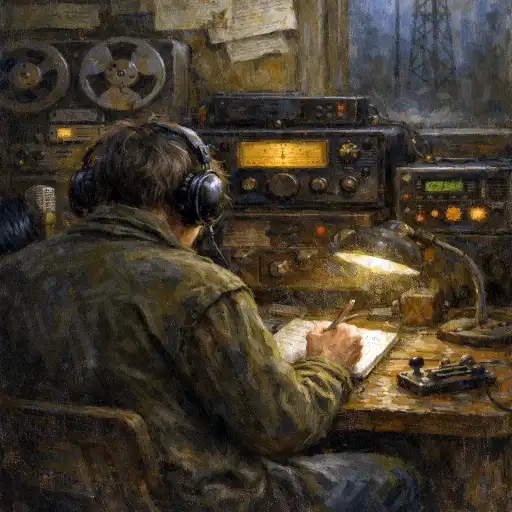
A numbers station is a powerful radio transmitter that blasts shortwave signals across the globe. Shortwave radio is unique. Its radio waves literally bounce off the Earth’s ionosphere. That means a signal sent from a forest in Russia can skip across the sky and be picked up by a tiny receiver sitting in a hotel room in New York.
During the Cold War, intelligence agencies like the CIA, KGB, and MI6 faced a massive logistical problem. How do you tell an undercover agent in a hostile country what to do? If you call them on the phone, the enemy can tap the line. If you send a physical letter, counter-intelligence will intercept it.
Shortwave radio solved that problem beautifully. Governments built massive, hidden transmission towers. They recorded voices reading blocks of numbers. Anyone with a $10 battery-powered radio could tune in.
The beauty of this system? The enemy might hear the broadcast, but they had absolutely no idea who was listening.
The Genius of the One-time Pad
Hearing the numbers is easy. Understanding them is the hard part.

To decode the gibberish, an agent uses a “one-time pad”. Think of it like a tiny, secret notebook. Each page contains a completely random key of numbers. The spy listens to the broadcast, writes down the numbers, and subtracts the random key on their specific page using simple math. The result spells out a message in plain text. Maybe it says, “Meet at the bridge.” Maybe it says, “Abort the mission.”
Once the agent decodes the message, they rip out the page and burn it.
Why is this so brilliant? Because without that exact matching page, the broadcast is mathematically unbreakable. Modern supercomputers cannot crack a genuine one-time pad. It remains the ultimate foolproof security system.
Famous stations
Over the decades, civilian radio nerds — often called “shortwave listeners” — started mapping these weird broadcasts. Because governments never publicly admit they own these stations, civilians gave them creepy nicknames based on their signature sounds. Here are the heavy hitters.
1. The Lincolnshire Poacher
For over thirty years, a bizarre station broadcasted from the Mediterranean island of Cyprus. It was widely believed to be run by the British Secret Intelligence Service (MI6). Before reading the numbers, the station played a jaunty, electronic version of an old English folk song called “The Lincolnshire Poacher”.
Imagine hearing a cheerful little tune, followed by a robotic female voice deadpanning, “Zero. Two. Five. Eight. Eight.” The signal was incredibly powerful, likely meant for British spies operating across the Middle East. It finally went off the air around 2008, but its sister station, “Cherry Ripe,” kept broadcasting from Guam for a while longer.
2. UVB-76: The Russian Buzzer
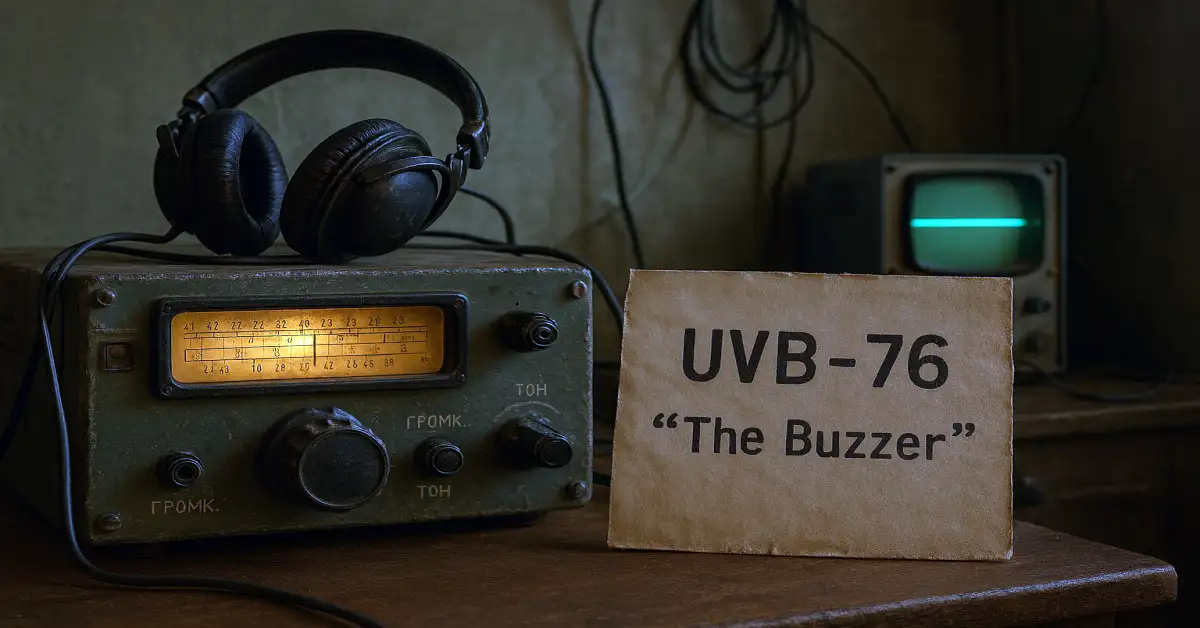
If you want pure nightmare fuel, look no further than UVB-76. Radio hobbyists call it “The Buzzer”. Broadcasting from Russia since the late 1970s on the frequency 4625 kHz, this station does exactly what its name implies. It buzzes.
Twenty-four hours a day, seven days a week, it emits a harsh, monotonous tone at a rate of roughly 25 tones per minute. For months at a time, that is all it does. But very rarely, the buzzing stops. A live human voice suddenly cuts in, shouts a string of Russian names and numbers, and then the buzzing resumes.
Conspiracy theorists have wild ideas about The Buzzer. Some claim it is a “Dead Hand” trigger — a doomsday switch designed to automatically launch nuclear missiles if Russia is attacked. Military experts brush that off. They strongly suspect it is a communications hub sending orders to the Western Military District. The station is highly active right now. In September 2025, it broadcasted a rare coded message featuring names like Nikolai and Tatyana alongside the terms “NZHTI” and “HOTEL”. Whether it signals troop movements or just routine radio checks, it remains Russia’s most famous radio mystery.

3. HM01: The Cuban “Atención” Station
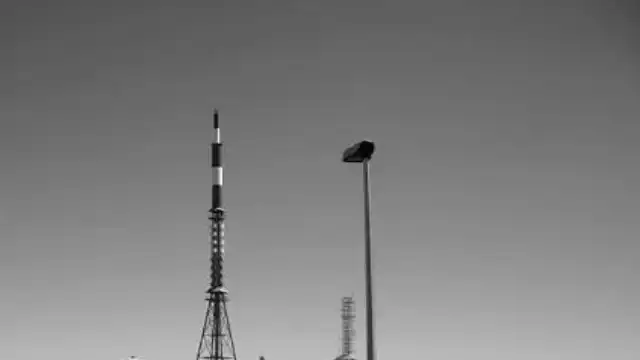
Cuba’s intelligence network ran a highly successful numbers station often designated as HM01. It always started with a Spanish voice shouting, “¡Atención! ¡Atención!” This station isn’t just famous for its creepy vibe. It actually brought down one of the most damaging spies in American history.
The Arrest of Ana Montes

You might be wondering, do real spies actually get caught using this stuff? Yes. They absolutely do.
Meet Ana Belén Montes. In the late 1990s, she was the top Cuba analyst for the United States Defense Intelligence Agency (DIA). She had ultra-high security clearance. She briefed the Pentagon. She helped shape US foreign policy.
She was also secretly working for Fidel Castro.
For nearly 17 years, Montes stole classified American secrets and handed them over to Havana. How did she receive her orders without getting caught? She used a standard Sony shortwave radio. Montes would sit in her Washington D.C. apartment, tune her dial to 7887 kHz, and wait for the “¡Atención!” signal. She used a special decryption program provided by her handlers to crack the code.
The FBI finally caught on to her. They secretly searched her apartment and found the exact number sequences from the radio broadcasts saved on a laptop. They arrested her on September 21, 2001, effectively ending one of the worst security breaches in US intelligence history. Montes served two decades behind bars and was officially released in January 2023. Her case is definitive proof that numbers stations aren’t just a relic of the past. They are actively used weapons of espionage.
Why Haven’t Computers Replaced Them?
We live in an era of encrypted messaging apps, satellite uplinks, and massive data centers. So why rely on analog radio tech from the 1920s?
Because the digital world is a trap.
Every time you send a text, load a webpage, or use a secure app, you leave a digital footprint. Intelligence agencies monitor the global internet backbone constantly. If a spy connects to a secure server, their location can be pinged. Their device can be hacked.
A simple analog receiver doesn’t transmit anything back. It only listens. You cannot hack a plastic radio. You cannot trace who is holding it. The system offers total, impenetrable anonymity.
Furthermore, internet infrastructure is fragile. When conflicts break out, the first thing a government does is cut the fiber-optic cables. We saw this recently. Following military escalation in the Middle East in early 2026, the internet in Iran was heavily restricted. The moment the web went dark, a mysterious numbers station (dubbed V32 by the radio community) fired up, broadcasting sequences in Farsi to operatives in the region.
When the power grids fail and the internet dies, radio waves keep flying.
How you can listen right now
You don’t need top-secret clearance to hear these broadcasts. You don’t even need to leave your couch.
If you want to go old school, buy a cheap shortwave radio online. Stretch a long copper wire out your window to act as an antenna. Wait until the sun goes down, as AM frequencies travel much further at night. Start twisting the dial.
If you prefer the digital route, search for “WebSDR” platforms. These are internet-connected radio receivers located all over the world. You can log into a receiver stationed in the Netherlands or Russia and tune into the shortwave bands right through your browser. Organizations like Priyom.org actually track the active schedules of known stations and post when they are about to broadcast. It is like a TV guide for spies.
The Endless Broadcast
Numbers stations are the spy world’s worst-kept secret. They operate completely in the open, hiding in plain sight. They are a chilling reminder that right now, beneath the pop music and talk radio, invisible wars are being fought over the airwaves. Every beep, every buzzer, and every robotic voice carries a secret that you and I will never understand.
Have you ever stumbled across a weird radio broadcast late at night? Do you think the Russian Buzzer is sending active military codes, or just holding the frequency open? Drop your wildest theories in the comments below!
If you love deep dives into tech history and espionage, hit that share button and send this to your favorite true-crime junkie.

