

Fourth of July History: The Biggest Myths of Independence Day
Fire up the grill, throw on some hot dogs, and pass the sparklers. The Fourth of July is the quintessential American summer holiday. We all know the story, right? On July 4, 1776, the Founding Fathers gathered in Philadelphia, boldly signed the Declaration of Independence, and rang the Liberty Bell to announce a brand-new nation. It makes for a brilliant movie scene.
But what if almost everything you think you know about that fateful day is slightly skewed?
History is messy. It rarely fits perfectly into a single, neat calendar square. When you strip away a century of patriotic folklore and greeting-card sentiment, the real story of 1776 gets much more interesting. Let’s untangle the facts from the fiction and look at what actually went down during the birth of the United States.
Key Takeaways
- The Vote: America actually voted to separate from Great Britain on July 2, not July 4.
- The Signing: Nobody signed the parchment Declaration of Independence on July 4; most delegates signed it on August 2.
- The Bell: The Liberty Bell probably didn’t ring on the Fourth of July, and it definitely didn’t crack that day.
- The Flag: There is zero contemporary evidence that Betsy Ross designed or sewed the first American flag.
Myth 1: America Declared Independence on July 4, 1776
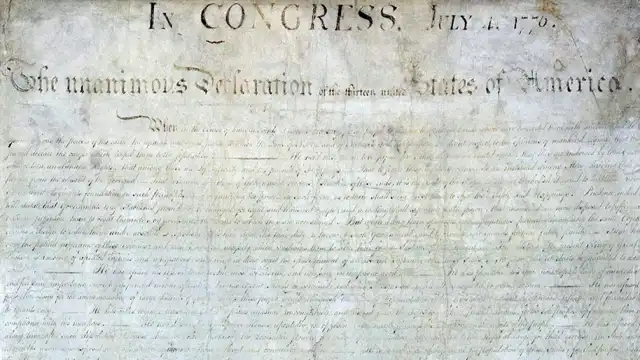
Ask anyone when America declared its independence, and they will point directly to the date on the calendar. It seems obvious. However, if you could jump into a time machine and ask John Adams, he would tell you everyone was celebrating two days late.
The real political rupture happened on July 2, 1776. On that day, the Second Continental Congress voted to approve the Lee Resolution. This was a motion introduced by Richard Henry Lee of Virginia that officially declared the colonies free and independent states.
John Adams was so thrilled by the July 2 vote that he wrote a famous letter to his wife, Abigail. He predicted that July 2 would be commemorated by succeeding generations as the great anniversary festival, complete with pomp, parades, sports, and bonfires.
So, why do we focus on the fourth?
Congress spent July 3 and most of July 4 debating and tweaking the actual text of the formal document explaining why they had taken that vote. Thomas Jefferson drafted the statement, but the committee chopped out roughly 25% of his original text. Congress officially adopted the final text on the afternoon of July 4. That final date was printed at the very top of the document, sealing it in the public mind forever.
Myth 2: The Declaration Was Signed on July 4th by Every Delegate
Picture the famous painting by John Trumbull. It hangs inside the U.S. Capitol, showing dozens of delegates lining up to sign the magnificent parchment document on July 4. It is an inspiring visual. It is also completely inaccurate.
No mass signing occurred on July 4, 1776.
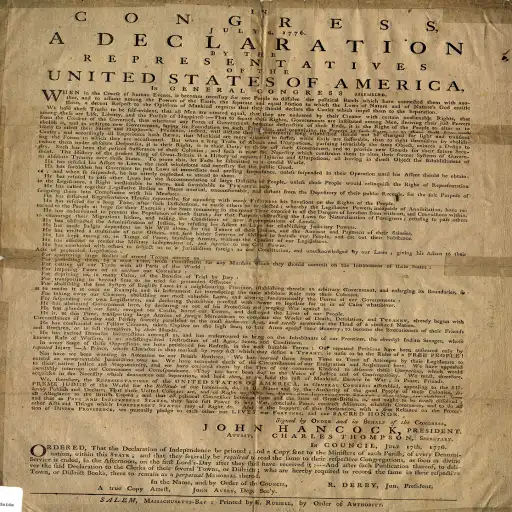
The only men who put their names on the document that day were John Hancock, the President of the Continental Congress, and Charles Thomson, the secretary. They signed a printed version called a broadside, which was rushed to a local print shop run by John Dunlap. These “Dunlap Broadsides” were distributed across the colonies to spread the news.
The handwritten parchment version we see in museums today did not even exist yet. Congress didn’t order the official document to be handwritten on parchment — a process called engrossing — until July 19.
According to records kept by the National Archives, delegates finally began ink-signing that parchment document on August 2, 1776. Some members weren’t even in town that day; several signers didn’t add their names until weeks or months later. The last signature wasn’t added until 1777.
Myth 3: The Liberty Bell Rang Out on July 4th and Cracked in Joy
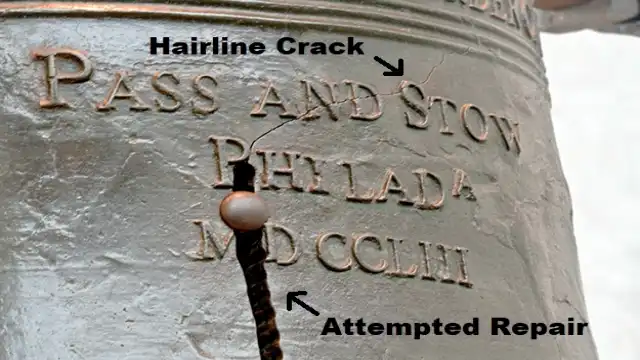
The legend says the giant bell in the steeple of the Pennsylvania State House — now Independence Hall — tolled violently on July 4 to broadcast the birth of freedom to the city. According to local lore, it rang so hard that it fractured down the middle.
It is a poetic story. It is pure fiction.
Philadelphia was a city occupied by a nervous populace and an active military. Historians at the National Constitution Center point out that the statehouse steeple was undergoing major repairs in July 1776. Operating the heavy bell during that time was highly unlikely.
Furthermore, the public announcement of the Declaration did not even happen on July 4. It occurred on July 8, when Colonel John Nixon read the document aloud to a crowd in the statehouse yard. While city bells did ring out to mark that public reading, there are no specific records showing the State House Bell was one of them.
Where did the myth come from?
A writer named George Lippard made up the story in 1847 for a children’s magazine. The public loved the tale, and it stuck. As for the famous crack? No one knows exactly when the first hairline fracture appeared. However, the gaping crack that permanently silenced the bell happened in February 1846, when it was rung to celebrate George Washington’s birthday.
Myth 4: Betsy Ross Designed and Sewed the First American Flag
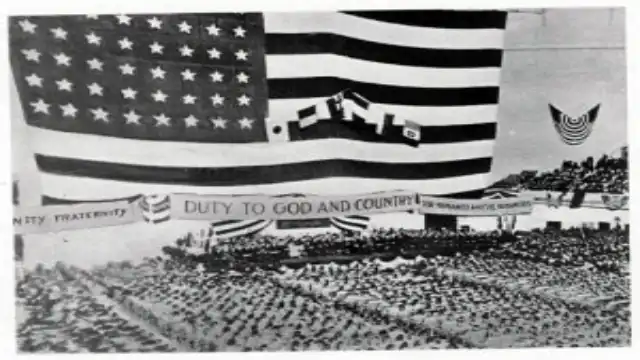
We have all seen the illustrations of a sweet George Washington sitting in a cozy Philadelphia upholstery shop, asking a widowed seamstress named Betsy Ross to sew a flag with thirteen stars arranged in a neat circle.
She was a real person. She did sew flags for the Pennsylvania Navy. Did she create the first stars and stripes? There is zero evidence to prove it.
The story did not emerge until 1870, nearly a century after the revolution. Her grandson, William Canby, presented a paper to the Historical Society of Pennsylvania claiming his grandmother made the flag. His only proof was affidavits from his own family members recalling old family stories.
No congressional records, letters, or diaries from 1776 mention Betsy Ross working on a national flag. The Continental Congress did not even pass the Flag Resolution, which defined the official design of the flag, until June 14, 1777 — a full year after Washington’s alleged meeting with Ross.
Most historians credit the original design to Francis Hopkinson, a talented New Jersey delegate who signed the Declaration of Independence. He even sent a bill to Congress asking to be paid for designing the “Flag of the United States.”
Bizarre Historical Facts Stranger Than Fiction
While the popular myths are easily debunked, the real history of the Fourth of July contains a couple of jaw-dropping coincidences that sound completely made up.
Consider the fates of Thomas Jefferson and John Adams.

These two men were absolute titans of the revolution. They were close friends who became bitter political rivals, only to reconcile later in life through a legendary series of letters. By an unbelievable twist of fate, both men died on July 4, 1826.
That date marked the exact 50th anniversary of the adoption of the Declaration of Independence.
Adams was ninety years old when he died at his home in Massachusetts. His famous last words were, “Thomas Jefferson survives.” He had no idea that Jefferson had actually passed away a few hours earlier at Monticello, his Virginia estate, at the age of eighty-three. Five years later, James Monroe, the fifth U.S. president, also died on the Fourth of July.
Why Do the Myths Persist?
Why do we cling to these historically inaccurate stories?
During the 19th century, the United States was a young nation growing at a breakneck speed. It survived a brutal Civil War and welcomed millions of new immigrants. The country desperately needed a unified, romanticized origin story to bind a diverse population together.
Simple, dramatic narratives are easier to teach than complex political history. It is far more exciting for a schoolchild to imagine a brave grandmother cutting five-pointed stars or a massive bell cracking under the weight of freedom than it is to explain weeks of bureaucratic editing and parliamentary voting procedures.
The core truth remains unchanged. The myths do not diminish the bravery of the historical actors. The 56 men who eventually put their ink signatures on that parchment document were committing high treason against the British Crown. If the Revolutionary War had failed, those signatures would have doubled as their death warrants.
So, this summer, when you are watching the fireworks explode over your neighborhood, you can appreciate the holiday for what it really is: a celebration of a messy, radical, high-stakes gamble that changed the world forever.
Which of these Fourth of July myths surprised you the most? Do you know any other hidden pieces of Revolutionary War trivia? Share your thoughts in the comments below, and let’s keep the history conversation going!

