

Is It Illegal to Kill Bigfoot? Inside the Skamania County Sasquatch Refuge
A massive, foul-smelling, eight-foot-tall hairy figure crashes through the brush. You panic. Your hands grip a hunting rifle. But before you even think about pulling the trigger, a strange question flashes through your mind: Am I going to jail if I shoot this thing?
It sounds like a completely ridiculous hypothetical scenario. After all, mainstream science treats Bigfoot as nothing more than campfire folklore and grainy, blurred home videos. Yet, if you happen to be standing within the borders of Skamania County, Washington, that question isn’t ridiculous at all. It is a matter of actual, binding local law.
In this specific slice of the Pacific Northwest, poaching the elusive ape-man is explicitly, textually illegal.
At a glance
- The Pioneer Law: In 1969, Skamania County, Washington, passed the world’s first ordinance making it a literal crime to kill Bigfoot.
- The Penalty Shift: Originally classified as a felony carrying a five-year prison sentence, the law was modified in 1984 to a gross misdemeanor punishable by a year in jail and a $1,000 fine.
- The True Intent: While the ordinance reads like a love letter to cryptozoology, its true goal was protecting heavily bearded human hunters from being accidentally shot by panicked tourists.
The Birth of Ordinance No. 69-01: An April Fool’s Felony
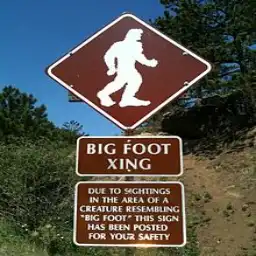
To understand how this law made it onto the books, we have to travel back to the late 1960s. Bigfoot fever was sweeping across the nation. Plaster casts of massive, mysterious footprints were popping up everywhere. The local economy in southwestern Washington was booming with eccentric investigators, amateur monster hunters, and journalists all looking for a big scoop.
On April 1, 1969, the Skamania County Board of Commissioners dropped a bombshell. They officially passed Ordinance No. 69-01, declaring the entire county a protected sanctuary for the “Sasquatch, Yeti, Bigfoot, or Giant Hairy Ape.”
Because it was signed on April Fool’s Day, the public assumed it was an elaborate publicity stunt. However, Commission Chair Conrad Lundy Jr. quickly set the record straight, famously stating: “This is not an April Fool’s Day joke. There is reason to believe such an animal exists.”

The original law didn’t mess around. It decreed that any “premeditated, willful, and wanton slaying” of a Sasquatch within county lines was a major felony. If you bagged a Bigfoot, you faced up to five years inside a state prison and a massive $10,000 fine.
The 1984 Reality Check
For fifteen years, the original ordinance stood as a quirky badge of honor for the county. But behind closed doors, local lawyers were sweating.
By 1984, Prosecuting Attorney Bob Leick realized a glaring constitutional issue. A county government doesn’t actually possess the legal jurisdiction to invent brand-new felony crimes out of thin air — that power belongs strictly to the state legislature. If someone actually went to court over the law, it would immediately crumble.
The commissioners officially amended the ordinance on — you guessed it — April 1, 1984. They dropped the charge from a heavy felony to a gross misdemeanor.
Inside the Modern Sasquatch Refuge Rules
The amended 1984 law remains on the books today. It is a fascinating piece of legal writing because it includes some incredibly specific, mind-boggling clauses that look like they belong in a sci-fi thriller.
The Malice Aforethought Matrix
The current law divides a potential Bigfoot slaying into two distinct categories:
- With Malice Aforethought: If you deliberately hunt down, track, and execute a Sasquatch with clear intent, it is a gross misdemeanor. The penalty is up to one year in county jail, a $1,000 fine, or both.
- Without Malice Aforethought: If you shoot one in a sudden panic or by accident, the penalty drops to six months in jail and a $500 fine.
The Delusion Clause
The law strictly anticipates the “crazy” defense. Section 3 explicitly states that an accused person cannot claim they were suffering from insane delusions, diminished capacity, or a “diseased mind” as a valid legal defense for killing the creature.

The Homicide Trap
This is the absolute crown jewel of the ordinance. Section 4 states that if someone kills a creature and the Skamania County Coroner determines the victim’s remains to be biologically “humanoid,” the Prosecuting Attorney must immediately drop the misdemeanor charge and upgrade the case to an active homicide investigation.
The Ultimate Double Standard: If you shoot a Bigfoot and science proves it’s a rare ape, you go to jail for a year. If science proves it’s a primitive human cousin, you get hit with a first-degree murder charge.
The Secret Motive: Saving Bearded Elk Hunters
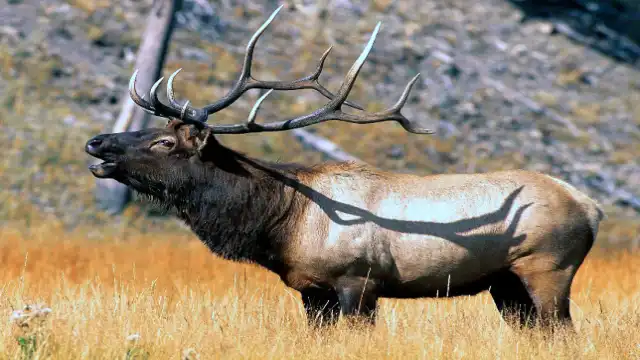
Why would a real government spend precious time, resources, and legal energy protecting a cryptid? Did the commissioners secretly possess government-classified proof of an ancient hominid roaming the woods?
Not quite. The true motivation behind the law wasn’t cryptozoology — it was public safety.
During the peak of the 1960s monster craze, hundreds of eager, inexperienced tourists were flooding into the dense brush of the Columbia River Gorge. Many of them were armed with high-powered hunting rifles, desperate to become the person who put Bigfoot on the map.
Now, think about what a traditional, local Pacific Northwest hunter looks like. They are often large individuals wearing heavy, dark wool coats or shaggy camouflage, sporting massive winter beards, and tramping through the brush at dawn.

The county commissioners realized they had a recipe for a horrific accident. A panicked, over-eager city slicker might spot a local resident walking through the morning fog, mistake them for a “Giant Hairy Ape,” and open fire. By passing a law making it a massive crime to shoot anything resembling a giant ape, the county created a brilliant psychological deterrent. It forced hunters to hesitate, check their targets, and think twice before pulling the trigger.
The law saved lives, but probably not Sasquatch lives. It protected the local human population from reckless friendly fire.
Where Else Is It Illegal to Hunt Sasquatch?
Skamania County isn’t the only local municipality that chose to get weird with its environmental protections. Over the decades, a few other regions decided to get in on the action.
- Whatcom County, Washington: In 1991, the Whatcom County Council passed Resolution No. 92-043, officially declaring their entire territory a “Sasquatch Protection and Refuge Area.” Unlike Skamania, this resolution is purely symbolic and doesn’t carry specific jail time, but it asks all citizens to respect the creature’s right to peace.
- The State of Oregon: While Oregon doesn’t have a specific “Bigfoot Law,” their state wildlife regulations operate on a strict “protected-unless-specified” basis. This means it is automatically illegal to hunt any species that isn’t explicitly listed as an official game animal by the state. Since Sasquatch isn’t on the approved hunting list, shooting one would instantly land you a massive poaching fine.
The Environmental Value of a Weird Law
Whether you believe in the creature or not, Skamania County’s unique ordinance has aged incredibly well. It aligns beautifully with the Pacific Northwest’s proud, long-standing tradition of wilderness preservation and deep environmental conservation.
By declaring their entire county a refuge for an imaginary endangered species, they highlighted a profound truth about our relationship with nature: The deep, unexplored corners of our forests deserve to remain wild, untouched, and just a little bit mysterious.
To this day, nobody has ever been arrested or prosecuted under the Skamania County Sasquatch ordinance. Is that because the law successfully deterred reckless hunters, or is it simply due to a distinct lack of Sasquatches out there to shoot? That is a secret the foggy forests of Washington aren’t giving up anytime soon.
Grab Your Camera, Leave the Rifle!
If you are planning an outdoor trip to southwestern Washington, the local tourism boards highly encourage you to look for the hairy legend — just make sure you are shooting with a camera instead of a gun. Have you ever explored the deep woods of the Columbia River Gorge and felt like you weren’t completely alone? Do you think more states should pass laws protecting undiscovered species? Drop your thoughts, theories, and favorite cryptid encounters in the comments section below!

