
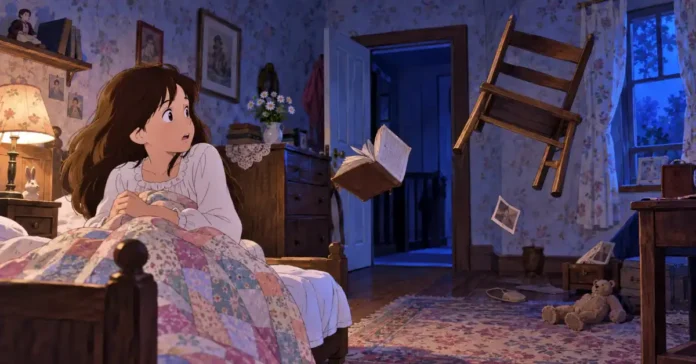
Most ghost stories begin with a tragedy that ends a life, leaving behind a restless spirit in the shadows. The bizarre case of Olive Wilkins flipped that script entirely when an entire household found itself terrorized by a phantom who was still breathing, walking, and sitting right at the dinner table. What unfolded was not a haunting from beyond the grave, but a chilling psychological mystery fueled by pregnancy, isolation, and subconscious panic.
The Olive Wilkins Poltergeist: The Strange Case of the Woman Who Haunted Her Own Home
Have you ever walked through your own front door and felt like someone else was watching you from the hallway? That creeping chill on the back of your neck is unnerving enough on an ordinary evening. Now, imagine hearing footsteps pacing the floorboards above your head, thumping on locked doors, and shifting heavy furniture while every member of your family sits frozen in the parlor.
That was the waking nightmare inside the Wilkins home.
In classic ghost lore, poltergeists are noisy, destructive troublemakers. They toss teacups across kitchens, snap bedposts, and hammer on baseboards like frantic drummers. Families usually call a priest, pack their bags, or hire an investigator with a notebook.
Yet the drama surrounding Olive Wilkins took a sharp left turn into uncharted territory. When the family finally unmasked the entity rattling their walls, they did not find a demon or an angry ancestor. They found Olive herself — trapped inside a waking trance she knew nothing about.
A terrified household in the dark
The disturbances started with small, annoying sounds that nobody could explain. A sudden sharp rap against a bedroom door frame. A muffled shuffle across the attic floor when the stairs were completely empty.
At first, family members blamed the usual suspects. Old houses settle, timber warps in cold weather, and field mice love chewing through lath and plaster. But the noises grew louder, bolder, and distinctly deliberate.
Pounding began rattling the walls with rhythmic precision. Heavy thumps shook the floor under the beds, knocking pictures crooked on the plaster. Kitchen utensils slid across workbenches when backs were turned.
Family members started clustering together in a single room after dusk, jumping at every creak. Neighbors heard the ruckus from the roadway and began whispering about family curses and demonic visitors.
Every night followed the same exhausting routine:
- The household would gather by the fireplace, attempting to read or mend clothes in tense silence.
- Sudden, violent raps would echo from the pantry, the upstairs hall, or directly behind the couch.
- Someone would grab an oil lamp, rush toward the sound, and find nothing but empty air and swirling dust.
- Within minutes, another crash would shake the opposite corner of the building.
The chaos wore down everyone’s nerves. Tempers frayed. Sleep became impossible. Whoever was orchestrating this campaign of domestic terror seemed to take dark delight in keeping the entire house in a perpetual state of jumpy panic.
The clues that pointed inward
As the haunting dragged on, odd patterns began surfacing. Poltergeist cases throughout history usually scatter chaos at random, but this unseen pest had very specific habits.
Curiously, the wildest activity clustered around times when the house was quietest, especially late at night or during the groggy hours just before dawn. Even stranger was the target of the entity’s apparent obsession.
Whenever the knocks started talking — rapping once for “no” and twice for “yes,” as was popular in early spiritualist circles — the invisible presence seemed preoccupied with one specific person: Olive.
Disembodied sounds appeared to track her movements. Footsteps seemed to pace outside whichever room she occupied. Whenever guests or relatives worked up the courage to shout questions into the dark rafters, asking who the spirit was looking for, the answering thuds spelled out a single, chilling question:
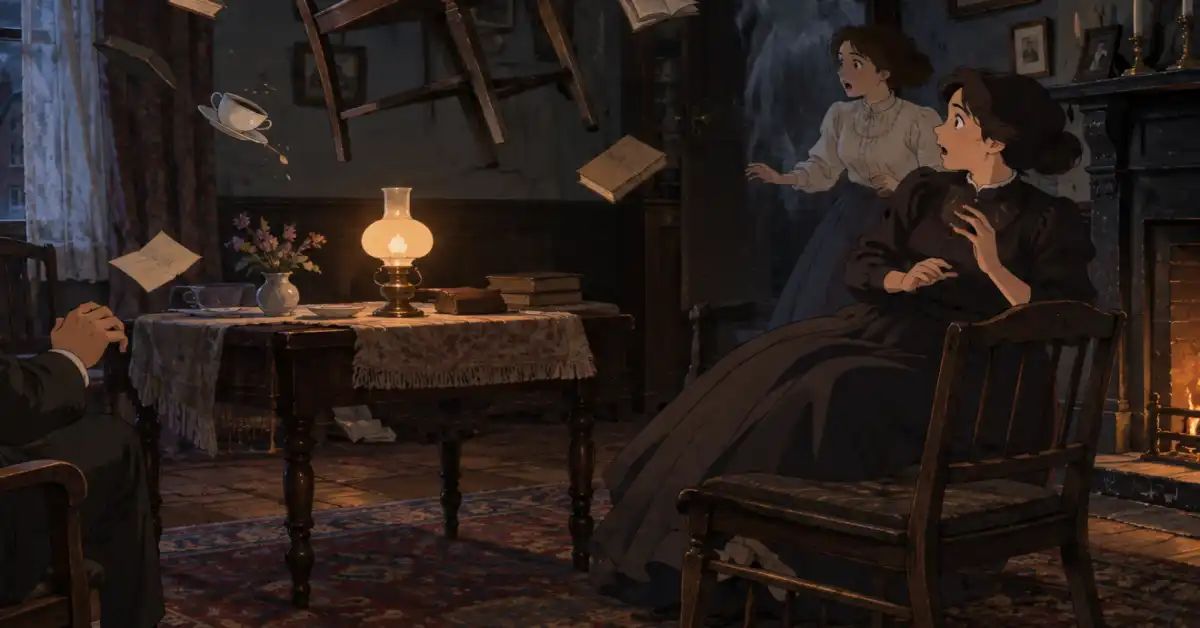
Where is Olive?
Think about how terrifying that would feel. Sitting in your own parlor, pregnant, exhausted, and hearing invisible knuckles pound on the wood while asking for you.
Olive appeared genuinely horrified. She wept, clutched her relatives, and begged for prayers. She looked pale, drawn, and terrified to be left alone for even two minutes. Her terror was not an act; she was losing weight and visibly trembling at every unexpected sound.
Yet sharp-eyed observers in the household noticed an uncanny quirk that made their skin crawl. The loudest crashes never occurred while someone was staring directly at Olive. The violent bangs erupted the second she stepped out of the room to fetch a cup of water, or right after she slipped under her blankets to rest.
Could the ghost only attack when she was vulnerable? Or was something far stranger unfolding behind closed doors?
THE ANATOMY OF A LIVING-AGENT HAUNTING
| Stage | Details |
|---|---|
| Severe Internal Stress | Pregnancy terror and isolation; strict social expectations of silent endurance |
| Psychological Dissociation | Conscious mind shuts out panic; subconscious splits into an active alternate state |
| Physical Manifestation | Sleepwalking / somnambulic vandalism; unconscious thumping, moving objects, hiding items |
| Externalized Folklore | Family interprets chaos as a “poltergeist”; the phantom becomes real to everyone involved |
The trap and the midnight discovery
Tired of living in fear, the family decided to stop playing defense. If this was a flesh-and-blood trickster, they were going to catch them red-handed. If it was truly a devil from the pit, they wanted proof before calling in outside help.
They devised a simple stakeout plan.
One evening, after the lamps were extinguished, family members positioned themselves quietly in dark corners of the house. They took off their boots, stayed off creaky floorboards, and kept their breathing shallow. They waited for the ghost to make its move.
Around midnight, right on schedule, the noises began.
A floorboard creaked in the hallway. Then came the soft, dry scraping of wood against plaster. Instead of screaming or running away, an observer struck a match and held the flame high.
The flickering yellow light revealed the phantom.
Standing in the dim hallway was Olive.
Her eyes were wide, glassy, and completely unblinking. She was moving with an uncanny, rigid stillness, like a mechanical doll wound up tight. Her hands were pressed against the wall, rhythmically rapping her knuckles against the wooden panels to produce the very sounds that had terrified the house for weeks.
Family members called her name softly. She did not flinch. They reached out and touched her arm; her muscles were rigid as stone. She was sound asleep.
When they gently guided her back toward her bed and woke her up, the reaction was heartbreaking. Olive rubbed her eyes, looked around in confusion, and burst into tears. Her hands were bruised and scraped, yet she had zero memory of getting out of bed, wandering the halls, or making a sound.
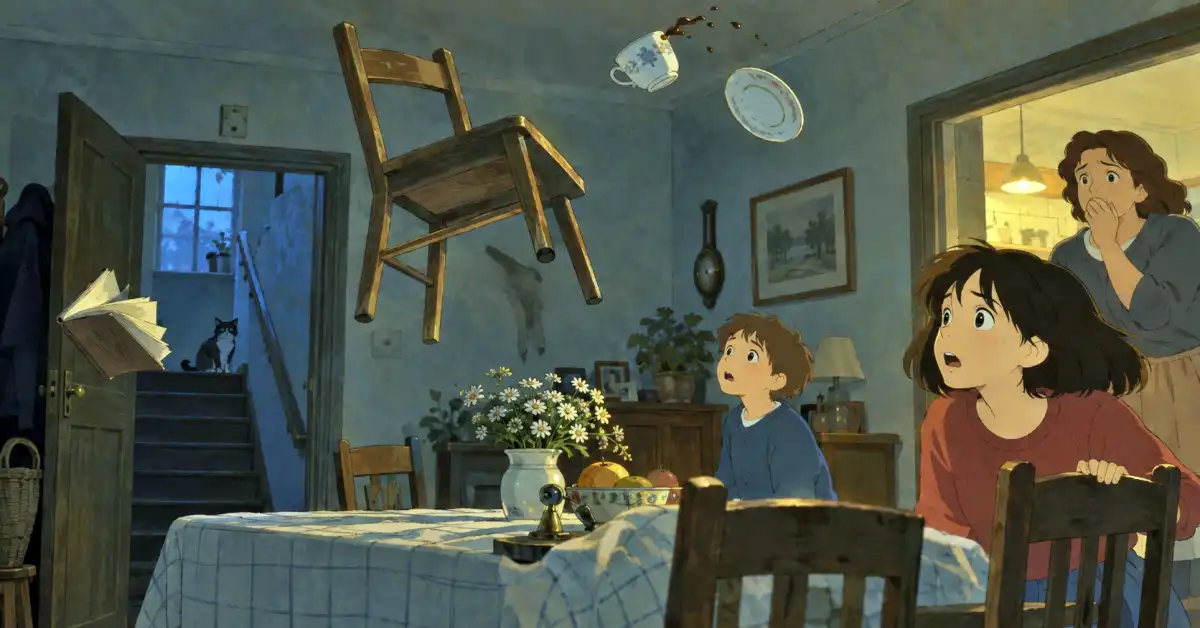
The ghost terrorizing the Wilkins household was not an intruder from the afterlife. It was Olive’s own body, hijacked by a subconscious mind desperate to act out a scream she could not utter while awake.
Pregnancy, fear, and victorian silence
To truly understand why Olive did this, you have to look at the world she lived in.
Modern medicine gives us ultrasound scans, sterile surgical suites, pain management, and around-the-clock neonatal care. We take basic maternal safety for granted. Back in Olive’s day, pregnancy was a terrifying brush with mortality.
Women watched their sisters, mothers, and childhood friends die routinely from puerperal fever, hemorrhage, and complicated deliveries. Every pregnancy carried an unspoken, looming question: Will I survive this?
Domestic Pressures on Women (Historical Era)
| Stage | Content |
|---|---|
| Expectation | Silent, joyful domestic bliss |
| Reality | High maternal mortality rates, total medical uncertainty, zero therapy |
| Forbidden Outlet | Voicing panic, anger, or unwillingness to become a mother |
| Result | The subconscious cracks open; somnambulic “poltergeist” behavior appears |
Compounding that terror was an oppressive culture of silence. Society expected women to be placid, selfless, and thrilled about impending motherhood. Admitting that you were terrified — or worse, that you deeply dreaded having a baby — was treated as a moral failing, if not outright madness.
Young wives had no therapists, no online support groups, and no safe space to say, “I am terrified out of my wits.”
Olive Wilkins was drowning in domestic stress. Her family depended on her, her body was changing rapidly, and her anxiety was spiraling out of control. Because her polite, conscious self was forbidden from slamming doors, screaming at relatives, or demanding help, her subconscious mind took the wheel while she slept.
The phantom asking “Where is Olive?” was not just a creepy prank. It was a profound psychological cry for help. The real Olive — her hopes, her sanity, her sense of self — felt like it was disappearing under the weight of expectations.
Her subconscious was asking the very question she could not voice by daylight: Where did I go?
Sleepwalking, dissociation, and the mind in revolt
How does a person thump on walls, slide chairs, and torment their own family without remembering a single second of it? Modern psychology has clear names for what the Wilkins family witnessed: somnambulism and dissociative fugue states.
When a human being experiences extreme, prolonged stress without any emotional release valve, the brain protects itself through dissociation. It essentially walls off conscious awareness from physical action.
During deep non-REM sleep, the motor centers of the brain can wake up while the executive, conscious parts remain sound asleep. People in this state can:
- Navigate complex spaces: Sleepwalkers can open latches, walk down steep stairs, and unlock front doors without stubbing a toe.
- Perform intricate tasks: People have been documented cooking meals, writing letters, and driving vehicles while in somnambulic trances.
- Exhibit altered personalities: A timid, soft-spoken person can become cold, hostile, or oddly mechanical, showing zero emotional response to their surroundings.
- Experience total amnesia: Because the hippocampus does not properly record memories during these episodes, the waking self has no recollection of the event.
Olive was not a fraud trying to get attention. She was suffering from an acute dissociative disorder triggered by overwhelming perinatal stress. Her sleepwalking self became an avatar for all her buried rage, fear, and desire to disrupt the domestic routine that was slowly crushing her.
A comparative look
The Olive Wilkins case is far from unique. When you peel back the layers of legendary poltergeist reports from the eighteenth, nineteenth, and early twentieth centuries, a striking pattern emerges.
Poltergeists almost never target random, happy households. They cluster around young women, adolescents, and overburdened domestic servants.
| Historical Case | Focal Person | Life Circumstances & Stressors | Reported Activity | Ultimate Finding / Interpretation |
| Olive Wilkins | Olive Wilkins (Adult Woman) | Pregnancy, extreme isolation, fear of childbirth | Nighttime knocks, door pounding, moving furniture | Caught sleepwalking in a deep dissociative fugue state |
| The Amherst Mystery (1878) | Esther Cox (18 years old) | Severe sexual trauma, intense domestic pressure | Flying objects, wall scratches, small fires | Traumatic dissociation, suspected unconscious or deliberate agency |
| The Glenluce Devil (1654) | Alexander Campbell (Teenager) | Harsh religious schooling, intense parental pressure | Bed-shaking, stone throwing, whistling | Adolescent rebellion channelled through cultural folklore |
| The Watseka Wonder (1877) | Lurancy Vennum (13 years old) | Onset of puberty, chronic debilitating illness | Personality shifts, voice changes, trance states | Classic dual personality / dissociative identity triggered by physical pain |
Notice the thread running through every single case? The “spirit” is never an ancient pharaoh or a faceless ghoul. The spirit is always an externalization of an overwhelmed, powerless living human being.
In cultures steeped in ghost lore, the mind borrows the language of the supernatural to express human misery. If people believe in ghosts, their broken subconscious builds one.
Was it pure sleepwalking or something stranger?
Even after the family caught Olive red-handed in the hallway, debates broke out among researchers and paranormal buffs who read about the case. Can simple sleepwalking explain everything that was reported?
Parapsychologists have long argued for a concept known as Recurrent Spontaneous Psychokinesis (RSPK).
Pioneered by researchers like William G. Roll, RSPK suggests that human beings — especially those enduring intense emotional conflict or hormonal upheaval — can subconsciously project bursts of physical kinetic energy outward. According to this fringe theory, the person is not consciously moving items; their brain is somehow throwing physical punches into the surrounding environment.
Two Ways to Explain the Olive Wilkins Case
| Skeptical / Clinical View | Parapsychological (RSPK) View |
|---|---|
| Physical somnambulism | Biological energy bursts |
| Unconscious night-wandering | Telekinetic displacements |
| Exaggerated family memory | Subconscious mind bending physical space |
| Confirmation bias | Hormonal/stress trigger |
| Solved by direct sight |
While the RSPK theory sounds exciting, the simplest explanation holds the most ground.
When people live in terror for days on end, their senses warp. A small tap sounds like a sledgehammer. A chair bumped during the night gets remembered as an object levitating across the room. Memory is notoriously pliable, especially when you are sleep-deprived and terrified of the dark.
Olive did not need psychic powers to wreck her home. Her own two hands, guided by a sleepwalking brain pushed to its absolute limit, were more than enough to create a legendary haunting.
The aftermath: what happened to Olive?
What makes the Wilkins story so special is how it ended.
In many historical ghost stories, the conclusion is bleak. Accused tricksters were publicly shamed, cast out of their communities, or dumped into grim Victorian asylums where cold baths and isolation ruined whatever health they had left.
The Wilkins family took a different path.
Once they realized that Olive was sick rather than sinister, the anger vanished. The realization that she was suffering from profound exhaustion and fear transformed their terror into compassion. They secured medical care, surrounded her with daytime support, ensured she was watched gently at night, and eased the domestic burdens bearing down on her shoulders.
With the emotional pressure cooker released, the “poltergeist” simply melted away.
The knocks ceased. The doors stayed still. The terrifying voice asking for Olive fell completely silent.
Once Olive felt seen, supported, and safe, her subconscious mind no longer needed to haunt the hallway. She delivered her child, regained her strength, and lived out her life in a house that was finally, peacefully quiet.
References
Podmore, Frank.Modern Spiritualism: A History and a Criticism (1902). Classic analysis of unconscious trickery, somnambulism, and secondary personalities in alleged hauntings.
- Roll, William G.The Poltergeist (1972). Theoretical foundations of Recurrent Spontaneous Psychokinesis and adolescent stress focal points.
- Showalter, Elaine.The Female Malady: Women, Madness, and English Culture, 1830–1980 (1985). Essential reading on historical perceptions of female hysteria, domestic entrapment, and emotional dissociation.

