

The Somerton Man Identified: How DNA Led Investigators to Carl Webb
For over 70 years, a well dressed corpse found on an Australian beach in 1948 sparked wild rumors of Russian spies, secret codes, and untraceable poisons. Known only as the Somerton Man, his identity became Australia’s most famous cold case. Fast forward to 2022. A determined professor and a forensic genealogist teamed up to extract DNA from hairs trapped in an old plaster death mask. Using modern genetic genealogy, they finally gave the Somerton Man his real name: Carl Webb, a 43 year old electrical engineer from Melbourne with a broken heart.
Key takeaways
- The Scene: A man was found dead on Somerton Beach in Adelaide on December 1, 1948, with all the tags cut out of his clothes.
- The Clues: Police found a scrap of paper reading “Tamám Shud” (meaning “it is ended”) hidden in his pocket, linking him to a rare book of Persian poetry.
- The Science: Researchers extracted DNA from strands of hair stuck in a plaster cast made of his face in 1949.
- The Match: By building massive family trees using public DNA databases, experts traced his lineage directly to Carl Webb.
- The Truth: Webb wasn’t a spy. He was an electrical engineer who likely traveled to Adelaide trying to track down his estranged wife.
The 1948 Mystery Begins
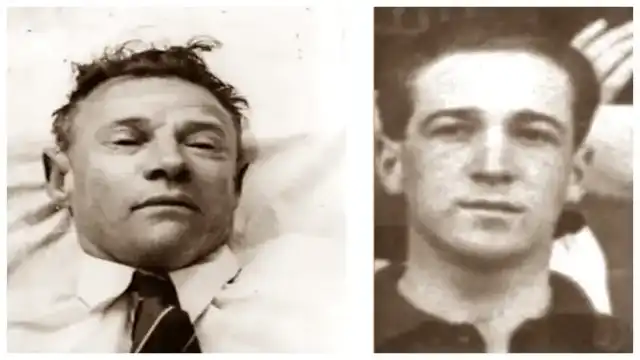
Picture this. It’s the morning of December 1, 1948, in Adelaide, Australia. The weather is warming up. Two men riding horses along Somerton Beach spot a man slumped against a seawall.
He is dead.
The man looks to be in his 40s, in top physical shape, with calves like a ballet dancer. He’s dressed far too warmly for a summer morning — wearing a suit, tie, and a heavy double-breasted jacket. His shoes are polished to a shine. But when police arrive and begin searching his pockets, things get weird fast.
He carries no wallet. No ID. He has an unused rail ticket, a used bus ticket, chewing gum, matches, and two combs.
Then investigators check his clothes. Every single manufacturer’s tag is snipped off.
Who was he? Why hide his identity so carefully? Local police thought they’d crack the case in a few days. They printed his photo in newspapers across the country. Still, nobody claimed him.
The Strange Clues Left Behind
The mystery deepened a month later when detectives found a brown suitcase abandoned at the Adelaide railway station. It belonged to the dead man.
Inside? More clothes with the tags carefully removed. A stencil kit, a table knife altered to look like a weapon, and thread that perfectly matched a repair on the man’s trousers. Nothing in the suitcase offered a name.
Then came the biggest twist. During a final examination of the body, a pathologist noticed a tiny, hidden fob pocket sewn inside the dead man’s trousers. Tucked inside was a tightly rolled scrap of paper.
Printed on it were two Persian words: Tamám Shud.
Translated, it means “it is ended” or “finished.” Police quickly realized the scrap was torn from the final page of The Rubaiyat of Omar Khayyam, a 12th-century book of poetry focused on living life to the fullest because death is always near.
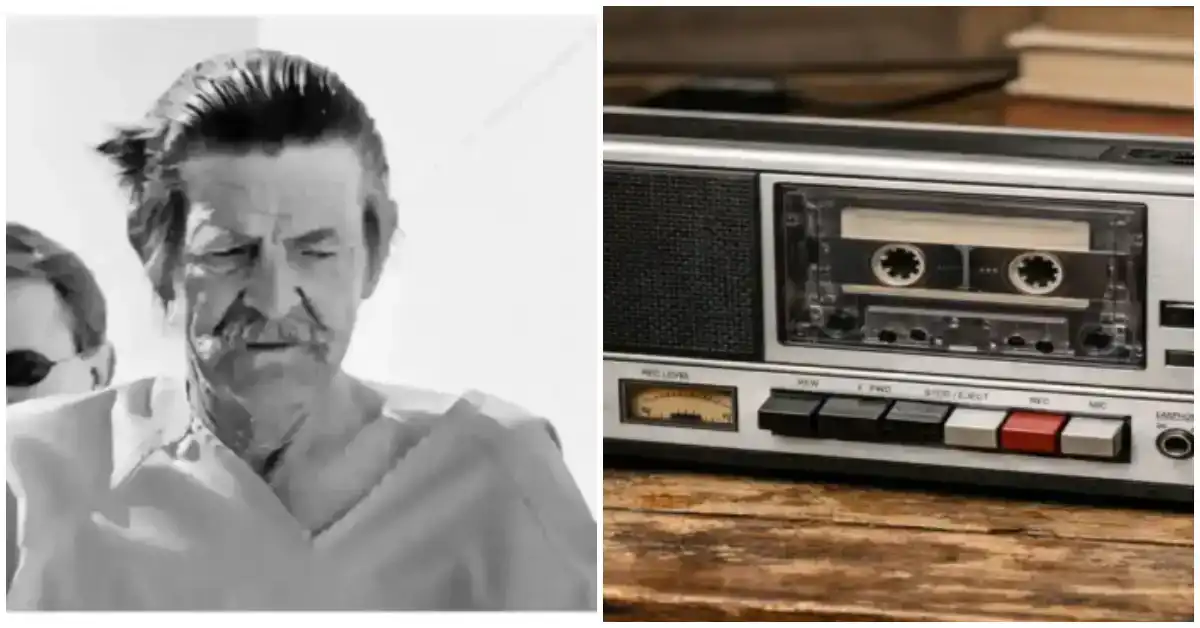
Detectives launched a nationwide search for the exact book this scrap was ripped from. Miraculously, a local man came forward. He found a rare edition of The Rubaiyat tossed into the back seat of his unlocked car around the time the body was discovered. The final page was missing. The paper matched perfectly.
In the back of this book, police found faint pencil indentations. They revealed an unlisted phone number and a jumble of random letters that looked exactly like a secret code.
Decades of Wild Theories
You can’t have a dead guy with cut tags, a secret pocket, and a bizarre code without people jumping to extreme conclusions.
The phone number belonged to a nurse named Jo Thomson, who lived incredibly close to where the body was found. When police showed her the plaster cast made of the dead man’s face, she reportedly looked horrified and nearly fainted. Yet, she fiercely denied knowing him.
Because this happened during the dawn of the Cold War, rumors exploded. Was he a Soviet spy? Did he know too much? Some suspected he was assassinated using an untraceable poison. Autopsy reports did show severe internal bleeding in his stomach, suggesting a toxic substance, but scientists never found actual poison in his system.
For 73 years, the Tamam Shud case stumped the smartest codebreakers in the world. Even the FBI took a crack at it.
The man was buried in an Adelaide cemetery under a tombstone reading: Here lies the unknown man who was found at Somerton Beach.
The DNA Breakthrough
Let’s skip ahead to modern times. Professor Derek Abbott, a researcher at the University of Adelaide, became utterly obsessed with this case. For over a decade, he chipped away at the mystery.
Abbott knew that traditional police work had failed. If this case was ever going to be solved, it required modern science. He teamed up with Colleen Fitzpatrick, a renowned forensic genealogist from the United States who specializes in identifying unknown bodies.
They had one massive problem. The Somerton Man was buried under concrete. While the South Australian government finally approved an exhumation in 2021, Abbott and Fitzpatrick didn’t actually need the bones.
Digging for Genetic Gold
Back in 1949, police made a plaster bust of the man’s head and shoulders. During this messy process, a few dozen of the man’s actual hairs got trapped in the plaster.
Abbott managed to get his hands on these hairs. Getting DNA out of hair without the root is notoriously difficult. Extracting 70-year-old degraded DNA is practically a scientific nightmare.
“It’s like trying to put together a 5,000-piece jigsaw puzzle where someone has thrown away half the pieces,” Abbott explained to the press.
Despite the odds, a specialized lab in California managed to sequence a workable DNA profile from those ancient strands of hair.
The Power of Genetic Genealogy
Once they had the genetic code, Fitzpatrick went to work. If you’ve ever used 23andMe or AncestryDNA, you know the basics. You spit in a tube, and a computer matches you with distant cousins.
Investigative genetic genealogy uses these same public databases (specifically GEDmatch and FamilyTreeDNA, which allow law enforcement and researchers to upload profiles). Fitzpatrick found a few distant cousins of the Somerton Man.
From there, she didn’t use test tubes or microscopes. She used census records, birth certificates, and old newspaper clippings. By building massive family trees backward from those cousins, she narrowed the lines down to one specific family tree.
There were 4,000 people in this tree. Abbott and Fitzpatrick painstakingly eliminated them one by one.
Finally, in July 2022, they landed on a single name. A man who simply vanished from all official records in April 1947.
His name was Carl Webb.
Meet Carl Webb
So, who was Australia’s most mysterious dead man?
He wasn’t a Russian spy. He wasn’t an international assassin. He was a 43-year-old electrical engineer and instrument maker born in 1905 in Footscray, a suburb of Melbourne. He was the youngest of six siblings.
The reality of Carl Webb is much more human — and tragic — than the James Bond-style theories suggested.
Who Was He Really?
Webb was a smart, detail-oriented guy. Being an instrument maker perfectly explains the strange tools found in his suitcase. He loved poetry, which explains The Rubaiyat. He even wrote his own poems.
But he also had a dark side. Records show Webb had severe mood swings and a violent temper. He suffered from depression and reportedly had a deeply unhappy marriage.
Why Was He in Adelaide?
This is where the story pieces itself together perfectly. Webb married a woman named Dorothy Robertson. Their relationship was toxic. In 1947, Dorothy finally had enough. She left Webb and moved to South Australia.
Webb disappeared from Melbourne shortly after.
Why was he on that beach? Researchers strongly believe Webb traveled to Adelaide to track Dorothy down. The unlisted phone number found in the poetry book belonged to Jo Thomson, who lived nearby. While we may never know exactly how they knew each other, it’s highly possible Thomson knew Dorothy, and Webb was trying to find his wife through her.
As for the death itself? There was no international assassination plot. Webb likely died by suicide. He had a history of severe depression. The Tamam Shud scrap — “it is ended” — reads exactly like a final goodbye from a man who loved dark poetry.
Solving the Final Puzzles
What about the cut tags on his clothes?
During the 1940s, buying secondhand clothing was incredibly common due to post-war rationing. People frequently cut the name tags of previous owners out of garments. Alternatively, Webb may have removed them himself to make it harder for his estranged family to identify him and drag out the pain of his death.
And that baffling “spy code” written in the back of the book?
Abbott believes it wasn’t a code at all. Webb was an avid fan of horse racing. The random letters were likely just abbreviations for horse names he was tracking.
For example, a line starting with “M” might just stand for a horse named Microphone. It’s a mundane explanation that perfectly fits a 1940s Melbourne bloke.
What This Means for Future Cold Cases
Identifying Carl Webb isn’t just about putting a ghost to rest. It is a massive flex for modern forensic science.
If scientists can pull a name out of hair trapped in a 70-year-old chunk of plaster, no cold case is truly unsolvable. Genetic genealogy has already caught the Golden State Killer and identified the “Boy in the Box” (Joseph Augustus Zarelli).
This technology is reshaping how we view unsolved mysteries. It proves that behind every wild conspiracy theory, there is a real human being with a family, a history, and a name.
The Somerton Man is no longer a blank slate for our imaginations. Carl Webb finally gets to rest in peace.
Are you fascinated by cold cases getting solved? The science of genetic genealogy is moving at lightning speed. Check out how police are using public DNA databases to identify Jane and John Does across the globe. Who knows? The next massive breakthrough might just involve your distant family tree.

