

Renting a car in Great Britain unlocks misty Scottish glens, sleepy honey-stone Cotswold villages, and dramatic Cornish sea cliffs that trains simply cannot reach. Sitting on the right side of the cabin while navigating narrow lanes bordered by ancient stone walls can rattle your nerves on day one. A few spatial tricks and road rules will have you shifting lanes and circling roundabouts like a seasoned local in no time.
The mental shift: spatial orientation & the white line rule
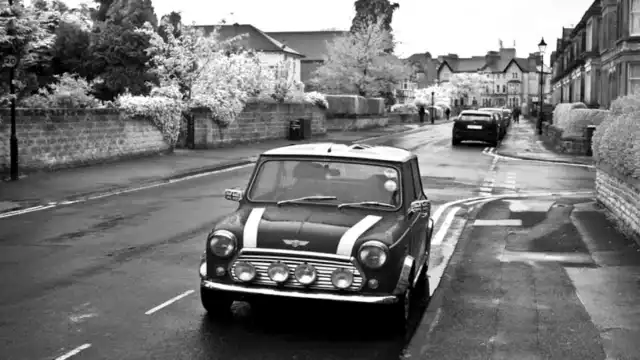
The terror of driving on the left vanishes once your brain locks onto the right visual anchors. When you slide into the driver’s seat on the right side of the car, your entire physical orientation flips.
What is the biggest mistake American drivers make during their first hour? Drifting too far to the left.
Because you are accustomed to sitting on the left side of a vehicle, your subconscious mind tries to position your body in the middle of the lane. In a British right-hand-drive car, doing that shoves the passenger side of your vehicle inches from brick walls, high hedges, and stone curbs.
| Concept | Wrong | Right |
|---|---|---|
| Positioning | Passenger too close to hedge; driver offset | Driver sits on the line |
| Reference | Ditch/hedge | White center line |
| Driving habit | Subconscious US drift | Center line anchor |
The golden rule: driver hugs the center line
Keep this phrase on repeat: “Driver sits on the white line.”
As long as your right shoulder is tracking close to the dashed white line dividing the two lanes, the rest of your car is positioned safely in your lane. If your passenger looks terrified or you hear leaves scraping your left side-mirror, you have drifted toward the gutter.
4 Muscle memory traps to expect
- The Phantom Seatbelt Reach: You will reach over your left shoulder for the seatbelt and grab empty air. It sits over your right shoulder.
- The Wiper-Turn Signal Switch: On many British cars, the turn indicator stalk remains on the left side of the steering column, while the wiper stalk is on the right. When approaching your first few turns, you will inevitably turn on your windshield wipers instead of your blinker. Laugh it off and flip the correct stalk.
- The Rearview Mirror Check: Your eyes will dart up and to the right looking for the rearview mirror. It is mounted up and to your left.
- The “Look Right First” Habit: When stepping off a curb or pulling out of a junction, your brain will instinctively look left first. Train yourself to look RIGHT, then LEFT, then RIGHT again. Traffic approaches from your immediate right.
Renting an automatic car in the UK: book months ahead
Can you drive a manual transmission? Even if you can shift stick back home, doing it in the UK is a completely different beast.
In a British manual car:
- The pedal layout stays identical (Clutch on the left, Brake in the middle, Gas on the right).
- The gear shift pattern is identical (First gear is top-left, reverse is bottom-right or push-down).
- The catch: You must execute every gear shift using your non-dominant left hand while keeping your right hand steady on the steering wheel on narrow roads.
If your left hand has zero mechanical muscle memory, stalling at a busy five-lane roundabout is an unnecessary stress you do not need on vacation.
| Factor | Automatic Transmission | Manual Transmission (Stick) |
|---|---|---|
| Rental Fleet Share | ~30%–40% of total stock | ~60%–70% of total stock |
| Rental Price Difference | 20% to 40% more expensive | Budget-friendly base rates |
| Booking Lead Time | 2 to 4 months in advance | Walk-up or short notice ok |
| Driving Stress Level | Low (focus solely on road) | High (left-hand gear shifting) |
The sizing trap: smaller is smarter
In America, upgrading to a full-size SUV feels luxurious. In the UK, it is a liability.
Village streets in the Cotswolds, Cornwall, and the Scottish Highlands were mapped out centuries before automobiles existed. They are flanked by unforgiving dry-stone walls and parked cars. Underground parking garages in historic cities like Edinburgh, York, and Bath feature tight spiral ramps with zero margin for error.
Rent the smallest car that holds your passengers and luggage. A compact hatchback or small crossover will slide through narrow gaps that leave large SUVs stuck folding in their side mirrors.
Petrol vs Diesel vs Electric at the pump
When stopping to refuel, pay close attention to fuel pump colors. They are the exact opposite of many American gas stations:
- Green Handle = Unleaded Petrol (Gasoline)
- Black Handle = Diesel
- Never mix them up: Putting petrol into a diesel engine or vice versa will destroy the fuel injection system and land you a £4,000 repair bill. Look inside the fuel cap door for the manufacturer label (“Petrol / E10” or “Diesel / B7”).
Conquering multi-lane UK roundabouts
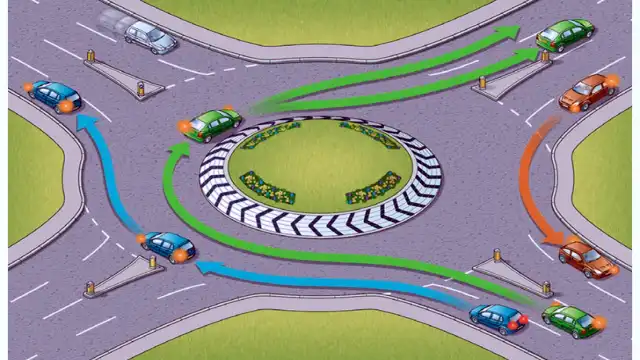
Americans often dread roundabouts. In Britain, traffic circles keep traffic flowing across millions of junctions without stoplights. Once you grasp the geometry, you will realize how efficient they are.
The core roundabout rules
- Traffic Flows Clockwise: You travel around the central island in a clockwise direction.
- Give Way to the Right: Vehicles already circulating on the roundabout have absolute priority. Stop before the dashed give-way line and wait for a safe gap in traffic coming from your right.
- No Stopping on the Circle: Once you enter the roundabout, you have priority over incoming traffic. Keep moving smoothly.
| Position | Exit / Approach |
|---|---|
| 12 O’Clock | Straight exit |
| 3 O’Clock | Right exit |
| 6 O’Clock | Entrance |
| 9 O’Clock | Left exit |
| Approach | Lane 1 | Lane 2 |
Which lane should you pick on approach?
Follow the standard Highway Code guidelines unless road arrows paint a different instruction:
- Turning Left (1st Exit / 9 o’clock): Signal left on approach. Stay in the left-hand lane. Maintain your signal and exit smoothly.
- Going Straight (2nd Exit / 12 o’clock): Do not signal on approach. Stay in the left-hand lane (or marked center lane). As you pass the first exit, turn on your left signal to notify trailing cars you are leaving at the next exit.
- Turning Right or U-Turn (3rd+ Exit / 3 o’clock): Signal right on approach. Enter using the right-hand lane. Hug the inner circle. When you pass the exit prior to yours, switch on your left indicator, check your left mirror and blind spot, and move across to your exit.
Panic-Free Tip: What if you end up in the wrong lane or miss your exit? Never slam the brakes or swerve. Just stay in your lane, loop around the roundabout a second time, indicate left, and exit safely on your second pass. Nobody will honk at you for taking another lap.
Single-track country roads & passing places
Head out to the Scottish Highlands, the Lake District, or rural Wales, and two-lane tarmac quickly dissolves into a single-track road—one narrow lane of asphalt shared by both directions of traffic.
How do two cars heading toward each other pass without crashing? Look for Passing Places. Every few hundred yards, the road widens into a paved cutout marked with a diamond or square white sign reading “Passing Place”.
| Direction | Vehicle | Action | Location |
|---|---|---|---|
| Southbound | Car A | Heading south | Oncoming lane |
| Northbound | Car B | Waits | Passing place (left side) |
| Northbound | Your car | Heading north | Approaching passing place |
Passing place etiquette
- The Left-Side Rule: If the passing place cutout is on your left, pull into it and stop. If the cutout is on your right, do not cross over the road into it. Instead, stop on the left side of the main road directly opposite the cutout. This allows the oncoming driver to pull into the cutout on their side to pass you.
- Who Reverses? If you meet an oncoming vehicle between passing places, whoever is closest to a cutout shifts into reverse. If you are driving downhill and meet a car traveling uphill, courtesy dictates that the downhill vehicle reverses, as climbing uphill in reverse is trickier.
- The Courtesy Wave: When a local pulls over to let you pass, acknowledge their courtesy with a friendly raise of your right hand from the steering wheel.
- Let Faster Drivers Pass: Single-track roads are working roads for delivery vans, doctors, and local farmers. If a vehicle appears behind you, pull into the next passing place on your left to let them overtake.
- Never Park in a Passing Place: Passing places are strictly for vehicle passing and overtaking. Parking your car inside one to step out and photograph sheep blocks the entire road network and earns hefty local backlash.
UK speed limits, road classes & speed camera traps
Speed limits in the United Kingdom are posted in Miles Per Hour (MPH), not Kilometers Per Hour. Your dashboard speedometer will display MPH prominently.
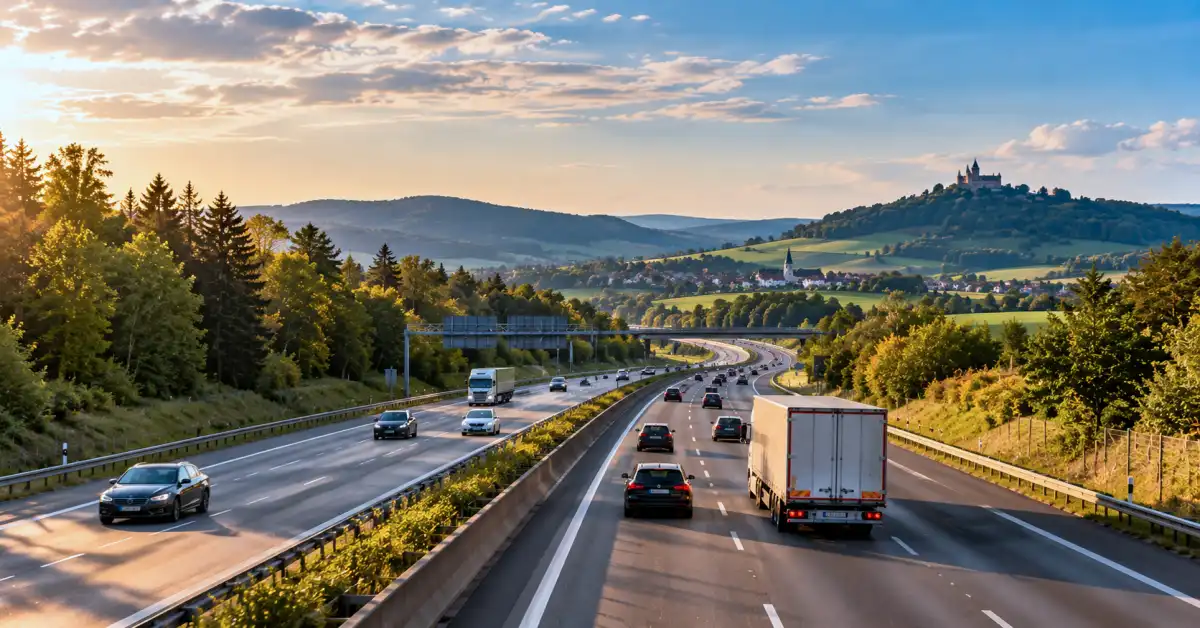
Official UK speed limits for cars
| Road Classification | Road Sign Identifier | Speed Limit (Cars & Small Vans) |
| Built-Up Urban Areas | Streetlights present / 30 / 20 signs | 30 MPH (Default) / 20 MPH (Wales & London) |
| Single Carriageway | One lane each direction, no central barrier | 60 MPH (National Speed Limit) |
| Dual Carriageway | Separated by a central reservation/barrier | 70 MPH (National Speed Limit) |
| Motorways (M-Roads) | Multi-lane grade-separated highways | 70 MPH |
The National speed limit sign
You will frequently see a circular white sign with a single black diagonal stripe running across it. That is the National Speed Limit sign.
It does not state a number because the speed limit changes depending on the road structure:
- On a standard two-lane country road with no median barrier, it means 60 MPH.
- On a divided highway (dual carriageway) with a concrete or grass median barrier, it means 70 MPH.
Wales 20 MPH Law: Wales enforces a default 20 MPH speed limit on all residential and built-up roads where streetlights are spaced under 200 yards apart. Many boroughs across Greater London enforce this identical 20 MPH cap. Keep your eyes glued to local speed limit circle signs.
How speed cameras work in the UK
Unlike in the US, where police cruisers hide behind highway billboards with radar guns, traffic enforcement across the UK is almost entirely automated:
- Fixed Gatsos & Truvelos: Bright yellow camera boxes mounted on poles. By law, fixed speed cameras must be painted high-visibility yellow. Look for white painted ladder lines on the road surface ahead of them.
- Average Speed Cameras (SPECS): Mounted on yellow overhead gantries over stretches of several miles. These calculate your average speed between two points. Tapping your brakes right before the camera will not save you if your average speed across the entire five-mile zone exceeded the limit.
- Smart Motorways: Multi-lane motorways (like the M1, M6, and M25) feature electronic overhead digital signs displaying variable speed limits (e.g., 50 or 60 MPH during congestion). These variable limits are legally enforceable. High-speed digital cameras mounted to the gantries will trigger automatically the second the digital sign illuminates.
Essential British Highway Code Quirks
The UK Highway Code contains specific rules that trip up foreign drivers daily.
1. No “Turn Right on Red” Equivalent
In the US, turning right on a red light after coming to a complete stop is standard. In the UK, there is no such thing as turning left on red. A red traffic light means complete stop without exception. You cannot turn left, right, or proceed until the signal turns green.
2. Pedestrian Zebra Crossings
Zebra crossings feature black-and-white road stripes paired with flashing yellow globes mounted on striped poles (called Belisha Beacons).
If a pedestrian places a single foot onto the stripes, drivers must come to a complete stop. Do not crawl forward or rev your engine; wait until the pedestrian has stepped completely onto the opposite sidewalk before rolling forward.
3. Yellow Box Junctions
In cities, you will see large intersections painted with crisscross yellow lines known as Box Junctions.

Under British law, you must not enter the box unless your exit road is clear. If you enter the box while traffic is backing up and get stuck inside when the light changes, automated overhead enforcement cameras will capture your license plate and send an £80 to £130 fine directly to your rental agency.
4. Double Yellow Lines vs Single Yellow Lines
Parking regulations are marked directly on the asphalt along the curb:
- Double Yellow Lines: Parking or waiting is strictly prohibited 24 hours a day, 7 days a week.
- Single Yellow Lines: Parking is restricted during specific hours posted on nearby small metal timeplates (e.g., “No parking Mon-Sat 8am-6pm”).
- Double Red Lines (Red Routes): Found throughout London and major hubs. No stopping, waiting, or loading at any time for any reason.
Clean air zones, tolls, and congestion charges
Driving in major British cities involves navigating clean air emissions zones. Rental cars usually comply with emissions standards, but you are still responsible for paying the daily administrative zone fees.
| City / Zone | Daily Cost / Charge | Payment Window |
|---|---|---|
| London Congestion Charge | £15.00 per day | Pay online by midnight on 3rd day |
| London ULEZ (All London) | £12.50 per day (Older gas) | Pay online via TfL portal |
| Dartford Crossing (Dart Charge) | £2.50 per crossing | Pay online by midnight next day |
| Birmingham Clean Air Zone | £8.00 per day (Older gas) | Pay within 6 days online |
London driving warning
Avoid driving a rental car into Central London. Between the £15 Daily Congestion Charge, the £12.50 Ultra Low Emission Zone (ULEZ), sky-high parking garage fees, and bumper-to-bumper bus traffic, driving in the capital is frustrating and expensive. Pick up your rental car at Heathrow or Gatwick airport on the day you leave London to explore the countryside.
The Dartford crossing (Dart charge)
Crossing the Thames River east of London via the Dartford Crossing (A282) features no physical toll booths. Cameras read your license plate automatically. You must log onto the official Dart Charge gov.uk portal and pay the £2.50 toll online by midnight on the following day, or face an automatic penalty notice.
Departure Checklist
Before shifting into gear and pulling out of the rental car bay, take five minutes to set up your vehicle:
| Checklist Item | Action |
|---|---|
| Adjust Right & Left Mirrors | Angle them slightly downward to view the rear curb line. |
| Pair Your Phone | Mount your smartphone securely in an eye-level dashboard holder. |
| Program GPS | Enter your destination before turning the key. |
| Test Left-Hand Wipers & Lights | Locate the hazard lights, wipers, and turn signals. |
| Check Fuel Cap | Note whether your vehicle takes Petrol (Unleaded) or Diesel. |
| Take Departure Photos | Snap 360-degree photos of wheels and bumpers to document pre-existing curb scrapes. |
Frequently Asked Questions
Can I drive in the UK with a standard US driver’s license?
Yes. Visitors holding a valid full US state driver’s license can legally drive cars and motorcycles in the UK for up to 12 months from the date of their last entry into the country. You do not legally need an International Driving Permit (IDP), though carrying one alongside your passport and US license is helpful for insurance verification.
What should I do if I scrape a wheel on a high stone curb?
Curb rash on alloy wheels is the single most common damage charge assessed by British rental agencies. If you scuff a wheel, do not attempt to buff it out with unauthorized materials. When returning the vehicle, point it out transparently during the check-in walkaround. Purchasing comprehensive zero-excess insurance (or using premium credit card auto collision coverage) protects you from paying out-of-pocket wheel repair fees.
What happens if an emergency vehicle approaches behind me?
Under Highway Code Rule 219, do not panic or brake abruptly in the middle of the road. Check your mirrors, look for a safe spot on the left, signal, and pull over smoothly to let ambulances, police cars, or fire engines pass. Avoid pulling into dedicated bus lanes or pushing through red light camera junctions to make way, as automatic enforcement cameras do not excuse camera violations for yielding to sirens.
Driving on the left side of the road in the UK feels completely foreign for the first forty-five minutes. Once you anchor your position against the center dividing line, yield clockwise at roundabouts, and give way gracefully on single-track country lanes, the anxiety disappears. Take a breath, keep your eyes on the road, and enjoy the freedom of exploring the British countryside at your own pace.

