
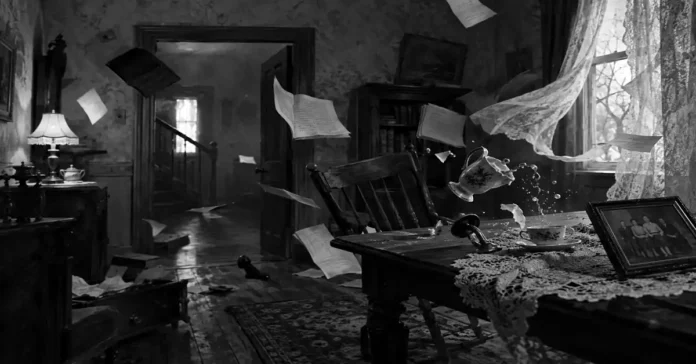
Spooky fires and airborne chairs sound like campfire fiction until you find them recorded in yellowed police logs and university archives. Real poltergeist cases leave distinct paper trails behind, complete with sworn witness affidavits, acoustic recordings, and hardheaded investigators trying to catch tricksters red-handed. Strip away the Hollywood jumpscares, and what remains across centuries of documented poltergeist history is stranger, funnier, and far more human than you might expect.
1. The Drummer of Tedworth (1661–1662)
- Location: Wiltshire, England
- Primary Witnesses: Magistrate John Mompesson, Joseph Glanvill (Fellow of the Royal Society), local townspeople
- Key Phenomena: Rhythmic drumming on roofs, levitating bedframes, flying shoes, sulfurous odors
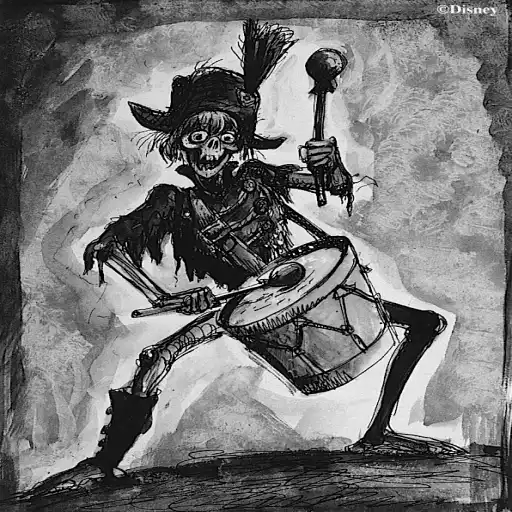
In March 1661, magistrate John Mompesson confiscated a military drum from William Drury, an unlicensed vagrant and former parliamentary soldier drumming for money. Mompesson had Drury arrested, but Drury slipped out of custody. The drum was left behind at Mompesson’s country house in Tedworth.
That was when the noise started.
An invisible drummer beat tattoo rhythms on the roof and outer boards every evening. Doors banged open on their own. Chairs chased servants across the floorboards. The children’s beds lifted several feet into the air with the kids still in them.
Joseph Glanvill visited the house to see the ruckus firsthand. He watched linens yank themselves off beds and heard strange scratching sounds beneath floorboards that mimicked words.
Drury was eventually jailed for another crime. Legend says he bragged to a cellmate that he used witchcraft to torment the magistrate. Historians have a simpler take: Drury likely had accomplices using hollow floorings, cords, and chimney tricks to get revenge on the judge who stole his prized drum.
2. The Epworth Rectory Disturbances (1716–1717)
- Location: Lincolnshire, England
- Primary Witnesses: Samuel Wesley Sr., Susanna Wesley, John Wesley, and the rectory servants
- Key Phenomena: Rhythmic raps, phantom footsteps, trenchers dancing on tables, invisible groaners
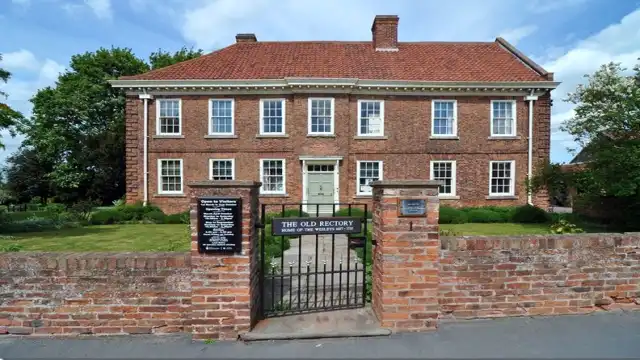
Before John Wesley founded the Methodist Church, his childhood household sounded like a bowling alley.
Beginning in December 1716, the Wesley rectory was plagued by a visitor the family nicknamed “Old Jeffrey.” The trouble started with loud knocks echoing through the kitchen floor. Soon, heavy, boot-like footsteps marched up and down the attic stairs. A hand mill ground corn by itself in the middle of the night. Whenever Samuel Wesley prayed aloud for the King, the banging doubled in volume.
Susanna Wesley kept detailed notes in her diary. The daughters treated the entity like an unruly pet, calling out, “Come along, Jeffrey!” whenever the floor vibrated.
The racket stopped as suddenly as it started in early 1717. Was it a poltergeist? Local villagers had serious political grudges against Samuel Wesley for his outspoken Royalist views. Several researchers suspect angry neighbors engineered the noise through unsealed flues and outside access tunnels.
3. The Stratford Poltergeist (1850–1851)
- Location: Stratford, Connecticut, USA
- Primary Witnesses: Reverend Eliakim Phelps, visiting clergymen, local journalists
- Key Phenomena: Stuffed effigies posed in prayer, flying turnips, shattered windowpanes
Reverend Eliakim Phelps was a straight-laced Presbyterian minister who lived in a sprawling mansion. Returning from church on March 10, 1850, his family walked in to find their furniture ransacked.
Things escalated into bizarre pageantry. Eleven stuffed dummies — fashioned from clothes, cushions, and cotton batting — stood kneeling in the parlor with open Bibles balanced in their cloth hands.
Objects began launching across rooms. A silver fork stabbed into a tablecloth by itself. A raw turnip covered in strange runes fell from the ceiling onto the dining table. Windows cracked inward without stones landing on the carpet.
Suspicions fell on Phelps’s 11-year-old stepson, Harry. Wherever Harry walked, umbrellas flew and candlesticks jumped. When Harry was sent away to a boarding school in Pennsylvania, the activity instantly ceased. The boy was likely an agile prankster whose modest parlor tricks snowballed into collective religious mania among the visiting preachers.
4. The Great Amherst Mystery (1878–1879)
- Location: Nova Scotia, Canada
- Primary Witnesses: Esther Cox, Walter Hubbell, Dr. Edwin Carritte
- Key Phenomena: Scratches carved into skin, spontaneous combustion, wall graffiti
Eighteen-year-old Esther Cox lived with her sister and brother-in-law in a cramped cottage in Amherst. Her troubles began shortly after she survived a traumatic sexual assault by a male acquaintance.
Her body began swelling inexplicably, accompanied by loud booming noises beneath her bed that sounded like gunshots. Soon, messages appeared gouged into the bedroom plaster: “Esther Cox, you are mine to kill.”
Actor Walter Hubbell moved into the home to document the disturbances. He watched potatoes fly across the kitchen and witnessed spontaneous fires erupting inside closed closets. Match heads flew from boxes and ignited against walls.
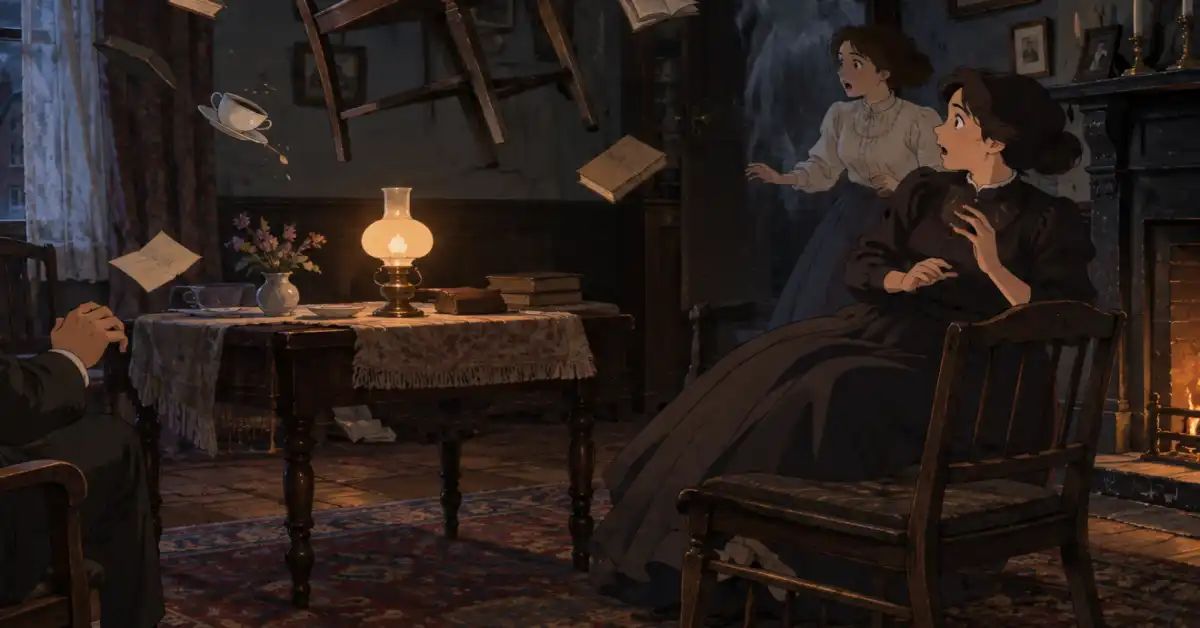
The nightmare ended after a fire destroyed a neighbor’s barn where Esther was working. She was convicted of arson, received a short sentence, and upon her release, married and relocated. Modern psychologists interpret the case as a textbook mix of acute trauma, severe dissociation, and unmonitored arson by an emotionally shattered teenager.
5. The Worksop Poltergeist (1883)
- Location: Nottinghamshire, England
- Primary Witnesses: Joe White (grocer), Police Constable Higgs, Frank Podmore
- Key Phenomena: Exploding crockery, self-propelling washtubs, floating basins
Joe White ran a busy grocery shop attached to his home in Worksop. On the night of March 1, 1883, the china on his shelves began flying onto the floor.
Basins jumped off tables. Salt cellars shattered in mid-air. What makes the Worksop case stand out in early parapsychological literature is Police Constable Higgs.
Dispatched to investigate a suspected break-in, the uniformed officer stood squarely in the kitchen. In his signed deposition, Constable Higgs stated he watched an empty washbasin lift off a wooden bench, float across the room, turn completely upside down, and drop to the floor while everyone in the room stood with their hands visible.
Frank Podmore investigated the incident for the Society for Psychical Research (SPR). He tracked the focal point to Eliza Rose, a 14-year-old adopted maid. As soon as White fired Eliza and sent her packing, the plates stayed safely on their shelves. Podmore concluded that the dim candlelight and sheer confusion allowed a nimble-fingered teenager to toss dishes without detection.
6. The Eleonore Zugun Case (1925–1927)
- Location: Talpa, Romania, and London, England
- Primary Witnesses: Countess Wassilko-Serecki, Harry Price (psychical researcher)
- Key Phenomena: Spontaneous bite marks, flying coins, small stones pelted against windows
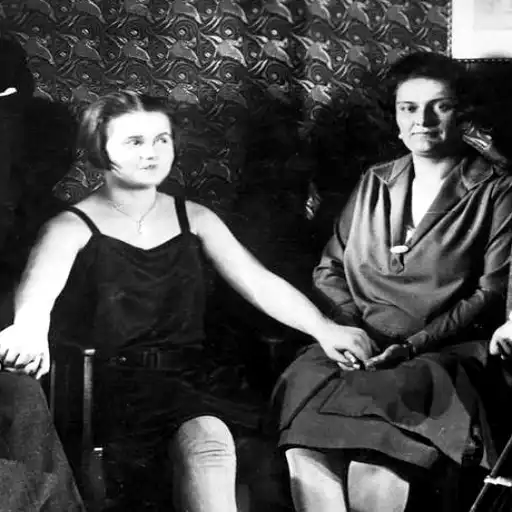
In a rural Romanian village, 12-year-old Eleonore Zugun became convinced that “Dracu” (the Devil) was throwing stones at her. Locals shunned the girl, and she was briefly placed in a convent.
An Austrian researcher, Countess Wassilko-Serecki, rescued the girl and brought her to Vienna. Later, famed ghost investigator Harry Price invited Eleonore to his National Laboratory of Psychical Research in London.
In Price’s controlled laboratory, strange marks appeared on Eleonore’s skin. Deep teeth indentations, welt-like scratches, and saliva spots materialized on her arms and chest while her hands were restrained. Small metal objects and inkwells flew across the room when her back was turned.
Price used high-speed cameras to catch the action. While he suspected the object tossing involved subtle misdirection, the sudden appearance of skin dermographia (hives caused by light scratching) puzzled him. The entire circus vanished when Eleonore turned 14 and began menstruating, pointing to an intense psychosomatic reaction tied to puberty and stress.
7. The Battersea Poltergeist (1956)
- Location: 63 Wray Crescent, Battersea, London
- Primary Witnesses: The Hitchings family, Harold Chibbett (researcher), local police
- Key Phenomena: Loud wall rapping, flying slippers, charred linens, written notes from “Donald”
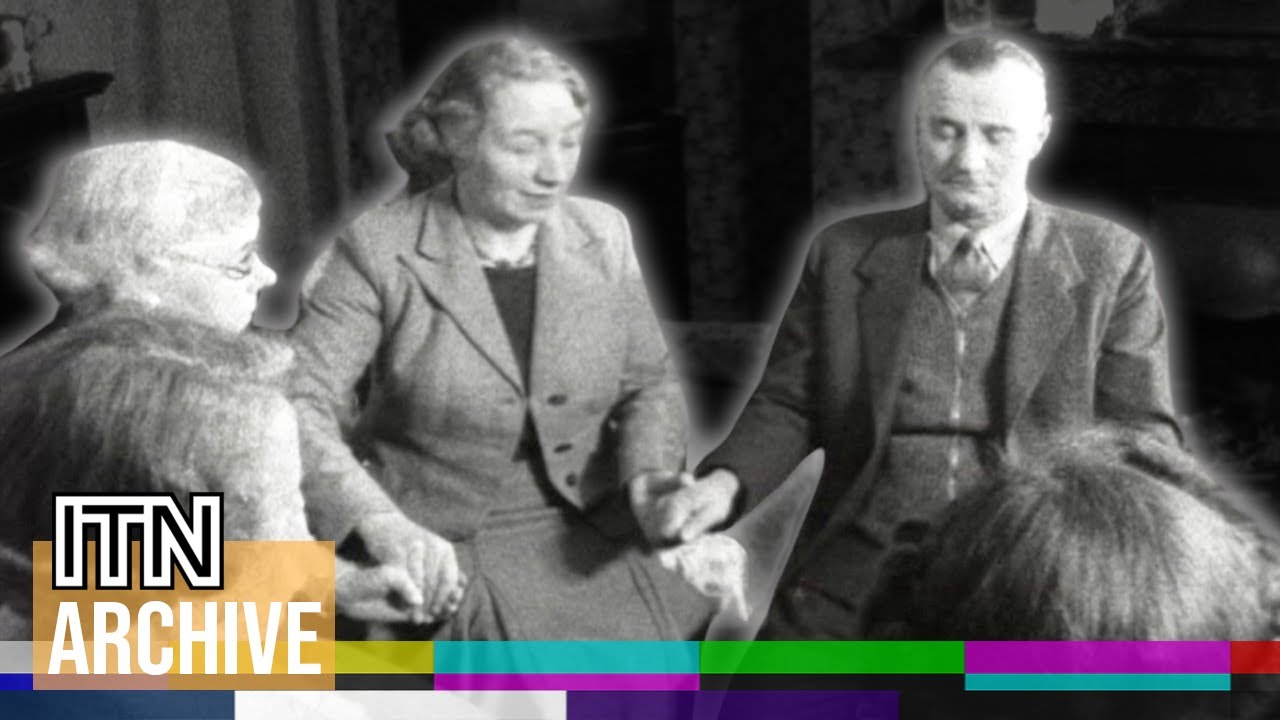
Fifteen-year-old Shirley Hitchings worked as an apprentice dressmaker and lived with her parents and grandmother in a drafty terrace house. In January 1956, loud rhythmic hammering echoed from the walls.
Small fires broke out in bedrooms. Slippers danced. Most curiously, written notes began appearing throughout the house.
The notes were signed by “Donald,” an entity claiming to be Louis XVII, the lost Dauphin of France. Donald demanded Shirley leave out clothes, wrote crude letters to researchers, and answered questions with taps on bedside tables.
Ghost hunter Harold Chibbett spent years investigating the case, keeping sprawling notebooks. Shirley became a media sensation, interviewed by newspapers and radio broadcasts.
The haunting lasted twelve years before petering out. Contemporary psychological analysis suggests Shirley — suffering in an overcrowded, high-stress home with a sick mother — subconsciously (and occasionally consciously) manufactured “Donald” as an escape hatch to get attention and agency.
8. The Seaford Poltergeist (1958)
- Location: Long Island, New York, USA
- Primary Witnesses: James Herrmann Sr., Detective Joseph Tozzi, Dr. J.B. Rhine, Dr. J. Gaither Pratt
- Key Phenomena: Explosively popping bottle caps, flying porcelain figurines, toppling nightstands
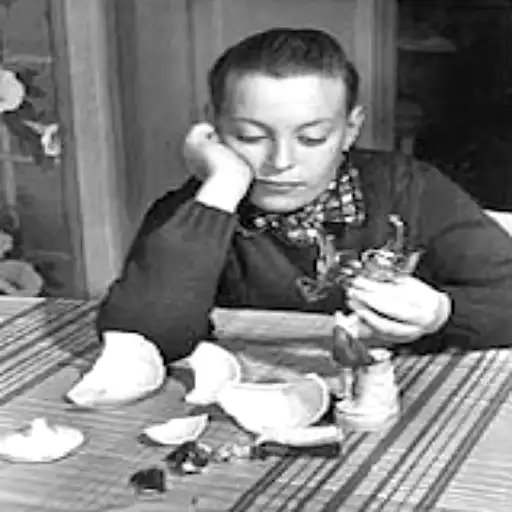
On February 3, 1958, screw-top bottles containing holy water, shampoo, and bleach inexplicably popped their caps and spilled across carpets inside the Herrmann home. Over four weeks, roughly 70 similar incidents threw the house into chaos.
Detective Joseph Tozzi of the Nassau County Police took charge of the investigation. He suspected a local prankster, high-frequency radio transmissions, or even sonic booms from nearby aircraft. He ruled out all three.
Dr. J.B. Rhine and Dr. J. Gaither Pratt from Duke University’s Parapsychology Laboratory stepped in to run tests.
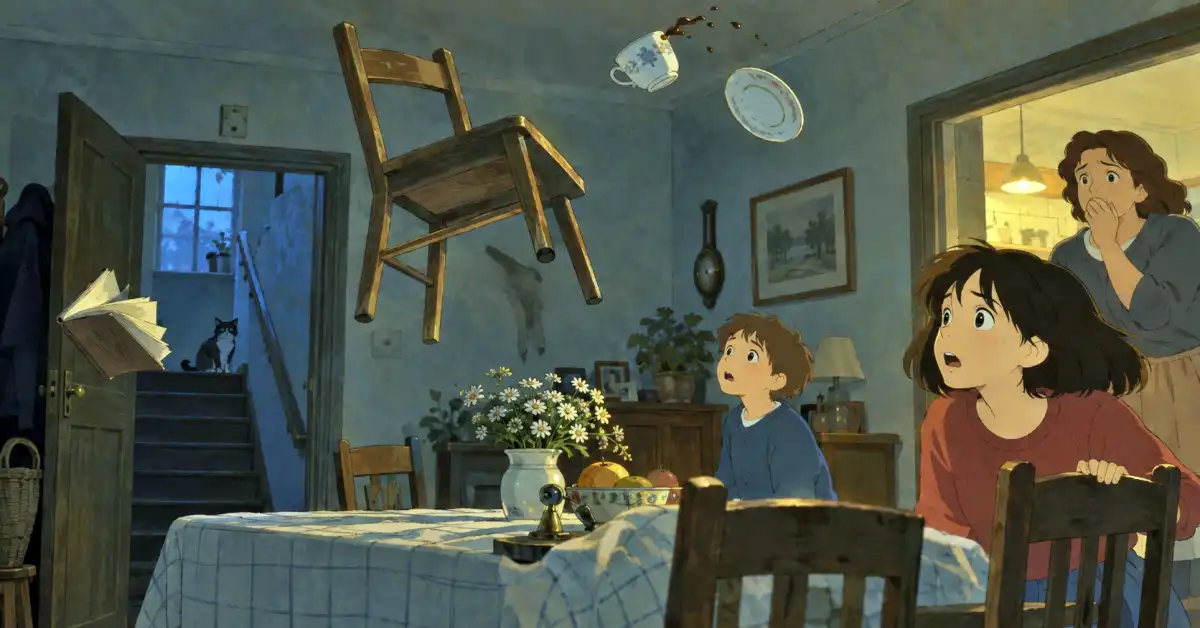
Every single eruption happened when 12-year-old Jimmy Herrmann Jr. was at home. When Jimmy sat at school, the bleach bottles behaved. While investigators never caught Jimmy in the act, the simple mechanics of popping caps and flicking statues match the exact physics of an energetic boy looking to break the monotony of suburban life. Once reporters packed their gear and left, the bottles stayed capped.
9. The Sauchie Poltergeist (1960)
- Location: Clackmannanshire, Scotland
- Primary Witnesses: Dr. Robert Nisbet (family physician), Dr. W.H. Galloway, local ministers
- Key Phenomena: Rhythmic headboard knockings, heavy sideboards sliding along floors, rippling linens
Eleven-year-old Virginia Campbell had just moved from a quiet, rural island in County Donegal to industrial Scotland. Shy, isolated, and missing her pet dog, Virginia struggled to settle in.
Shortly after her arrival, strange events centered around her bed. Heavy bedside furniture slid across the room while witnesses watched. Her schoolteacher saw a desk lid open and shut repeatedly while Virginia sat with her hands clamped together on top of it.
Dr. Robert Nisbet witnessed a heavy sideboard move away from the wall while Virginia was lying entirely motionless. He placed his hand on her headboard and felt violent vibrations pulsing through the wood, synchronized with loud banging sounds.
The Sauchie case remains one of parapsychology’s favorites because the medical doctors and clergy had zero interest in ghost hunting; they were trying to diagnose an illness. As Virginia made friends and adjusted to her Scottish school, the knocks faded away for good.
10. The Black Monk of Pontefract (1966–1970s)
- Location: 30 East Drive, Pontefract, West Yorkshire, England
- Primary Witnesses: Joe and Jean Pritchard, Diane Pritchard, Phillip Pritchard
- Key Phenomena: White powder poured from ceilings, heavy grandfather clock toppled, physical dragging
Joe and Jean Pritchard purchased a newly built council home in Pontefract. They soon regretted it.
Flour and pool cleaning chemicals mysteriously dumped onto carpets. Puddles formed in hallways with no leaking pipes overhead. Heavy oak furniture marched across the living room floor.
The family nicknamed the presence “Fred,” though local folklore soon escalated it into the ghost of a 16th-century monk hanged for rape. The activity zeroed in on 12-year-old Diane Pritchard.
Diane was allegedly dragged by her neck up the flight of stairs, leaving red welts on her throat.
Author Colin Wilson popularized the case, turning 30 East Drive into a paranormal tourism landmark. Skeptical investigators who reviewed the original statements noticed a glaring pattern: the most dramatic claims came from second-hand family gossip, and the violent phenomena happened only when Diane or Phillip were alone in the room.
11. The Miami Poltergeist (1967)
- Location: Tropico Novelties, Miami, Florida, USA
- Primary Witnesses: William G. Roll (parapsychologist), J. Gaither Pratt, police officers
- Key Phenomena: Smashing glassware, flying plastic boxes, beer steins falling off shelves
Not all poltergeists haunt creepy Victorian attics. This one picked a brightly lit wholesale warehouse packed with wholesale novelties, ashtrays, and plastic trick toys.
In January 1967, boxes of novelties began flying off warehouse shelving. Glass cups dropped and shattered on the concrete floor every twenty minutes. The business owner called the police, suspecting union sabotage or an angry employee.
Parapsychologist Dr. William G. Roll and his team set up shop between the aisles. They established strict lines of sight, mapping the trajectories of flying objects.
The disturbances occurred exclusively when 19-year-old shipping clerk Julio Vasquez was on duty.
Roll thought he had captured genuine psychokinesis until an investigator caught Julio on camera flicking a glass ashtray with his wrist while pretending to reach for a box. Julio was later arrested for an unrelated prank involving a false police report. Case closed.
12. The Rosenheim Poltergeist (1967–1968)
- Location: Rosenheim, Bavaria, Germany
- Primary Witnesses: Sigmund Adam (attorney), Dr. Friedbert Karger, Dr. Gerhard Zicha, Hans Bender
- Key Phenomena: Heavy phone dialing to the speaking clock, swinging chandeliers, leaking copiers
At the law office of Sigmund Adam, the technology went completely haywire in late 1967.
Overhead fluorescent tubes twisted ninety degrees in their sockets. Office copy machines leaked developer fluid across carpets. Even stranger, the office telephones rang the local speaking clock (119) up to six times a minute, racking up astronomical telephone bills.
Adam called the German post office and utility companies to diagnose the wiring. Physicists Dr. Friedbert Karger and Dr. Gerhard Zicha of the prestigious Max Planck Institute installed voltage monitors and field recorders. They detected massive, inexplicable current fluctuations on the building’s main circuits.
Parapsychologist Hans Bender quickly spotted the common denominator: 19-year-old secretary Annemarie Schaberl.
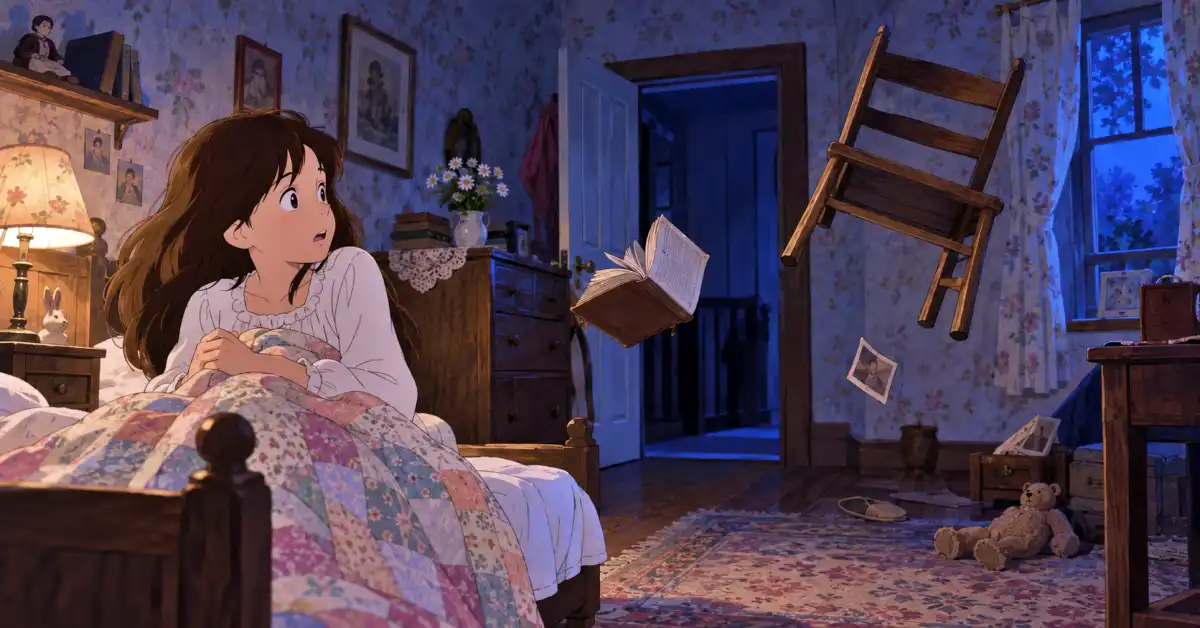
Whenever Annemarie walked through the foyer, hanging lamps swung violently behind her. If she entered the room, lightbulbs exploded. Annemarie hated her job, detested her boss, and suffered from severe emotional distress. The moment she was let go from the firm, the electric meters flattened, the phones calmed down, and the law office went quiet.
13. The Matthew Manning Disturbances (1971)
- Location: Cambridge, England
- Primary Witnesses: The Manning family, Dr. A.R.G. Owen (Cambridge geneticist)
- Key Phenomena: Levitating furniture, pool formations, automatic historical signatures
Fifteen-year-old Matthew Manning was preparing for his school exams when the Queen’s House in Linton began acting up.
Chairs stacked themselves into pyramids. Puddles appeared inside locked wardrobes. Most famously, hundreds of signatures written in antique handwriting appeared scribbled on the white walls of Matthew’s bedroom. The names matched deceased historical figures from the village’s 17th-century parish registers.
Dr. A.R.G. Owen, a respected Cambridge geneticist and poltergeist scholar, observed the boy and ruled out deliberate malice.
The family discovered an ingenious outlet: automatic drawing and writing. Whenever Matthew sat down with a sketchbook and a pen, his hand dashed across the paper, producing elaborate drawings in the distinct styles of Albrecht Dürer, Aubrey Beardsley, and Pablo Picasso. The destructive house-wrecking stopped the minute Matthew used the creative outlet. Manning grew up to write bestselling books about the experience and became a healer.
14. The Enfield Poltergeist (1977–1979)
- Location: 284 Green Street, Enfield, North London, England
- Primary Witnesses: Peggy Hodgson, Janet Hodgson, Maurice Grosse, Guy Lyon Playfair, WPC Carolyn Heeps
- Key Phenomena: Furniture sliding, flying marbles, guttural vocalizations, alleged levitations
Enfield is the undisputed heavyweight champion of poltergeist cases. In August 1977, single mother Peggy Hodgson called the police after a heavy chest of drawers moved across the bedroom floor on its own.
Police Constable Carolyn Heeps signed a sworn affidavit stating that she watched an armchair lift and slide four feet across the carpet without anyone touching it.
Over the next eighteen months, Society for Psychical Research investigators Maurice Grosse and Guy Lyon Playfair logged over a thousand hours at the council house. They recorded banging noises and snapped motor-drive photographs of 11-year-old Janet Hodgson leaping — or being thrown — from her mattress.
Janet soon began speaking in a raspy, gravelly voice, claiming to be “Bill Wilkins,” a man who had died in the living room years earlier.
Skeptics had a field day. Magicians Bob Couttie and Anita Gregory caught the girls bending spoons themselves and hiding video cameras revealed Janet bouncing on the mattress like a trampoline. Janet later confessed that she and her sister faked “about two percent” of the activity just to see if Grosse would notice. Did they fake the other ninety-eight percent, too? Probably.
15. The Columbus Poltergeist (1984)
- Location: Columbus, Ohio, USA
- Primary Witnesses: John and Joan Resch, Fred Shannon (photojournalist), Dr. William G. Roll
- Key Phenomena: Flying telephone handsets, overturned tables, shattered lamps
Fourteen-year-old Tina Resch was an adopted teen trapped in an unhappy, strict household. In March 1984, the home erupted into chaos with flying glassware and tumbling furniture.
Photojournalist Fred Shannon of The Columbus Dispatch sat in the living room for hours. His camera captured a famous photo sequence: a heavy push-button phone flying across Tina’s lap while her hands were empty. The image ran on front pages worldwide.
Dr. William G. Roll flew to Ohio to examine Tina, suspecting genuine psychokinesis.
The party ended when a television crew from WTVN left a camera rolling on a tripod while pretending to pack up their gear. The tape rolled. Tina waited until she thought nobody was watching, casually reached out with her foot, and tipped an expensive lamp onto the floor before screaming in mock terror. While parapsychologists still debate the early incidents, the caught-on-tape fraud destroyed the case’s credibility instantly.
Comparison of documented cases
| Case Name | Year | Location | Primary Focal Person | Scientific or Official Observers | Final Assessment |
| Drummer of Tedworth | 1661 | England | William Drury | Magistrate John Mompesson, Joseph Glanvill | Vengeance pranks / Structural trickery |
| Epworth Rectory | 1716 | England | Wesley Daughters | Samuel Wesley Sr., Susanna Wesley | Probable hostile villager sabotage |
| Stratford Poltergeist | 1850 | USA | Harry Phelps (11) | Rev. Eliakim Phelps, Visiting Clergy | Unsupervised adolescent trickery |
| Great Amherst Mystery | 1878 | Canada | Esther Cox (18) | Dr. Edwin Carritte, Walter Hubbell | Trauma dissociation and arson |
| Worksop Poltergeist | 1883 | England | Eliza Rose (14) | PC Higgs, Frank Podmore (SPR) | Misdirection under poor lighting |
| Eleonore Zugun | 1925 | Romania | Eleonore Zugun (12) | Harry Price (NLPR) | Dermographia and psychosomatic stress |
| Battersea Poltergeist | 1956 | England | Shirley Hitchings (15) | Harold Chibbett, BBC Journalists | Staged distraction from domestic distress |
| Seaford Poltergeist | 1958 | USA | Jimmy Herrmann (12) | Det. Joseph Tozzi, J.B. Rhine, J.G. Pratt | Unproven adolescent mischief |
| Sauchie Poltergeist | 1960 | Scotland | Virginia Campbell (11) | Dr. Robert Nisbet, Dr. W.H. Galloway | Unconscious psychogenic disturbance |
| Black Monk of Pontefract | 1966 | England | Diane Pritchard (12) | Local Press, Colin Wilson | Practical jokes expanded by folklore |
| Miami Tropico Novelties | 1967 | USA | Julio Vasquez (19) | Dr. William Roll, J. Gaither Pratt | Caught deliberate manual fraud |
| Rosenheim Poltergeist | 1967 | Germany | Annemarie Schaberl (19) | Max Planck Physicists, Hans Bender | Severe conversion disorder / RSPK |
| Matthew Manning | 1971 | England | Matthew Manning (15) | Dr. A.R.G. Owen (Cambridge) | Sublimated tension via automatic art |
| Enfield Poltergeist | 1977 | England | Janet Hodgson (11) | WPC Heeps, Maurice Grosse (SPR) | Confessed partial trickery / Ventriloquism |
| Columbus Poltergeist | 1984 | USA | Tina Resch (14) | Fred Shannon, Dr. William Roll | Confirmed caught-on-tape fraud |
Deep-Dive Investigations: Our Dedicated Case Files
If you want to go beyond the 15 historical overviews above, explore our standalone investigations into seven of history’s most baffling, localized outbreaks. Each file features raw archival transcripts, full witness testimony, and forensic timelines:
- The Runcorn Poltergeist (1952) >
When heavy Bibles, clocks, and photo albums began launching themselves inside a modest Cheshire council house on Byron Street, 17-year-old John Jones found himself at ground zero. Local police, paranormal researchers, and hundreds of curious onlookers crowded the pavement to witness Cheshire’s wildest mid-century mystery. - The Cideville Poltergeist (1850) >
This French parish scandal escalated from violent wall-thumping into an open-court slander trial. After Father Tinel accused a local shepherd named Thorel of practicing black magic on two young pupils, the entire commune took the stand to debate flying desks and invisible slaps before a stunned judge. - The Mackie / Rerrick Poltergeist (1695) >
Documented in gripping detail by local minister Alexander Telfair, the small farmhouse of stonemason Andrew Mackie in Kirkcudbrightshire suffered relentless stone-throwing, spontaneous fires, and phantom voices whispering through the floorboards. It remains Scotland’s foundational poltergeist dossier. - The Bromley Allotment Poltergeist >
Disturbances do not just stay cooped up in bedrooms and parlors. This bizarre suburban London case spilled outdoors across vegetable plots and garden sheds, tormenting allotment holders with flying garden shears, bouncing seed boxes, and airborne spades. - The Granite Creek Poltergeist >
Set against the rugged backdrop of a British Columbia gold rush camp, this frontier haunting terrified miners and townspeople alike. Mysterious showers of pebbles pelted log cabins from clear skies, defying winter weather and local prospectors searching for a shooter in the dark. - The Olive Wilkins Case (1922) >
When 14-year-old Olive Wilkins sat down in her classroom, chalk launched from blackboards, inkwells tipped over, and desks shuffled across floorboards without hands near them. School administrators and physicians scrambled to distinguish genuine physical anomalies from clever classroom misdirection. - The South Shields Poltergeist (2005–2006) >
A chilling modern account that brought the poltergeist phenomenon into the 21st century. An ordinary North East England couple watched their toddler’s electronic toys crawl across rooms, discovered box cutters planted upright in furniture, and received menacing, instantaneous text messages from an unknown source.
References
- Glanvill, Joseph.Saducismus Triumphatus: or, Full and Plain Evidence Concerning Witches and Apparitions (1681). Detailed contemporary records of the Drummer of Tedworth.
- Wesley, John.The Arminian Magazine (1784). Compiles the original letters, journal entries, and witness accounts of the 1716 Epworth Rectory disturbances.
- Hubbell, Walter.The Great Amherst Mystery: A True Narrative of the Supernatural (1888). Contains signed affidavits from neighbors, physicians, and witnesses regarding Esther Cox.
- Podmore, Frank.Modern Spiritualism: A History and a Criticism (1902). In-depth investigative breakdown of the Worksop and Stratford cases by the Society for Psychical Research.
- Price, Harry.Poltergeist Over England: Three Centuries of Mischievous Ghosts (1945). Archival notes from the National Laboratory of Psychical Research on Eleonore Zugun and classic UK cases.
- Bender, Hans.“Der Rosenheimer Spuk – ein Fall von Spontaner Psychokinese” (1968), Zeitschrift für Parapsychologie und Grenzgebiete der Psychologie. The original technical and voltage documentation from the Max Planck Institute researchers.
- Playfair, Guy Lyon.This House Is Haunted: The Amazing Inside Story of the Enfield Poltergeist (1980). Exhaustive field logs, audio tape transcripts, and diary entries from the 18-month London investigation.
- Roll, William G.The Poltergeist (1972). Diagnostic case studies, trajectory maps, and field notes from the Miami, Seaford, and Columbus investigations.

