

The Triage Tent Revelation: Was Jacob Dead the Entire Time?
The short answer is yes. Tim Robbins plays Jacob Singer, a wounded soldier who spends the entire runtime dying on an operating table in a sweltering Vietnam triage tent in 1971.
Think about the timeline for a second. The gritty, garbage-strewn New York City we spend two hours navigating is set in 1975. Jacob works as a humble postal clerk. He shares an apartment with his sultry girlfriend Elizabeth Peña (Jezzie). He attends veterans’ meetings, dodges unmarked black sedans, and ducks away from shadowy figures sprouting fleshy horns.
None of those post-war years actually happened.
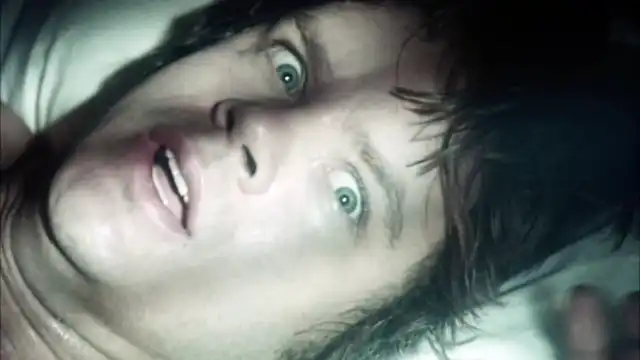
When Jacob is gutted by a bayonet during a chaotic surprise attack in the jungle, his physical body goes into shock. Field medics airlift him to an emergency aid station. As military doctors desperately stitch his shredded intestines, Jacob’s brain does what human brains do under unspeakable trauma: it dreams. It hallucinates. It fights tooth and nail to stay alive.
The entire civilian life Jacob experiences in New York is a dying projection. Some psychologists call it near-death lucidity. Eastern mystics call it the bardo — an intermediate state where a disembodied soul wanders before moving on. Those four years in Brooklyn flash through his synapses in the span of a few frantic minutes on a canvas stretcher.
The Bardo and Bruce Joel Rubin’s Spiritual Blueprint
To truly grasp this film, you have to look at screenwriter Bruce Joel Rubin. Rubin did not set out to write a standard Hollywood jump-scare marathon. He spent years living in a Buddhist monastery, absorbing texts like the Tibetan Book of the Dead.
Rubin viewed dying not as an abrupt light switch flipping off, but as an arduous metaphysical journey. When a person dies suddenly, the ego refuses to accept the game is over. It builds a whole reality out of unresolved regrets, guilt, and lingering attachments.
Director Adrian Lyne grounded Rubin’s script in tactile, sweaty dread. Lyne gave the film its signature look: pulsating subway tiles, flickering institutional lighting, and monstrous faces inspired by the grotesque paintings of Francis Bacon. While Lyne brought visceral body horror, Rubin provided the metaphysical spine.

Jacob is trapped in his own customized purgatory. He cannot pass over because he carries two massive emotional anchors. The first is unresolved grief over the death of his youngest boy, Macaulay Culkin (Gabe Singer), who was killed by a car before the war. The second is sheer, animalistic terror of his own mortality.

The Meister Eckhart Speech: Why Devils Are Just Misunderstood Angels
The undisputed philosophical heart of Jacob’s Ladder arrives in a dingy chiropractor’s office. Jacob’s back is wrecked — a physical echo of the bayonet wound bleeding out in Southeast Asia. He hobbles in to see his gentle, barrel-chested friend Danny Aiello (Louis).
As Louis cracks Jacob’s spine back into alignment, Jacob confesses the sheer agony of his daily life. He feels like he is trapped in Hell. Louis smiles warmly and drops one of the most poignant Meister Eckhart quotes in modern cinema:
“Eckhart saw Hell too. He said: The only thing that burns in Hell is the part of you that won’t let go of your life: your memories, your attachments. They burn them all away. But they’re not punishing you, he said. They’re freeing your soul. So the way he sees it, if you’re frightened of dying and you’re holding on, you’ll see devils tearing your life away. But if you’ve made your peace, then the devils are really angels, freeing you from the earth. It’s just a matter of how you look at it, that’s all.”
What does Eckhart’s 14th-century Christian mysticism mean for a 20th-century grunt?
Imagine holding onto a metal chain that is being yanked away by a heavy machine. If you clamp your hands tight, the links rip your skin off. The machine looks like a sadistic monster trying to destroy you. If you simply open your fingers, the chain slips out cleanly. You walk away unharmed.
Jacob is gripping the chain. Because he refuses to release his grip on life, the forces trying to strip away his physical identity appear to him as faceless demons, predatory doctors, and tail-whipping beasts. They are not malicious torturers. They are spiritual demolition workers dismantling the house Jacob built around himself so his soul can finally step outside. Louis is Jacob’s earthly guardian angel, gently telling him how to surrender.
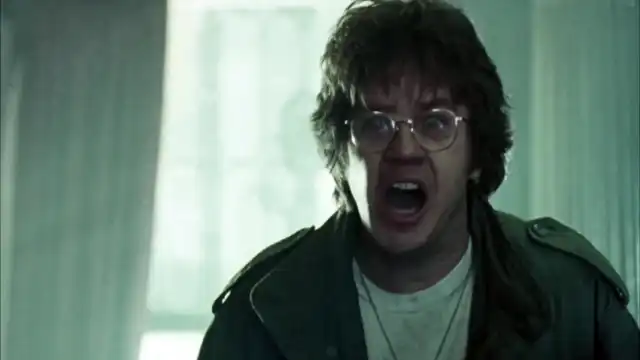
The Ladder Drug: Real Army Conspiracy or Dying Mind Shield?
One lingering plot point continues to confuse viewers. Late in the movie, a chemist named Michael Newman corners Jacob. He claims the army dosed Jacob’s unit with an experimental synthetic compound dubbed “The Ladder”. The chemical was designed to bypass rational thought and unleash untamed homicidal fury. According to Michael, the experiment backfired disastrously: the men went berserk and butchered each other.

The film even closes with a sober text crawl citing real-world BZ drug experiments conducted by the military during that era.
Did the military actually poison Jacob? Or was the government conspiracy another figment of his imagination?
The psychological evidence points firmly to the second answer. Consider the terrifying reality of Jacob’s death. In a fraction of a second, the jungle explodes. Men scream. Smoke fills the canopy. A trusted comrade suddenly thrusts a bayonet straight through Jacob’s belly.
How does an educated man process that level of senseless horror while bleeding into the mud?
The human ego despises meaninglessness. Dying randomly in friendly fire is a cold, indifferent tragedy. Jacob’s subconscious cannot stomach the thought that his life ended over a chaotic mistake. To cope, his dying psyche manufactures an elaborate cover-up. Inventing a sinister military cabal, shady chemists, and top-secret hallucinogens gives his death narrative purpose. It tells him: You were a victim of a grand evil scheme, not meaningless carnage.
While the Pentagon truly did test 3-quinuclidinyl benzilate (BZ) on soldiers at Edgewood Arsenal, actual BZ was an incapacitating agent — it caused lethargy, slurred speech, and deep sleep, not savage cannibalistic bloodlust. The nightmarish, homicidal super-drug described in the film is Jacob’s internal screen, shielding him from the arbitrary cruelty of war.
Jezzie vs Gabe: Earthly Flesh Against Spiritual Surrender

Jacob is caught between two powerful figures pulling him in opposite directions.
On one side stands Jezzie. Her name is a blunt shorthand for Jezebel, the biblical archetype of temptation. Jezzie loves Jacob, but she represents raw flesh, physical survival, and earthly anchorage. She dances provocatively at loud parties, engages in fierce intimacy, and grows furious whenever Jacob brings up his past life or his dead son. In one crucial scene, she deliberately burns pictures of Jacob’s former family in the building furnace. She is fighting to keep him tethered to the physical world, urging him to forget the dead and stay in the grime of mortality.
On the opposing side stands Gabe.
Little Gabe is not an anchor; he is a beacon. Gabe represents unconditional love and the life Jacob once cherished before war shattered his spirit. When Jacob finally stops fighting the government, drops the lawsuits, and returns to his quiet family brownstone, the house is empty. Half-eaten food sits on plates. The bustle is gone.
Sitting alone on the couch, Jacob finally lets go.
Gabe appears at the foot of the stairwell, smiling, and takes his father’s hand. Together, they walk up the stairs toward a warm, blinding light. This stairway is the biblical Jacob’s Ladder from the Book of Genesis — the symbolic bridge linking heaven and earth. By walking up those steps, Jacob completes the journey Meister Eckhart spoke of. The devils have shed their scary masks. Only love remains.
The Subtle Clues Hiding in Plain Sight
Rewatching Jacob’s Ladder with the ending in mind turns the horror film into an open secret. The script practically screams the truth at you in every scene:
- The Palm Reader’s Warning: At an off-duty party, a fortune teller reads Jacob’s hand, recoils in genuine terror, and states flatly: “According to this, you’re already dead!”
- The Gurney Ride Through Hell: When hospital attendants wheel a paralyzed Jacob down bloodstained corridors littered with severed limbs, an orderly leans over him. Jacob begs to go home. The attendant scoffs: “Home? What home? You’re dead.”
- The Slipped Disc: Jacob’s recurring back problems are always localized right where the enemy soldier ran him through with a rifle blade.
- The Ice Bath Fever: When Jacob spikes an unbearable body temperature, Jezzie dumps him into a tub filled with crushed ice. In reality, soldiers dying of shock and internal bleeding suffer massive systemic temperature dysregulation.
Acceptance and the Peaceful Smile
Modern cinema loves trick endings, but most feel cheap — like a gimmick designed to pull the rug out from under the audience.
Jacob’s Ladder avoids that trap because the revelation is an act of mercy, not a cheap trick. When the film snaps back to the muddy medical tent in 1971, the camera rests on Tim Robbins’ face. His skin is pale, but a soft, serene grin plays on his lips.
One exhausted medic pulls back the pupillary light, looks down at the corpse, and mutters: “You know, he put up a hell of a fight… looks peaceful now, though.”
Jacob Singer spent his final breaths fighting demons because he was terrified of dying. The moment he surrendered his attachments, accepted his losses, and reached for the hands of the people he loved, those demons transformed into angels. He was never crazy, he was never hunted by the state, and he was never trapped in Hell. He was just finding his way home.

