

Phineas Gage: Brain Injury, Personality Change & Recovery
You’re standing on a rocky railroad site, holding a heavy iron bar. Suddenly, a massive explosion rocks the ground, and that very iron rod shoots directly through your skull. You don’t drop dead. Instead, you sit up, look at your terrified coworkers, and casually start describing what just happened.
It sounds like a cheesy horror movie plot, doesn’t it? Yet, this is exactly what happened to a 25-year-old rail foreman named Phineas Gage in 1848. His survival remains one of the greatest medical marvels ever recorded. His case fundamentally altered our understanding of how the human brain creates who we are.
For over a century, textbooks have taught that this catastrophic accident turned an upstanding young man into a permanent, lawless drifter. But modern historical deep-dives tell a vastly different, far more inspiring story of human resilience. What really happened to Phineas Gage?
At a glance
- The Injury: A 13-pound tamping iron shot completely through Gage’s left frontal lobe.
- The Science: The accident provided the first clear evidence that distinct brain regions govern specific traits like personality and emotional control.
- The Reality Check: While early accounts claimed he was permanently ruined, modern research proves Gage experienced an incredible long-term recovery.
The Accident in Cavendish
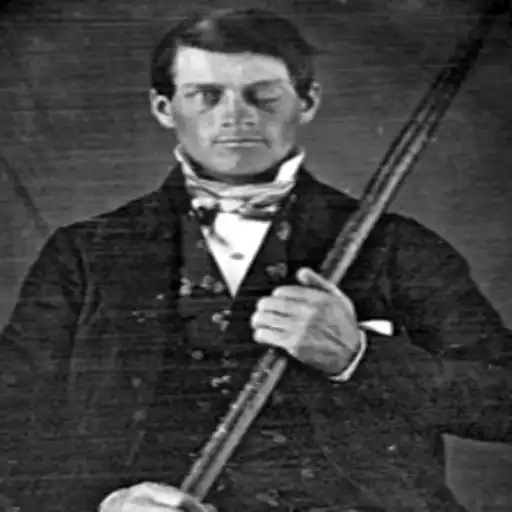
On September 13, 1848, Phineas Gage was working near the quiet village of Cavendish, Vermont. As a trusted foreman for the Rutland and Burlington Railroad, his job was to clear massive boulders using gunpowder. The process required intense focus and a specialized tool: a custom-made tamping iron.
This wasn’t just a small piece of metal. It was a massive, pointed rod measuring 3 feet 7 inches long and weighing over 13 pounds.

Gage was pouring gunpowder into a deep hole drilled into rock. He then turned his head to speak to his men. In that split second of distraction, his heavy iron rod scraped the edge of the granite hole. A single spark flew. It ignited the powder, turning the tamping iron into a missile.
The rod struck Gage’s left cheek, tore through his brain, shattered the top of his skull, and landed dozens of feet away, wet with blood and brain tissue.
How did he survive? The sheer speed of the iron rod might have saved his life. It acted like a hot bullet, instantly cauterizing parts of the wound. Amazingly, Gage never lost consciousness. Within minutes, he was sitting upright in an oxcart, conversing calmly during the ride back to his boarding house. When the local doctor, John Martyn Harlow, arrived, Gage famously greeted him by saying, “Doctor, here is business enough for you.”
What Happened Inside Gage’s Skull?

To understand why this case fascinated the medical community, we have to look at the exact path the metal took. The iron rod targeted the prefrontal cortex, specifically the left frontal lobe.
Medical historians and neuroscientists have spent decades trying to map the precise damage. A landmark neuroimaging study published in PLOS ONE utilized advanced computer modeling to reconstruct the injury. The researchers discovered that while the grey matter of his left frontal cortex was severely damaged, the iron rod also tore through the brain’s white matter.
Think of grey matter as individual computers and white matter as the massive bundles of fiber-optic cables connecting them. By severing these vital connections, the accident didn’t just injure one isolated spot. It completely disrupted the global network connecting Gage’s emotional centers to his logical thinking centers.

“No Longer Gage”: The Myth of the Eternal Psychopath

Before the blast, Gage was highly regarded by his employers as a sharp, well-balanced businessman. He possessed excellent social skills and a persistent work ethic. Once his physical wounds healed under Dr. Harlow’s careful watch, his mental state appeared radically altered.
Dr. Harlow noted that the delicate balance between Gage’s intellectual faculties and his animal propensities seemed utterly shattered. He became fitful, irreverent, and heavily prone to the grossest profanity. He showed little deference for his peers and grew impatient when advice conflicted with his sudden desires. His friends shook their heads and lamented that he was “no longer Gage.”
Because of this erratic behavior, the railroad refused to give him his foreman job back. This specific chapter of his life birthed a massive medical myth. For over a century, psychology textbooks claimed Gage was permanently transformed into an aggressive, sociopathic monster who spent the rest of his days brawling, drinking, and drifting aimlessly.
Why did this exaggerated narrative persist? During the 19th century, scientists were locked in a fierce debate over “localization”—the idea that specific brain parts control specific behaviors. Proponents of this theory loved Gage’s story. They used his behavioral shift to argue that the frontal lobe was the literal seat of human morality and social structure. To make their point stick, subsequent writers slowly exaggerated his symptoms, turning a temporarily unstable man into a cartoon villain.
The Forgotten Story of Gage’s Recovery
Is a broken brain permanently broken? For generations, science assumed the answer was yes. However, meticulous research by Australian psychologist Malcolm Macmillan completely dismantled the myth of Gage’s permanent ruin. As highlighted in a historical review in Frontiers in Human Neuroscience, Gage actually achieved a stunning degree of long-term rehabilitation.
Let’s look at the facts versus the popular folklore surrounding his life post-accident.

The Phineas Gage Reality Check
| Life Element | The Popular Textbook Myth | The Documented Historical Fact |
| Employment Status | He became an aimless drifter who could never hold down a real job. | He worked successfully as a long-distance stagecoach driver in Chile for nearly seven years. |
| Moral Character | He turned into a violent, untrustworthy psychopath. | He lived a peaceful, structured life, showing great care for his family and horses. |
| Core Intelligence | The injury left him with severely depleted mental and memory capacities. | His speech, memory, and advanced mechanical skills remained entirely functional. |
How did this turnaround happen? The secret lay in his decision to move to Valparaíso, Chile, in 1852. There, he took an incredibly demanding job driving heavy, six-horse stagecoaches along rugged mountain passes.
Think about what it takes to drive a team of six horses over unpredictable terrain. It demands intense focus, planning, emotional regulation, and strict physical coordination. The highly structured environment of his Chilean job acted as a natural form of cognitive behavioral therapy. Every day, his brain was forced to build new neural pathways to bypass the damaged areas. This ability of the brain to adapt, rewire, and heal itself is what we call neuroplasticity.
The Final Chapter
Gage’s remarkable journey eventually took a heavy physical toll. By 1859, his health began to deteriorate, and he returned to his family, who had relocated to San Francisco, California. The traumatic brain injury had left behind hidden electrical instability. In February 1860, Gage began suffering from severe epileptic seizures.
On May 21, 1860, nearly twelve years after surviving the impossible, Phineas Gage passed away during a major seizure. He was only 36 years old. Years later, Dr. Harlow learned of his passing and requested that Gage’s family donate his skull and the famous tamping iron to science. Today, they rest together inside the Warren Anatomical Museum at Harvard Medical School, continuing to educate thousands of visiting students.
What can we learn from a railroad worker who lived more than a century ago? Phineas Gage proved to the medical world that our brains shape our identity, our morals, and our futures. More importantly, his late-stage recovery serves as a powerful testament to the human brain’s quiet, stubborn capacity to heal against all imaginable odds.
What Do You Think?
The story of Phineas Gage bridges the gap between historical tragedy and scientific triumph. Did you grow up hearing the textbook myth that he remained an unchangeable drifter, or did you know about his incredible recovery in Chile? Let’s start a conversation in the comments section below!

