

Did M. Night Shyamalan pull off the greatest movie twist of all time? Absolutely. Back in 1999, The Sixth Sense completely shattered our collective minds. Everyone remembers that legendary whisper: “I see dead people.” Consequently, audiences literally gasped when they realized Dr. Malcolm Crowe (Bruce Willis) was a ghost the entire time.
However, the truth was hiding in plain sight from minute one. Have you ever wondered how we all missed it? Surprisingly, it boils down to basic human psychology. According to cognitive perception research, filmmakers actively use “change blindness” and confirmation bias to manipulate our focus. Essentially, we only see what we want to see. Therefore, Shyamalan practically spoon-fed us the reality of Malcolm’s demise. Yet, we completely swallowed the lie.
Are you ready to have your mind blown all over again? Let’s break down the 10 brilliant, undeniable clues that prove Malcolm was dead all along.
1. The Opening Scene: A Fatal Encounter
Let’s talk about the absolute beginning. The movie wastes zero time establishing danger. Specifically, a deranged former patient breaks into Malcolm’s home and shoots him point-blank. Then, the film abruptly jumps ahead to the “next fall.” We never witness Malcolm recovering. We never see a hospital trip. Naturally, we assume he miraculously survived. Why? Because Bruce Willis is a famous action hero! Consequently, our brains fill in the blanks. In reality, that gunshot was absolutely fatal.
2. Malcolm Never Interacts With Physical Objects
Look closely at how Malcolm moves through the world. Interestingly, he never interacts with physical objects when other living people are around. For example, during the infamous anniversary dinner, he doesn’t pull out his chair. Instead, he simply slides into it. Furthermore, when the check arrives, he reaches for it, but Anna snatches it first. Ultimately, he cannot manipulate earthly items. Shyamalan masterfully frames these moments to look like normal human clumsiness or marital tension.

3. The Unchanging Wardrobe
Did you notice Malcolm’s fashion sense? Or rather, his lack of it? Throughout the entire runtime, he wears the exact same clothes. Specifically, he rocks variations of the outfit he died in. Sometimes he throws on an overcoat. Other times, he wears a sweater. Nevertheless, the base layers remain completely identical. According to the movie’s own lore, ghosts are trapped in the appearance of their final moments. Therefore, Malcolm is stuck wearing his death suit forever.
4. Anna’s “Coldness” Is Actually Grief
We are led to believe Malcolm’s marriage is falling apart. For instance, Anna constantly ignores him. She sleeps alone. She even seemingly embraces another man. Consequently, we pity Malcolm for his crumbling relationship. However, rewatching these scenes changes everything. Obviously, Anna isn’t giving him the silent treatment. She is a grieving widow! During the restaurant scene, she speaks to herself because she is celebrating their anniversary completely alone. She literally cannot see or hear him.
5. The Locked Basement Door
Throughout the film, Malcolm desperately tries to open his basement office door. Unfortunately, the red knob simply won’t budge. He assumes he misplaced his key. Surprisingly, the truth is far more tragic. Cole explicitly states that ghosts only see what they want to see. Therefore, Malcolm remembers the house exactly as it was when he lived. Once the illusion shatters, he finally realizes the door isn’t locked at all. Actually, Anna blocked it with a heavy desk to box up his old things.

6. Cole’s Initial Terror
Remember when Cole first meets Malcolm? The kid is absolutely petrified. In fact, he sprints into a church to hide. Initially, we think Cole is just a highly anxious child reacting to a stranger. Yet, think about what Cole actually sees. Ghosts appear to him exactly as they died. Therefore, Cole doesn’t see a friendly therapist in a sharp suit. Instead, he sees a man walking around with a gaping, bloody gunshot wound in his stomach! No wonder the poor kid ran for his life.
7. No One Else Ever Acknowledges Him
This detail is incredibly sneaky. Only Cole ever speaks directly to Malcolm. Granted, Malcolm shares scenes with other adults. For example, he sits right next to Cole’s mother, Lynn. However, she never actually acknowledges his presence. She never looks him in the eye. She never responds to his comments. Consequently, Shyamalan tricks us into thinking Malcolm is just quietly observing as a polite professional. Ultimately, he is literally invisible to everyone except Cole.
8. The Meaning Behind the Color Red
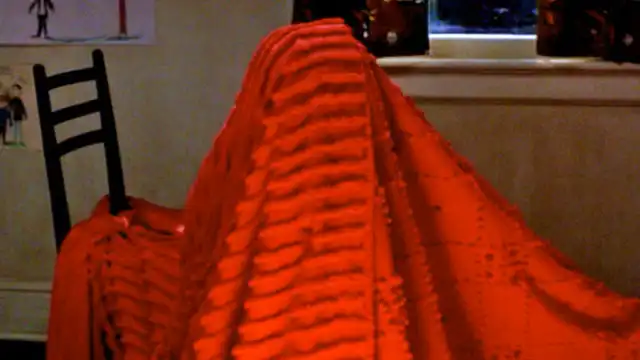
Shyamalan color-codes his movie beautifully. Specifically, the color red signifies a connection to the supernatural or the dead. Do you recall the red doorknob on the basement door? How about the red tent Cole hides in? Similarly, red items constantly surround Malcolm. Moreover, whenever a ghost is about to appear, the temperature visibly drops, and red pops up in the frame. Thus, the director practically painted a neon sign pointing to Malcolm’s true status.
9. The Missing Wedding Ring
Pay close attention to Malcolm’s hands. Strangely, he doesn’t wear a wedding ring. We assume this visually represents his broken marriage. However, the reality is deeply morbid. When someone dies, the mortician or family often removes their jewelry before burial. Because Willis is naturally left-handed, he supposedly had to learn to write with his right hand for the movie. Why? To hide the missing ring on his left hand from overly observant viewers. Consequently, this subtle detail screams “dead guy.”
10. His Own Accidental Confessions
Sometimes, the subconscious tells on itself. During their first real chat, Cole asks Malcolm if he is a good doctor. Interestingly, Malcolm replies, “I used to be.” Furthermore, whenever Malcolm gets highly emotional, he subconsciously clutches his stomach. Specifically, he grabs the exact spot where he was shot. These aren’t just throwaway acting choices. Instead, they are deliberate hints that his soul vaguely remembers the trauma of his own murder.
The Rules of the Dead in Shyamalan’s Universe

To fully grasp the brilliance of this twist, we must understand the specific rules Shyamalan established. Crucially, these rules apply perfectly to Malcolm throughout the story.
- Rule 1: They Only See What They Want to See. As Cole famously whispers, ghosts don’t know they are dead. Consequently, they exist in a state of profound denial. Therefore, Malcolm genuinely believes he is still trying to save his marriage and cure patients.
- Rule 2: They Only See Each Other If They Want To. Interestingly, ghosts don’t wander around having supernatural parties. Instead, they are intensely focused on their own unresolved trauma. Thus, Malcolm never notices the other terrifying spirits haunting Cole.
- Rule 3: They Bring the Cold. Whenever a spirit gets angry or emotional, the surrounding air turns freezing cold. Obviously, Malcolm’s sheer presence inherently brings a supernatural chill to his surroundings, even if he doesn’t realize it.
The Psychology of Being Fooled
Let’s get real for a second. How did an entire generation miss these glaring hints? Simply put, our brains are lazy. According to the World Health Organization (WHO) frameworks on mental processing, human brains rely heavily on established patterns to process information quickly.
Because we saw Bruce Willis acting like a living protagonist, our brains stubbornly locked onto that narrative. We ignored the anomalies. Furthermore, Shyamalan’s masterful pacing kept us thoroughly distracted by Cole’s terrifying ghost encounters. Ultimately, The Sixth Sense isn’t just a spooky movie. Actually, it is a brilliantly executed psychological experiment played on the audience.
Why This Twist Changed Cinema Forever
Before 1999, movies certainly had twists. Look at The Empire Strikes Back or Psycho. However, The Sixth Sense invented a completely new subgenre: the puzzle-box thriller. Suddenly, audiences didn’t just want a good story. Instead, they wanted to be tricked. They demanded movies that required a second viewing.
Furthermore, it ruined Bruce Willis’s traditional action hero typecast in the best way possible. Instead of shooting bad guys, he gave a deeply vulnerable, tragic performance. Moreover, Haley Joel Osment delivered an Oscar-worthy performance at age 11. Ultimately, this film proved that horror could be emotionally devastating rather than just mildly scary.
Frequently Asked Questions
Did Bruce Willis know the twist before finishing the script?
Surprisingly, no. According to Hollywood lore, Willis initially thought it was a straightforward psychological drama. Consequently, he didn’t realize his own character was a ghost until he read the very last pages. Did that massive reveal shock him? Absolutely. Ultimately, this initial ignorance helped him play the role with perfect, genuine obliviousness.
How did Donnie Wahlberg prepare for his terrifying opening scene?
Interestingly, the former boy-band star underwent brutal physical torment. Specifically, he starved himself to drop 43 pounds for just three minutes of total screen time. Furthermore, he purposefully isolated himself in a dark room to capture Vincent’s completely shattered psyche. Was that extreme method acting worth it? Definitely. Therefore, his startling transformation completely shocked both the crew and the audience.
Why did M. Night Shyamalan cast himself as the pediatrician?
Actually, this casting choice was a direct homage to his own family. Specifically, both of the director’s parents are real-life doctors. However, his acting nerves almost ruined the emotional scene. Naturally, sharing the screen with a powerhouse like Toni Collette severely intimidated him. Consequently, he nervously cut most of his own dialogue in the final editing room!
How did a 10-year-old Haley Joel Osment nail such a dark audition?
Admittedly, his father made a brilliantly grim parenting choice. Specifically, Eugene Osment told his son the script was about desperate communication, rather than just scary monsters. Furthermore, the young actor stubbornly stayed up the entire night before his reading. Why? To look genuinely exhausted and deeply haunted. Ultimately, that authentic, sleep-deprived aura instantly won him the iconic role.
Did the camera crew actively hide Bruce Willis’s shadow on set?
Not entirely, but they were incredibly sneaky. However, the cinematographer meticulously framed shots to avoid emphasizing Malcolm’s physical footprint. For example, you rarely see his reflection in mirrors alongside living characters. Moreover, the lighting crew actively avoided casting his shadow directly across other actors. Indeed, this subtle visual trickery subconsciously told our brains he wasn’t truly occupying the physical space.
Final Thoughts
Now it’s your turn. Grab some popcorn, fire up your favorite streaming service, and rewatch this 1999 masterpiece. Knowing the truth entirely changes the emotional weight of every single scene. Did you spot any other subtle hints we missed? Drop a comment below with your favorite sneaky detail!
Additionally, share this breakdown with a friend who still thinks The Sixth Sense is just a basic scary movie. Finally, don’t forget to bookmark this page and subscribe to our newsletter for more mind-bending movie explanations and deep dives!

