

You’ve probably seen the dramatic headlines. Another year passes, and another massive wave of honey bee deaths sweeps the nation. We treat this news with a brief sigh of disappointment before going back to our daily routines.
But the situation in our agricultural backyards has reached a boiling point.
Between June 2024 and February 2025, commercial beekeepers in the United States reported losing a staggering 62% of their colonies. That translates to roughly 1.6 million vanished hives. This isn’t just a minor hiccup in nature. It is a full-blown agricultural crisis that cost the beekeeping industry over $600 million in a matter of months.
Are the bees just flying away? Are they getting sick? Is it all because of pesticides?
The truth is messy. Honey bees face a toxic cocktail of parasitic vampires, neurotoxic chemicals, and starving landscapes. Let’s break down exactly what is happening inside the hive, clarify the mystery of Colony Collapse Disorder, and figure out how we can actually fix this mess.
Quick read
- CCD is a specific mystery. Colony Collapse Disorder refers strictly to a phenomenon where worker bees vanish overnight, leaving the queen behind.
- The real killer has eight legs. Today, the biggest threat to bees isn’t sudden disappearance — it’s a parasitic mite called Varroa destructor.
- Pesticides scramble bee brains. Neonicotinoid chemicals don’t always kill bees on contact. Instead, they destroy the insect’s internal GPS and memory.
- Monocultures cause starvation. Vast farms growing only one crop leave bees malnourished and vulnerable to disease.
- The economic stakes are massive. Pollinators are responsible for billions of dollars in crop production annually. Without them, your grocery bill will skyrocket.
What Exactly is Colony Collapse Disorder (CCD)?
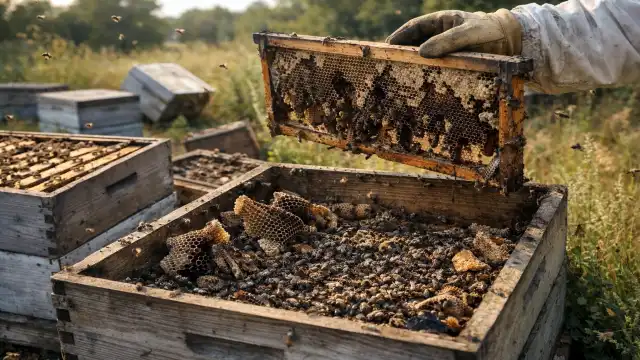
Let’s clear up a massive public misunderstanding right out of the gate. People often use “Colony Collapse Disorder” as a catch-all phrase for any time bees die.
That is scientifically incorrect.
CCD is a very specific, nightmare scenario that first made waves around 2006. Beekeepers would open their hives after winter and find them entirely empty. There were no dead bee bodies scattered around the entrance. The worker bees simply flew off and never came back. Bizarrely, they left behind their queen, unhatched larvae, and a stockpile of untouched honey.
It was like a science fiction movie. A thriving city of 50,000 insects, turned into a ghost town overnight.
While the exact trigger for classic CCD was never perfectly pinned down to a single cause, the Environmental Protection Agency (EPA) and the USDA eventually concluded it was likely a combination of severe stress factors. However, here is the plot twist: documented cases of classic CCD have actually dropped significantly over the last decade.
Does that mean the bees are saved? Absolutely not.
They are still dying at unprecedented rates. They just aren’t pulling a disappearing act anymore. Instead, we are finding hives full of sick, dead, and dying bees. To understand why this modern massacre is happening, we have to look at the four primary culprits driving today’s hive collapses.
Why Are Bees Dying Today?
Forget the mystery of vanishing workers for a moment. The current crisis is much easier to see under a microscope, even if it is harder to solve.
1. Vampire Mite (Varroa destructor)

If you want to design the perfect villain for a honey bee, look no further than the Varroa mite.
This external parasite is aptly named Varroa destructor. Imagine a tick the size of a dinner plate attaching itself to your body. That is the physical reality for a honey bee dealing with a Varroa infestation. These mites latch onto adult bees and developing larvae, feeding on their bodily fluids and fat stores.
Feeding alone weakens the bee, but the real damage is viral. Varroa mites are dirty needles. They act as vectors for at least five debilitating diseases, most notably the Deformed Wing Virus (DWV). When a bee is infected with DWV during its larval stage, it hatches with shriveled, useless wings. A bee that cannot fly cannot forage. A bee that cannot forage starves the colony.
We have reached a terrifying tipping point with these parasites. According to massive agricultural studies conducted in early 2025, Varroa mites have evolved. They are now showing severe resistance to amitraz, the primary chemical miticide beekeepers use to keep them in check.
Our best weapon against the mites is failing. The result? A massive spike in acute bee paralysis and sudden colony death.
2. Neurotoxic Pesticides (Neonicotinoids)
Farmers need to protect their crops from pests. We all understand that. But the collateral damage caused by our current chemical arsenal is devastating.
Enter neonicotinoids, often just called “neonics.”
Unlike older pesticide sprays that wash off in the rain, neonics are systemic. A seed is treated with the chemical before planting. As the plant grows, it absorbs the toxin into its vascular system. The chemical ends up in the leaves, the stems, and most importantly, the pollen and nectar.
When a honey bee lands on a treated flower, it doesn’t instantly drop dead. Instead, it suffers “sublethal effects”.

Neonics attack the insect’s central nervous system. Recent research reveals that exposure alters brain gene expression, causing profound memory loss and spatial disorientation. Imagine trying to navigate a dense city without a map, while dizzy and confused. Foraging bees simply forget how to find their way back to the hive.
The horror doesn’t stop with the workers. Studies show that when queen bees are exposed to these chemicals, their reproductive systems shut down. Sperm viability in drone bees drops by nearly 40%. A colony cannot survive if the queen can’t lay healthy eggs.
Europe largely banned outdoor use of these chemicals years ago. Yet, they remain widely used in many parts of the globe, silently scrambling the brains of our most important pollinators.
3. “Strawberry Diet” and Habitat Loss
Let’s talk about nutrition. Humans cannot survive on a diet consisting exclusively of plain pasta. We need vitamins, minerals, and varied protein sources.
Bees are no different. They require a diverse mix of pollen from multiple types of flowers to build a robust immune system.
Unfortunately, modern agriculture relies heavily on monoculture farming. This practice involves planting thousands of acres of a single crop — like almonds, corn, or soybeans. For a brief window, there is an ocean of food. But it’s only one type of food. Feeding a hive nothing but almond pollen for weeks is the nutritional equivalent of forcing a human to eat nothing but strawberries.
Once that single crop finishes blooming, the landscape becomes a barren, green desert. There are no wildflowers. There are no weeds. Just miles of manicured grass or harvested stalks.
Malnourished bees cannot fight off infections. Their fat bodies shrink. When winter hits, these starved, weakened colonies simply freeze and fade away.
4. Climate Change and Shifting Seasons
Weather patterns dictate a bee’s entire life cycle.
Warmer winters and unpredictable spring thaws are throwing nature’s delicate timing completely out of sync. A sudden warm spell in February might trick a hive into waking up early. The bees burn through their honey reserves, flying out to find fresh nectar.
But the flowers haven’t bloomed yet.

By the time a late frost rolls in, the bees are caught outside or trapped in a hive with zero food. This ecological mismatch is quietly starving millions of wild and managed pollinators before the spring season even truly begins.
Why You Should Care ($18 Billion Problem)
You might not care about insects. You might even be allergic to them. Why should the average person worry about a few bugs dying off?
Look at your dinner plate.
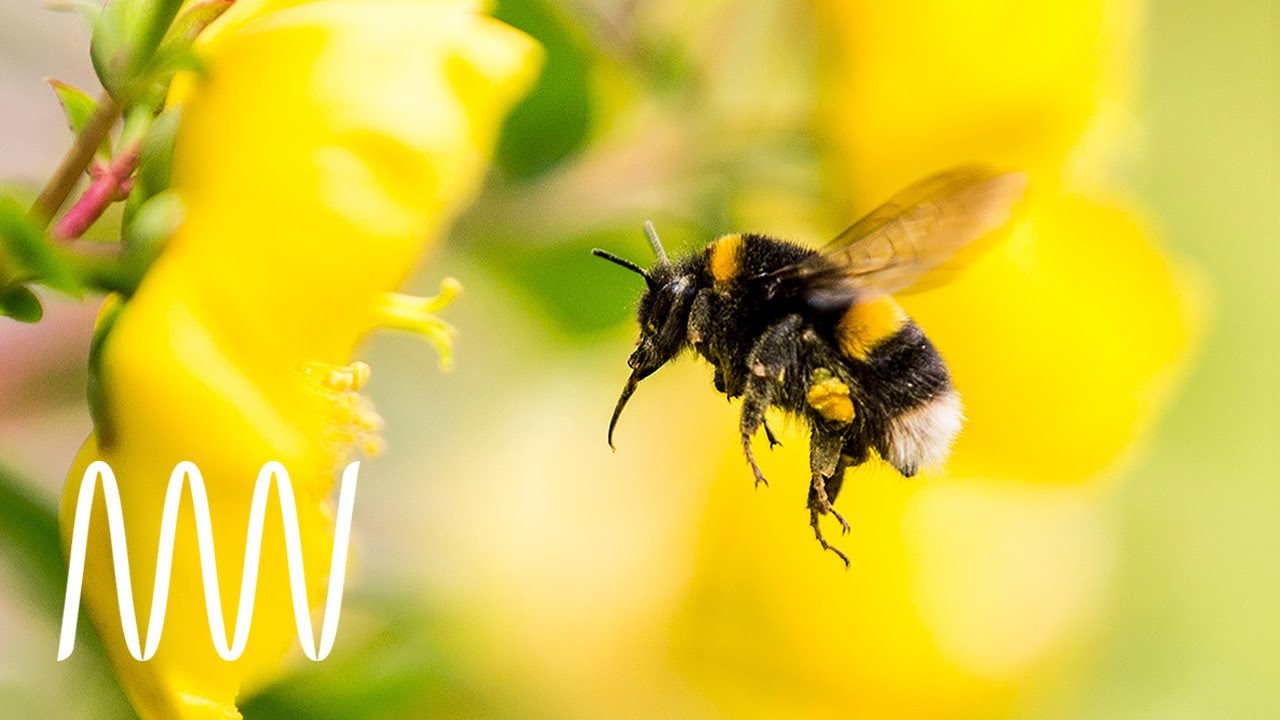
One-third of the human diet relies directly on insect pollination. We aren’t just talking about honey. We are talking about apples, cherries, blueberries, avocados, almonds, broccoli, and squash. Without honey bees transferring pollen from one blossom to another, these crops fail.
The U.S. Department of Agriculture values this pollination work at roughly $18 billion annually.
When beekeepers lose 60% of their hives, the cost of renting the surviving colonies for crop pollination skyrockets. Farmers pass those exact costs directly onto you at the grocery checkout line. If the bee decline continues at this aggressive pace, nutrient-dense fruits and vegetables will transition from everyday staples into luxury items.
How You Can Actually Help Save the Bees
The problem feels massive. It involves international chemical conglomerates, global weather patterns, and microscopic genetics. But fixing the pollinator crisis actually starts in our own front yards.
You don’t need to buy a beekeeper suit to make a difference.
- Ditch the perfect lawn. Manicured, weed-free turf is an ecological wasteland. Let some clover and dandelions grow. To a hungry spring bee, a dandelion is a lifesaving hamburger.
- Plant native flowers. Visit your local nursery and ask for native plants that bloom at varying times of the year. You want something flowering in early spring, mid-summer, and late fall so local hives have a constant, diverse buffet.
- Stop spraying poisons. Throw away the broad-spectrum insecticides and cosmetic weed killers. If you absolutely must treat a pest problem, seek out organic, bee-safe alternatives. Never spray blooming plants.
- Support local beekeepers. Skip the mass-produced, bear-shaped plastic bottles of generic honey. Go to a farmer’s market and buy raw honey from someone in your zip code. You are directly funding the people fighting the Varroa mite on the front lines.
- Provide a water source. Bees get thirsty too. A shallow birdbath filled with clean water and a few resting stones prevents exhausted foragers from drowning while they drink.
The honey bee is remarkably resilient. A healthy colony can survive brutal winters, fend off predators, and adapt to harsh conditions. But they cannot survive a simultaneous assault of mutant mites, brain-altering chemicals, and mass starvation.
They need our help to level the playing field.
What’s your next step?
Have you noticed fewer bees in your garden this year? Leave a comment below and tell us one small change you plan to make in your yard this spring to help local pollinators. Whether it’s planting a single pot of lavender or letting your dandelions grow wild, every tiny action matters. Let’s get to work!

