

Horror fans and occult enthusiasts often stumble upon the ultimate forbidden text. You have probably heard the terrifying whispers about a book bound in human skin. Supposedly, reading its pages will drive you completely insane. Welcome to the dark, mysterious legend of the Necronomicon.
Basically, this infamous grimoire is known worldwide as the “Book of the Dead.” Therefore, people naturally assume it sits locked away in the Vatican or hidden in some dusty underground museum. However, the true story is much weirder than any ancient curse.
Let’s explore the factual history, the bizarre 1977 Simon Grimoire, and the real psychology explaining why modern practitioners swear this magic actually works.
The Fictional Origins: H.P. Lovecraft and “The Hound”
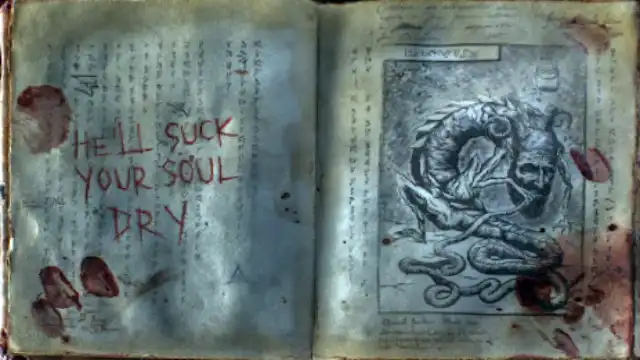
First, we must burst a massive bubble. The Necronomicon is absolutely, unequivocally, 100% fake. In fact, it was invented entirely by the legendary cosmic horror author H.P. Lovecraft.
Specifically, Lovecraft first mentioned the dreaded text in his short story “The Hound,” which he wrote in September 1922 and officially published in the February 1924 issue of Weird Tales. Consequently, readers instantly fell in love with the idea of a forbidden, sanity shattering encyclopedia.
So, where did Lovecraft get the inspiration? Actually, he created a rich, fake backstory for it. According to his 1927 essay “History of the Necronomicon,” a “Mad Arab” named Abdul Alhazred penned the original text in the 8th century under the Arabic title Al Azif. Interestingly, Abdul Alhazred wasn’t a historical figure at all. Instead, it was simply a playful pseudonym Lovecraft adopted when he was a five year old boy obsessed with The Arabian Nights.
Furthermore, Lovecraft actively encouraged other writers like August Derleth and Clark Ashton Smith to reference the book in their own stories. By doing so, they essentially crowdsourced a myth. Because multiple authors kept dropping casual hints about the Necronomicon, fans naturally assumed it was real. Ultimately, Lovecraft spent the rest of his life patiently writing letters to curious fans, explaining that the book was just a clever plot device.
The Simon Necronomicon (1977): When Fiction Became a “Real” Grimoire

Despite Lovecraft’s repeated denials, the myth refused to die. Decades later, the 1970s ushered in a massive occult revival. Suddenly, people craved dark, esoteric knowledge. Naturally, someone decided to cash in on the legend.
In 1977, a mysterious figure known only as “Simon” published what we now call the Simon Necronomicon through Avon Books. This is where things get genuinely wild. Rather than just copying Lovecraft’s fictional alien gods (like Cthulhu), Simon created a massive, incredibly detailed magical mashup.
Here is what the 1977 Simon Grimoire actually contains:
- Sumerian and Babylonian Mythology: The author shamelessly lifted real translations from pioneering 19th century Assyriologists. Consequently, the incantations use genuine ancient Middle Eastern languages.
- Aleister Crowley’s Influence: The book heavily borrows structural elements from Crowley’s real world ceremonial magic systems.
- Lovecraftian Flavor: Finally, Simon sprinkled Lovecraft’s fictional deities on top, aggressively claiming that Lovecraft and Crowley were somehow tapping into the exact same ancient, cosmic truths.
Indeed, the marketing was brilliant. The introduction firmly warned readers that the rituals were incredibly dangerous. Moreover, Simon claimed he received the translated manuscript from a mysterious monk. Is any of that true? Absolutely not. Today, most historians and occult scholars strongly suspect that “Simon” was actually occult writer Peter Levenda. Essentially, he masterfully blended real Babylonian history with 20th century pulp fiction to create a highly profitable hoax.
The Psychology of Chaos Magic: Why Do People Think It “Works”?
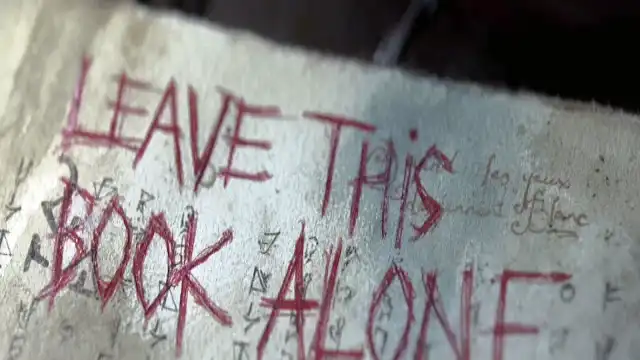
Here is the most fascinating twist in the entire saga. Even though the Simon Necronomicon is a proven 1970s hoax, thousands of people actively use it. Furthermore, they genuinely claim to get terrifying, real world results.
How is that logically possible? The answer lies in human psychology and a fascinating modern occult practice known as Chaos Magic.
What is Chaos Magic?
Basically, Chaos Magic emerged in the late 1970s and 1980s. Unlike traditional religions, this system argues that belief itself is just a psychological tool. Therefore, the historical accuracy of a magical text doesn’t matter at all. Instead, the only thing that matters is the psychological state of the practitioner.
According to this modern framework, if you deeply believe in Batman, you can perform a magic ritual invoking Batman to give you strength. Consequently, using a fake book filled with fictional alien gods works perfectly fine, provided you can mentally trick yourself into taking it seriously.
The Power of the Placebo Effect
Logically, the human brain is highly susceptible to the placebo effect. When you perform a complex, spooky ritual in a dark room smelling of incense, your brain naturally shifts gears.
- Heightened Awareness: Suddenly, your adrenaline spikes due to the spooky atmosphere.
- Pattern Recognition: You start hyper focusing on random coincidences in your daily life.
- Confirmation Bias: If you cast a spell for money and randomly find a twenty dollar bill the next day, your brain ignores the statistical odds and directly credits the spell.
According to psychological studies on human perception, we see exactly what we expect to see. Therefore, when teenage edge lords read the Simon Necronomicon’s dire warnings and try the rituals, they absolutely terrify themselves. The shadows in the corner genuinely seem to move. Ultimately, the “monsters” they summon are just physical manifestations of their own repressed anxiety.
The Concept of the Egregore
Additionally, occultists point to the concept of an egregore. Essentially, an egregore is a psychological thoughtform created by the collective belief of a large group of people. Because millions of readers have spent the last century obsessing over the Necronomicon, believers argue that the book has generated its own independent psychological energy.
Does this mean Cthulhu is actually real? Obviously not. However, it does mean that the idea of Cthulhu carries intense emotional weight. By tapping into that shared cultural nightmare, practitioners can effectively trigger profound psychological changes within themselves.
Can a Fake Book Actually Be Dangerous?
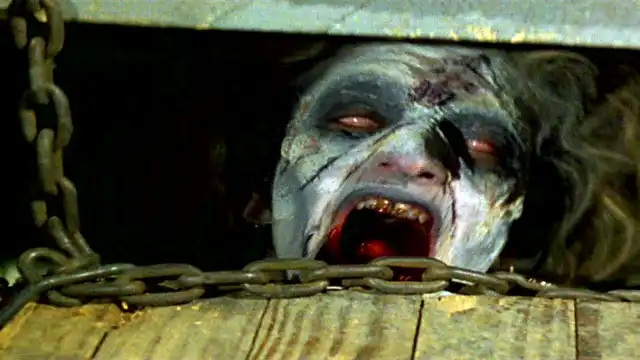
So, is it safe to mess around with the Necronomicon? From a purely scientific standpoint, demons won’t drag you to hell. However, playing with extreme psychological triggers is never totally harmless.
When vulnerable, mentally unbalanced individuals dive into chaotic, fear based rituals, bad things can logically happen. The danger isn’t supernatural; it is psychological.
Consider the real world consequences:
- The Nocebo Effect: This is the evil twin of the placebo effect. If you genuinely believe you have cursed yourself, your body reacts with actual physical stress, insomnia, and panic attacks.
- Paranoia: Staring into the dark while chanting fake Babylonian words will mess with your baseline reality testing.
- Real Life Tragedies: Tragically, unstable individuals have occasionally used the Simon Necronomicon to justify horrific acts, such as the infamous 1996 “Vampire Clan” murders led by Rod Ferrell.
Basically, the book is only as dangerous as the mind of the person reading it.
The Ultimate Legacy of the Mad Arab
Looking back, H.P. Lovecraft accomplished something truly spectacular. He didn’t just write a scary story. Instead, he birthed an entire modern mythology.
Today, the Necronomicon pops up everywhere. You can easily spot references to it in movies like The Evil Dead, popular video games, and heavy metal lyrics. Furthermore, thanks to the Simon Grimoire, it firmly established itself on the shelves of real world occultists.

Ultimately, the truth behind the Book of the Dead highlights a beautiful quirk of human nature. We desperately want the world to be more mysterious than it actually is. Consequently, if a magical book doesn’t exist, we will simply invent one. And then, surprisingly, we will convince ourselves that it was real all along.
What are your thoughts on this legendary literary hoax? Have you ever flipped through a copy of the Necronomicon? Drop a comment below, share this deep dive with your fellow horror buffs, and let us know if you believe human psychology is the real magic!
Frequently Asked Questions
Did the Pope actually ban the Necronomicon in the Middle Ages?
Absolutely not. Because H.P. Lovecraft completely invented the book in 1922, the medieval Catholic Church never interacted with it. However, Lovecraft playfully claimed in his fictional 1927 essay that Pope Gregory IX banned the text in 1232. Ultimately, fans simply confused his brilliant world building with actual European history.
Why is the Simon Necronomicon filled with actual Babylonian words?
Basically, the mysterious author “Simon” wanted his 1977 hoax to look flawlessly authentic. Therefore, he shamelessly plagiarized real translations from early 20th century Assyriologists. By directly copying ancient Mesopotamian incantations and mixing them with Lovecraft’s fictional alien gods, he successfully fooled thousands of eager occultists.
What is Chaos Magic, and how does it relate to Lovecraft?
Essentially, Chaos Magic is a postmodern occult movement that treats human belief as a literal tool. Practitioners strictly argue that historical accuracy doesn’t matter. Consequently, they often use Lovecraft’s fictional monsters in real rituals because the sheer horror of the mythology triggers a massive, highly effective psychological response.
Was the author of the Simon Grimoire ever officially identified?
Officially, no. However, almost all modern occult historians heavily suspect Peter Levenda wrote it. Although Levenda consistently denies being “Simon,” he openly admits to working closely on the original 1977 publication. Furthermore, the writing style closely mirrors his later historical and conspiracy based research.
Can reading the Necronomicon actually damage your mental health?
Supernaturally? No. Psychologically? Yes, it certainly can. If an unstable or highly anxious person performs terrifying rituals in the dark, they will logically trigger the “nocebo effect.” Consequently, this induces extreme paranoia, sleep deprivation, and panic attacks, effectively making the “curse” a self fulfilling psychological prophecy.
Sources help:
- https://en.wikipedia.org/wiki/The_Hound
- https://www.goodreads.com/book/show/58973.The_Necronomicon
- https://en.wikipedia.org/wiki/Necronomicon
- https://en.wikipedia.org/wiki/Simon_Necronomicon

