

Lizzie Halliday: The ‘Worst Woman on Earth’ Who Made Lizzie Borden Look Innocent
When you hear the name “Lizzie” followed by “murder,” your brain likely jumps straight to a certain axe-wielding Sunday school teacher from Fall River. You know the rhyme. You know the acquittal. But here’s the thing: Lizzie Borden was an amateur compared to Lizzie Halliday.
While Borden was accused of killing two people and walked free, Halliday left a trail of husbands, arson, and bodies across New York that earned her the terrified nickname “The Worst Woman on Earth.” She was a whirlwind of chaos who didn’t just kill; she burned, shot, and stabbed her way into the history books, only to be largely forgotten.
Why? Because unlike Borden, Halliday didn’t have a wealthy family or a good lawyer. She was a force of nature that the 1890s media couldn’t handle. Let’s get into the twisted life of the Catskill Ripper.
Who Was Lizzie Halliday? (The Early Years & Immigrant Origins)
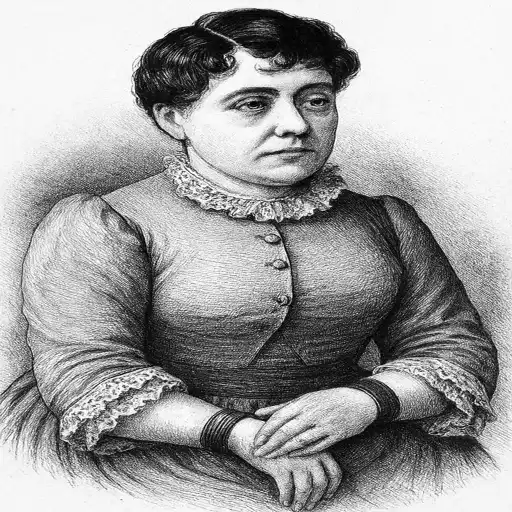
Before the headlines, there was just Eliza Margaret McNally. Born in County Antrim, Ireland, around 1859, she immigrated to the United States as a young child. If you’re looking for a “nature vs. nurture” debate, Lizzie is a tough case study. Her early life is a blur of aliases and vanishing spouses that would make a modern detective’s head spin.
By the time she arrived in upstate New York, she had already cycled through a confusing roster of husbands.
- Charles Hopkins (a.k.a. Ketspool Brown): Dead.
- Artemus Brewer: Dead.
- Hiram Parkinson: Deserted her (probably the smartest man in this story).
- George Smith: She allegedly tried to poison him before fleeing with his valuables.
She was a grifter, a drifter, and according to those who knew her prone to “spells” of mania. But her deadliest chapter began when she set her sights on an elderly farmer in Sullivan County named Paul Halliday. She married him in the early 1890s. Spoiler alert: It didn’t end with a rocking chair on the porch.
Why Was She Called “The Worst Woman on Earth”?
The newspapers of the 1890s didn’t use that title lightly. They called her the “Worst Woman on Earth” because her crimes weren’t just violent they were relentless.
The Fire and the Son
The trouble started in 1891 when the Halliday family home burned to the ground. Tragedy, right? Not quite. Paul Halliday’s mentally disabled son, John, died in the blaze. Lizzie claimed he had been trapped. However, evidence suggested the door had been locked from the outside. She was suspected of arson and murder, but in a time before forensics, she slipped through the cracks.
The Bodies in the Barn
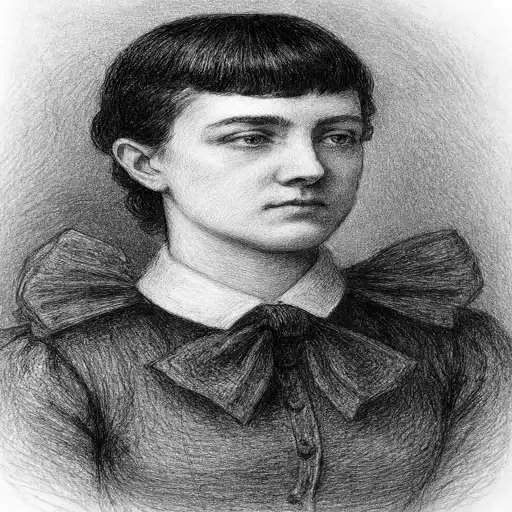
In August 1893, Paul Halliday disappeared. Lizzie told neighbors he was away on masonry work. But the neighbors in Burlingham weren’t buying it. They noticed a strange smell coming from the barn.
When authorities finally searched the property, they found a horror show. Hidden in the hay were the decomposing bodies of Margaret and Sarah McQuillan a mother and daughter Lizzie had known from her days in Philadelphia. They had been bound and shot.
But where was Paul?
Police ripped up the floorboards of the kitchen. There, buried in a shallow grave, was the body of Paul Halliday. He had been bound, shot, and mutilated. The sheer number of victims discovered in one week turned the local press into a frenzy. This wasn’t a crime of passion; it was a slaughterhouse.
The Catskill Ripper: Was She Connected to Jack the Ripper?
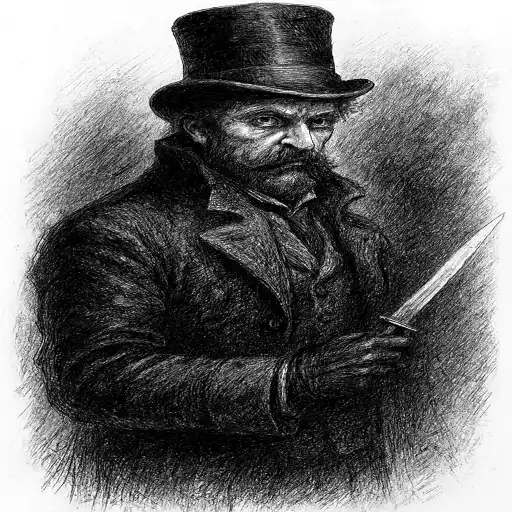
This is where the story goes from “local tragedy” to “international conspiracy.”
In 1893, the world was still trembling from the Whitechapel murders in London (1888). Jack the Ripper had never been caught. Enter Sullivan County Sheriff Harrison Beecher. After seeing the mutilation on Paul Halliday’s body and witnessing Lizzie’s absolute lack of remorse, Beecher went on record with a wild theory: Lizzie Halliday was Jack the Ripper.
Was it true? Almost certainly not.
Most historians agree that the timeline doesn’t fit perfectly, and the modus operandi (method of killing) was different. Ripper victims were slashed; Halliday preferred guns and fire (though she would later switch to sharp objects).
However, the media loved it. The idea that the Ripper was a woman a “Jill the Ripper” hiding in the Catskills sold thousands of newspapers. Whether she was the Ripper or not, she certainly possessed the same chaotic energy.
The Trial: Becoming the First Woman Sentenced to the Electric Chair
If you think modern courtroom dramas are intense, you should have seen The People vs. Lizzie Halliday.
Lizzie did not sit quietly. She treated the court like a stage. She tore her clothes, screamed profanities at the judge, and attacked her own defense counsel. At one point, she tried to strangle the Sheriff’s wife.
Despite her “insanity” defense, the jury didn’t buy it or they just wanted her gone. In 1894, she was convicted and sentenced to death.
Historical Milestone: Lizzie Halliday became the first woman in history sentenced to the electric chair.
New York had only recently adopted the chair (first used on William Kemmler in 1890), and the idea of frying a woman was controversial. Governor Roswell P. Flower eventually stepped in. A medical commission declared her legally insane, and her sentence was commuted. She was shipped off to Matteawan State Hospital for the Criminally Insane.
Society sighed in relief. They thought she was locked away for good. They were wrong.
The Final Murders: The Brutal Stabbing of Nurse Nellie Wickes
Lizzie spent over a decade at Matteawan. By 1906, she had become a “model patient.” She was granted privileges, including sewing tools. She even befriended a young nurse named Nellie Wickes.
But Lizzie Halliday didn’t do “friends.” She did “possessions.”
When Nellie Wickes announced she was leaving the hospital to take a new job, Lizzie felt betrayed. On a quiet afternoon in 1906, Lizzie cornered the nurse in a bathroom.
Armed with a pair of stolen scissors (some reports say shears), Lizzie attacked. She didn’t just strike once. She stabbed Nellie Wickes over 200 times.
It was a frenzy of violence that shocked even the hardened asylum staff. Lizzie then calmly washed her hands and changed her clothes. The “Worst Woman on Earth” had claimed one last victim from inside a secure facility.
Comparison: Lizzie Halliday vs. Lizzie Borden
Why does everyone know Borden, but almost no one knows Halliday? Let’s break it down.

| Feature | Lizzie Borden | Lizzie Halliday |
| The Crime | Accused of killing father & stepmother. | Killed husband, stepson, neighbors, nurse. |
| The Weapon | Axe (allegedly). | Fire, Gun, Scissors. |
| The Outcome | Acquitted (Found Not Guilty). | Convicted (Insane Asylum for life). |
| Social Status | Wealthy, upper-middle class. | Poor, Irish immigrant. |
| Body Count | 2 (Suspected). | 4+ (Confirmed). |
The Reality Check:
Lizzie Borden had the money to hire the best lawyers and the social standing to make a jury hesitate. Ladies of her stature didn’t chop up their parents, or so the Victorian thinking went.
Lizzie Halliday, on the other hand, was poor, an immigrant, and undeniably unhinged. She didn’t have a rhyme, but she had a much higher body count. Halliday was objectively the deadlier woman, a true serial killer who hunted for profit and revenge.
Frequently Asked Questions About Lizzie Halliday
Was Lizzie Halliday actually related to Lizzie Borden?
No, Lizzie Halliday and Lizzie Borden were not related, despite sharing a first name and a reputation for violence in the 1890s. While Lizzie Borden was a wealthy spinster from Massachusetts acquitted of axe murder, Lizzie Halliday was an impoverished Irish immigrant in New York convicted of multiple murders. However, the media often compared them because their crimes occurred during the same era.
Why was Lizzie Halliday called “The Worst Woman on Earth”?
Newspapers dubbed her the “Worst Woman on Earth” due to the sheer volume and variety of her crimes. Unlike typical killers of her time who used poison, Halliday was violently chaotic. She burned down her home (killing her stepson), shot her husband, bound and buried two women in a barn, and later stabbed a nurse over 200 times. Her lack of remorse and erratic behavior in court solidified the terrifying nickname.
Is there any proof that Lizzie Halliday was Jack the Ripper?
There is no concrete proof, but it was a major theory in 1893. Sullivan County Sheriff Harrison Beecher publicly speculated that Halliday might be connected to the Whitechapel murders because she had lived in England and the mutilation of her husband, Paul Halliday, resembled the Ripper’s style. However, most modern historians debunk this, noting that Halliday preferred guns and arson, whereas Jack the Ripper used a knife and targeted strangers on the street.
Did Lizzie Halliday really stab a nurse 200 times?
Yes. In one of the most brutal asylum attacks in history, Halliday killed Nurse Nellie Wickes in 1906 at the Matteawan State Hospital. Feeling betrayed that Wickes was leaving for another job, Halliday cornered her in a bathroom and stabbed her roughly 200 times with a pair of scissors. This murder proved that even after being institutionalized, Halliday remained extremely dangerous.
How did Lizzie Halliday finally die?
Lizzie Halliday died of natural causes (specifically Bright’s disease, a kidney ailment) on June 28, 1918, while still incarcerated at the Matteawan State Hospital. She spent the last 24 years of her life in the asylum, outliving many of the judges, lawyers, and husbands associated with her chaotic life.
Who was deadlier: Lizzie Borden or Lizzie Halliday?
Statistically, Lizzie Halliday was deadlier. Lizzie Borden was accused of killing two people (her father and stepmother) but was acquitted and died a free woman. Lizzie Halliday had a confirmed body count of at least four (her husband, stepson, and two women) and was convicted. Halliday was a serial killer with a clear pattern of eliminating anyone in her way, making her the more dangerous of the two “Lizzies.”
Are you fascinated by the dark history of the Catskills?
Next time you’re driving through Sullivan County, remember: it wasn’t always a peaceful vacation spot. It was the hunting ground of the Catskill Ripper. If you love uncovering forgotten history, share this article with your true-crime group chat let’s give Lizzie Halliday the infamy she earned.
Sources help:
- https://en.wikipedia.org/wiki/Lizzie_Halliday
- https://tamuforensics.miraheze.org/wiki/Halliday,_Lizzie
- https://www.newyorkalmanack.com/2014/08/a-short-history-of-serial-killer-lizzie-brown-halliday/

