

The Donner Party: Forensic Evidence of What Really Happened
When you hear “The Donner Party,” your brain probably jumps straight to one grisly detail: cannibalism. It’s the ultimate American horror story, right? A group of pioneers gets stuck in the snow and turns on each other. But here is the thing history is rarely that simple, and the science is even more complicated.
For over a century, the story was told through rumors, sensationalized newspaper articles, and the terrified memories of traumatized children. However, recent archaeological digs and forensic science have blown the dust off this legend. The truth isn’t just about what they ate; it is about how hard they fought to stay alive.
So, let’s skip the campfire ghost stories. We are going to look at the cold, hard facts, the forensic evidence, and the timeline that turned a dream vacation into a nightmare.
The Setup: A fateful Shortcut
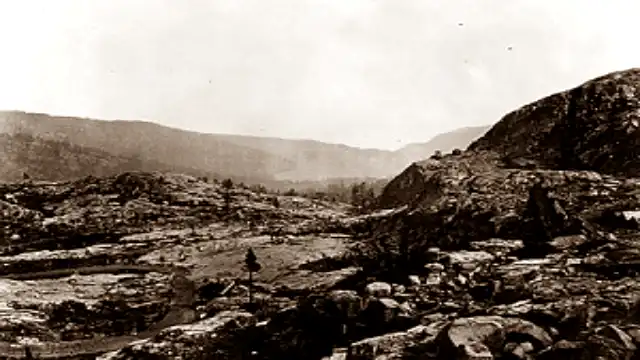
To understand the disaster, you have to understand the map. In the spring of 1846, 87 pioneers left Springfield, Illinois, headed for California. They were average families the Donners, the Reeds, the Breens looking for a better life.
Everything was going fine until they reached Fort Bridger. There, they made a decision that sealed their fate. They decided to take the Hastings Cutoff.
The Sales Pitch
Lansford Hastings was a guy who wrote a guidebook about a “new” route to California. He claimed it would shave 300 miles off the trip. There was just one problem: Hastings had never actually traveled the full route himself before writing about it.
Here is the reality of the “shortcut”:
- It wasn’t a road. It was a rugged, awful trail through the Wasatch Mountains and the Great Salt Lake Desert.
- Instead of saving time, it added 125 miles to their journey.
- It cost them weeks of precious time.
By the time the group stumbled out of the shortcut and rejoined the main trail, their cattle were exhausted, and morale was broken. Worse, winter was coming.
The Trap: Snowbound in the Sierra

If they had arrived just a few days earlier, they might have made it over the pass. But on October 31, 1846, the first flakes began to fall.
The group was split into two main camps, separated by about six miles:
- The Lake Camp: Located at what is now Donner Lake. This group (the Murphys, Breens, Graves, and Reeds) built crude cabins.
- Alder Creek Camp: The Donner families (George and Jacob) lagged behind because of a broken wagon axle. They didn’t have time to build cabins. They were stuck in flimsy tents, huddled under pine trees.
Then, the storm hit. And it didn’t stop. We aren’t talking about a few inches of powder. We are talking about drifts that eventually reached 20 feet deep.
The Forensic Evidence: Did They Eat Each Other?
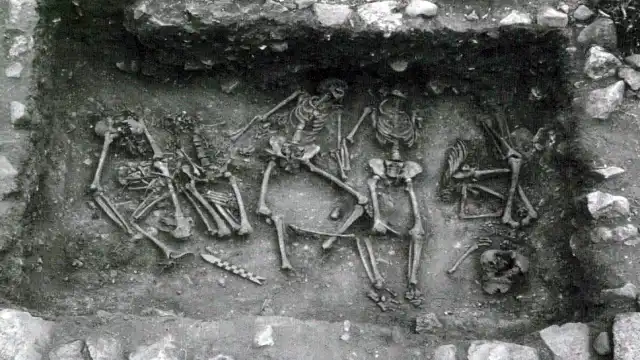
This is where the story gets scientific. For decades, historians assumed cannibalism was rampant at both camps. However, in 2003 and 2004, a team of archaeologists from the University of Oregon and the University of Montana, led by Dr. Julie Schablitsky and Dr. Kelly Dixon, excavated the Alder Creek site.
They wanted to see if the physical evidence matched the stories. What they found (and didn’t find) changed the narrative.
The Bones Tell the Story
The team recovered roughly 16,000 bone fragments from the Alder Creek hearth (fireplace). If the stories of a cannibalistic feeding frenzy were true, you would expect to find human bones mixed in, right?
Here is what the lab analysis found:
- Animal DNA: The bones belonged to cattle, deer, horses, and dogs.
- No Human Bones: At the Alder Creek site (the Donner family camp), the team found zero human bones.
Does this mean cannibalism never happened? No. It means it wasn’t the first option. The forensics prove that these people tried absolutely everything else first.
“Pot Polish” and Desperation
The bones they did find told a heartbreaking story of starvation. Under a microscope, the animal bones showed signs of “pot polish.” This happens when bones are boiled for hours and hours.
Why boil a bone that has no meat on it? To get the grease. The pioneers were smashing animal bones and boiling them to extract every single calorie of marrow and grease. They were eating their rugs. They were eating the hide off the roofs of their cabins. They even ate the family dog (bones identified as Canis familiaris were found in the fire).
The forensic takeaway? Cannibalism was the absolute last resort. It wasn’t savagery; it was a calculated, desperate attempt to survive after the leather and bone marrow ran out.
The “Forlorn Hope”: Where the Line Was Crossed
While the Alder Creek evidence is ambiguous, we know for a fact that cannibalism occurred elsewhere. In December, a group of 15 men and women tried to hike out of the mountains on makeshift snowshoes. They were called the “Forlorn Hope.”
They got lost. They ran out of food. And people started dying.
Survivors later recounted that out on the open snow, stripped of societal norms, they had to eat the bodies of their dead companions to keep moving. By the time they reached a settlement weeks later, only seven of the original 15 were alive.
The Survivors: Who Lived and Why?
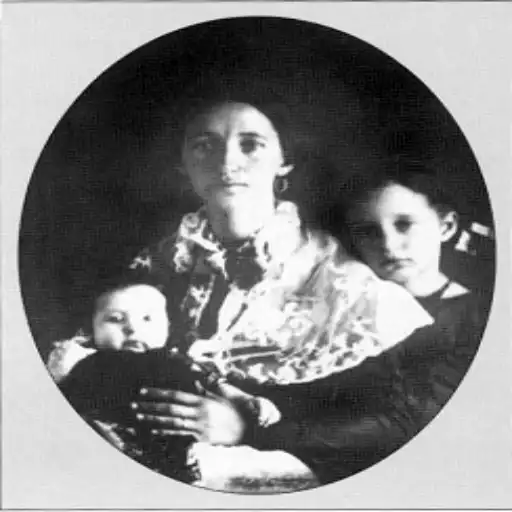
Of the 87 people trapped in the mountains, only 48 survived. That is a survival rate of about 55%. But who lived?
If you look at the demographics, a clear pattern emerges.
- Women outlived men: Two-thirds of the women survived, compared to only one-third of the men.
- Age mattered: Children between 6 and 14 had a decent survival rate. Infants and the elderly (over 49) were the first to die.
- Family size: Large families that stuck together (like the Breens) tended to survive better than single men.
The Heroism of Tamsen Donner
One of the most tragic figures is Tamsen Donner. She was George Donner’s wife. She was healthy enough to walk out with the rescue parties. In fact, rescuers urged her to save herself.
She refused. George was dying of an infection and starvation. Tamsen chose to stay behind at Alder Creek to comfort her husband in his final days, sending her children ahead to safety. She never made it out.
Timeline of the Tragedy
To help you visualize how long this ordeal lasted, here is the breakdown:
- April 14, 1846: The core group leaves Springfield, Illinois.
- July 20, 1846: The fatal decision to take the Hastings Cutoff.
- October 31, 1846: The front of the party reaches the pass, but snow blocks the way.
- December 16, 1846: The “Forlorn Hope” snowshoe party leaves camp.
- February 19, 1847: The First Relief party arrives. They can only take a few people.
- April 1847: The Fourth (and final) Relief party arrives to salvage property. Only Lewis Keseberg is found alive.
Fact vs. Fiction: Busting the Myths
Over the years, pop culture has twisted the facts. Let’s set the record straight.
Myth 1: They murdered people for food.
Fact: With the exception of two Native American guides (Luis and Salvador) who were tragically shot by the Forlorn Hope party in a state of delirium, there is little evidence that people at the camps murdered each other for food. They almost exclusively ate those who had already died of starvation.
Myth 2: Lewis Keseberg was a monster.
Fact: Keseberg was the last man found at the camps. He was surrounded by half-eaten bodies and a pot of human flesh. Rescuers accused him of murdering Tamsen Donner. However, Keseberg sued for defamation later in life and won. He admitted to eating the dead to survive (a necessity), but he vehemently denied murder. He lived the rest of his life as a pariah, but historically, he was likely just a desperate man in an impossible situation.
Myth 3: Everyone participated.
Fact: Not everyone touched human flesh. The Reed family, for example, managed to survive without it (mostly because James Reed had cached supplies ahead on the trail after he was banished earlier in the trip).
Why This Story Still Matters
It is easy to judge the Donner Party from the comfort of a heated home with a full fridge. But forensic science reminds us of their humanity. These weren’t ghouls. They were parents boiling leather strips to feed their starving children. They were teenagers hiking through waist-deep snow.
The broken animal bones at Alder Creek prove that they held onto their humanity for as long as physically possible. They didn’t turn on each other until the biological imperative to survive overrode everything else.
So, the next time you hear about the Donner Party, don’t just think about the ending. Think about the endurance it took to get there.
FAQs: The Darkest Questions About the Donner Party
Did the Donner Party actually eat each other?
Yes, but not immediately. While popular culture focuses on the gore, forensic evidence shows cannibalism was a last resort. At the Alder Creek camp, archaeologists found thousands of animal bones but zero human bones, proving the families there boiled cattle hides and family dogs before even considering human flesh. However, survivor accounts confirm that the “Forlorn Hope” snowshoe party and those at the Lake Camp eventually consumed the bodies of those who had already died of starvation to survive.
How many people survived the Donner Party?
Out of the 87 pioneers who entered the Wasatch Mountains, only 48 survived. That is a 55% survival rate. Interestingly, women fared much better than men due to their slower metabolism and higher body fat percentage. About two-thirds of the women survived, compared to only one-third of the men.
Who was the last person rescued?
Lewis Keseberg was the last survivor brought down from the mountain in April 1847. When rescuers found him, he was alone, surrounded by the bodies of the dead. He was famously vilified as a “human cannibal” and accused of murdering Tamsen Donner for food, though he successfully sued for defamation later in life.
Why couldn’t they just go back?
By the time they realized they were trapped, the snow at the pass was already five feet deep. Their wagons could not pass over the rocky terrain in that depth. Within weeks, the snow drifts reached 20 feet, burying their cabins. Without snowshoes (which they had to make later), walking back through the deep powder was a suicide mission.
Is the Donner Party campsite haunted?
Many visitors to Donner Memorial State Park report an eerie atmosphere, but there is no scientific proof of hauntings. However, the site remains a somber graveyard. The “Murphy Cabin” site is marked by a large rock that served as the cabin’s back wall, standing as a silent witness to the tragedy.
Call to Action:
Does the forensic evidence change how you view the Donner Party? Or do you think the mysteries buried in the Sierra snow will never be fully solved? Drop a comment below or share this with a friend who loves history!
Sources help:
- https://highways.dot.gov/highway-history/general-highway-history/back-time/hastings-cutoff-and-highway-80-tragedy-donner
- https://www.digitalhistory.uh.edu/disp_textbook.cfm?smtID=2&psid=3251
- https://pages.uoregon.edu/digital/uonews-archive/archive/news-release/2011/10/archaeology-desperation-details-donner-tragedy.html

