

Have you ever walked past an Italian bakery in mid March? If so, you probably noticed the windows piled high with golden, cream filled pastries. Naturally, your mouth watered. Those beautiful treats are called Zeppole di San Giuseppe. Every year on March 19th, Italy essentially runs on them.
But why this specific pastry? And why on this exact day? Honestly, the story is wilder than you might think. It involves ancient Roman wine gods, a famous Biblical flight to Egypt, and a 19th-century Neapolitan duke. Furthermore, March 19 marks St. Joseph’s Day. In Italy, that doubles as Father’s Day. Consequently, eating these fried dough rings is a massive cultural event.
Let’s dig into the exact reasons why Italians eat Zeppole on St. Joseph’s Day. We will explore the traditions, the quirky history, and the deep meaning behind every single bite.
What Exactly is a Zeppola di San Giuseppe?
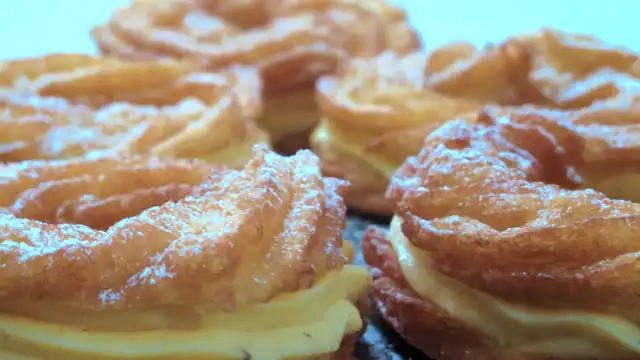
Before we talk history, we need to define the food. What makes a true zeppola? Ultimately, it is a simple yet brilliant creation.
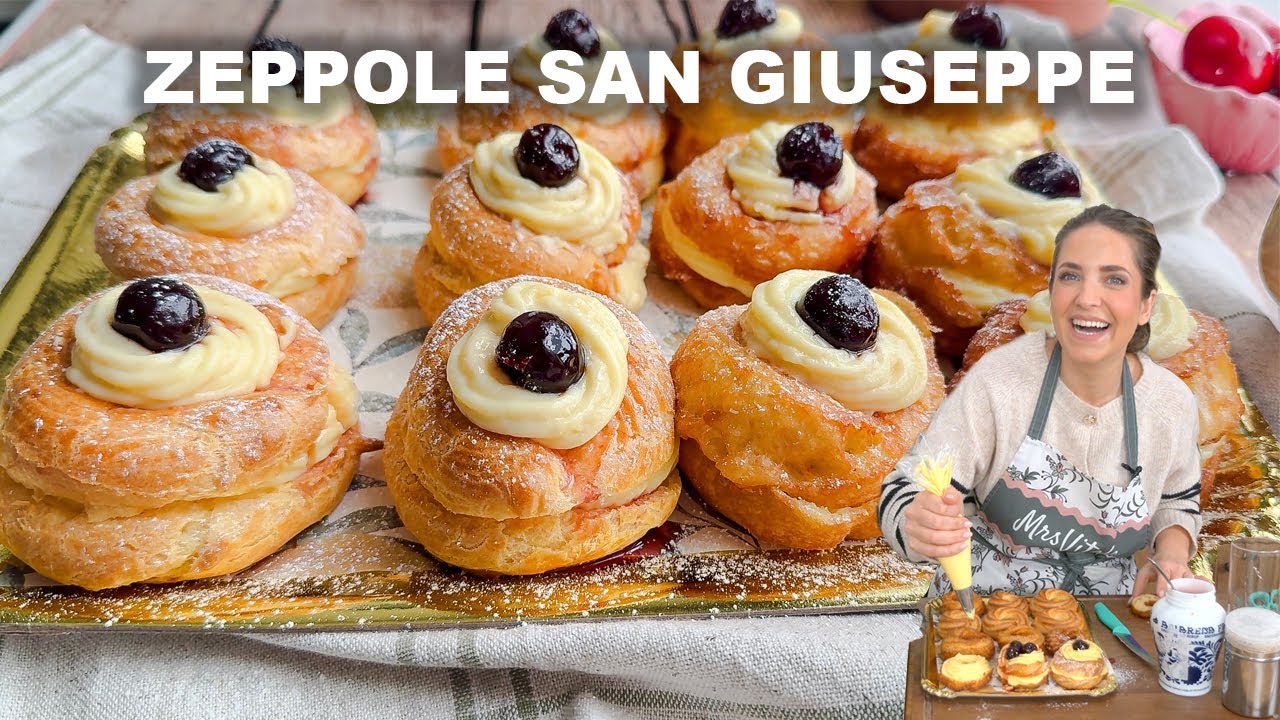
A Zeppola di San Giuseppe is a ring of choux pastry. Bakers pipe the dough into a circle, then cook it until puffy and golden. Traditionally, they deep fry it in oil or lard. However, many modern bakeries offer baked versions for a lighter finish. Once cooked, the pastry gets filled and topped with velvety crema pasticcera (Italian pastry cream). Finally, a single syrupy amarena (sour cherry) sits right on top, finished with a generous dusting of powdered sugar.
Sounds amazing, right? It absolutely is.
The contrast of textures drives people crazy. You get a crisp exterior, a soft, airy inside, and the rich, vanilla scented cream. Then, the tartness of the dark cherry cuts right through the sweetness. Therefore, it never feels too heavy. You can easily eat two. Maybe three. No judgment here.
The Surprising History of Zeppole (It Goes Way Back)
If you ask three different Italians where zeppole came from, you will get three different answers. Accordingly, the history breaks down into three main theories. Let’s look at the facts.
1. The Biblical Legend: St. Joseph the Fritter Vendor
For many devout Catholics, the origin starts with the Holy Family. According to religious lore, Mary and Joseph had to flee to Egypt with the baby Jesus to escape King Herod. Obviously, moving to a foreign land with zero income is tough. So, how did Joseph support his family?

Legend says he became a street vendor. Specifically, he sold fried dough pancakes. Because of this, ancient Romans later gave St. Joseph the nickname il frittellaro (the fry cook). Thus, eating fried dough on his feast day honors his hard work and sacrifice as a father. It is a beautiful story. Still, historians point to an even older tradition.
2. The Pagan Roots: Ancient Rome and Liberalia
Long before Christianity took hold, the Romans knew how to throw a party. Around 500 BC, they celebrated a festival called Liberalia on March 17th. This bash honored Bacchus, the god of wine, and his mentor, Silenus.
During Liberalia, citizens drank massive amounts of wine. Meanwhile, they consumed sweet wheat fritters fried in boiling lard. These treats were essentially the great grandparents of the modern zeppola.
Centuries later, Emperor Theodosius II outlawed pagan cults. Consequently, the Roman Catholic Church had a problem. People loved their spring festivals. To fix this, the Church cleverly assimilated the old traditions into new Christian holidays. Since St. Joseph’s Day landed on March 19th just two days after Liberalia, the timing was perfect. As a result, the pagan wheat fritters smoothly transitioned into Christian feast day treats.
3. The Neapolitan Nobility: The First Official Recipe
Despite the ancient myths, the zeppola we know today has a clear birthplace: Naples.
For hundreds of years, local street vendors fried simple dough balls in the open air. In fact, the famous German writer Johann Wolfgang von Goethe wrote about seeing these hot, sizzling pastries during his travels to Naples in the late 1700s.
However, the modern pastry cream and cherry version didn’t get documented until 1837. Enter Ippolito Cavalcanti, the Duke of Buonvicino. He was a famed Neapolitan gastronomist. Cavalcanti published a cookbook titled Trattato di Cucina Teorico-Pratica (Treatise on Theoretical and Practical Cuisine). Inside this historic text, he wrote down the very first official recipe for Zeppole di San Giuseppe. Interestingly, he wrote it in the local Neapolitan dialect. From that moment on, the recipe was locked in history.

Why March 19th? Understanding St. Joseph’s Day
In the United States, March usually means St. Patrick’s Day. Conversely, in Italy, March 19th steals the spotlight. But why is this date so important?
First, it aligns closely with the spring equinox. Historically, agrarian societies used this time to perform purification rites. Farmers lit huge bonfires to burn away winter brushwood. Symbolically, the fire welcomed the fertility of spring. Even today, some southern Italian towns light the Fanoja di San Giuseppe (St. Joseph’s bonfire) while eating, you guessed it fried dough.
Second, the date carries immense religious weight. St. Joseph represents the ultimate protector. He is the patron saint of carpenters, workers, and fathers. Because of this, Italy officially adopted March 19th as Father’s Day (Festa del Papà) in 1968.

Think about how Americans celebrate Father’s Day. Usually, it involves a barbecue or a new necktie. In Italy, children buy boxes of zeppole for their dads. Historically, parents used to buy wooden toys for their kids on the “Carpenter’s Feast”. When the day officially became Father’s Day, the roles flipped. Now, kids bring the sweets home.
Regional Variations: How the South Celebrates
While Naples claims the crown, the rest of Southern Italy puts its own spin on the tradition. Italians are fiercely proud of their regional food. Therefore, a zeppola in Puglia looks slightly different than one in Sicily.
Here is how different regions mix things up:
- Campania (Naples): The strict traditionalist approach. Choux pastry, crema pasticcera, and an amarena cherry. Period.
- Sicily: Bakers often use rice flour in the dough. Afterward, they coat the fried rings in sticky orange honey and powdered sugar.
- Sardinia: They call them zippulas. Here, the dough frequently incorporates saffron and a hint of citrus zest. Often, they eat them during Carnival leading up to St. Joseph’s Day.
- Puglia: The dough gets fried in olive oil instead of lard. Sometimes, locals mix a little bit of liqueur into the batter for an extra kick.
No matter the region, the core meaning remains intact. The pastry brings families together.
The Great Debate: Fried or Baked?
Let’s be real for a second. Deep frying anything makes it taste better. That is just basic science. Historically, authentic Zeppole di San Giuseppe are always fried. Remember the ancient Romans cooking in boiling lard? That technique built the foundation of the flavor.
Nowadays, health conscious eaters often choose the baked version (zeppole al forno). Baking the choux pastry makes it lighter and puffier, similar to a standard cream puff. Is it delicious? Absolutely. Is it historically accurate? Not quite.
Food purists will argue that a baked zeppola is just a glorified pastry shell. On the other hand, the baked version allows you to eat a massive dessert without needing a nap immediately afterward. Ultimately, the choice is yours. Both versions dominate bakery displays from January through late March.
The Italian-American Experience
When millions of Southern Italians immigrated to the United States in the late 19th and early 20th centuries, they packed their traditions. Consequently, cities like New York, Boston, and Philadelphia became hubs for St. Joseph’s Day celebrations.
In places like Manhattan’s Little Italy, bakeries start cranking out zeppole weeks in advance. However, Italian-American bakeries often tweak the recipe. For instance, you might find zeppole filled with sweetened ricotta or even chocolate cannoli cream. While a Neapolitan grandmother might roll her eyes at a chocolate filled zeppola, these variations show how food gracefully evolves.

The Spectacle of St. Joseph’s Altars
Furthermore, Italian-Americans and Sicilians use St. Joseph’s Day to give thanks. During a medieval famine in Sicily, peasants prayed to St. Joseph for rain. When the rains finally came, they grew fava beans to survive. To show gratitude, they created “St. Joseph’s Altars” (or Tavole di San Giuseppe).
These massive tables hold bread, fava beans, wine, and endless platters of zeppole. It is a stunning display of faith, charity, and community. Because the holiday falls during Lent, no meat is served. Instead, the zeppola acts as the grand finale of this sacred, meatless banquet. It proves that even in times of restriction, Italians find a way to eat spectacularly well.
How to Eat a Zeppola Like a Local
Want to participate in the tradition? You cannot just grab a pastry and eat it randomly. There are unwritten rules to enjoying a Zeppola di San Giuseppe properly.
- Timing matters: Do not eat this for breakfast. Italians generally prefer a light, sweet cornetto with their morning cappuccino. Save the zeppola for dessert after a heavy Sunday lunch.
- Pair it right: Serve it with a shot of strong espresso. The bitterness of the coffee perfectly balances the sweet, rich custard.
- Use your hands: Forks and knives ruin the fun. Pick it up. Yes, you will get powdered sugar all over your shirt. Yes, a blob of cream might hit your chin. Embrace the mess. It is part of the experience.
- Share the love: Never buy just one. In Italy, you buy a tray wrapped in elegant paper, tied with a ribbon, and bring it to your father or your family.
The Meaning Behind the Bite
Food is never just food. Especially in Italy. When you bite into a zeppola, you are participating in a story that spans thousands of years.
You are tasting the legacy of ancient Roman spring festivals. You are experiencing the 1837 ingenuity of a Neapolitan duke. Most importantly, you are honoring the concept of family and fatherhood. In a fast-paced, modern world, taking a moment to sit down, share a pastry, and celebrate the people who raised us is profoundly grounding.
Take the amarena cherry, for example. It isn’t just for decoration. The rich, sweet cream symbolizes the joys of family love. Conversely, the bitter, tart cherry reflects the hardships a father endures to protect his household. Together, they create harmony.
Sure, it is a delicious sugar rush. But the deep rooted cultural survival makes it special. The recipe survived emperors, wars, and oceanic migrations. It adapted, evolved, and thrived.
Join the Tradition!
So, the next time March 19th rolls around, skip the generic chocolate bars. Track down an authentic Italian bakery. Ask for a Zeppola di San Giuseppe. Look at that perfect swirl of cream and that glossy amarena cherry.
Take a bite. Think about the history. Share it with someone you love.
Whether you prefer them fried to crispy perfection or baked for a lighter crunch, these pastries offer a genuine taste of Italian soul. Have you ever tried one? If you haven’t, mark your calendar for March. Call your local bakery, order a half dozen, and treat your family. Your taste buds and your dad will thank you!

