

If you think Valentine’s Day has always been about heart-shaped chocolates and overpriced roses, you might want to sit down. The real story isn’t a rom-com. It’s actually a horror movie.
We tend to view February 14th through the lens of Hallmark cards and dinner reservations. However, if you peel back the centuries, you don’t find Cupid. You find sacrificed goats, a Roman lottery system, and a saint who was literally beaten to death.
Ready for the truth? Here is the bloody, messy, and fascinating history of how we got from public whippings to “Be Mine.”
Lupercalia: The Pagan Party That Started It All

Long before we were exchanging polite greeting cards, the ancient Romans were celebrating Lupercalia. Held annually from February 13th to 15th, this wasn’t exactly a date night. It was a chaotic fertility festival dedicated to Faunus (the Roman god of agriculture) and the founders of Rome, Romulus and Remus.
So, what actually went down during Lupercalia?
The festivities began with a sacrifice. Members of the Luperci (an order of Roman priests) would gather at a sacred cave. They would sacrifice a goat for fertility and a dog for purification. But it didn’t stop at the altar.
The Ritual of the Bloody Thongs
After the sacrifice, things got weird. The priests would slice the goat’s hide into strips. These strips were dipped in the sacrificial blood. The priests would then take to the streets, gently slapping women and crop fields with the bloody goat skin.
You’re probably thinking, “Why would anyone agree to this?”
Believe it or not, Roman women actually welcomed the contact. During that era, it was widely believed that being touched by the bloody hide (called februa) would make them more fertile in the coming year. This ritual is actually where we get the name for the month of February—it literally means “purification.”
The Original “Match.com”
Legend suggests there was also a matchmaking component to Lupercalia, though some historians debate its accuracy. According to the story, all the young women in the city would place their names in a big urn. The city’s bachelors would each choose a name.

The result? The pair would be coupled up for the duration of the festival (and often longer). Often, these random matches ended in marriage. It was efficient, sure. But romantic? Hardly.
Who Was St. Valentine? (And Why Was He Beheaded?)

As Rome became Christianized, the church wasn’t thrilled about a holiday involving naked men running around with goat skins. Enter St. Valentine.
Here is the problem: The Catholic Church actually recognizes at least three different saints named Valentine or Valentinus, all of whom were martyred. The history is murky, but the most popular theory focuses on a priest who served during the third century in Rome.
The defiance of Emperor Claudius II
Emperor Claudius II decided that single men made better soldiers than those with wives and families. His solution? He outlawed marriage for young men.
Valentine, realizing the decree was unjust, defied Claudius. He continued to perform marriages for young lovers in secret. When Valentine’s actions were discovered, Claudius ordered that he be put to death.
The First “Valentine” Note
While in jail awaiting execution, legend says Valentine fell in love with the jailer’s daughter, who visited him during his confinement. Before his death, it is alleged that he wrote her a letter signed, “From your Valentine.”
It’s a phrase we still use today, usually without realizing it was originally signed by a man about to be clubbed and beheaded. He was executed on February 14, 270 A.D.
How The Church Hijacked the Holiday
For a long time, Lupercalia and the memory of St. Valentine co-existed loosely in the cultural mindset. However, by the end of the 5th century, the church had enough of the pagan rituals.
Pope Gelasius I muddied the waters. In 496 A.D., he officially declared February 14th as St. Valentine’s Day. The goal was to stamp out the pagan celebration of Lupercalia by replacing it with a Christian feast day.
Did it work? Sort of.
The church successfully banned the naked running and the goat sacrifices. Yet, the day didn’t immediately become about “romance.” For centuries, it was just a religious observance honoring a martyr. The “love” part wouldn’t arrive for another thousand years.

Chaucer: The Man Who Invented Romance
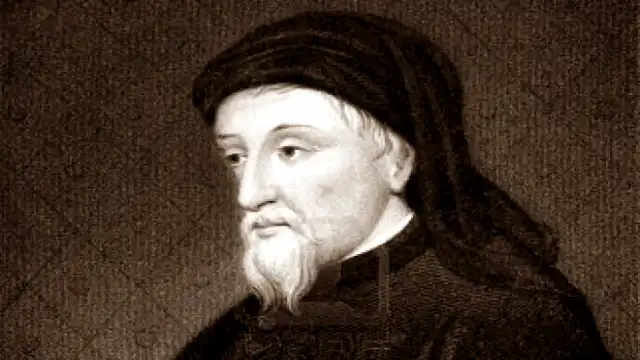
If you want to blame someone for the pressure to be romantic in February, blame Geoffrey Chaucer.
Before the Middle Ages, there is no record of Valentine’s Day being celebrated as a romantic holiday. That changed around 1375 when Chaucer wrote Parliament of Fowls.
In this poem, he links the tradition of courtly love with the celebration of St. Valentine’s feast day. He wrote:
“For this was sent on Seynt Valentyne’s day / Whan every foul cometh there to choose his mate.”
Chaucer took a grim anniversary of an execution and rebranded it as the day birds (and humans) find their partners. The idea stuck. High society in Europe began sending love notes during bird-mating season. By the time Shakespeare came around, Ophelia was mentioning Valentine’s Day in Hamlet, cementing it in pop culture.
From Executions to Billion-Dollar Industry
So how did we get from medieval poetry to spending over $25 billion annually in the U.S. alone?
The Mother of the American Valentine
In the 1840s, a woman named Esther Howland began selling the first mass-produced valentines in America. Known as the “Mother of the Valentine,” she created elaborate creations with real lace, ribbons, and colorful pictures.
She expected to sell about $200 worth of cards. She ended up selling over $5,000 worth (a small fortune at the time). The commercial floodgates were open.
The Chocolate Connection
In 1861, Richard Cadbury (yes, that Cadbury) saw a marketing opportunity. He improved his chocolate-making technique to extract pure cocoa butter, creating a more palatable eating chocolate. He packaged these chocolates in heart-shaped boxes decorated with Cupids and rosebuds.
The brilliance? Even after the chocolates were eaten, people kept the beautiful boxes to store mementos and love letters. It was arguably the first stroke of genius in Valentine’s marketing.

Is Valentine’s Day a Lie?
In a way, yes.
The modern holiday is a strange cocktail of a Roman whipping ritual, a Catholic martyrdom, medieval poetry, and Victorian marketing.
- Is it pagan? Its roots in Lupercalia certainly are.
- Is it Christian? Technically, it’s named after a Saint.
- Is it commercial? Absolutely.
But knowing the dark history doesn’t mean you can’t enjoy it. It just makes the day a little more interesting. So, when you bite into that chocolate heart this year, remember: at least you aren’t running through the streets of Rome dodging a bloody goat skin.
And honestly? That’s something worth celebrating.
Fast Facts
- Who is Cupid? In Roman mythology, Cupid is the son of Venus, the goddess of love. In Greek mythology, he was Eros. He wasn’t always a chubby baby; early art depicted him as a handsome, dangerous man who played with people’s emotions.
- The “X” Symbol: Why do we sign letters with “XOXO”? In the Middle Ages, many people couldn’t write. They would sign documents with an “X” in the presence of witnesses and then kiss the X to show sincerity.
- Vinegar Valentines: In the Victorian era, people didn’t just send love letters. They also sent “Vinegar Valentines” mean, anonymous cards insulting the recipient’s looks or intelligence. Talk about trolling before the internet.
Frequently Asked Questions
Is Valentine’s Day actually a pagan holiday?
Technically, yes. While the modern holiday is named after a Christian martyr, its roots are deeply intertwined with Lupercalia, an ancient Roman fertility festival held in mid-February. Pope Gelasius I established St. Valentine’s Day in 496 A.D. largely to overshadow and replace these pagan rituals, which involved goat sacrifices and running through the streets with bloody hides.
What is the dark story behind Valentine’s Day?
The “dark story” refers to two main events: the brutal nature of the Roman festival Lupercalia (where women were whipped with goat skins to ensure fertility) and the violent execution of St. Valentine. The saint was beaten with clubs and beheaded by Emperor Claudius II for illegally performing marriages for soldiers.
Did St. Valentine really exist?
Yes, but his identity is complicated. The Catholic Church recognizes at least three different saints named Valentine or Valentinus, all of whom were martyred. The most famous figure was a priest in Rome during the third century. However, because the historical accounts are so old and legendary, the Church actually removed St. Valentine from the General Roman Calendar in 1969, though he remains a saint.
Why do we celebrate Valentine’s Day on February 14?
We celebrate on February 14th because that is the traditional anniversary of St. Valentine’s execution (martyrdom) around 270 A.D. Additionally, the mid-February date was chosen by the Church to “Christianize” the pagan Lupercalia festival, which took place from February 13th to 15th.
Who invented the romantic version of Valentine’s Day?
You can thank the English poet Geoffrey Chaucer. Before his 1375 poem Parliament of Fowls, there was no record of Valentine’s Day being a romantic holiday. Chaucer linked the feast day of St. Valentine to the mating season of birds (“courtly love”), which transformed the holiday from a solemn religious observance into a celebration of romance.
What is the “Vinegar Valentine” tradition?
In the Victorian era, not all Valentines were sweet. People often sent “Vinegar Valentines”—cheap, anonymous cards featuring caricatures and mean poems. These were sent to reject unwanted suitors or to insult people’s appearance, intelligence, or bad habits. It was essentially the 19th-century version of “trolling.”
Did this dark history ruin the holiday or make it cooler? Share this article with your Valentine (or your anti-Valentine squad) and see if they know the truth about the goat skins!

