

What is Last Thursdayism? The Mind-bending theory of a 7-day-old universe
Ever look at the stars and feel tiny? Most people do. Science tells us the universe is roughly 13.8 billion years old. But what if it isn’t? What if everything including your memories, the half-eaten pizza in your fridge, and the fossils deep underground was created exactly last Thursday?
Welcome to the wild world of Last Thursdayism. Naturally, it sounds completely absurd. Yet, you absolutely cannot prove it wrong. For tech enthusiasts and sci-fi fans obsessed with simulation theory, this concept hits dangerously close to home.
Key takeaways
- The Core Idea: Last Thursdayism is a philosophical thought experiment claiming the universe, along with all physical evidence of age and human memories, popped into existence last Thursday.
- The Roots: It stems from the Omphalos hypothesis, proposed by Philip Henry Gosse in 1857 to merge religious creationism with geological science.
- The Skeptic’s Spin: Famous philosopher Bertrand Russell later adapted this into his “Five-Minute Hypothesis” in 1921.
- The Catch: It is entirely unfalsifiable. Any evidence you present to disprove it was allegedly created last Thursday to trick you.
- The Lesson: It teaches us about epistemology (how we know what we know) and the limits of human observation.
What exactly is Last Thursdayism?

Imagine booting up a massive open-world video game. Instantly, the digital world is filled with ancient ruins, dusty books, and characters who remember their childhoods. Obviously, those characters didn’t actually live through those years. The programmer simply coded them with a backstory.
Last Thursdayism applies that exact logic to our reality. Specifically, it argues that a creator (or a highly advanced AI) booted up our universe a few days ago. Consequently, every dinosaur bone you see in a museum is basically a prop. Moreover, that embarrassing memory you have from middle school? It never happened. Instead, it was simply implanted into your brain a week ago.
Is this a serious scientific theory? No way. Rather, it functions as a philosophical brain-teaser. Think of it as the ultimate troll logic.
The Origin story

To understand where this wacky idea came from, we need a quick history lesson. Back in the mid-19th century, scientists were digging up fossils and realizing the Earth was insanely old. Meanwhile, religious literalists were having a major crisis.
Enter a British naturalist named Philip Henry Gosse. In 1857, he published a book titled Omphalos. Incidentally, “omphalos” is the Greek word for navel, or belly button. Gosse asked a weirdly specific question: Did Adam and Eve have belly buttons? Since they weren’t born to a human mother, they technically didn’t need them. However, Gosse argued that God created the world to look fully functional and mature.
Therefore, trees were created with growth rings already inside them. Furthermore, mountains were created with signs of ancient erosion. Gosse called this the Omphalos hypothesis. He believed the Earth was young, but it was purposely designed with fake evidence of a deep past.

People hated it. Scientists dismissed it as unprovable nonsense. Religious folks hated the implication that God was a cosmic trickster planting fake bones just to mess with us. Ultimately, the book flopped hard, ruining Gosse’s career.
Bertrand russell and the Five-minute hypothesis
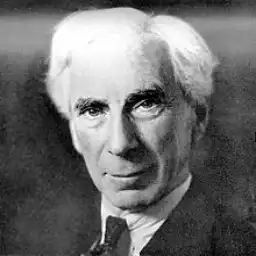
Fast forward to 1921. Legendary philosopher Bertrand Russell decided to take Gosse’s rejected idea and push it to the absolute extreme.
Russell introduced the Five-Minute Hypothesis in his book The Analysis of Mind. He stated: “There is no logical impossibility in the hypothesis that the world sprang into being five minutes ago, exactly as it then was, with a population that ‘remembered’ a wholly unreal past.”.
He wasn’t actually trying to prove the world was secretly five minutes old. Actually, Russell used this to highlight a crucial point about human knowledge. Specifically, he wanted to show that our memories are just chemical states existing in the present. Because of this, we cannot flawlessly guarantee the past ever happened.
Eventually, internet culture and modern thinkers took Russell’s concept, mashed it up with Gosse’s, and birthed the joke we now call Last Thursdayism.
The Physics problem
To really grasp how wild this concept is, look at modern astrophysics. Consider the Andromeda galaxy. It is roughly 2.5 million light-years away from Earth. Consequently, the light hitting your eyes right now began its journey 2.5 million years ago.
If Last Thursdayism is accurate, that light never actually traveled across deep space. Instead, the creator spawned the light beam already in motion, just a few thousand miles above Earth, perfectly mimicking a 2.5-million-year journey.
The same logic applies to radiometric dating. Scientists use the decay of radioactive isotopes to calculate the age of rocks. A uranium lead dating test might show a rock is 4 billion years old. Under the Last Thursday framework, that rock was forged last week with the exact atomic ratios needed to simulate a 4 billion year old decay process.
Why would a creator go through such exhausting, microscopic trouble? Critics argue it turns the creator into a massive deceiver. If the universe is packed with fake clues, then studying nature is a complete waste of time.

Why you can’t prove Last Thursdayism wrong
Here is the most frustrating part of the whole concept. You simply cannot debunk it.
If you try to argue against a Last Thursdayist, the conversation usually goes like this:
- You: “I have a video of my birthday party from 2018!”
- Them: “The video, the phone you recorded it on, and your memory of the party were all created last Thursday.”
- You: “What about the history books documenting World War II?”
- Them: “Those books were printed last Thursday, fully written, to give us a fake backstory.”
This makes Last Thursdayism an unfalsifiable theory. In science, for a theory to be valid, there must be a way to test and potentially disprove it. Since every piece of counter evidence is instantly dismissed as “part of the illusion,” testing it is impossible.
Honestly, it feels like arguing with a brick wall.
Occam’s Razor: Why we don’t actually believe it
So, if we can’t prove Last Thursdayism false, why doesn’t everyone believe it? Thank a medieval monk named William of Ockham.
He gave us a mental tool called Occam’s Razor. This principle suggests that when you have two competing explanations for something, the simpler one is usually correct.
Let’s weigh our options:
- Option A: The universe is 13.8 billion years old, evolving naturally through physics, chemistry, and biology over endless millennia.
- Option B: A mysterious entity created the entire universe last Thursday. Then, it painstakingly fabricated trillions of fossils, stars, and human memories just to trick us into thinking the universe is old.
Clearly, Option B requires a massive, unnecessary leap of faith. It assumes the existence of a deceptive creator who spent limitless energy coding a fake history. Therefore, Occam’s Razor tells us to toss Option B in the trash. We accept Option A because it makes the fewest wild assumptions.

What this means for Tech enthusiasts and Simulation theory
If you love tech, programming, or virtual reality, Last Thursdayism probably sounds awfully familiar. That is because it is the grandfather of the modern Simulation Hypothesis.
Today, visionaries frequently argue that there is a high probability we live in a massive computer simulation. Think about how rapidly video games have advanced. Forty years ago, we had the pixelated game of Pong. Today, we have photorealistic VR.
Eventually, humanity will create simulations so advanced that the digital inhabitants won’t know they are inside a computer. Consequently, who is to say we aren’t already inside one of those simulations right now?
If our reality is a simulation, the programmer could easily pause the system, rewind it, or reset it. They could spawn us into existence on a literal Thursday. In this context, Last Thursdayism isn’t just an old religious debate; it is a legitimate question about artificial intelligence and the nature of digital reality.
Should you care?
Does it actually matter if the world was made last week? Not really.
Whether the universe is incredibly old or incredibly fresh, your rent is still due. You still have to do your laundry. The consequences of your actions still feel real right now.
Philosophical games like Last Thursdayism are mental workouts. They force us to question why we believe what we believe. They keep us humble. Furthermore, they remind us that the human brain, for all its processing power, still has limits. We have to take certain things like the reality of yesterday on blind faith.
So next time you feel overwhelmed by the long, heavy history of the world, just relax. After all, maybe none of it existed before last Thursday anyway.
Did this mind-bending theory make you question your own memories? Drop a comment below and let us know: If you found out the universe was genuinely created last Thursday, what is the first thing you would do? Don’t forget to share this article with a friend and watch their brain melt!

