

Universe 25 Experiment Explained: The Science and Flaws of Calhoun’s Mouse Utopia
Imagine building the perfect city. Nobody goes hungry. Nobody gets sick. The temperature is always comfortable, and predators simply do not exist. Sounds like an absolute dream, right?
American ethologist John B. Calhoun built exactly that in July 1968. He created a lavish enclosure for mice called Universe 25. He gave them unlimited food, endless water, and multi-level apartments.
It was supposed to be a paradise. Instead, it became a terrifying nightmare.
The population exploded, then violently collapsed. This bizarre social experiment became a cornerstone of psychological research and urban planning fears. Even decades later, people still debate what the “mouse utopia” actually proves. Are we destined for the same fate?
Let’s break down the science, the gaping flaws, and the haunting legacy of Universe 25.
Quick read
- Abundance isn’t enough: Unlimited resources did not stop the mouse society from completely collapsing.
- The Behavioral Sink: Overcrowding caused extreme social dysfunction, leading to hyper-aggression and maternal abandonment.
- The “Beautiful Ones”: A subset of mice withdrew entirely from society, choosing only to eat, sleep, and groom themselves.
- Scientific flaws: Modern researchers argue the experiment design was rigged, and humans possess cultural adaptability that rodents lack.
Rat Utopias in a Barn

Long before the infamous mouse experiment, Calhoun spent years studying Norway rats.
His fascination with population dynamics started way back in 1947. He secured an outdoor barn in Rockville, Maryland, and gave a colony of rats endless food alongside protection from predators. He fully expected the population to swell to 5,000. Surprisingly, it capped out at just 200. The rats naturally subdivided into smaller, manageable groups of about a dozen individuals.
By 1954, working at the National Institute of Mental Health (NIMH), Calhoun moved his work indoors. He placed dozens of brown rats into a 10-by-14-foot room divided into four interconnected pens.
This is where things first got weird.
The rats developed an odd psychological quirk. They began to associate eating with socializing. They refused to eat alone. During feeding times, up to 60 rats would cram into a single pen, completely ignoring the perfectly good food in the other three rooms. This voluntary, extreme crowding triggered massive infant mortality and social breakdown.
Calhoun realized the problem wasn’t a lack of physical space. It was a breakdown of natural social spacing. In 1962, he published an article in Scientific American outlining these findings, officially introducing the world to the “behavioral sink”.
Building a Rodent Paradise
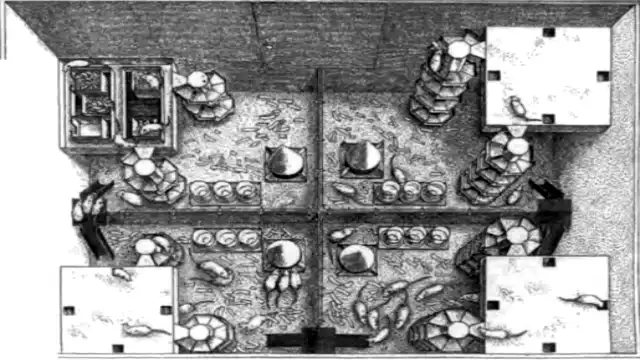
Fast forward to 1968. Calhoun decided to take his theories to the absolute limit. He didn’t just throw some mice in a cage; he engineered a highly specific, controlled environment.

Universe 25 was a 9-foot square metal pen designed to hold nearly 4,000 mice safely. It featured 256 separate living compartments, 16 distinct burrows, and constant access to food and water. The temperature stayed perfect. Disease was heavily monitored. No cats, no owls, no threats.
He started the society with just four pairs of healthy mice. The stage was set for a massive population boom.
The 4 Phases of the Mouse Utopia
Like any civilization, Universe 25 went through distinct eras. Calhoun meticulously tracked the rise and fall over several years.
1. The Strive Phase
The first few months were peaceful. The original eight mice settled into their new luxury apartments. They mapped out their territory, established initial social bonds, and started breeding.
2. The Exploit Phase
Things escalated quickly. The population began doubling every 55 days. Mice filled up the lower levels first, eating from the easily accessible food hoppers. They seemed perfectly happy. Society functioned normally.
3. The Equilibrium Phase
Around day 315, the population growth abruptly slowed. The utopia now held hundreds of mice, and space grew tight. Social structures started to fray. Young mice entering adulthood found no available physical space or social roles. Dominant males became violently defensive of their territories.
4. The Decline Phase
This is where the horror movie truly begins. By day 560, the population peaked at roughly 2,200 mice. Notice that this number is well below the enclosure’s 4,000-mouse capacity. Despite having enough physical room and endless food, the social fabric totally disintegrated. Birth rates plummeted. Infant mortality skyrocketed to 96% in some sections.
After day 600, not a single surviving pup was born. The society entered a state Calhoun ominously called “death squared”.
Behavioral Sink and Beautiful Ones

Calhoun used his previously coined term, the behavioral sink, to describe this exact phenomenon. It refers to the collapse of normal behavior due to extreme, inescapable overcrowding.
What did this collapse actually look like?
- Hyper-aggression: Alpha males roamed the pens, attacking others without provocation.
- Maternal failure: Stressed mothers kicked their pups out of the nests early. Sometimes, they abandoned them entirely or even killed them.
- Total disruption: Normal mating rituals vanished. Certain males attempted to mate with any mouse they encountered, regardless of gender or age.
Then, there was the most disturbing group of all. Calhoun called them “The Beautiful Ones”.
These were mostly male mice who completely opted out of society. They didn’t fight for territory. They didn’t try to mate. They isolated themselves in secure areas and spent all their waking hours doing three things: eating, sleeping, and grooming. Because they never fought, their coats remained pristine and free of scars.
They were physically healthy but psychologically dead. They had lost all ability to handle complex social interactions. If another mouse approached them, they simply ignored it.
Why Did the Utopia Fail?
The physical resources never ran out. Food and water remained abundant until the very end. So, what actually killed Universe 25?
It wasn’t a lack of calories. It was a lack of purpose.
In the wild, a mouse spends its day foraging, avoiding predators, and defending resources. When you remove all those struggles, the animals need something else to structure their society around.
Universe 25 forced thousands of mice into constant, inescapable social contact. Social density became the real killer. There were simply too many interactions happening too fast. The cognitive load snapped their fragile social hierarchies. When the mice could no longer retreat or find a unique role, their brains essentially blue-screened.
Scientific Flaws: Why humans aren’t mice
During the 1970s, people panicked. They looked at Universe 25 and assumed human cities were doomed.
Wait a minute. Are we really just giant, hairless rodents?
Modern science says no. While Calhoun’s work is fascinating, critics quickly point out massive flaws in his methodology and conclusions.
We have culture
Mice operate on instinct. Humans build complex institutions, create laws, and develop cultural norms to handle high-density living. We invent noise-canceling headphones, zoning laws, and social etiquette. We adapt to our environments in ways animals simply cannot.
The Enclosure design was rigged
Researchers argue that Calhoun unintentionally created artificial bottlenecks. Male mice are naturally territorial and polygamous. In a natural forest, if a male cannot secure a mate or territory, he simply moves away. Universe 25 offered zero escape routes.
Dominant males easily guarded the choke points leading to the nesting boxes. They hoarded the females into artificial harems. Subordinate males couldn’t leave, so they were forced into a constant state of exhausting, unwinnable conflict. The experiment didn’t simulate overpopulation. It simulated a prison riot.
Questionable sanitation
Calhoun only cleaned Universe 25 every six to eight weeks. Think about 2,000 mice living in a small room for two months without a deep clean. Disease and parasitism likely spread rapidly. Many of the bizarre behaviors he recorded could easily be attributed to sickness rather than psychological collapse.
Ethical standards
No ethical review board would approve Universe 25 today. Knowingly breeding animals into a confined space until they resort to cannibalism violates every modern guideline for animal welfare.

The Bizarre Modern Legacy of Universe 25
Even with its scientific flaws, this experiment left a massive cultural footprint.
In the 1970s, it fueled apocalyptic anxieties. Biologist Paul Ehrlich published The Population Bomb, predicting mass starvation. Movies like Soylent Green visualized a grim, overcrowded future. Planners looked at densely packed urban housing projects and genuinely feared a human behavioral sink.
Fast forward to right now. The overpopulation panic has largely faded, as global birth rates are actually declining. Yet, Universe 25 remains fiercely relevant.
Why? Because the psychological parallels are eerie.
Look closely at “The Beautiful Ones.” These were individuals who withdrew from a chaotic, hyper-crowded society to sit alone, completely self-absorbed, doing nothing productive. Does that sound familiar?
Many sociologists see reflections of this in our digital habits. Think about the modern internet. It is an environment of endless resources (information) and infinite social connection. We are crammed into digital spaces with millions of other users. Just like the rats who crowded into one feeding pen, humans flock to a few massive social media platforms. The sheer volume of daily interactions can be paralyzing.
The result? Digital behavioral sinks. We see hyper-aggression in the form of comment section toxicity. We see social withdrawal in the Japanese phenomenon of hikikomori, where young adults refuse to leave their bedrooms for years. Is it possible that “The Beautiful Ones” are the equivalent of endless doom-scrollers? People who just consume content, sleep, and groom their curated online personas, completely detached from real-world community building?
Calhoun himself didn’t view his work purely as a doomsday prophecy. He later spent years trying to figure out how technology and better environmental design could save humanity from a similar fate. He believed human creativity was the ultimate escape hatch.
Wrapping it all up
Universe 25 wasn’t a perfect study. You can’t put human complexity into a 9-foot metal box and expect a one-to-one comparison.
Still, the underlying warning hits hard. A society needs more than just basic survival metrics to thrive. People need purpose, healthy boundaries, and meaningful social roles. Without those, even a utopia can rot from the inside out.
What do you think? Is modern society showing signs of a “behavioral sink,” or are we smart enough to engineer our way out of the trap? Drop your thoughts in the comments below, and share this article with a friend who loves a good deep dive into psychology!
References:
- https://en.wikipedia.org/wiki/Behavioral_sink
- https://www.smithsonianmag.com/smart-news/this-old-experiment-with-mice-led-to-bleak-predictions-for-humanitys-future-180954423/
- https://www.disabled-world.com/disability/publications/journals/universe-25.php
- https://www.mentorresearch.org/the-quiet-collapse-of-courtship-bonding-marriage-family-community-and-reproduction
- https://www.sciencehistory.org/stories/magazine/mouse-heaven-or-mouse-hell/

