

The Haunting History of the Crybaby Bridges of Indiana
Local lore promises you will hear a terrifying sound piercing the dark: the faint, unmistakable wailing of an infant. Urban legends call these places “Crybaby Bridges.”
While almost every state has at least one of these spooky landmarks tucked away in its backwoods, Indiana is the undisputed capital of the phenomenon. The Hoosier State is home to at least six different historically documented Crybaby Bridges. From Madison County down to the covered bridges of Putnam County, these structures serve as local monuments to tragedy, guilt, and the paranormal.
How did one state end up with so many haunted spans? What really happened over these dark waters? Let’s take a look at the history, the folklore, and the bizarre science behind Indiana’s most famous haunted bridges.
Need to know
- The Indiana Constellation: Indiana features at least six distinct bridges tied to the classic “crybaby” urban legend, scattered across Anderson, Avon, Dublin, Vincennes, and Putnam County.
- The Madison County Epicenter: The iron span on County Road 675 in Anderson remains the state’s most active and widely discussed paranormal hotspot.
- Interactive Spells: Many of these locations require a highly specific, local ritual — such as honking your horn three times or leaving baby powder on your car bumper — to trigger the haunting.
- The Acoustic Truth: Many ghostly cries can actually be traced back to local wildlife, unique bridge architecture, and how moving water echoes against concrete walls.
The Epicenter: Madison County’s Crybaby Bridge (Anderson, IN)
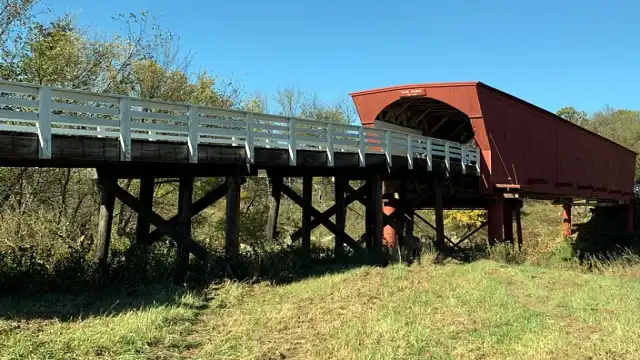
If you ask a hardcore paranormal investigator to point you toward the definitive Indiana ghost bridge, they will send you directly to Madison County. Located on the rural outskirts of Anderson, Indiana, near County Road 675, this site has drawn thrill-seekers and folklore researchers for generations.
The physical backdrop of the location feels like it was ripped straight out of a horror movie. Deep woods flank the narrow road, and the air always feels a few degrees colder right as you step onto the crossing.
Local folklore collectors at the Indiana State University Folklore Archives have logged multiple unique variants of the Madison County legend. Over the years, three primary stories have emerged to explain the ghostly activity.
The Three Core Legends of County Road 675
- The Tragic Auto Accident: The oldest and most common variant tells the story of a young family driving home late at night. The driver lost control of the vehicle on the slick road, crashing violently into the bridge’s protective railing. During the impact, their infant was thrown from the vehicle, plunging into the dark, murky waters below. Local stories claim that if you stand on the bridge at midnight, you can still hear the mother’s frantic spirit searching the riverbanks.
- The Desperate Choice: A darker version of the tale traces back to the late 1950s. The story claims a young, unwed teenage mother gave birth secretly in the backseat of a car. Terrified of social banishment and desperate to hide her situation, she allegedly walked to the center of the span and dropped the child over the iron railing.
- The Shoreline Abandonment: The final variation takes a sharp detour from the water. In this version, the baby didn’t land in the river at all. Instead, it tumbled onto the sharp, rocky bank beneath the bridge structure. The infant was left badly injured in the brush with no one around to save it.
Whichever version locals choose to believe, the reported paranormal results remain identical. Visitors who park on the bridge at midnight frequently report hearing the distant sound of a baby crying directly beneath the floorboards. This chilling wail is almost always followed by a distinct, heavy splashing sound in the water, as if the tragic event is playing out on an endless, cosmic loop.
Avon Haunted Bridge: The Railroad Spandrel (Hendricks County)
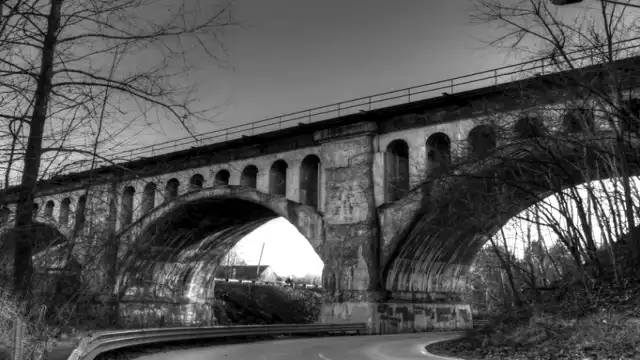
Travel roughly an hour southwest of Anderson into Hendricks County, and you will find an entirely different architectural beast. The Avon Haunted Bridge isn’t a creaky iron structure. It is a massive, towering concrete rail bridge built using elegant spandrel arches.

Designed by engineer W.M. Dunne and constructed in 1906 for the Big Four Railroad, this active landmark is so deeply woven into local culture that it is prominently featured on the official Avon town seal. Driving underneath its massive arches even made Indianapolis Monthly’s bucket list of essential things every Hoosier must do.
The Avon bridge carries two distinct layers of hauntings. The first involves a construction worker who allegedly slipped during the 1906 pour, falling directly into the wet cement where he was buried alive. When heavy freight trains roll across the tracks today, locals claim you can hear his muffled groans echoing through the concrete structure.
The second layer is pure crybaby lore.
According to regional historians, a young mother was walking along the elevated railroad tracks late at night, desperately trying to carry her severely sick baby to a doctor in Indianapolis. As she crossed the high span, a massive steam train came barreling around the bend. Blinded by the headlight and deafened by the whistle, the terrified mother slipped. She fell from the high tracks into White Lick Creek below, killing both herself and her infant child.
Paranormal teams visiting Washington Township Park — which sits right adjacent to the bridge structures — often log phantom footsteps on the active tracks and the sound of a woman screaming for her lost infant as the wind rolls through the concrete arches.
Edna Collins Covered Bridge: The Three-Honk Ritual (Putnam County)

To experience a more interactive haunting, you need to head out to rural Putnam County. This is where you will find the Edna Collins Covered Bridge, sometimes referred to by old-timers simply as “Baby Bridge.”
Built by carpenter Charles Hendrix in 1922 to span Little Walnut Creek, this 80-foot structure holds a unique title. It was the very last covered bridge ever constructed in Putnam County, built to replace a modern concrete bridge that had been completely washed out during a historic high-water flood.
The legend revolves around a real little girl named Edna Collins who lived in a farmhouse just a short walk from the creek bed. During the sweltering Indiana summers, Edna loved to swim in the cool waters beneath the bridge. Her parents would drop her off on their way into town. When they returned to pick her up, her father would tap his car horn exactly three times to let her know it was time to leave.
One evening, the horn sounded, but Edna didn’t run out from under the wooden trusses. Her worried parents rushed down to the water, only to find that their daughter had tragically drowned.
How to Trigger the Putnam County Phenomenon
Unlike other haunted locations where you simply sit and listen, the Edna Collins bridge requires visitors to actively participate in the historical memory of the tragedy. Paranormal investigators follow a highly specific, multi-step routine to summon the spirit:
- Drive your vehicle completely onto the center of the wooden bridge deck.
- Turn off your headlights, switch off the engine, and sit in total silence.
- Tap your car horn exactly three times, mimicking the pickup signal used by Edna’s father.
If the legend holds true, the spirit of little Edna will respond to the familiar sound. Visitors have captured audio recordings of a young girl laughing near the wooden exit ramps. More terrifyingly, numerous drivers have exited the bridge only to find small, child-sized handprints pressed firmly into the dust on their car windows or bumpers.
Vincennes, Dublin, and Putnam County’s Ghost Roads
While Anderson, Avon, and Putnam County get the lion’s share of media attention, Indiana’s crybaby phenomenon stretches into several other historical pockets.
The Vincennes Bridge (Knox County)
Down in southwestern Indiana, near the historic city of Vincennes, sits a location logged extensively in the Indiana Folklore Collection. The Knox County variant dates back to the early pioneer eras of the state. The legend states a pioneer family was attempting to cross a swollen creek during a spring thaw when their wagon overturned. A baby was swept away by the raging currents. Local researchers note that unlike the 1950s urban variants, the Vincennes haunting features a phantom pioneer wagon light that flickers along the water line on foggy nights.
The Dublin Crossing (Wayne County)
On the eastern edge of the state, along the historic National Road corridor, lies the tiny town of Dublin, Indiana. The Dublin Crybaby Bridge is a frequent topic on regional paranormal forums. The story here follows a familiar structural pattern: a mother and child meeting a grim fate during a midnight storm. Visitors to the Dublin span frequently report that electronic equipment — such as cell phones, digital cameras, and audio recorders — will completely drain of battery power the exact moment you cross the threshold of the bridge.
Why Indiana?
Why does one state have so many identical stories attached to completely different bridges? Is it a case of genuine mass hauntings, or is there a psychological and architectural explanation at play?
The truth is a fascinating blend of human psychology, sociology, and acoustic engineering.

The Universal Copycat Phenomenon
Folklore researchers use the term ostension to describe how people act out flash myths and urban legends in real life. The “Crybaby Bridge” is a classic American archetype. When a story becomes popular in one county, teenagers and storytellers in neighboring counties will naturally transplant that exact same narrative onto their own local, creepy-looking bridge. It gives communities a shared ritual — a test of bravery for young drivers looking to push their limits on a Friday night.
The Material and Acoustic Reality
When you strip away the ghost stories, old bridges are naturally weird, noisy places. Several physical factors explain why people consistently report hearing infants cry at these specific locations:
- Nocturnal Wildlife: The areas surrounding these rural bridges are prime hunting grounds for local predators. Animals like red foxes and bobcats produce nocturnal mating calls and distress screams that sound shockingly, terrifyingly human. To an anxious teenager sitting in a dark car on a bridge, a fox screeching in the brush easily mutates into a crying baby.
- Structural Hydroacoustics: Old iron truss bridges and hollow concrete spandrel arches act like massive acoustic amplifiers. When river water rushes over rocks or bubbles past wooden debris beneath the frame, the sound bounces off the underside of the deck. This creates a rhythmic, undulating echo that can easily trick the human brain into recognizing a voice — a psychological phenomenon known as pareidolia.
- Atmospheric Inversions: Sound travels differently over water, especially late at night when cold air gets trapped beneath a warm upper layer. This atmospheric quirk allows distant sounds from miles away — like a squeaking farm gate or a whining dog — to travel along the river corridor, making it sound like the noise is originating right from the bridge itself.
Field Guide for Ghost Hunters: Respecting the Spans
If you decide to take a road trip to investigate Madison County’s County Road 675 or any of Indiana’s other legendary bridges, you need to follow basic safety and legal protocols. Many of these historical landmarks sit on active public roads or border private properties.
| Investigation Rule | What to Do | Why It Matters |
| Check Property Lines | Stay strictly within public right-of-ways or designated park zones. | Trespassing laws are strictly enforced by rural Indiana sheriffs. |
| Watch for Traffic | Never park your car completely blocking a single-lane bridge. | Active farm equipment or local residents may round the bend unexpectedly. |
| Pack a Flashlight | Always carry high-powered backup illumination. | Rural bridge decks often feature missing boards, rusted metal, or steep drops. |
| Document the Baseline | Take audio recordings before you turn off your car engine. | You need to know what the natural river and wind sound like before hunting for ghosts. |
The Human Heart of the Legend
At their core, the Crybaby Bridges of Indiana are about much more than cheap jump scares or high school dares. They are living pieces of oral history. These stories show us how ancient people anxieties about protection, motherhood, and sudden death get passed down from generation to generation.
Whether these bridges are home to lingering spiritual energy or are simply beautiful, acoustical marvels of engineering, they continue to capture our collective imagination. They remind us that no matter how bright our modern headlights shine, there will always be mysteries waiting for us out in the dark.
We Want to Hear From You!
Have you ever visited the Crybaby Bridge in Madison County, or tested the three-honk ritual at the Edna Collins span? Did you hear anything strange, or did your car headlights flicker out?
Tell us your personal ghost stories in the comments below! If you found this historical deep-dive fascinating, share it with a friend who loves exploring the spookier side of the Midwest.

