

Why Is Bastille Day Celebrated? The Storming of the Bastille Explained
It’s summer in Paris, 1789. The streets are sweltering. The air feels thick with anger, desperation, and hunger. People are literally starving because the price of bread has skyrocketed. Meanwhile, the King of France sits in his lavish palace, seemingly disconnected from the chaos brewing just miles away.
This powder keg of inequality sparked one of the most famous rebellions in human history. We call the anniversary of that explosion Bastille Day.
But what actually happened on that fateful July afternoon? Why did a mob target a medieval fortress? Did they really storm it just to free oppressed prisoners? The truth is far more fascinating — and a bit less Hollywood — than you might think. Let’s peel back the layers of French history to understand why July 14 remains the ultimate symbol of liberty.
At a glance
- The Catalyst: Bastille Day commemorates the July 14, 1789 storming of the Bastille prison, which kicked off the French Revolution.
- The Real Motive: The mob wasn’t primarily looking for prisoners; they desperately needed gunpowder and weapons to fight the king’s army.
- The True Celebration: France actually officially celebrates the Fête de la Fédération of 1790, a peaceful festival of national unity held exactly one year after the prison fell.
- Modern Traditions: Today, the holiday is marked by massive military parades, spectacular fireworks, and vibrant street parties across France.
A Powder Keg Waiting to Blow: France Before 1789
To grasp why the French completely lost their cool, you have to look at how society was rigged. Late 18th-century France operated under the Ancien Régime, a strict social hierarchy. You had the clergy at the top, the nobility right below them, and everyone else — the Third Estate — carrying the crushing weight of the nation on their backs.
Taxes were brutal. The wealthy elite paid almost nothing, leaving peasants and the middle class to foot the bill for France’s massive national debt. That debt stemmed from years of lavish royal spending and funding foreign conflicts, including the American Revolution.
Then came the food shortages. Bad harvests wiped out wheat supplies. By early 1789, a standard loaf of bread cost a peasant nearly a month’s wages. People were furious. They were hungry. Ideas from Enlightenment thinkers like Voltaire and Rousseau began circulating, whispering a radical concept: equality. A revolution seemed entirely necessary.
What Actually Was the Bastille?
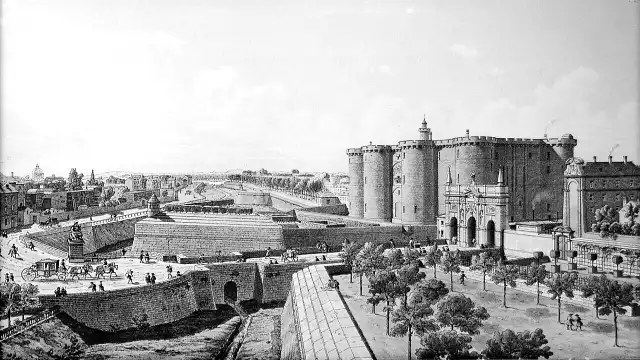
Before it became a target, the Bastille Saint-Antoine was a massive stone fortress in eastern Paris. Built during the 1370s to defend the city against the English in the Hundred Years’ War, the structure was intimidating. Its stone walls stretched over one hundred feet high, surrounded by an eighty-foot-wide moat.
By the 17th century, the French monarchy had repurposed the castle into a state prison. It quickly gained a dark reputation. Kings, especially Louis XVI, used the Bastille to quietly lock away political dissidents, unruly nobles, and writers who dared to criticize the crown. Often, prisoners were tossed into cells without a trial, simply on the king’s direct order.
To the starving citizens of Paris, those looming towers represented absolute royal tyranny. It stood as a physical manifestation of everything wrong with the monarchy.
July 14, 1789: The Day Everything Changed
Tensions hit a breaking point in July. King Louis XVI dismissed a popular finance minister who had shown sympathy for the common people. Fearing the king was preparing the military to massacre citizens and arrest the newly formed National Assembly, Parisians realized they needed to defend themselves.
They began raiding armories. On the morning of July 14, a massive crowd looted the Hôtel des Invalides, making off with thousands of muskets. There was just one massive problem: they didn’t have enough gunpowder.
They knew exactly where to find it.
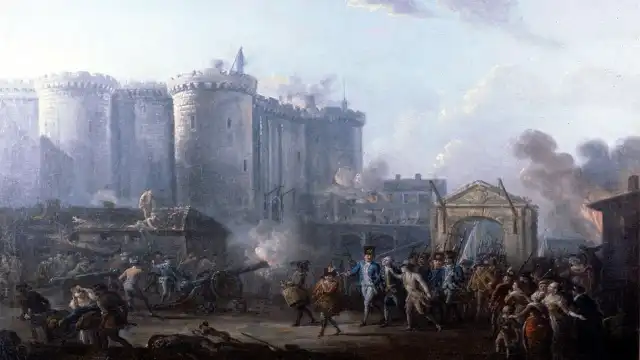
The Bastille housed roughly 250 barrels of gunpowder. A mob of nearly a thousand angry citizens marched on the fortress, demanding the commander, Governor Bernard-René de Launay, hand over the munitions.
De Launay panicked. Realizing he only had a handful of veteran soldiers and Swiss guards to defend the massive complex, he pulled up the drawbridges. The standoff dragged on for hours. Suddenly, a few brave rebels scaled the outer walls and severed the chains holding the drawbridge. It slammed down. The crowd surged into the courtyard.
Gunfire erupted. Chaos consumed the fortress. The panicking royal soldiers fired into the dense crowd, killing nearly a hundred attackers. After a bloody afternoon battle, de Launay realized help wasn’t coming. He surrendered to avoid a total massacre, opening the inner gates. The Bastille had fallen.
The Anti-Climax: Who Was Actually Inside?
Here is where history gets incredibly ironic. The revolutionaries shattered the locks, expecting to free hundreds of tortured political martyrs.
They found exactly seven people.
The inmates included four individuals convicted of forgery, two men with severe mental illness, and one disgraced aristocrat whose own family asked the king to lock him up. The terrible dungeons were virtually empty. By 1789, the fortress was barely used and actually scheduled for demolition.
Yet, the facts didn’t matter. The symbolic victory was deafening. Ordinary citizens had violently overthrown a central pillar of royal power. The French Revolution had officially begun.
The Real Reason We Celebrate: Fête de la Fédération (1790)
Ask almost anyone outside of France what Bastille Day celebrates, and they will confidently say “the storming of the prison.” That is only half the story.
When the French government made July 14 a national holiday in 1880, they had a specific debate. Celebrating a bloody riot where a mob hacked a prison governor to death felt a bit… gruesome. Lawmakers wanted a unifying narrative.
They found their perfect solution in the Fête de la Fédération.

Exactly one year after the prison fell, on July 14, 1790, France hosted a colossal festival on the Champ de Mars. Over 300,000 citizens from all over the country gathered to celebrate national unity and the creation of a constitutional monarchy. King Louis XVI even attended, publicly swearing an oath to the new constitution.
This massive celebration marked a brief, beautiful moment of peace and patriotism before the revolution plunged into the terrifying bloodshed of the Reign of Terror. Modern Bastille Day officially commemorates both events: the explosive uprising of 1789, and the peaceful, unifying festival of 1790.
How France Parties on July 14 Today
If you find yourself in France during La Fête Nationale (the French rarely call it “Bastille Day” themselves), prepare for a spectacle.
- The Champs-Élysées Military Parade: Since 1880, Paris has hosted the oldest and largest regular military parade in Europe. Troops, tanks, and cavalry march down the iconic avenue while fighter jets streak across the sky, leaving plumes of red, white, and blue smoke. The French President and foreign dignitaries watch from grandstands.
- Bals des Pompiers (Firemen’s Balls): On the nights of July 13 and 14, fire stations across the country open their doors to the public. They host massive, roaring dance parties that last until dawn. It’s a delightfully quirky tradition where locals mix with the heroes who keep them safe.
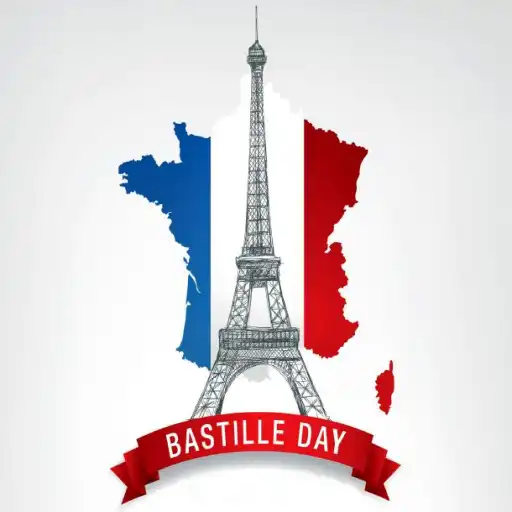
- Dazzling Fireworks: No national celebration is complete without pyrotechnics. The most famous display happens at the Eiffel Tower. Thousands pack onto the Champ de Mars — the exact site of the 1790 Fête de la Fédération — to watch the sky explode in color.
Global Impact: Why Bastille Day Matters Worldwide
You don’t have to be French to appreciate the legacy of this holiday. The uprising in Paris sent shockwaves around the globe. It proved that absolute monarchs were not untouchable gods.
The successful revolt inspired a wave of democratic movements. It directly fueled the Haitian Revolution, where enslaved people overthrew their French colonial rulers. It provided a blueprint for independence struggles in Belgium, Poland, and across Latin America.
The core values demanded by those hungry Parisians — Liberté, Égalité, Fraternité (Liberty, Equality, Fraternity) — became the bedrock of modern democratic societies. Whenever citizens stand up against oppressive regimes to demand human rights and fair representation, the spirit of the Bastille lives on.
Liberty requires vigilance. The men and women who risked everything on that hot July afternoon understood that freedom is never freely given. You have to demand it. Sometimes, you have to break down a fortress to get it.
Have you ever experienced Bastille Day in France, or celebrated it in your hometown? Drop your thoughts and experiences in the comments below, and share this article with a fellow history lover to keep the spirit of 1789 alive!

