

Why Japan Celebrates the Penis Festival (Kanamara Matsuri Explained)
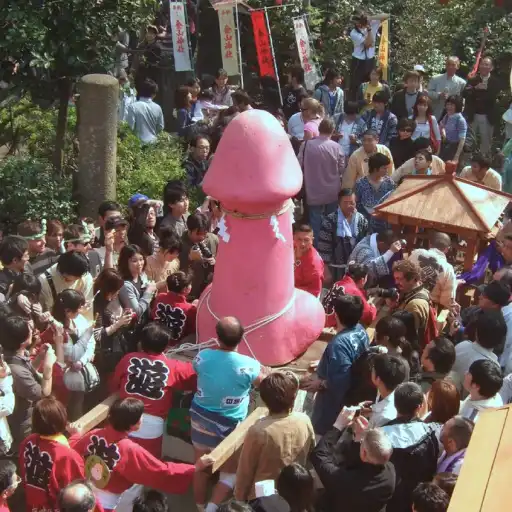
Imagine walking down a peaceful street in suburban Japan, surrounded by beautiful cherry blossoms. Suddenly, the massive crowd erupts in wild cheers. A gigantic, bright pink penis statue bobs through the air, carried by hundreds of chanting people in traditional festival gear. Sounds absolutely wild, right? Well, this is a totally normal spring day in Kawasaki.
Every year, thousands of eager travelers gather for the Kanamara Matsuri. English speakers usually just call it the “Penis Festival.” On the surface, it looks like a massive, wacky street party fueled by phallic shaped lollipops and endless selfies. However, this unique event is deeply rooted in ancient, serious history.
Why does Japan host such an explicitly themed parade? Interestingly, the answer involves a sharp toothed demon, Edo period sex workers, and modern HIV awareness. Let’s dive into the fascinating, heartwarming truth behind the Kanamara Matsuri.
Key Takeaways
- Ancient Roots: The festival honors Shinto deities of blacksmithing and human sexuality.
- Historical Protection: During the Edo period, local prostitutes prayed here for divine protection against deadly STDs.
- Modern Cause: Today, the event raises critical funds for global HIV/AIDS research.
- Total Inclusivity: The festival is a massive, safe celebration for the LGBTQ+ community in conservative Japan.
- The Main Event: Three large portable shrines (mikoshi) are paraded through the streets, including the legendary pink “Elizabeth.”
What exactly is kanamara matsuri?

First, we need to understand the absolute basics. Kanamara Matsuri literally translates to the “Festival of the Steel Phallus.” It takes place annually on the first Sunday of April. The specific venue is the Kanayama Shrine, which sits comfortably within the larger Wakamiya Hachimangu Shrine complex in Kawasaki.
During this day, the quiet shrine transforms entirely. Over 30,000 visitors pack the narrow streets. You will see vendors selling radish carvings, suggestive candies, and quirky souvenirs. Everyone is laughing, taking photos, and celebrating openly. Nevertheless, beneath this carnival atmosphere lies a profound Shinto religious ceremony.
The Mythical origins: a demon, a blacksmith, and an iron fix
Let us rewind the clock. Japanese Shintoism is universally famous for its rich, complex mythology. According to local folklore, the origins of the Kanamara Matsuri sound exactly like a bizarre fantasy movie.
The legend goes like this. A jealous, sharp toothed demon fell madly in love with a beautiful young maiden. Unfortunately for the demon, the woman did not return his dark affections. Instead, she married a normal human man. Enraged, the magical demon decided to hide inside the bride’s vagina.
When the wedding night arrived, disaster immediately struck. The demon violently bit off the groom‘s penis. Tragically, the woman remarried, only for the exact same gruesome fate to befall her second husband.
Desperate for a permanent solution, the terrified woman sought help from a local blacksmith. He ingeniously forged a solid steel phallus. When the demon attempted its biting trick on the heavy metal object, it shattered all of its teeth. Consequently, the evil spirit fled forever, allowing the woman to finally live a peaceful life.
Because of this victory, the steel phallus was enshrined. Thus, the local shrine became a designated place to worship Kanayama Hiko and Kanayama Hime. These two powerful Shinto deities famously protect metalworkers, blacksmiths, and human sexuality.

The Real history: protecting Edo-period sex workers
Myths are definitely entertaining. However, the true historical foundation of the festival is deeply grounded in actual human struggle.
During the Edo period (1603-1868), Japan was heavily connected by a major travel route called the Tokaido Road. This specific highway linked the capital city of Edo (now Tokyo) to Kyoto. Along this bustling route, the city of Kawasaki served as a vital post town. Travelers, wealthy merchants, and fierce samurai frequently stopped there to rest.
Naturally, a thriving entertainment district quickly emerged. Local inns employed many women who worked as maids and prostitutes. Life for these women was incredibly harsh. At that specific time, sexually transmitted diseases (STDs) ran rampant across the country.
The Medical reality of edo japan
Syphilis, in particular, was a deadly, incurable epidemic. According to historical medical journals indexed on Google Scholar, syphilis devastated urban populations in 17thcentury Japan.
Having absolutely no modern antibiotics, the desperate sex workers of Kawasaki turned to religious faith. They walked to the Kanayama Shrine in the dead of night. There, they prayed fervently for divine protection against venereal diseases. Furthermore, they also prayed for general health, fertility, and a smooth childbirth.
Eventually, the shrine administrators decided to host a daytime festival. They wanted to create a welcoming, safe space where anyone could pray for sexual health in broad daylight. They wanted an event completely free of societal judgment or cruel discrimination.
The Three star shrines (Mikoshi) of the parade
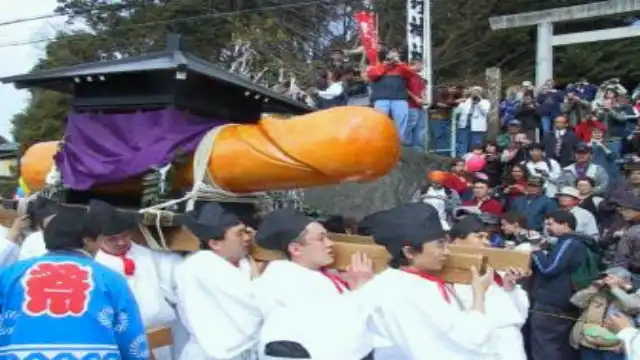
If you attend the festival today, the undeniable highlight is the midday parade. The loud procession features three main mikoshi (portable Shinto shrines). Dozens of energetic participants carry these massive, heavy structures through the crowded streets.
Each specific mikoshi has its own distinct identity:
- Kanamara Omikoshi: This is technically the oldest of the bunch. It features a simple, traditional wooden phallus. Usually, it respectfully leads the parade, carried by the dedicated local parishioners.
- Kanamara Boat Mikoshi: Next up is the iron phallus. It rests securely inside a boat shaped shrine. This dark, metal statue directly references the legendary blacksmith’s creation that miraculously defeated the sharp toothed demon.
- Elizabeth Mikoshi: Finally, we have the undisputed star of the entire show. Elizabeth is an enormous, bright pink phallus. A famous drag queen club in Tokyo named “Elizabeth” actually donated this iconic statue decades ago. Traditionally, members of the transgender and drag communities carry this specific shrine, pumping it rapidly up and down to the roaring cheers of the enthusiastic crowd.
The overall atmosphere is absolutely electric. People chant, sing, and dance wildly as the shrines bounce along the pavement. It is loud, happily chaotic, and incredibly joyful.

How a local ritual became a global phenomenon
For many decades, the Kanamara Matsuri was a relatively quiet, localized affair. In the 1970s, you would only find a small, dedicated group of locals observing the rites.
Then, the internet happened.

In the early days of social media and YouTube, curious tourists began uploading videos of the massive pink “Elizabeth” bouncing down a normal Japanese street. Naturally, the funny footage went totally viral. Western audiences were completely baffled by the explicit imagery.
Today, the festival attracts massive crowds. According to the Japan National Tourism Organization (JNTO), foreign tourists now make up roughly 60% of the total crowd. The event successfully transformed from an obscure local ritual into an internationally recognized bucket list destination.
Does this massive influx of rowdy tourists ruin the authentic vibe? Not necessarily. The smart organizers openly welcome the global attention. They cleverly use the massive crowds to broadcast their core message: sexual health and safety.
A Champion for LGBTQ+ rights and HIV/AIDS awareness
Beneath the silly giggles and the novelty t-shirts, the Kanamara Matsuri serves a deeply noble, vital purpose. It is a powerful fundraising vehicle for global health.
Starting in the 1980s, the terrifying global AIDS epidemic shocked the world. Shinto priests at Kanayama Shrine recognized a sad, historical parallel between the modern HIV crisis and the ancient struggles of the Edo period sex workers. Therefore, they officially shifted the festival’s charitable focus.
Today, the organizers proudly donate a significant portion of the festival’s proceeds directly to HIV/AIDS research. They also set up informational booths to distribute free educational pamphlets regarding safe sex. In a society that is often highly conservative about public displays of sexuality, this open dialogue is incredibly refreshing. The World Health Organization (WHO) consistently emphasizes that community driven destigmatization is absolutely critical for combating sexually transmitted infections. The Kanamara Matsuri does exactly that.
A Safe haven for diversity
Furthermore, the festival acts as a vital safe haven for the LGBTQ+ community. Japan does not currently recognize same sex marriage at the national level. Many LGBTQ+ individuals unfortunately face immense societal pressure to quietly conform.
However, on the first Sunday of April in Kawasaki, those strict rules completely vanish. Transgender individuals, drag queens, and gay couples celebrate their identities openly. They carry the bright pink Elizabeth mikoshi with immense pride. Ultimately, the festival aggressively champions a world entirely free of sexual discrimination.
What to expect if you visit (Tips for travelers)
Are you actively planning a trip to Japan? If you want to experience this wild event yourself, you definitely need to prepare in advance.
The Kanamara Matsuri always takes place on the first Sunday of April. For upcoming trips, mark your travel calendars for April 6, 2025, or April 5, 2026. The venue is Kanayama Shrine, located just a quick two minute walk from Kawasaki Daishi Station.
Here is exactly what you should expect:

- Massive Crowds: You must arrive extremely early. The festival officially starts around 11:00 AM, but the shrine grounds fill up by 9:00 AM. If it gets too crowded, local police will literally restrict entry.
- Phallic Everything: Prepare your eyes. You will see penis shaped lollipops, penis shaped candles, and penis shaped hats. Vendors even painstakingly carve daikon radishes into extremely suggestive shapes. It is an absolute goldmine for quirky souvenirs.
- A Festive Mood: Nobody takes themselves too seriously here. You will see sweet grandmas laughing while licking pink candy, and tourists eagerly snapping selfies with Shinto priests. Everyone is just trying to have a genuinely good time.
- Cherry Blossoms: Early April is prime sakura season in Japan. The striking juxtaposition of delicate pink cherry blossoms framing a giant pink penis is a photographic masterpiece you simply cannot miss.
Is the festival just a commercial cash grab?
With so many tourists buying novelty keychains, some harsh critics argue the festival has lost its soul. Has it simply become a cheap commercial sham?
Honestly, that cynical viewpoint misses the big picture. Yes, the festival heavily leans into its own absurdity. Vendors absolutely capitalize on the tourists’ desire for funny photos. However, Shintoism is not a religion rooted in guilt. Unlike many Western religions that view sex as inherently sinful or taboo, Shintoism largely views human sexuality as a natural, beautiful, life giving force. Fertility is considered a divine blessing.
Celebrating human reproduction with loud laughter, tasty food, and warm community is a profoundly traditional concept. The locals who attend are not just there for the cheap Instagram clout. Many young couples still visit the main altar to pray for a successful pregnancy. Others pray for their new businesses to thrive.
The booming laughter does not diminish the sacredness. Instead, the joy actively amplifies the festival’s core message of life.
Shinto perspectives on fertility
To truly grasp the Kanamara Matsuri, you must understand the basics of the Shinto religion. Shinto is the indigenous, ancient faith of Japan. It heavily revolves around the worship of kami (spirits or gods) that inhabit all of nature.
In Shinto belief, there is no strict concept of original sin. The human body is not something you need to hide in shame. Therefore, explicit fertility festivals known historically as honen matsuri were actually quite common across rural Japan. They were vital community events perfectly designed to ensure a bountiful crop harvest and a steadily growing population.
While many of these explicit festivals sadly died out during the rapid modernization of the late 19th century, the Kanamara Matsuri stubbornly survived. It gracefully adapted. It evolved directly from a localized plea for disease protection into a massive, highly inclusive celebration of life itself.
Celebration of life
The Kanamara Matsuri is much more than a bizarre internet meme. It remains a living, breathing testament to historical human resilience.
It started as a desperate plea from marginalized women actively seeking protection from deadly diseases. Over centuries, it morphed beautifully into a joyous, worldwide celebration of sexual health, fertility, and inclusivity. When you finally strip away the novelty sunglasses and the sugary lollipops, you find a festival with a massive, beating heart. It vividly reminds us that human sexuality should not be shrouded in dark shame. Instead, we should strictly protect it, completely understand it, and occasionally, parade it down the street in a giant pink shrine.
So, the next time you see a viral video of the famous Japanese Penis Festival, you will know the real story. It is not just a crude joke. It is a powerful, ancient prayer for a healthier, infinitely happier world.
Have you ever attended a totally unique cultural festival during your travels? Would you personally brave the massive Kawasaki crowds just to see the famous Elizabeth mikoshi in person? Drop your thoughts in the comments below, and don’t forget to share this article with your favorite travel buddies!

