

The Reincarnation of Arthur Flowerdew: The Man Who Lived a Past Life in Ancient Petra
Have you ever visited a place for the very first time, yet felt a bizarre sense of returning home? We all experience deja vu occasionally. However, the story of James Arthur Flowerdew takes that feeling to an entirely different level. Because he didn’t just feel a vague connection to a foreign land. He possessed intimate, inexplicable knowledge of it.
Here is a man who lived a remarkably quiet life in coastal England. Yet, he successfully guided professional archaeologists through unexcavated ruins in the Middle East. Let’s dive into one of the most baffling historical enigmas of the 20th century.
Key takeaways
- James Arthur Flowerdew was an ordinary Englishman born in 1906 who claimed to remember a past life in the ancient city of Petra.
- He experienced lifelong, highly specific visions of a rose-red desert city despite never traveling outside of Europe.
- After watching a 1970s BBC documentary, he recognized his visions, leading to an extraordinary trip to the archaeological site.
- Flowerdew successfully identified unexcavated ruins and hidden landmarks, utterly baffling professional archaeologists.
- Leading experts concluded he lacked the capacity to fake such vast, accurate historical knowledge, making his case a compelling argument for reincarnation.
Who was James Arthur Flowerdew?
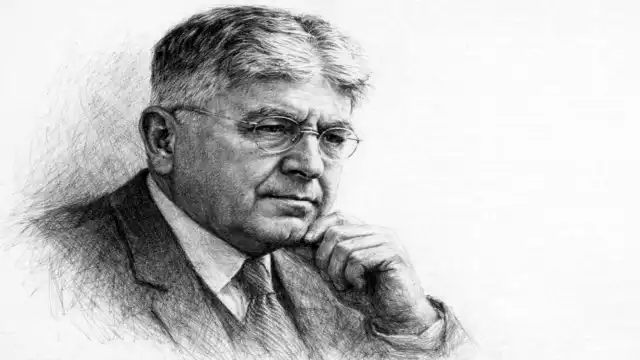
To understand how crazy this story is, we must first look at the man himself. James Arthur Flowerdew was born on December 1, 1906, in Norfolk, England. Honestly, his life was completely ordinary. He wasn’t a rich explorer. He never attended prestigious universities to study ancient history. In fact, he spent almost his entire 95 years in his quaint coastal hometown.
During his life, Arthur only left the United Kingdom once. That single trip was a brief, mundane holiday to France. Therefore, he had absolutely zero exposure to the Middle East. Yet, from his early adolescence, something strange occupied his mind. He experienced vivid, recurring visions that he simply could not switch off.
Visions of a Rose-red city

Imagine playing on a grey, chilly English beach. Suddenly, your mind transports you to a blistering, sun baked desert. That is exactly what happened to young Arthur. While playing with multi colored pebbles on the Norfolk shore, he constantly daydreamed of a magnificent city carved directly into towering, red rock cliffs.
These weren’t fuzzy, dream like fragments. Instead, they felt like concrete, lived memories. He saw narrow gorges winding through stone. He pictured grand temples hewn from the living rock. Furthermore, he clearly remembered walking the sandy streets of a bustling desert metropolis. How does a kid in 1910s rural England dream up accurate Nabataean architecture?
As Arthur grew older, the clarity of his visions intensified. He remembered wearing a rough tunic. He even recalled working specifically as a temple guard. Naturally, he kept most of these intense thoughts to himself. Who would actually believe him? Without the internet or a massive local library, he had no way to research these mental images. Consequently, he simply lived his life, quietly carrying the heavy secret of a different era.

BBC documentary that changed everything

Fast forward decades later to 1978. Arthur was now an elderly man enjoying his retirement. One quiet evening, he sat down to watch television. A BBC documentary began playing on the screen.
The camera panned through a narrow, winding desert canyon. Then, the gorge abruptly opened up to reveal a breathtaking facade carved into vibrant red sandstone. It was Al-Khazneh, the famed Treasury of Petra in Jordan.
Arthur froze. He stared at the screen in absolute disbelief. This was it. The ancient city of Petra, established by the Nabataean kingdom around 300 BC, was the exact city from his lifelong visions. Suddenly, the puzzle pieces snapped together. He didn’t just recognize the city. He intimately knew it.
So, what did he do? He picked up the phone. Excited and overwhelmed, Flowerdew contacted the BBC to share his bizarre story. To his surprise, they actually listened. The producers were initially skeptical, as anyone would be. Yet, they became deeply intrigued by the sheer volume of specific knowledge he possessed. Thus, they filmed a short television piece detailing his claims.
Journey to jordan
Word travels fast, even without the internet. The Jordanian government saw the broadcast and took immediate notice. Naturally, they were curious. Was this British pensioner a brilliant con artist, or was something genuinely supernatural happening? To find out, they offered to fly Arthur out to Petra. They wanted to test his claims firsthand.
Before hopping on a plane, Arthur faced a rigorous interview. Iain Browning, a leading archaeological expert on Petra, questioned him relentlessly. Browning wanted to trip him up. Instead, Arthur effortlessly pointed out specific landmarks strictly from memory. He even detailed a highly plausible use for an ancient, mysterious structure that had previously baffled top archaeologists.
Then, Arthur boarded a plane for the Middle East. Keep in mind, he was an old man who had barely left his home county. Now, he was traveling to a harsh desert kingdom to prove he lived there 2,000 years ago. Would you have the guts to do that?

What flowerdew discovered in petra
Upon arriving at the legendary ruins, Arthur did not act like a typical tourist. He behaved like a local returning home after a long trip. Almost instantly, he took the lead. He confidently guided seasoned experts through the sprawling archaeological complex.
His accuracy was mind blowing. Let’s break down his most astonishing discoveries on the site:
- The Ancient Guardhouse: Arthur marched straight to an unexcavated structure. He explicitly stated it was a guardhouse where he once worked. Later, excavations proved his claim correct.
- His Own Murder Site: He led the archaeological team to a specific, unremarkable spot in the ancient city. Here, he casually explained that he had been murdered at this exact location during his past life as a guard.
- Hidden Temples: He correctly identified the buried locations of ancient temples that were completely hidden from the naked eye.
- The Volcano Rock: Arthur had previously mentioned a volcano shaped rock on the city outskirts during his interviews. Sure enough, that exact geological formation existed just as he described.
According to reports verified by researchers, he didn’t just make lucky guesses. He provided intricate details about Nabataean daily life. The lead archaeologist made a profound statement following the trip. He admitted that Arthur filled in specific details entirely consistent with historical and archaeological facts. Furthermore, the expert concluded it would require a highly deceptive genius to fake memories on that massive scale. In his professional opinion, Arthur was absolutely not a fraud.
Skepticism vs Belief
Skeptics naturally jump to a logical conclusion. Maybe he just read a lot about Petra in secret? Or perhaps he watched a movie featuring the city? (For the record, Indiana Jones and the Last Crusade didn’t premiere until 1989, a full decade after his trip).
Flowerdew aggressively maintained he had never seen or read any literature on Petra before that BBC broadcast. Finding detailed, esoteric archaeological blueprints in rural 1920s England would have been nearly impossible anyway. Additionally, acquiring unexcavated data things not even the experts knew yet defies all conventional logic.
Therefore, the scientific community struggled to explain how a humble English local acquired such precise data. The strange reincarnation case of James Arthur Flowerdew sits firmly at the intersection of science and spirituality. You don’t have to believe in the paranormal to appreciate the sheer mystery of it.
Psychological and spiritual debate
Many spiritual leaders view this case as definitive proof of rebirth. In fact, Tibetan Buddhist lama Sogyal Rinpoche heavily highlighted Flowerdew’s story in his acclaimed work, The Tibetan Book of Living and Dying. Rinpoche argued that the astounding accuracy of his memories completely rules out educated guessing. Similarly, historian Mircea Eliade likely used Arthur’s unbelievable experience as inspiration for his famous novel Youth Without Youth.
However, strict atheists and skeptics offer alternative theories. Some argue it was an elaborate, lifelong hoax designed for attention. Yet, Arthur never sought wealth from his story. After his trip, he quietly returned to his modest life in Norfolk. He simply wanted closure for the images plaguing his mind since childhood.

Another fascinating scientific theory involves “genetic memory.” Could trauma or intense experiences imprint onto our DNA, passing down through countless generations? While modern science confirms trauma can alter gene expression through epigenetics, recalling specific architectural layouts from 2,000 years ago pushes that theory past its breaking point.
About this case
Today, AI and modern search engines can easily pull a billion facts about Petra in milliseconds. We can take a flawless virtual 3D tour from our living rooms. Consequently, it is hard to imagine a time when information was incredibly scarce.
Arthur Flowerdew didn’t have Google. He didn’t have Wikipedia. He possessed a raw, unexplained connection to a civilization long dead. His story forces us to ask deeply uncomfortable questions. What really happens after we die? Does the human soul recycle itself? Are our memories truly confined to a single, brief lifetime?
We may never have concrete, undeniable answers. Reincarnation remains unproven by strict, peer reviewed scientific standards. Yet, extraordinary claims require extraordinary evidence. For many researchers, Arthur’s ability to locate buried ancient structures provides exactly that. The Norfolk man who remembered ancient Jordan leaves behind a legacy that shatters logical explanation.
Mystery lives on
Ultimately, James Arthur Flowerdew passed away peacefully on September 30, 2002. He took his final secrets to the grave. Whether you view his story as a bizarre psychological anomaly, a massive coincidence, or literal proof of a past life, you cannot deny its intrigue. It challenges our fundamental understanding of human consciousness. It proves that the universe is far stranger than we often admit.
What do you think? Was Arthur Flowerdew genuinely reincarnated, or is there a rational, scientific explanation we are somehow missing? Drop your theories in the comments below! If you loved diving into this historical mystery, share this article with a fellow history buff or mystery lover. Don’t forget to bookmark our page for more mind-bending true stories from the past!
References:
- https://en.wikipedia.org/wiki/Arthur_Flowerdew
- https://www.edwest.co.uk/p/the-mystery-and-magic-of-petra
- https://www.reddit.com/r/atheism/comments/3kj46s/can_we_debunk_arthur_flowerdews_case_of/
- http://parsizoroastrianism.com/Tenets/AnEnglishmansExperienceofReincarnation.pdf

