

Picatrix Explained: The Medieval Grimoire of Astrology, Talismans, and Magical Rituals
This isn’t Harry Potter. This isn’t Charmed. This isn’t a “book of shadows” put together by a Wiccan high priestess in the 1970s.
This is the Picatrix.
It is, quite possibly, the most notorious, influential, and downright weird grimoire (book of magic) in Western history. It’s a book that was supposed to be a secret, a text so dense with philosophy and so “problematic” in its rituals that it was whispered about, banned, and obsessively studied by the greatest minds of the Renaissance.
It’s been called demonic, diabolical, and an abomination. But the scholars who actually wrote it called it something else: The Goal of the Wise.
Its real name is Ghāyat al-Ḥakīm, and its story is a 1,000-year journey from the philosopher-magicians of the Arabic world to the Latin-speaking scholars of royal Spain, and finally, into the secret libraries of the men who built the Renaissance.
This book is the “dirty little secret” of Western occultism. It’s the source code. And the ingredients… well, let’s just say they are not for the faint of heart.
So, what the hell is in this thing? And how did a “cursed” book secretly shape history?
What Is the Picatrix?
First, forget the image of a leather-bound book with a pentagram, chained to a desk. The Picatrix is a textbook. It’s a dense, 400-page academic manual divided into four books.
If you were a 13th-century student, you’d probably find it… boring. At first.
It’s not a book of “spells” in the way we think of them (like “a charm to make someone love you”). It’s a complete system of the-astrological-magic. It’s a “how-to” guide for manipulating the cosmos.
The four books cover:
- Book I & II: These are the “theory” sections. They are a crash course in high-level philosophy, astronomy, and cosmology. They lay out the map of the universe, explaining how the planets, stars, and hidden “sympathies” (or “vibes”) of the cosmos all connect.
- Book III & IV: This is the “lab manual.” This is the part that got the book its X-rated reputation. This is where the author says, “Okay, now that you know the theory, here’s how you do it.” It’s packed with hundreds of rituals for creating talismans, summoning spirits (not demons, planets), and achieving “the goal of the wise” total mastery over your reality.
The core idea is this: The universe is a single, living being, and the stars and planets are the organs of that being. Magic, therefore, isn’t about pleading with a god. It’s about applied astrophysics.
Baghdad to Spain
To understand the book, you have to know where it came from. And it didn’t come from Europe.
Step 1: The Arabic Original (The Ghāyat al-Ḥakīm)
The book was originally written in Arabic, likely in the 10th or 11th century. It’s a masterpiece of the Hermetic tradition a school of thought that saw magic, astrology, and philosophy as one single, unified science, all stemming from the legendary Egyptian sage, Hermes Trismegistus.
The author is unknown, but the text is attributed to “Maslama al-Majriti,” a famous Andalusian astronomer. Most scholars, like the historian David Pingree, believed this was a pseudonym, a way to give the text a “big name” author.
Step 2: The Translation (The Picatrix)
For 200 years, this book was a treasure of the Islamic world. Then, in 1256, everything changed.
It was translated into Latin in Spain at the court of King Alfonso X, “the Wise.” Alfonso’s court was a legendary melting pot of Christian, Jewish, and Muslim scholars, and their job was to translate the “greatest hits” of Arabic science into Latin for European audiences.
They had no idea what they were unleashing.
The translator, not knowing what to do with the Arabic name “Maslama,” seems to have garbled it into “Picatrix.” And thus, a legend was born. For centuries, Europeans thought “Picatrix” was the name of the diabolical author.
So, How Does This Magic Even Work?

This is the most important part. The magic of the Picatrix is all about timing.
It’s not just what you do. It’s when you do it.
Let we break it down:
- The Premise: The universe is flooded with cosmic energy. The planets (Saturn, Jupiter, Mars, etc.) are not just rocks; they are beings. They are the “fonts” that beam specific kinds of energy at the Earth. Mars beams “war” and “conflict.” Venus beams “love” and “harmony.” Saturn beams… well, death, restriction, and weird secret knowledge.
- The Goal: As a magician, your job is to capture this energy.
- The Tool: The Talisman. A talisman isn’t just a “lucky charm.” In the Picatrix, a talisman is a battery. It’s a physical object (a ring, a metal plate, a statue) that you build to be a perfect container for a specific planetary energy.
- The “How”: You must construct this talisman at the exact astrological moment when the planet you want is most powerful (in its “home” sign, rising on the horizon, not being “yelled at” by other planets).
So, if you want to make a talisman for “success and riches,” you’d wait for a “five-star” Jupiter moment. You’d engrave the right sigil (a kind of “cosmic phone number”) onto a plate of tin (Jupiter’s metal) while burning Jupiter’s incense (like cedar).
If you timed it right, the talisman would, according to the Picatrix, become a living, breathing object. It would be filled with the spirit of Jupiter. It would be alive.
Let’s Get Weird
The “theory” part is done. Let’s talk about the parts that made the Church want to burn this book.
Books I and II are all high-minded philosophy. Books III and IV are where the author… gets his hands dirty.
To “charge” these talismans and make them really powerful, the Picatrix says you need more than just good timing. You need a “sympathetic” base. You need stuff that is already humming with the right (or wrong) energy.
And that means bodily fluids. Lots of them.
- Blood (human and animal)
- Brains
- Bile
- Semen
- Urine
- Earwax
This isn’t symbolic. The rituals are disgustingly specific. The author is a firm believer in the idea that “as above, so below.” To channel the living cosmos, you need living substances.
This is where you find the really dark stuff. The rituals in Book IV for “Engendering generation and destroying regions” are, no holds barred, black magic.
- There are rituals to destroy a city, to poison a river, or to drive a man insane.
- There are instructions for building a “head that speaks,” (a teraphim) which involves a decapitated head, or a complex automaton, to be used for necromancy.
- There are recipes for “vapors” that, when inhaled, allow you to “see” the spirits of the planets, which often involves ingredients that are, today, known to be powerful hallucinogens and poisons (like belladonna and hashish).
This is why the Picatrix got its reputation. It’s not a book of “good” magic or “bad” magic. It’s a book of power. It presents these rituals with the same cold, academic detachment as a chemistry textbook. “To get Result X, you must do Y.”
How It Built the Renaissance
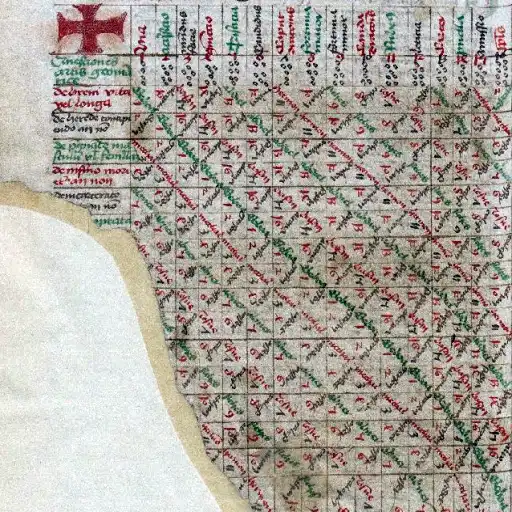
Here’s the biggest secret of all. The Picatrix was a massive success.
The Church immediately branded it as a “book of devils.” It was banned, listed on the Index Librorum Prohibitorum. This, of course, just made it the hottest, most “must-read” book in Europe.
It became the ultimate samizdat a forbidden text passed around in secret, hand-copied manuscripts, and whispered about by every single important thinker of the Renaissance.
You know the names:
- Marsilio Ficino: The “father” of the Florentine Renaissance, the man who translated Plato. He definitely read the Picatrix.
- Pico della Mirandola: The brilliant young philosopher. His 900 Theses (which also got him in trouble) are full of Picatrix style ideas.
- Heinrich Cornelius Agrippa: His Three Books of Occult Philosophy the other great grimoire of the era is basically a “cleaned up,” user friendly version of the Picatrix.
These men were the rock stars of their day. And the Picatrix was their source code.
As the historian Frances Yates argued in her groundbreaking work Giordano Bruno and the Hermetic Tradition, these Renaissance men performed a brilliant “PR” move.
- They read the Picatrix.
- They loved the astrological, talismanic, Neoplatonic magic.
- They hated the blood, brains, and general “yuck” factor (which they blamed on “barbaric” Arabs, by the way).
So, they “laundered” it. They kept the high minded philosophy of “drawing down the stars.” They kept the talismans, the music, the incense, and the astrological timing. They just swapped out the brains for poetry and called it “Natural Magic” or “Spiritual Magic.”

The entire system of Renaissance “High Magic” is just the Picatrix with the nasty bits scrubbed off.
It’s the greatest intellectual cover-up of all time. The men who built the “Enlightenment” and the “Scientific Revolution” were all, in secret, practicing a “white washed” version of the most diabolical book of magic in the world.
About 1,000 Year Old Book
For centuries, the Picatrix was a dark legend, a book you heard about but could never read. It was only available in a few, famously terrible, bootleg translations.
That all changed recently.
In 2019, the Penn State University Press a major academic publisher released the first ever critical English translation by scholars Dan Attrell and David Porreca, here.
The secret is out.
For the first time, anyone can read this book. And what we find is not a “devil’s Bible.” We find a snapshot of a completely alien, yet brilliant, worldview. It’s a world where the universe is alive, and magic is a science. It’s a world where philosophy, astronomy, and ritual are all part of the same “Great Work.”
The Picatrix isn’t just a book of spells. It’s the missing link. It’s the bridge between the ancient wisdom of Egypt and Persia, the “golden age” of Arabic science, and the “enlightened” mind of the European Renaissance.
It’s dark, it’s disturbing, and it’s one of the most important books ever written.
Now that the Picatrix is no longer a “secret,” the full, unfiltered text is out there. It’s a challenging read, but it’s a direct look into the mind of a medieval magician.
What part of its legacy do you find more fascinating the “nightmare fuel” rituals, or its secret influence on the greatest minds of the Renaissance?
Let me know your thoughts in the comments below.

