

The Atuk Curse Explained: Why Hollywood’s Cursed Screenplay Was Never Made
A comedy script floating around Hollywood since the early 1970s has allegedly been linked to the deaths of John Belushi, Sam Kinison, John Candy, and Chris Farley — plus two others who simply read it. Coincidence? Bad luck? Or something darker? Let’s dig in.
Need to know
- The Atuk screenplay has been linked to six deaths over roughly 15 years
- Every lead actor attached to the project died before the film could be completed
- The curse — if real — targets the script, not the source novel
- Skeptics argue it’s coincidence, high-risk lifestyles, and selective storytelling
- The story achieved mainstream formalization with a February 21, 1999, Los Angeles Times article titled “The ‘Atuk’ Curse”
Imagine a screenplay so dangerous that directors joke about it in hushed tones. Actors quietly pass on it. Agents won’t even touch the thing. No studio has dared greenlight it. And the longer it sits unproduced, the longer the list of people connected to it who turned up dead.
That’s Atuk. And no, this isn’t a horror movie — it’s a comedy.
The Book Nobody Cursed (And the Script That Was)
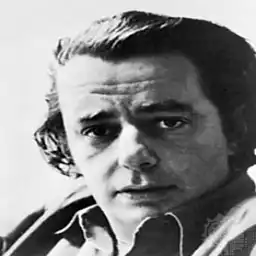
It all starts in Canada. The Incomparable Atuk is a satirical novel by Canadian author Mordecai Richler, first published in 1963 by McClelland & Stewart. Transplanted to Toronto from his native Baffin Island, Atuk the poet becomes an unlikely overnight success — but rapidly abandons his traditional values, choosing opportunism over integrity.
Richler’s work critiques a society aspiring to cultural independence while maintaining economic reliance on the United States, highlighting hypocrisies through Atuk’s transformation into a symbol of greed and assimilation. Sharp stuff for 1963. The kind of satire that makes readers uncomfortable in the best possible way.
Here’s the twist, though — the book was never cursed. Nobody who read the novel died. Nobody who adapted a stage version dropped dead. The curse, according to Hollywood lore, belongs entirely to the screenplay.
Fellow Canadian Norman Jewison, the Academy Award-nominated director of In the Heat of the Night and The Thomas Crown Affair, bought the rights to the novel in 1971, and Todd Carroll wrote the script. Carroll is best known for Clean and Sober (1988), starring Michael Keaton and Morgan Freeman. By all accounts, it’s a genuinely funny piece of writing — a classic fish-out-of-water comedy. An Inuit man, hustling and fumbling through the chaos of New York City. He struggles with materialism, pop culture, and racism. Big laughs. Big heart.
So why has it never been filmed? Because everyone who tried to star in it ended up dead.
Victim #1 — John Belushi (1982)
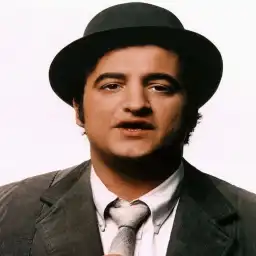
It wasn’t until 1982 that John Belushi got hold of the script and signed on to play the lead. Belushi was the funniest man in America at the time — fresh off Animal House, The Blues Brothers, and a legendary run on Saturday Night Live. A heavyset, chaotic, unstoppable comedic force. The role of Atuk seemed tailor-made for him.
He was offered the lead role in 1982 and showed a lot of interest in the script. But a few months later, on March 5th, Belushi was tragically found dead in his hotel room at the Chateau Marmont by his trainer Bill Wallace. He was only 33 years old. The cause of death was determined to be drug-related, most likely a speedball.
Two months later, Catherine Evelyn Smith admitted she had been with Belushi on the night of his death and had given him the fatal dosage. The case was reopened, and she was arrested and charged with first-degree murder. The charge was eventually reduced through a plea bargain.
That’s the first domino. It fell quietly enough that nobody called it a curse — yet.
Victim #2 — Sam Kinison (1988–1992)
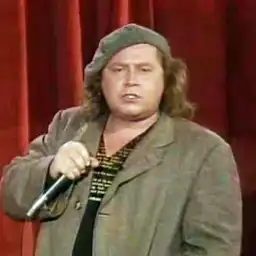
In 1986, after losing their lead, the script went back on the market and this time Sam Kinison got involved. If anyone was born to play a loud, culture-shocked outsider rampaging through New York City, it was Kinison — the screaming, wild-eyed preacher-turned-comedian who made chaos look like an art form.
In 1988, production began and managed 8 days of filming before Kinison halted production. Some sources say the notoriously prickly Kinison never even read the script before taking the role and arrived on set with rewrites in hand, while others say his manager promised him creative control without clearing it with the studio. A lawsuit followed. The movie stalled again.
Then, just as things were picking back up — on April 10th, 1992, Kinison was killed in a head-on collision near Needles, California, by a 17-year-old who was drunk. He was only 38 years old.
What happened next is the part that unsettled people most. Kinison was alive after the crash. Witnesses reported he spoke briefly before dying — seemingly arguing with an unseen presence. His last words, according to those present, were “Why? Why?” before he quietly replied: “Okay, okay, okay.” He went silent and never came back.
Whether you’re religious or not, that’s a haunting image to sit with.
Victim #3 — John Candy (1994)
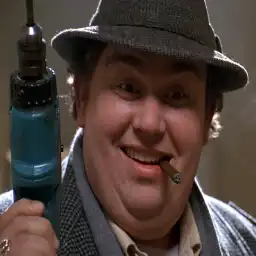
By 1994, the project resurfaced again. Candy was excited about playing the role and began reading the script immediately. He was the perfect fit — a beloved Canadian comedian with warmth, physical comedy chops, and enough star power to finally get this thing made.
The “curse” struck again in 1994 when John Candy, who had been approached for the role of Atuk, was rumored to have actually been reading the script when he died of a heart attack on March 4th — the day before the 12th anniversary of Belushi’s death.
Read that again. The day before the anniversary. Candy was 43.
His death at age 43 drew further attention to the supposed Atuk curse. Candy’s passing, similar to Belushi and Kinison, became part of the tapestry of tragedy now permanently stitched to this screenplay. It was at this point that people in Hollywood started whispering the word “curse” out loud.
Collateral Damage — Michael O’Donoghue (1994)
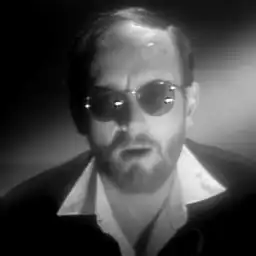
Here’s where things start getting genuinely eerie. Screenwriter Michael O’Donoghue, who was Saturday Night Live‘s first head writer and the co-writer of the 1988 Bill Murray film Scrooged, was a friend of John Candy’s. O’Donoghue either gave Candy the Atuk script or read it with him.
Several months after Candy’s death, his good friend Michael O’Donoghue died unexpectedly of a cerebral hemorrhage. When it became public that O’Donoghue had read the Atuk script with Candy shortly before his death, rumors of a “curse” on the ill-fated project began circulating throughout Hollywood.
He was 54. No prior warning. No dramatic illness. Just — gone.
Two deaths in the same year, both connected to the same script. Hollywood officially got nervous.
Victim #4 — Chris Farley (1997)
Time passed. Memories faded. And someone decided to try again.
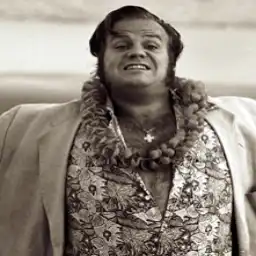
United Artists revisited the script in 1996, this time casting Chris Farley as Atuk. Farley was inspired by John Belushi throughout his life and tried to emulate the performer in many ways. The parallels were almost poetic — and, in retrospect, deeply tragic. Both big men. Both SNL legends. Both comedians who burned brightest and fastest.
He knew his idol Belushi was offered the part before he died, and quickly expressed an interest in the part. It was rumoured Farley was about to accept the offer when, just like Belushi, he died unexpectedly of a drug overdose on December 18th, 1997 — also aged 33.
Also aged 33. Same method. Same age. Different decade — same result.
He died of a drug overdose — a speedball. Just like Belushi. His brother John found him in his apartment. The Atuk curse, if you believe in it, had now claimed its most parallel victim yet.
More Collateral Damage — Phil Hartman (1998)
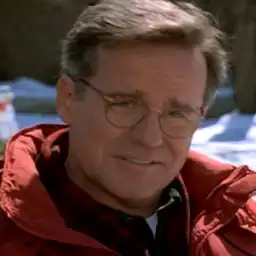
Phil Hartman, a friend and colleague of Chris Farley, who had a massive career in movies and television, also read the script, with the idea of taking another role in it while Farley played Atuk.
Five months after the tragic death of Farley, Hartman’s wife murdered Phil in cold blood. His wife Brynn Hartman got into a heated argument with Phil after he threatened to leave her if she started using drugs again. Around 3am, Brynn entered the bedroom and shot Phil twice in the head and once in his side. Brynn then took her own life. Phil Hartman was 49.
He was forty-nine. And another Canadian. The detail feels almost deliberate — as though the curse had a preference for Canadian comedians with ties to SNL.
So… Is the Curse Real?
Now for the honest part.
Some say that these curse stories have been cherry-picked. That with the script circulating for so many decades in Hollywood, these tragic souls weren’t the only ones to read the script and express interest. That’s a fair point. How many actors, writers, and producers passed through those pages without incident? We don’t know, because their names don’t make the list.
Survivorship bias is a real thing. We remember the deaths because they’re dramatic and connected. We forget the living because they’re just… living.
Some point to coincidence and the high-risk lifestyles of comedians in the 1980s and 1990s as more plausible explanations. That’s also fair. The comedy world of that era was genuinely brutal — substance abuse was rampant, mental health support was essentially non-existent, and the pressure to perform was relentless.
According to the Los Angeles Times, Carroll’s response was, “I think it’s either coincidence or practical explanation.” The screenwriter himself doesn’t believe his own work is haunted.
And yet — Belushi and Farley dying at the exact same age (33), by the exact same method (speedball overdose), after being attached to the exact same project? That’s the kind of detail a novelist would be told to cut for being too on the nose.
Why Was Atuk Really Never Made?
Here’s the part most curse articles skip over: the practical reasons the movie was never made are actually pretty straightforward.
First, the subject matter aged poorly. A comedy about an Inuit man navigating New York City — written in the 1970s, set to star predominantly non-Indigenous actors — was going to face serious cultural scrutiny by the 1990s. What played as quirky fish-out-of-water satire in 1963 read very differently by the time Chris Farley was attached.
Second, every production attempt collapsed before finishing. Production began in 1988 and managed only 8 days of filming before Kinison halted it. Creative disputes, studio interference, rewrites — the ordinary Hollywood dysfunction that kills projects every single week.
Third, the curse itself became a reason to avoid it. Once the story gained traction — particularly after the 1998 segment on AMC’s Hollywood Ghost Stories, which introduced the concept to audiences with supernatural undertones — the script became more famous as a death omen than a comedy vehicle. No A-list comedian would touch it. Their agents certainly wouldn’t let them.
At some point, the curse became self-fulfilling in the most practical sense: nobody wants to be the next name on the list.
Question Worth Asking
Why do these comedians, specifically? What is it about the Atuk role — a big, physical, charismatic outsider dropped into a world that doesn’t understand him — that kept attracting men who lived exactly that kind of life?
Belushi, Kinison, Candy, Farley. All big personalities. All performers who turned their own chaos and pain into comedy. All men who, in different ways, struggled with the very things their comedic personas amplified. The script didn’t kill them. But it’s almost as if the role had a type — and that type came with a built-in fragility that Hollywood failed to protect.
That’s not a curse. That’s a tragedy.
The Script Still Exists
Here’s the kicker — this unproduced screenplay has been floating around Hollywood since the early ’70s. It hasn’t been destroyed. Nobody locked it in a vault. It circulates. It gets passed around. And every few years, someone reads it and thinks, this could actually work.
Whether you believe in curses or not, the real story of Atuk is a window into an era of Hollywood comedy that was brilliant, reckless, and ultimately devastating. The comedians who died weren’t victims of a piece of paper. They were casualties of a system that celebrated their excess while doing nothing to protect them from it.
The script just happened to be there for all of it.
Final Thought
Would you read the Atuk screenplay if someone handed it to you?
Most people say yes, until they’re actually holding it. Then, apparently, they put it down.
Enjoyed this? Share it with someone who loves Hollywood mysteries — and maybe don’t forward the script itself.
Also Check out the original 1999 Los Angeles Times piece titled “The ‘Atuk’ Curse” that first brought this story to mainstream attention, or explore Mordecai Richler’s original novel The Incomparable Atuk (1963) to see where it all began.

