

Carl Sagan: 7 Ways the ‘Pale Blue Dot’ & Cosmos Changed How We See the Universe
It’s February 14, 1990. Voyager 1 is speeding away from our solar system at 40,000 miles per hour, 3.7 billion miles from home. The mission is technically over. The cameras are about to be shut down to save power. But one man insists on turning the ship around for one last look.
That man was Carl Sagan. And that look gave us the “Pale Blue Dot.”
Most of us know the image a tiny, pixelated speck of light suspended in a sunbeam. But do we really grasp how much that single photo, and Sagan’s 1980 masterpiece series Cosmos, fundamentally rewired our collective brain? It wasn’t just about pretty space pictures. It was a philosophical earthquake.
Sagan didn’t just teach us about stars; he taught us about us.
In a world drowning in noise and pseudoscience, Sagan’s voice cuts through like a laser. He blended hard science with the soul of a poet, making the universe accessible to everyone from grade-schoolers to grandmothers. But his impact goes deeper than just “billions and billions” of stars.
Here are 7 distinct, powerful ways Carl Sagan changed how we see the universe and our place within it.

1. The “Overview Effect” for the Rest of Us
Astronauts often report a cognitive shift when they see Earth from space a phenomenon known as the Overview Effect. It’s a sudden, overwhelming realization of Earth’s fragility and unity, where borders vanish and the atmosphere looks like a paper-thin shield protecting all of life.
Before 1990, you had to be in orbit to feel this. Sagan changed that.
By fighting NASA management to turn Voyager 1 around (a risky move that could have damaged the camera’s sensors), he forced humanity to confront its own insignificance. He brought the Overview Effect down to the living room.
The Great Demotion
Sagan called it the “Great Demotion.” For centuries, we thought we were the center of the universe. Copernicus moved the sun to the center. Galileo showed us other worlds. But the “Pale Blue Dot” was the final nail in the coffin of human arrogance.
- The visual proof: You can’t look at that speck and argue that we are the masters of the cosmos.
- The emotional impact: It stripped away the “us vs. them” mentality. As Sagan famously wrote, “Think of the rivers of blood spilled by all those generals and emperors so that, in glory and triumph, they could become the momentary masters of a fraction of a dot.”
He didn’t just show us a planet; he showed us a mirror.
2. Weaponizing Science for Peace: The Nuclear Winter Warning

Here is a lesser-known fact: Sagan didn’t just talk about the stars; he used his scientific clout to try and save the world from burning.
In the early 1980s, the Cold War was at its peak. The prevailing military doctrine was that a nuclear war could be “winnable.” Sagan, along with a team of atmospheric scientists (the TTAPS study), ran the numbers and found something terrifying.

They discovered that the smoke from burning cities would rise into the stratosphere, blocking the sun and plunging Earth into a “Nuclear Winter.”
Science vs. Politics
Sagan took this theory directly to the public and Congress. He clashed with the Reagan administration, which downplayed the threat.
- He bypassed the gatekeepers: Instead of keeping the debate in obscure journals, he went on The Tonight Show and wrote for Parade magazine.
- The result: He shifted the narrative. Nuclear war wasn’t just about who fired first; it was a suicide pact for the entire species.
This was a masterclass in scientific responsibility. He showed that looking at other planets like the dust storms on Mars could teach us how not to destroy our own. He proved that astronomy isn’t just about “out there”; it’s about survival “down here.”
3. The “Sagan Effect”: Democratizing the Cosmos
Before Cosmos: A Personal Voyage aired in 1980, science was largely seen as the domain of serious men in white coats speaking in jargon. Popularizing science was viewed with suspicion by the academic elite.
Sagan smashed that barrier, but he paid a price.
The Cost of Cool
There is a phenomenon in academia actually called the “Sagan Effect.” It’s the snobbish perception that if a scientist is popular with the public, their research must be “dumbed down” or less rigorous. Because of his TV fame, Sagan was denied tenure at Harvard and later rejected for membership in the National Academy of Sciences (until a posthumous award corrected the insult).
But he won the war.
- Cosmos was watched by over 500 million people in 60 countries.
- He used special effects (the “Spaceship of the Imagination”) and history to tell a story, not just lecture on physics.
- He paved the way for every science communicator we love today. No Sagan, no Bill Nye. No Neil deGrasse Tyson. No Brian Cox.
He taught us that science belongs to everyone, not just the academics. He made it okay to be smart, curious, and full of wonder.
4. We Are “Star Stuff”: Bridging Science and Spirituality
One of the biggest rifts in human culture is the gap between science and religion. Sagan built a bridge right over it.
He famously declared, “We are made of star stuff.”
This wasn’t just a poetic flourish; it was hard astrophysics. The carbon in our DNA, the calcium in our teeth, the iron in our blood all of it was forged in the hearts of collapsing stars that exploded billions of years ago.
A New Kind of Connection
Sagan offered a “cosmic spirituality” that didn’t require supernatural belief. He replaced the fear of the unknown with the awe of the known.
- The Insight: We are a way for the universe to know itself.
- The Impact: This idea gave people a profound sense of connection to the cosmos. You aren’t a stranger in the universe; you are a part of it. You are its child.
He showed that you don’t need myths to feel small and significant at the same time. The reality of nature is far more breathtaking than any fairy tale.
5. The Golden Record: Thinking in Deep Time
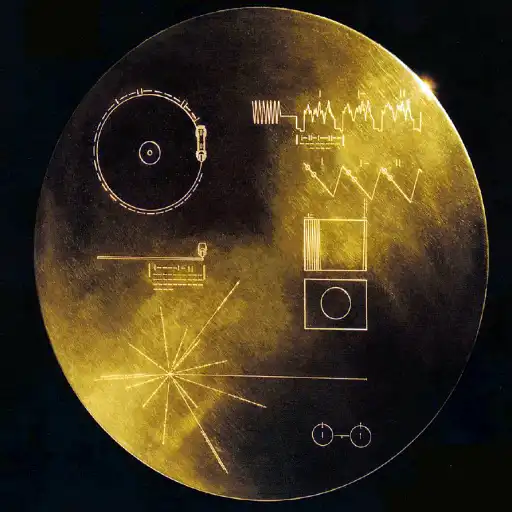
Sagan played the ultimate long game. In 1977, he chaired the committee that created the Voyager Golden Record two phonograph records containing sounds and images of Earth, bolted to the sides of Voyager 1 and 2.
This wasn’t a scientific instrument. It was a message in a bottle thrown into the cosmic ocean.
What it Says About Us
The record contains:
- Greetings in 55 languages.
- The sound of a kiss, a mother and child, wind, and surf.
- Music from Bach to Chuck Berry.
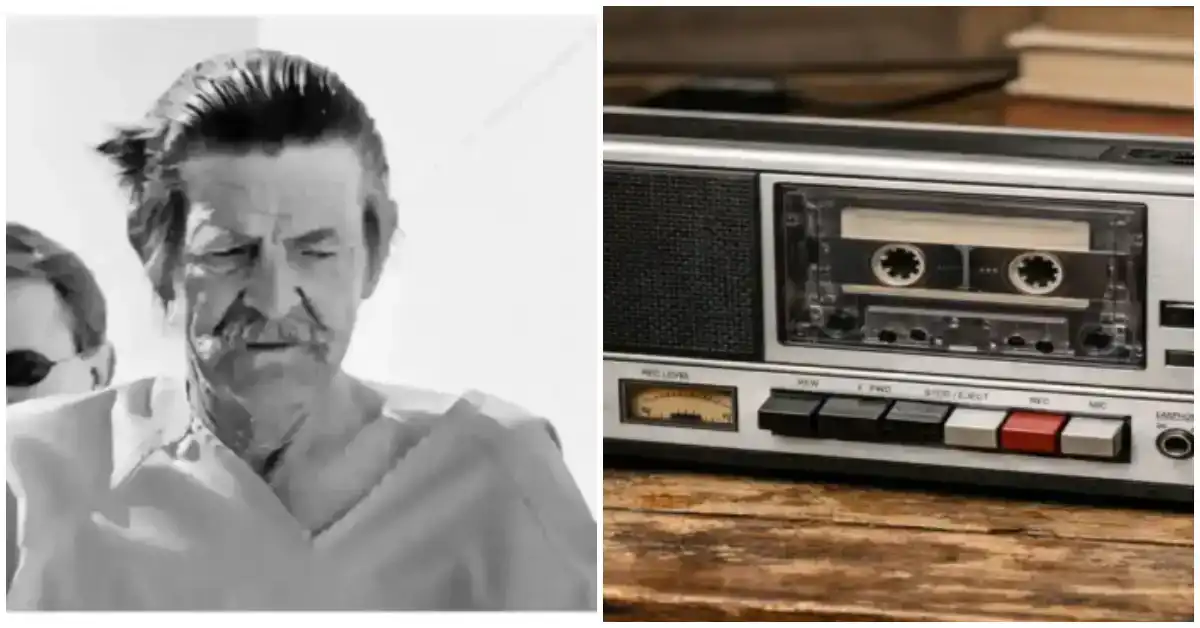
- Brainwaves of a woman in love (Ann Druyan, who would later become Sagan’s wife).
Why does this matter?
It forced us to curate our own legacy. If you had to explain humanity to an alien civilization in a billion years, what would you say? The Golden Record made us think about our species not as Americans or Russians, but as Earthlings. It was an exercise in planetary unity that redefined how we view our legacy in the universe.
Voyager 1 will outlast the Pyramids. It will outlast the Earth itself. Long after our sun swells and swallows the Earth, that record will still be out there, silent and gold, waiting for a listener.
6. Passing the Torch: The Personal Touch
You can measure a person’s legacy by the people they inspire. Sagan didn’t just speak to the masses; he changed lives one-on-one.
The Neil deGrasse Tyson Story:
In 1975, a 17-year-old kid from the Bronx named Neil applied to Cornell. He was already a budding astrophysicist. Sagan, the most famous scientist in America, saw the application and sent him a personal letter inviting him to visit.
- Sagan met him at the bus station on a snowy Saturday.
- He gave him a tour of the lab.
- He gave him a signed book.
- When the snow got bad, Sagan wrote his home phone number on a piece of paper and said, “If the bus doesn’t come, call me. You can spend the night at our house.”
Tyson later said, “I already knew I wanted to be a scientist. But that afternoon, I learned from Carl the kind of person I wanted to become.”
The Bill Nye Connection:
Bill Nye, the Science Guy, was actually a student in Sagan’s astronomy class at Cornell. He often cites Sagan’s emphasis on “pure science” and critical thinking as the foundation for his own career.
Sagan’s kindness and mentorship ensured that his “candle in the dark” didn’t flicker out when he died. He literally hand-picked the next generation of torchbearers.
7. The Baloney Detection Kit: Fighting the Demon-Haunted World
Sagan’s final and perhaps most urgent gift was his toolkit for critical thinking. In his book The Demon-Haunted World, he warned that a society dependent on science but ignorant of it was a recipe for disaster.
He foresaw a future where “awesome technological powers are in the hands of a very few, and no one representing the public interest can even grasp the issues.” Sound familiar?
Tools for Truth
He gave us the “Baloney Detection Kit” a set of rules to test arguments and detect lies.

- Independent confirmation of facts.
- Debate on evidence, not authority.
- Spin more than one hypothesis.
- Occam’s Razor (the simplest explanation is usually the right one).
He taught us that skepticism isn’t about being cynical; it’s about being safe. It’s the armor that protects us from being manipulated by charlatans, politicians, and bad actors. In the age of AI deepfakes and algorithmic misinformation, Sagan’s kit is more essential today than it was in 1995.
The Dot That Changed Everything
Carl Sagan died in 1996, but his “Pale Blue Dot” keeps spinning.
He took the cold, hard vacuum of space and filled it with warmth and humanity. He showed us that the universe is not something to be feared, but something to be explored. He taught us that our planet is a “lonely speck in the great enveloping cosmic dark,” and that this loneliness is exactly why we must cherish it and each other.
We are the universe becoming aware of itself. That is a heavy burden, but also a glorious privilege.
So, the next time you feel overwhelmed by the news, or your job, or the sheer chaos of modern life, take a page from Sagan’s book. Look up. Remember the dot.
Are you ready to see the universe differently?
Start tonight. Go outside, find a patch of dark sky, and just look. And if you want to keep that sense of wonder alive, pick up a copy of Cosmos or re-watch the series. The universe is waiting.
Frequently Asked Questions
Why did NASA engineers originally fight against taking the ‘Pale Blue Dot’ photo?
Most people assume NASA was eager for the shot, but that’s not true. Many engineers and mission managers were dead set against it. They feared that turning the camera back toward the sun—even from 3.7 billion miles away would fry the Voyager 1’s sensitive optics, ruining the mission. Carl Sagan had to fight a bureaucratic battle, appealing all the way to the top administrators, to get the “family portrait” of our solar system. He argued that the philosophical value outweighed the scientific risk. (Read the full story in Section 1).
How did the ‘Sagan Effect’ actually ruin Carl Sagan’s academic career?
While Sagan was a hero to the public, his fame made him a pariah among some elite scientists. This phenomenon, coined the “Sagan Effect,” suggests that perceived scientific rigor is inversely proportional to public popularity. Because he appeared on The Tonight Show and wrote for magazines, peers at Harvard denied him tenure, and the National Academy of Sciences initially rejected his membership. They mistook his clarity for simplicity. It wasn’t until later that the scientific community realized how vital his communication really was.
Was Carl Sagan an atheist, and how does ‘Star Stuff’ fit into that?
Sagan hated labels. He famously said, “An atheist is someone who is certain that God does not exist, someone who has compelling evidence against the existence of God. I know of no such compelling evidence.” He preferred the term agnostic. However, his concept that “we are made of star stuff” offered a spiritual alternative to religion a way to feel connected to the universe through biology and physics rather than theology. He didn’t want to kill spirituality; he wanted to ground it in reality.
What is the difference between the ‘Overview Effect’ and the ‘Pale Blue Dot’?
Great question. The Overview Effect is the physical and psychological shift astronauts feel when seeing Earth from orbit seeing it as a borderless, fragile ball. The Pale Blue Dot is Sagan’s way of bringing that experience to those of us stuck on the ground. By turning Voyager around, he gave non-astronauts the visual proof of our insignificance. While the Overview Effect requires a rocket, the Pale Blue Dot only requires a moment of reflection on that famous image.
Did Carl Sagan predict modern climate change?
Absolutely. Long before it was a political hot-button issue, Sagan testified before Congress in 1985 about the “Greenhouse Effect.” He used his research on the scorching atmosphere of Venus to illustrate what happens when carbon dioxide runs rampant. He also pioneered the concept of “Nuclear Winter,” showing how smoke from burning cities could cool the Earth and destroy agriculture. His work linked planetary science directly to human survival.
Why are there no human photos on the Voyager Golden Record?
It seems like an oversight, but it was intentional. When curating the Golden Record (the message sent to aliens on Voyager), Sagan and his team decided not to include photographs of war, poverty, or disease. They also excluded nude photographs of a man and woman due to pushback from NASA bureaucracy (fearing a political scandal in the 1970s). Instead, they included diagrams of human anatomy. They wanted to present a hopeful, unified image of Earth a “best of” album for the cosmos.
What would Carl Sagan think of Elon Musk’s plan to colonize Mars?
While Sagan was a massive proponent of exploration, he was also a staunch defender of Earth. He famously wrote, “Visit, yes. Settle, not yet.” He worried that if we treated Mars as a “backup drive,” we wouldn’t take care of our primary home. He believed we should not terraform other planets until we proved we could responsibly manage the atmosphere of this one. His focus was always: preserve the Pale Blue Dot first.
Sources & help & further reading:
- NASA Voyager Mission: The Pale Blue Dot Image, The Planetary Society: Carl Sagan’s Legacy, Library of Congress: Carl Sagan Papers, Science Magazine: TTAPS Nuclear Winter Study (1983), Neil deGrasse Tyson: On Meeting Carl Sagan
- https://science.nasa.gov/mission/voyager/voyager-1s-pale-blue-dot/
- https://www.dylantaylorfoundation.org/blogposts/what-is-the-overview-effect-and-how-can-space-travel-trigger-it
- https://en.wikipedia.org/wiki/Overview_effect
- https://www.smithsonianmag.com/science-nature/when-carl-sagan-warned-world-about-nuclear-winter-180967198/

