

The Delphi Murders: Inside the Controversial Ballistics of the Richard Allen Trial
Let’s talk about a case that practically broke the internet. For years, the tragic deaths of Abby Williams and Libby German haunted the small town of Delphi, Indiana. Eventually, after countless dead ends, an arrest finally shocked the nation. Consequently, the trial of local pharmacy technician Richard Allen gripped headlines worldwide. But behind the dramatic courtroom moments and shocking audio clips, a massive scientific debate was brewing. Ultimately, the entire prosecution hinged heavily on one tiny piece of unspent ammunition.
Have you ever wondered how a single, unfired bullet can send a man to prison for 130 years? Well, grab your detective hats. Today, we are diving deep into the weeds of the Richard Allen trial. Specifically, we will explore the controversial ballistics evidence that sealed his fate.
Key takeaways;
- The Crucial Discovery: An unspent .40-caliber round was found slightly buried in the dirt between the victims’ bodies.
- The Firearm Match: Forensic experts matched unique extractor and ejector marks on the casing to Richard Allen’s Sig Sauer P226 pistol.
- The Scientific Debate: Toolmark analysis was the core method used. However, defense attorneys fiercely criticized it as subjective “junk science”.
- The Final Verdict: Despite the complete lack of DNA or fingerprints, Allen was convicted in November 2024 and sentenced to 130 years behind bars.
Murders usually leave a messy trail of physical evidence. Surprisingly, the Delphi crime scene was entirely different. When investigators combed the woods near the Monon High Bridge Trail back in February 2017, they faced a frustrating lack of traditional clues.
Nightmare on the Monon High Bridge

First, let’s set the scene. On February 13, 2017, 13 year old Abby Williams and 14 year old Libby German vanished while hiking. Tragically, their bodies were discovered the very next day. Before her death, Libby bravely captured a grainy video on her cell phone. It showed a man walking tooward them, uttering the chilling words, “Guys, down the hill”.
For over five years, that video was the public’s only real clue. Meanwhile, law enforcement kept quiet about a highly guarded piece of physical evidence found at the scene. Right between the two girls, officers discovered an unspent Winchester .40-caliber Smith & Wesson cartridge.
So, why is an unfired round such a huge deal? Because it would eventually lead police right to Richard Allen’s front door.
Enter Richard allen and the “Magic Bullet”

Fast forward to October 2022. Authorities executing a search warrant at Richard Allen’s home seized several items, including a Sig Sauer Model P226 .40-caliber handgun. According to reports, this gun was practically a family heirloom. Allen admitted he owned it since 2001 and never let anyone else borrow it.
During the search, police also found a .40 caliber round kept in a “hope box”. Subsequently, the Indiana State Police Laboratory performed a rigorous analysis of the seized firearm. Their conclusion? The pristine, unfired round found near the victims’ bodies had definitively cycled through Richard Allen’s specific gun.

Instantly, the defense team went on the offensive. They aggressively dubbed the casing a “magic bullet,” arguing that prosecutors were leaning on highly questionable science to secure a conviction.
What exactly is an unspent round?
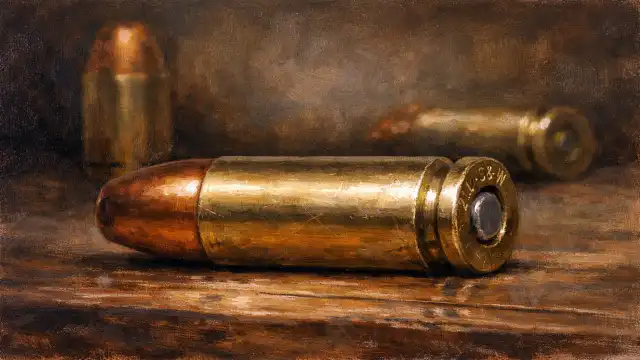
Before we get into the courtroom drama, let’s clarify some terminology. Often, the media uses the phrase “unspent bullet.” However, this is actually a bit inaccurate.
If you walked into a gun store, you’d buy cartridges. A full cartridge consists of four main components:
- The Casing: The brass (or nickel-plated) cylinder holding everything together.
- The Bullet: The actual metal projectile at the tip that fires downrange.
- The Gunpowder: The explosive material inside the casing.
- The Primer: A chemical cup at the base that ignites the powder when struck.
Therefore, the item found in Delphi wasn’t just a fired projectile. Instead, it was an entire, intact cartridge. It never fired. So, how did it end up in the dirt?
Prosecutors theorized that the killer racked the slide of his semi-automatic pistol to intimidate the terrified girls. Consequently, this mechanical action forcefully ejected a live round right onto the ground.
Toolmark identification

To connect the cartridge to Allen’s gun, the state relied entirely on a field known as toolmark identification. Basically, this science suggests that harder metal components inside a gun leave microscopic, one of a kind scratches on the softer brass casing.
Think of it like a fingerprint. When a gun cycles a round, internal pieces like the extractor and ejector physically grab and toss the casing. As a result, they leave tiny friction marks.
Melissa Oberg’s marathon testimony
During Day 7 of the high profile trial, the state brought out their star scientific witness. Melissa Oberg, a former Indiana State Police forensic firearms examiner, took the stand for a grueling seven hours.
She painstakingly explained her methodology to the jury. Back in her lab, she test fired Allen’s Sig Sauer P226. Next, she placed the test casings under a powerful comparison microscope alongside the Delphi crime scene cartridge.

According to Oberg, she found highly distinct matching characteristics in three different locations on the casing. Specifically, she focused heavily on three unique ejector marks. In her professional opinion, the match was conclusive. The round absolutely cycled through Allen’s weapon.
Furthermore, she confidently testified that the error rate for her specialized field is incredibly low, sitting between just 2% and 2.5%.
Defense fights back hard
But wait, is toolmark analysis really as foolproof as DNA? The defense loudly argued, absolutely not.
Attorneys Andrew Baldwin and Brad Rozzi wasted no time shredding the state’s narrative. During a fiery cross-examination, they attacked the core reliability of toolmark science. In fact, they pointed out that courts nationwide are increasingly scrutinizing this exact type of evidence.
Here are the main counter-arguments the defense presented:
- Subjectivity: Rozzi forced Oberg to admit that her final conclusion was ultimately subjective. Unlike a computerized DNA match, toolmark analysis relies heavily on human interpretation.
- Fired vs. Cycled: The defense highlighted a glaring issue. Oberg compared an unfired crime scene round to fired test rounds. Could the explosive force of firing a gun alter the distinct markings? The defense certainly thought so.
- Complete Absence of Forensics: Aside from this single cartridge, prosecutors had zero physical proof. The defense repeatedly reminded the jury that absolutely no DNA, fingerprints, or clothing fibers linked Richard Allen to the brutal crime scene.
Additionally, the defense team previously tried to bring in their own metallurgist expert to testify that the ballistics analysis was essentially “junk science”. Shockingly, Judge Fran Gull denied this request, completely blocking the jury from hearing that specific counter-perspective.
Lack of traditional forensics
Let’s pause and really think about the crime scene. The murders of Abby and Libby were incredibly violent. Autopsy results revealed the girls suffered massive cuts to their necks. Typically, an attack of this brutal magnitude leaves behind a chaotic mixture of DNA, hair, and blood.
Yet, investigators found absolutely nothing connecting Allen to the bodies. There was no testable DNA recovered. There were no viable fingerprints found on the girls’ clothing. Even more surprisingly, law enforcement found no trace evidence like soil, blood, or fibers inside Allen’s home or vehicle.
Because of this extraordinary absence of physical proof, the unspent cartridge bore the entire weight of the state’s forensic case. If Oberg’s toolmark analysis was flawed, the physical link connecting Allen to the woods would completely evaporate. This extreme reliance on a single, controversial piece of metal is precisely why the defense fought so viciously to get it thrown out.
Role of jailhouse confessions
Of course, we cannot ignore the elephant in the room. The ballistics didn’t exist in a vacuum. The prosecution also possessed a massive emotional weapon: Richard Allen himself.

While incarcerated, Allen made deeply incriminating statements to law enforcement and his family. In fact, prosecutors stated he confessed no less than five times while talking to his wife and mother on public jail phones. He allegedly knew details that only the true killer would know.
However, the defense painted a vastly different picture of these admissions. They argued that Allen was suffering from severe psychosis, brought on by brutal conditions in solitary confinement. A defense psychiatrist even testified that months locked in isolation could easily make a person delirious enough to falsely confess. Furthermore, the defense pointed out that Allen behaved erratically, doing things like eating his own feces in front of prison guards.
Therefore, the jury faced a monumental task. They had to decide if the confessions of a severely mentally deteriorating man corroborated the highly debated ballistics evidence.
About this ballistics battle
Ultimately, the jury had to weigh Oberg’s confident scientific testimony against the defense’s relentless skepticism. When you combine those chilling confessions with the microscopic ejector marks, the jury saw enough to act. In November 2024, they found Richard Allen guilty of all charges. Subsequently, a judge handed down a massive 130-year prison sentence, effectively ending his life as a free man.
Still, the legal community remains heavily divided over the “magic bullet.” Can we comfortably send people to prison for a century based on scratches on a piece of brass? Is toolmark identification a concrete science, or just an educated guess?
These questions aren’t just academic. In reality, they impact the very foundation of our justice system. The Richard Allen trial might be over, but the fierce debate surrounding forensic ballistics is just heating up. For defense attorneys across the country, this high-profile case serves as a terrifying precedent regarding the admissibility of subjective evidence.
On the other hand, for the grieving families of Abby Williams and Libby German, the unspent bullet was nothing short of a miracle. It was the solitary breadcrumb that finally brought a monster out of the shadows.
What are your thoughts on this complex case? Do you think toolmark analysis is reliable enough to secure a murder conviction, or was the defense right to call it “junk science”? Drop your opinions in the comments below! If you loved this deep dive, don’t forget to share this article with your fellow true crime junkies and subscribe to our newsletter for more weekly trial breakdowns!
References:
- https://rickallenjustice.com/the-richard-allen-trial-evidence-flaws-and-wrongful-conviction/
- https://www.the-independent.com/news/world/americas/crime/delphi-murders-richard-allen-ballistics-evidence-b2357560.html
- https://www.fox7austin.com/news/delphi-murders-richard-allen-trial-opening-statements
- https://www.youtube.com
- https://lawandcrime.com/high-profile/delphi-murder-suspect-seeks-to-have-key-ballistic-evidence-excluded-from-trial/
- https://www.basedinlafayette.com/p/delphi-murder-trial-day-7-how-investigation

