

National Drummer Day (Nov 15): Meaning, History & How to Celebrate
Have you ever tried tapping your head and rubbing your belly at the exact same time? It is tricky. Now, imagine doing that while tapping your left foot to one beat, stomping your right foot to another, and keeping a room full of screaming fans totally mesmerized.
Naturally, that is exactly what a drummer does every single night.
On November 15, we celebrate National Drummer Day. Ultimately, this day gives us a chance to honor the folks sitting at the back of the stage. They are the sweaty, hard-working timekeepers who hold our favorite songs together. Without them, rock and roll would just be a chaotic mess of guitar feedback.
Key takeaways
- What is it? A day dedicated to celebrating drummers and percussionists worldwide, held annually on November 15.
- Why it matters: Drummers are the foundation of any band. They control the tempo, mood, and groove.
- Health benefits: Playing drums burns calories, boosts brain power, and dramatically reduces stress.
- How to celebrate: Buy a drummer some new sticks, blast your favorite drum solos, or finally sign up for that beginner lesson.
What exactly is National Drummer Day?
Let’s be completely honest for a second. Singers get the fame. Guitarists get the flashy solos. Meanwhile, drummers get to haul heavy equipment into the venue through the back door.
Consequently, National Drummer Day was created to fix this unfair spotlight. Observed every November 15th, the holiday’s primary meaning is simple: give drummers their flowers. It is a global high-five to the rhythm makers. Whether they are playing a stadium tour, marching in a high school band, or just jamming in a local garage, they deserve massive respect.
Furthermore, this day highlights the vital role rhythm plays in our culture. The drummer dictates the heartbeat of the music. If the drummer speeds up, the whole band rushes. Conversely, if the drummer loses the beat, the song completely falls apart. They are the unseen directors of the show.
Heartbeat of history: How drumming began
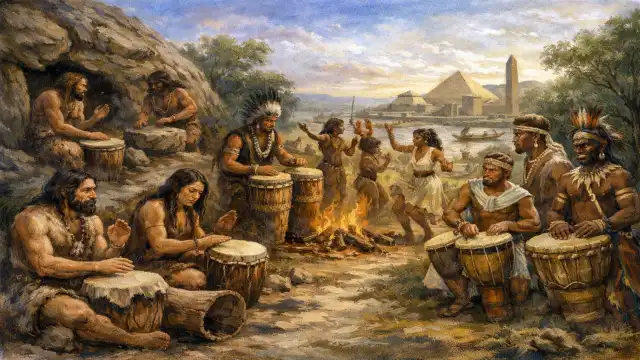
Drums are ancient in fact, they’re the oldest musical instruments. Long before people learned to craft brass horns or string wooden guitars, they were simply striking objects with sticks.

Historically, historians trace the earliest known drums back to 6000 BC in ancient Mesopotamia. Early humans quickly realized that hitting a hollowed-out log produced a booming sound. Soon after, they started stretching animal skins over these logs to create a sharper, louder noise.
For thousands of years, drums were not just for making music. Specifically, they were used for serious communication. Across parts of Africa and Asia, tribal leaders used “talking drums” to send urgent messages between villages. Because sound travels much faster than a person running through a jungle, drums were basically the ancient version of a text message.
Battlefields to the modern drum kit
As societies evolved, so did the drums. During the Middle Ages, military leaders figured out that a massive drumbeat could keep soldiers marching perfectly in step. Therefore, snare drums became essential tools on the battlefield.
However, the modern drum set the one you see at rock concerts today is actually a fairly recent American invention. Back in the late 1800s, jazz and blues bands in New Orleans needed to save money. Hiring three different percussionists to play the snare, cymbals, and bass drum was simply too expensive.
As a result, a clever guy named William F. Ludwig invented the first workable bass drum foot pedal in 1909. Suddenly, one single person could play multiple drums simultaneously using both hands and feet. That changed music forever. Suddenly, the drum kit was born.
Why drummers are the real MVPs
Why do we even need a specific day to celebrate drummers? Simply put, they do the heavy lifting.
Have you ever watched a great drummer up close? It is a serious athletic event. A study published by the Clem Burke Drumming Project revealed something mind-blowing. During a 90-minute concert, a rock drummer burns as many calories as a professional soccer player playing a championship match. Let that sink in.

Beyond the physical workout, drummers are the emotional anchor of a band. The lead singer might engage the crowd, but the drummer literally moves them. That irresistible urge you get to tap your foot or nod your head? That is the drummer hacking into your brain’s natural rhythm receptors.
Hidden brain benefits of banging on drums
Interestingly, drumming is not just good for the soul. It is actually incredible for your physical health. If you are a parent wondering if you should let your kid buy a drum set, the science heavily votes yes.
- Massive Stress Relief: Hitting things safely is therapeutic. Oxford University researchers discovered that playing drums triggers a massive release of endorphins. These are your brain’s natural “feel-good” chemicals.
- Boosts Brain Power: Drumming requires deep coordination. Because you are using all four limbs to do different things, you are literally building new neural pathways in your brain.
- Helps with ADHD: Many doctors recommend rhythmic therapy for children with ADHD. Focusing on a steady beat helps train the brain to concentrate and manage impulsive behavior.
- Strengthens Immunity: Surprisingly, group drumming has been linked to increased white blood cell counts. This means a good jam session might actually help you fight off a cold.
5 Legendary timekeepers you should know
To truly celebrate National Drummer Day, you need to listen to the masters. While there are thousands of brilliant musicians out there, a few heavy hitters completely changed the game.
- John Bonham (Led Zeppelin): He hit the drums harder than almost anyone else in history. Yet, he maintained an incredible groove. His intro on “When the Levee Breaks” is legendary.
- Neil Peart (Rush): Known as “The Professor.” Peart treated the drum kit like a massive science experiment. His massive setups and complex time signatures still baffle musicians today.
- Sheila E.: A fierce pioneer. She broke major barriers for female drummers in the 1980s, bringing infectious Latin percussion elements into mainstream pop music.
- Questlove (The Roots): The undisputed king of the modern groove. He plays with such precise, tight timing that he almost sounds like a perfectly programmed drum machine.
- Buddy Rich: Widely considered the greatest jazz drummer ever. His hand speed was absolutely terrifying. Even today, horn players struggle to keep up with his old solos.
How to celebrate National Drummer Day like a pro
Are you ready to join the party? You absolutely do not need to be a musician to celebrate. Here are a few creative ways to honor the day.
For the fans
- Curate a Drum-Heavy Playlist: Spend the day listening to songs famous for their beats. Put Phil Collins’ “In the Air Tonight” on repeat. Wait for that iconic drum fill. Air drum aggressively.
- Go See Live Music: Check out a local band playing in your town. Stand near the back, watch the drummer work, and cheer specifically for them.
- Tip the Drummer: If there is a tip jar at a local gig, drop a twenty in there. Trust me, drumsticks are expensive, and they break them constantly.
For the aspiring musicians
- Take a Lesson: Have you always wanted to play? Use November 15 as your excuse to finally book a beginner lesson at a local music shop.
- Buy a Practice Pad: You do not need a massive, loud drum set to start. A simple rubber practice pad and a pair of hickory sticks cost less than thirty bucks.
- Upgrade Your Gear: If you already play, treat yourself. Buy that new Zildjian cymbal or those fancy kick-pedal beaters you have been eyeing all year.
Anatomy of a basic drum kit
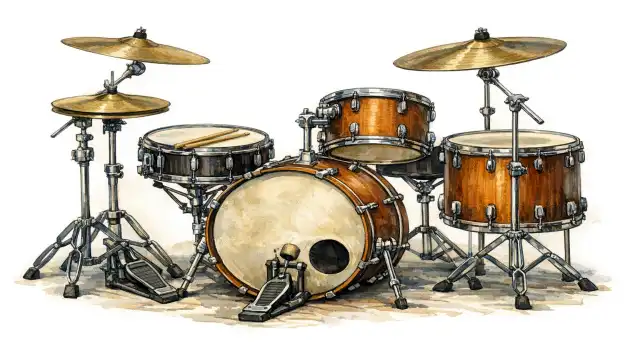
If you are new to the drumming world, the equipment can look incredibly confusing. What are all those shiny metal plates? Let’s break down a standard five-piece drum kit so you can easily understand it.
- The Bass Drum (Kick Drum): This is the massive drum sitting sideways on the floor. You play it with a foot pedal. It produces the deep “thump” that hits you right in the chest.
- The Snare Drum: Placed right between the drummer’s legs. It has metal wires stretched across the bottom, giving it a sharp, cracking “smack” sound.
- The Toms (Tom-Toms): These are the smaller drums mounted above the bass drum, plus a larger one on the floor. Drummers use these to play cool, rolling fills.
- The Hi-Hat: Two cymbals stacked on top of each other, attached to a foot pedal. Drummers open and close them to create a slick “chick-chick” rhythm.
- Crash and Ride Cymbals: The big brass plates hovering around the kit. The Crash makes a loud, explosive sound for big musical moments. Conversely, the Ride makes a pinging sound used to carry the beat during chorus sections.
Let’s bust some common drummer myths
Unfortunately, drummers deal with a lot of bad stereotypes. Since it is their holiday, let’s clear the air and bust a few annoying myths.
Myth 1: “Drummers aren’t real musicians.”
Wrong. Rhythm is the literal foundation of music. A guitarist can play the wrong chord, and the audience might miss it. However, if a drummer drops the beat, the entire crowd instantly trips over their own feet. Drummers understand math, timing, and song structure better than anyone else in the room.
Myth 2: “Drumming takes no talent, just hit things hard.”
Try playing a simple rock beat. It requires independent limb coordination. Your right hand is doing eighth notes, your left hand is doing quarter notes, and your right foot is doing syncopated off-beats. It takes years of intense brain-training to make it look effortless.
Myth 3: “Electronic drums aren’t real drums.”
Technology has changed. Modern electronic mesh kits feel incredible. Plus, they allow kids to practice with headphones at 2 AM without the neighbors calling the police. They are a massive blessing for modern parents.
Why AI will never replace a real drummer
In today’s tech-heavy world, people often ask if AI and drum machines will put drummers out of a job. After all, a computer can play a beat perfectly without ever getting tired.
Here is the truth. Perfect is actually pretty boring.
Drummers use what musicians call “feel.” Sometimes they pull the snare a hair behind the beat to make a groove feel lazy and heavy; other times they push slightly ahead to add nervous energy. A computer hits exactly on the grid people, by contrast, breathe life into the spaces between notes. That raw, sweaty, imperfect human groove is something an algorithm can’t fully reproduce.
Give the drummer some!
Ultimately, National Drummer Day is about respect. It is a reminder to appreciate the pulse behind the poetry. From ancient wooden logs in Mesopotamia to the massive stadium kits of today, drumming connects us all on a primal level.
So, when November 15 rolls around, make some noise. Text the drummer in your life. Share your favorite drum solo video on social media. Most importantly, turn up the stereo and let the rhythm take over.
Who is your absolute favorite drummer of all time? Do you prefer the heavy smashing of rock legends or the smooth grooves of jazz masters? Drop a comment below with your favorite drum track, and don’t forget to share this article with your bandmates to spread the National Drummer Day love!

