

Oldest Evidence of Surgical Anesthesia Found on 600-Year-Old Chinese Tools
Researchers discovered traces of a highly toxic plant called wolfsbane on 600-year-old surgical scissors and tweezers from a Ming Dynasty physician’s tomb. This is the world’s first direct chemical evidence that ancient surgeons used a topical anesthetic — and they detoxified the deadly plant with things like vinegar and mung beans before applying it.
Quick read
- The tools belonged to physician Xia Quan (1348–1411), whose tomb was excavated in Jiangyin, China.
- Scientists identified aconitine — a toxic compound from wolfsbane — on the surgical residue.
- Micro-Raman spectroscopy (a laser-based analysis) confirmed the chemical fingerprint.
- Ming doctors detoxified the poison using vinegar, mung beans, and even the urine of young boys.
- The prepared anesthetic powder/liquid was known as Caowu San.
- The study was published on May 26, 2026, in the peer-reviewed journal Antiquity.
Imagine lying on a table in 15th-century China, about to have surgery. No sterile operating room, no IV drip, no anesthesiologist in scrubs. Just a physician, iron scissors, tweezers — and a carefully prepared paste from one of the most poisonous plants on earth.
Sounds terrifying, right? But here’s the thing: that surgeon probably knew exactly what they were doing.
A new study published in the journal Antiquity has revealed something extraordinary — the world’s oldest direct chemical evidence of a topical anesthetic, hiding in plain sight on two 600-year-old surgical tools from a Ming Dynasty tomb in eastern China.
The Tomb, the Tools, and the Physician
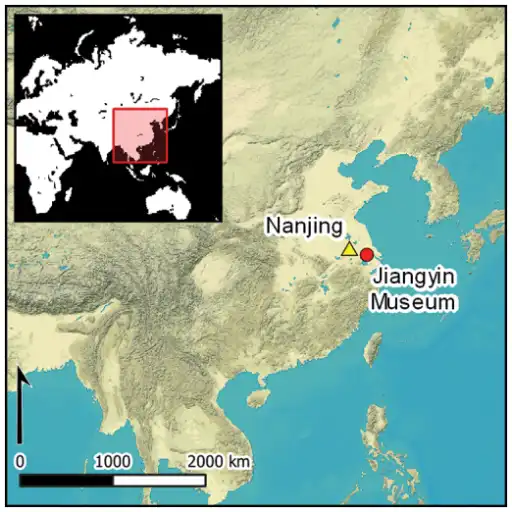
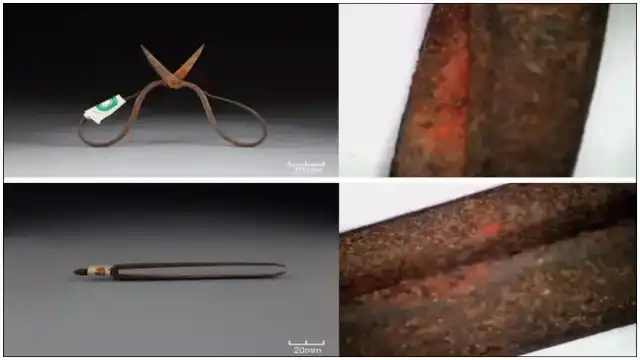
The story starts in 1974, when archaeologists unearthed a tomb in Jiangyin, a city in Jiangsu Province roughly 90 miles (150 km) northwest of Shanghai. The tomb belonged to Xia Quan, a physician who lived from 1348 to 1411. Among the artefacts buried alongside him were two iron surgical instruments — a pair of scissors and a pair of tweezers — now housed at the Jiangyin Museum.
These weren’t ceremonial objects. They were working tools. And they held secrets nobody had thought to look for until recently.
A team of researchers led by co-author Congcang Zhao, an archaeologist at Northwest University in China, decided to take a much closer look. What they found rewrote our understanding of ancient Chinese surgery.
Lasers, Residue, and a 600-Year-Old Secret
So how do you figure out what was on a rusty iron tool from the 1400s? You don’t just scrape it and guess.
The researchers first used X-ray fluorescence analysis — a non-destructive technique that reveals an object’s elemental composition — confirming the tools were made of iron. Then, under a microscope, they selected three tiny particles of rust-colored residue with the hope of identifying traces of organic compounds.
Only two milligrams of residue were removed from each instrument. That’s less than a grain of rice. Yet even from samples that small, the science came through.
The team used micro-Raman spectroscopy — a technique in which a laser is beamed at a sample, causing the sample’s photons to scatter. The pattern of that scattering can then be analyzed to generate the structural fingerprint of the molecules in the sample.

The results? A chemical signature that pointed unmistakably toward something both fascinating and dangerous.
The Raman spectroscopy analysis revealed the presence of the cyano functional group — found in hydrogen cyanide — as well as the organic components of oils and fats. Taken together, these results indicated “medicinal and potentially anaesthetic properties for the residues,” the researchers wrote. “The alkaloid toxin aconitine is suggested as a probable component of the residues.”
Somebody had rubbed a potent, numbing chemical onto those tools — and the ghost of it survived six centuries to tell the story.
What Exactly Is Wolfsbane (and Why Is It So Dangerous)?
If you’ve watched Game of Thrones or read old mythology, you’ve probably heard of wolfsbane. Historically linked to werewolf lore and royal assassinations, this plant has one of the most sinister reputations in the natural world.
Also known as aconite, monkshood, and wolfsbane, plants of the Aconitum genus are extremely poisonous — but they have also been used in traditional Asian medicine for centuries, primarily for their analgesic properties. The specific species likely used here was Aconitum carmichaelii — Chinese wolfsbane.
Aconitine can disrupt sodium channels in nerve cells and can be lethal. That disruption of nerve signals is, interestingly, exactly why it works as a numbing agent when applied correctly. Block the right nerve signals, in the right dose, on the right patch of skin — and the patient feels nothing.
The dose really does make the poison.
Ancient Chemistry: Turning a Killer Plant Into a Painkiller
Here’s the part that genuinely blows the mind. Ming Dynasty physicians weren’t just slapping raw wolfsbane onto their patients. They were processing it — with the kind of methodical knowledge we’d associate with pharmaceutical preparation.
Ming texts describe ways to reduce aconite’s toxicity, including preparation with boys’ urine, soaking in black soybean decoction, boiling in vinegar, detoxifying with mung beans, and removing the outer skin of the tuber. These might sound like folk remedies, but there’s real chemistry behind them. Acidic environments — think vinegar — break down aconitine into less toxic compounds. Mung beans contain compounds that bind to alkaloid toxins. Urine, however unconventional, contains urea and mildly acidic components that served a similar neutralising role.
The resulting compound, often called Caowu San, functioned as an anaesthetic intended to make patients insensitive to pain during surgery.
Think about what that represents. These physicians had no biochemistry labs, no pharmacological journals, and no FDA approval process. Yet through generations of observation and careful experimentation, they built a working system to turn a lethal plant into a controlled medicine. That’s not primitive guesswork — that’s empirical science.
How the Surgery Actually Worked
Picture the scene. The physician has prepared the Caowu San compound — likely a liquid or powder. The practitioner would apply the numbing agent to the area, then use the tweezers to hold the skin and the scissors to trim away the outer layer.

The anesthetic residue was present on both tools, concentrated in the functional areas — the tips and edges where direct contact with the patient would occur. That kind of distribution isn’t random. It’s consistent with deliberate, procedural application.
It’s likely that the anesthetic in this case was in liquid form; it may have splashed onto the iron implements, escaping cleaning and eventually corroding the metal.
That corrosion is what preserved the evidence. Ironic, isn’t it? The very rust that makes old tools look worn and forgotten is what locked in the chemical story of a long-dead surgeon’s care for their patient.
Why This Discovery Matters — Beyond One Tomb
Scholars have long known from written texts that Ming Dynasty physicians used Aconitum-based preparations. Medical manuals from the period describe the compounds, the detox processes, the dosing. But written records are one thing. Physical evidence is another.
While recipes for the production of Aconitum powder are known from ancient Chinese medical texts, this is the first direct physical evidence for its use in surgery.
That distinction is huge. Texts can be copied, embellished, or misattributed. Chemical residue on the actual tools of an actual physician — that’s as close to unimpeachable proof as archaeology gets.
As study co-author Zhao put it: “Combined with records of anaesthetic prescriptions in Ming Dynasty medical texts, the study confirms that Aconitum was employed as a topical anaesthetic, safely and precisely applied during surgical procedures.”
Its presence on the tools of a revered surgeon — Xia Quan, who lived around 1348 to 1411 and in whose tomb the tools were found in 1974 — implies a very high level of skill and precision.
Xia Quan wasn’t some fringe practitioner dabbling in dangerous herbs. He was a respected physician, buried with his tools. And those tools carry the evidence of a patient-centred medical practice that prioritised reducing suffering before making an incision.
What This Tells Us About Ming Dynasty Medicine
The Ming Dynasty (circa 1368–1644) tends to get overshadowed in Western history by the Renaissance happening simultaneously in Europe. But this discovery is a sharp reminder that sophisticated medical knowledge was alive and thriving in China long before ether and chloroform arrived on the scene in the 1840s.
The discovery offers a remarkable glimpse into medieval Chinese medicine, revealing not only advanced surgical knowledge but also refined methods for handling dangerous drugs safely.

Ming physicians clearly understood the difference between a lethal dose and a therapeutic one. They understood that route of administration mattered — topical application kept the toxic alkaloid localised, preventing it from entering the bloodstream in dangerous concentrations. They understood procedural control.
“Ming physicians used iron surgical instruments and controlled the toxicity of aconitine through topical application, compound prescriptions and strict procedural controls, demonstrating a practical ability to balance drug potency with patient safety,” Zhao said.
That’s pharmacokinetics — even if they didn’t use the word.
A Word on the Bigger Picture of Anesthesia History
Most Western history textbooks credit the birth of surgical anesthesia to 1846, when dentist William T. G. Morton publicly demonstrated ether at Massachusetts General Hospital. And in terms of modern, inhalable general anesthesia — that timeline holds.
But topical anesthesia? Pain management during surgery? The idea that surgeons should numb tissue before cutting it? That thinking, it now appears, was alive in China centuries earlier — not just in theory, but in measurable, chemical practice.
This doesn’t diminish the 19th-century breakthroughs. It enriches the full human story of medicine. People across cultures and eras have always searched for ways to relieve suffering. Sometimes they wrote it down. Sometimes it survived on the tip of a rusted pair of scissors.
Takeaway
Six centuries ago, a physician named Xia Quan pressed iron tweezers into a patient’s skin and trimmed tissue with scissors coated in a carefully prepared poison-turned-painkiller. The patient likely felt little.
And today, scientists read the chemical ghost of that encounter through a laser beam.
That’s not just a cool archaeology story. It’s a reminder that human ingenuity — the drive to understand, to experiment, to reduce pain — is ancient. It doesn’t belong to any one culture or century. It belongs to all of us.
Want to Go Deeper?
The full study — “Surgical anaesthesia in Ming China: scientific analysis of aconite residues on medical instruments” by Ling et al. — is published in the peer-reviewed journal Antiquity (2026). You can access it at doi.org/10.15184/aqy.2026.10347.
Found this fascinating? Share it with someone who thinks modern medicine has no debt to the ancient world — and watch their mind change. If you’re a student studying medical history or archaeology, this paper is a goldmine for your research. Drop your thoughts or questions below — what other ancient medical practices do you think are waiting to be chemically confirmed?
Sources verified via Live Science, Phys.org, ScienceAlert, and the primary research paper in Antiquity (Ling et al., 2026).

