

Texas Independence Day hits differently when you know the raw facts. Have you ever wondered what actually went down during the Battle of the Alamo? Most folks just picture a cinematic scene with Davy Crockett swinging his rifle. However, the historic truth is far more gripping than any Hollywood script. Back on March 2, 1836, a scrappy group of delegates declared Texas a free republic. Meanwhile, roughly 150 miles away in San Antonio, nearly 200 defenders were trapped inside a crumbling Spanish mission. Ultimately, they were staring total annihilation right in the face.
Therefore, let’s strip away the myths. We are going to explore what really happened during those bloody thirteen days. Furthermore, we will break down why a military defeat changed the map of North America forever. Grab a snack, because this history lesson is anything but boring.
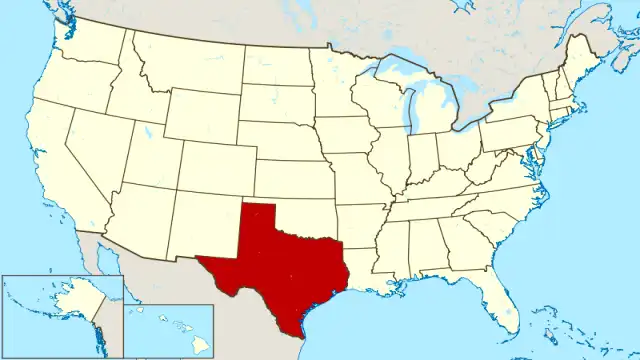
What Led to the Texas Revolution?
Naturally, wars do not just start overnight. Tensions had been brewing in the Mexican state of Coahuila y Tejas for years. During the 1820s, the Mexican government actually invited American settlers to move in. Under the leadership of men like Stephen F. Austin, thousands of pioneers arrived. Consequently, they packed up their entire lives and crossed the border looking for cheap, fertile land.
Eventually, things got incredibly complicated. The new immigrants brought along their own culture, laws, and controversially, the practice of slavery. Unfortunately, this directly clashed with Mexican laws, which had previously abolished the enslavement of people. Recognizing the growing threat, Mexico passed the Law of April 6, 1830, effectively banning further American immigration. Suddenly, the region became a massive powder keg.
By 1835, Mexican President General Antonio López de Santa Anna threw out the federalist Constitution of 1824. Instead, he centralized his power and ruled like an absolute dictator. As a result, both Anglo settlers (Texians) and native Mexican-Texans (Tejanos) felt completely betrayed. Rebellion was the only logical next step. Soon, small skirmishes broke out across the region. Specifically, the “Come and Take It” cannon incident in Gonzales kicked off the armed conflict. Following that, Texian forces actually pushed Mexican troops, led by Santa Anna’s brother in law General Martín Perfecto de Cos, out of San Antonio in December 1835. Interestingly, the rebels thought the fighting was over for the winter. They were completely wrong.
The Alamo Siege Begins: February 23, 1836
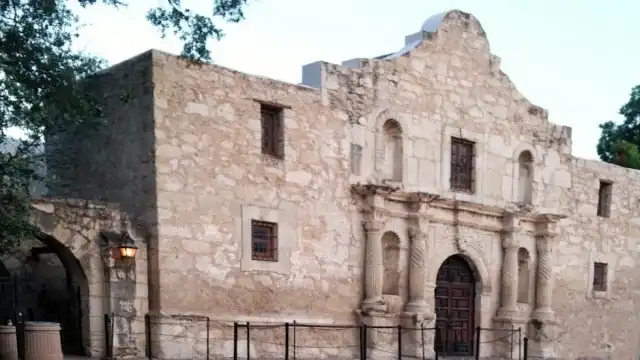
Furious over his family’s humiliation, Santa Anna marched an army of roughly 1,500 to 4,000 soldiers northward. His arrival in late February caught the rebels entirely off guard. Immediately, the Texians and Tejanos scrambled behind the thick walls of the Alamo. Originally, this compound was just an old religious outpost known as Mission San Antonio de Valero. Obviously, it was never designed to hold off a massive modern army. Its walls were incomplete, and the open plaza was massive.
Inside, the atmosphere was insanely tense. The defenders numbered barely 100 at first. Eventually, a few reinforcements trickled in, pushing the total close to 200. Besides the soldiers, women, children, and enslaved individuals also took shelter inside the walls. Truly, they were a mixed bag of brave souls hoping for a miracle. They frantically mounted cannons and barricaded the broken walls with dirt and timber.
The Men Behind the Myth
Let’s meet the main characters of this legendary standoff. History books love to focus on a specific trio of leaders, but their real lives were messy and complicated.
- William B. Travis: He was a 26 year old lawyer with a serious stubborn streak. Leaving his family and debts behind in Alabama, he came to Texas to start over. Taking command of the regular army forces, Travis absolutely refused to back down. Famously, he penned the “Victory or Death” letter, begging the world for reinforcements. Sadly, meaningful help never arrived.
- Jim Bowie: Everyone knew Bowie for his massive hunting knife and fierce temper. Originally sharing command with Travis, he led the volunteer militia. Furthermore, he was deeply tied to the local community through his marriage to a Tejano woman, Ursula de Veramendi. However, a severe illness, likely typhoid or pneumonia, quickly knocked him out. Consequently, he spent most of the battle bedridden and coughing violently.
- Davy Crockett: This former U.S. Congressman from Tennessee was an absolute frontier celebrity. After losing his political seat, he famously declared, “You may all go to hell, and I will go to Texas.” Looking for a fresh start, he arrived just weeks before the siege. Ultimately, his sharpshooting skills and fiddle playing provided a huge morale boost for the doomed men.
13 Days of Hell: Inside the Walls

Living inside a besieged fort is exactly as awful as it sounds. From February 23 onward, Mexican cannons bombarded the Alamo constantly. Sometimes, the shelling lasted all day and night. Therefore, nobody inside got a decent wink of sleep. Moreover, a brutal winter cold front rolled in, dropping temperatures near freezing. The men huddled by small fires, rationing their dwindling supplies of beef and corn.
Psychological warfare played a massive role too. Santa Anna ordered his military band to play a haunting bugle call known as the El Degüello. Translated loosely, it means “slit the throat.” Basically, it signaled that no mercy would be given and absolutely no prisoners would be taken. Despite this terrifying soundtrack, the defenders held their ground.
Occasionally, small groups of Texans snuck out to burn nearby huts that Mexican troops used for cover. Similarly, brave couriers slipped through enemy lines carrying Travis’s desperate pleas for backup. Miraculously, a group of 32 men from Gonzales managed to sneak into the fort on March 1. Yet, the overwhelming reality remained grim. They were vastly outnumbered, low on medicine, and running completely out of time.
March 2, 1836: Texas Declares Independence
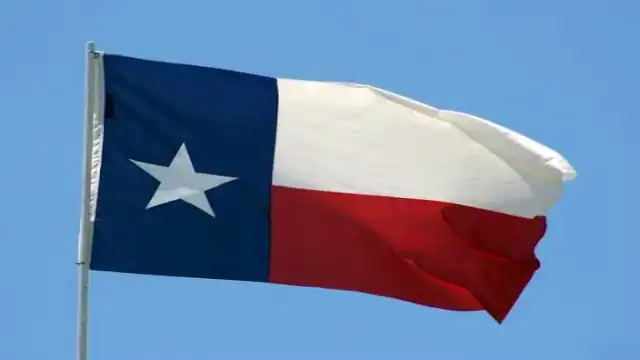
Let’s pause the battlefield action for a second. What was happening elsewhere in Texas? Up in a tiny, freezing town called Washington on the Brazos, political leaders were extremely busy. Specifically, on March 2, 1836, delegates officially signed the Texas Declaration of Independence. Drafted largely by George Childress, the document laid out their strict grievances against Santa Anna’s tyranny.
This specific moment is exactly why we celebrate Texas Independence Day. Formally, they created the Republic of Texas. Ironically, the men signing that piece of paper in an unheated cabin had no idea how dire the Alamo situation had become. Sam Houston, the newly appointed commander in chief of the Texan forces, desperately needed time to build a real army.
Meanwhile, Travis and his men were unwittingly buying Houston that exact time. Every single day the Alamo held out was another day the new Texas government survived. Without a doubt, that stark contrast is mind blowing. Politicians argued over laws while soldiers bled for the right to enforce them.
The Final Assault: March 6, 1836
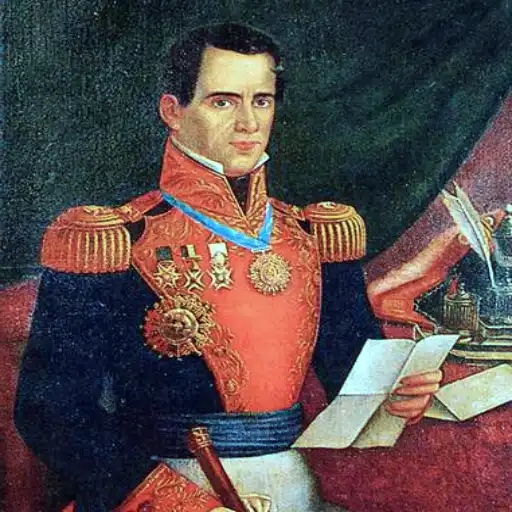
Inevitably, the breaking point arrived. On the 13th day of the siege, Santa Anna decided he was completely done waiting. At roughly 5:30 in the morning on March 6, the Mexican army launched a massive surprise attack. Before the sun even came up, hundreds of soldiers charged the compound from four different directions. They carried ladders, axes, and bayonets.
Initially, the Texan cannons blasted massive holes in the advancing lines. Still, the Mexican forces just kept coming. In the dark, confusion reigned supreme, and many Mexican soldiers were tragically killed by friendly fire. Eventually, they scaled the north wall and poured into the main plaza. Chaos erupted instantly. Hand to hand combat broke out using knives, bayonets, and clubbed rifles.

The defenders retreated into the Long Barrack and the chapel for a final stand. Tragically, the battle lasted less than ninety minutes. Travis died early on the north wall, shot squarely in the head. Bowie perished in his sickbed, reportedly firing his pistols until the very end. Crockett likely fell near the chapel, though exact details of his death remain heavily debated by historians. By sunrise, almost every single combatant inside the Alamo was dead.
The Survivors Who Lived to Tell the Tale
Did anyone make it out alive? Yes, but only a tiny handful of non combatants. Susanna Dickinson, her baby daughter Angelina, and Travis’s enslaved man, Joe, were spared. Santa Anna purposely let them live for a very specific reason. Consequently, he gave Susanna a blanket and two dollars, sending her eastward to warn Sam Houston. The dictator wanted everyone to know that resistance equaled absolute death. Joe’s subsequent testimony provided one of the most accurate historical accounts of the battle.
The Runaway Scrape
Hearing the news of the massacre, absolute panic swept across Texas. Families grabbed whatever they could carry and fled toward the United States border. Historically, this frantic mass exodus is known as the “Runaway Scrape.” Heavy spring rains turned the dirt roads to mud, making the journey incredibly miserable. Behind them, Sam Houston ordered his small army to retreat, burning towns like Gonzales so the advancing Mexican army could not use their resources.
Hollywood Myths vs. Historical Reality
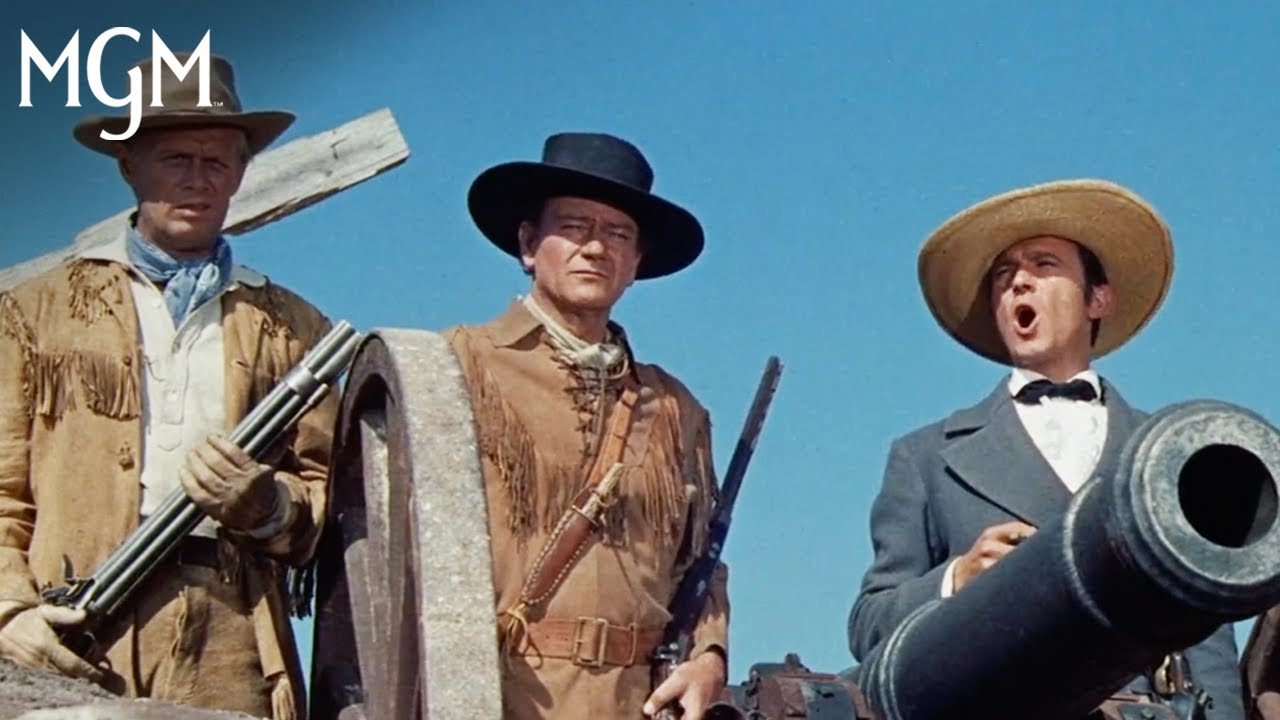
Let’s talk about the movies. Over the decades, Hollywood has released countless films about this legendary siege. Most notably, John Wayne’s 1960 epic The Alamo shaped how millions of people view this historical event. However, cinematic storytelling often bends the truth to make a cooler movie.
For instance, films usually show the final battle happening in broad daylight. In reality, the Mexican army attacked in the pitch black darkness just before dawn. Furthermore, movies love to portray Davy Crockett going down swinging his rifle in a crowd of soldiers. While it looks awesome on screen, historical accounts suggest he might have survived the initial fighting, only to be executed later. Additionally, Jim Bowie is frequently shown fighting valiantly from his bed. Truthfully, his illness was so severe that he was likely semi conscious when the Mexican soldiers breached his room. Separating fact from fiction helps us appreciate the genuine human struggle rather than just a shiny Hollywood fairy tale.
Forgotten Heroes
Often, pop culture paints the Alamo as just a bunch of white guys from Tennessee fighting Mexico. Truthfully, that is completely inaccurate. The Texas Revolution was immensely diverse. Several Native Tejanos, Mexican born Texans, fought and died defending the Alamo. They believed in the Constitution of 1824 and hated Santa Anna’s dictatorship just as much as the Anglo settlers did.
For example, Juan Seguín was a prominent Tejano leader. He was actually inside the Alamo during the early days of the siege. Luckily, Travis sent him out as a courier, which ultimately saved his life. Later, Seguín led a company of Tejano soldiers to victory at the final battle. Recognizing these Hispanic heroes is absolutely crucial to understanding the full, complex picture of Texas history. Additionally, folks of European descent, freed Black men, and Native Americans all played significant roles in the revolution.
The Real Impact
So, why do we still care about a battle that happened nearly two centuries ago? Militarily, the Alamo was a total disaster for the Texans. However, symbolically, it was a massive triumph.
First, it delayed Santa Anna’s march just enough for Sam Houston to gather and train his forces. Second, it created a furious battle cry that united the remaining soldiers. Just six weeks later, on April 21, 1836, Houston’s army ambushed Santa Anna’s camp at the Battle of San Jacinto. As they charged the sleeping Mexican troops, the soldiers screamed, “Remember the Alamo!” The slaughter was unprecedented. In a mere 18 minutes, the Texans defeated the Mexican force, capturing Santa Anna himself the very next day.
Ultimately, that decisive victory secured Texas independence. For nearly a decade, Texas existed as its own sovereign country. Then, in 1845, it officially joined the United States. Consequently, this annexation triggered the Mexican American War. When the dust settled from that massive conflict, the U.S. acquired roughly a third of its modern territory, including California, Nevada, Arizona, and Utah.
In short, a 90 minute skirmish in San Antonio triggered a historical butterfly effect that literally reshaped the entire North American continent. That is exactly why the Alamo is classified as a UNESCO World Heritage Site today.
The True Meaning of Texas Independence Day
Today, March 2nd serves as a powerful reminder of sacrifice and resilience. Celebrating Texas Independence Day isn’t just about eating barbecue and waving the Lone Star flag. Truly, it is about remembering ordinary people who stood firm in impossible circumstances.
They were not perfect comic book superheroes. Conversely, they were flawed humans who made a terrifying choice to fight for their freedom. Because of their grit, a brand new republic was born. Their defiance inspired generations to push forward when things looked incredibly bleak.
Are we learning from their bravery today? Whether you are facing a tough test at school, a hard day at work, or a major life obstacle, that fighting spirit still applies. Standing your ground when the odds are entirely stacked against you is a universal human virtue. Sometimes, losing a single battle is exactly what it takes to win the entire war.
The Legacy Lives On
Wrapping things up, Texas Independence Day and the Alamo are permanently tied together in the fabric of American history. One gave Texas its legal freedom, while the other paid the ultimate bloody price for it. Together, they forged an identity of independence, stubbornness, and immense cultural pride that defines the region to this very day.
Hopefully, the next time you hear “Remember the Alamo,” you will know exactly what those legendary words mean. It goes way beyond a catchy slogan or a souvenir t shirt. Instead, it represents the ultimate sacrifice for self determination and the relentless pursuit of liberty.
Ready to dive deeper into history? Leave a comment below with your favorite Texas history fact, or share this article with a friend who loves uncovering the truth behind the myths! Let’s keep the spirit of the Lone Star State alive together.

