
On a bitter Saturday night in March 1934, a shadowy gunman stepped onto the porch of an isolated Pennsylvania farmhouse and aimed a shotgun through the sitting room window. The blast shattered the glass, tore through the chest of a sixty-four-year-old widow named Susan Mummey, and ended a life defined by local rumors of sorcery. When police caught the shooter, he offered no denial or remorse, proudly declaring he had just destroyed a witch to break an evil hex that was slowly consuming his mind.
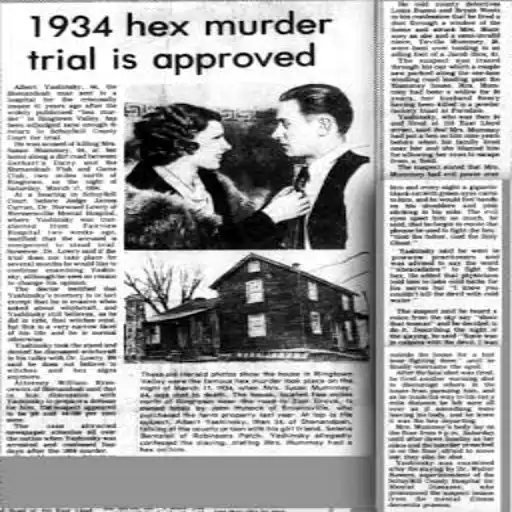
Tucked away in the Appalachian folds of Schuylkill County, Ringtown Valley was a quiet farming patch bordered by rough anthracite coal towns like Shenandoah and Mahanoy City. In the early decades of the twentieth century, these valleys served as a melting pot where conservative agricultural traditions lived right alongside the soot-choked realities of heavy industrial mining. Neighbors knew each other’s business, families stayed put for generations, and ancient customs carried enormous weight. Among those enduring customs was a deeply rooted belief system brought over by German settlers centuries earlier: the world of Pennsylvania Dutch folklore and Braucherei, commonly known as powwowing.
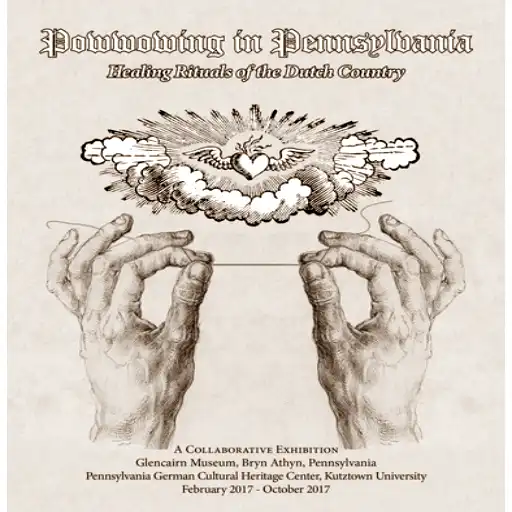
Powwowing was not Native American ritual, despite the name borrowing. It was a unique hybrid of Christian faith healing, herbal medicine, German mysticism, and protective charms passed down through generations. Practitioners relied heavily on John George Hohman’s famous 1820 folk manual, The Long Lost Friend, using secret incantations, Bible verses, and hand gestures to stop bleeding, soothe burns, heal sick cows, and ward off bad luck. Most healers were respected pillar figures who never charged a dime, taking only modest donations for their spiritual labor.
Every folk tradition cast a double-edged shadow. Where there was white magic to heal, rural folks believed there was dark magic to harm, a sinister flip side known as Hexerei. When crops withered without explanation, dairy cows suddenly stopped giving milk, or young men fell into inexplicable wasting illnesses, terrified locals rarely blamed bad luck or biology. They blamed a hex. They believed an envious neighbor had cast an evil eye, turning ordinary domestic life into a spiritual battlefield.
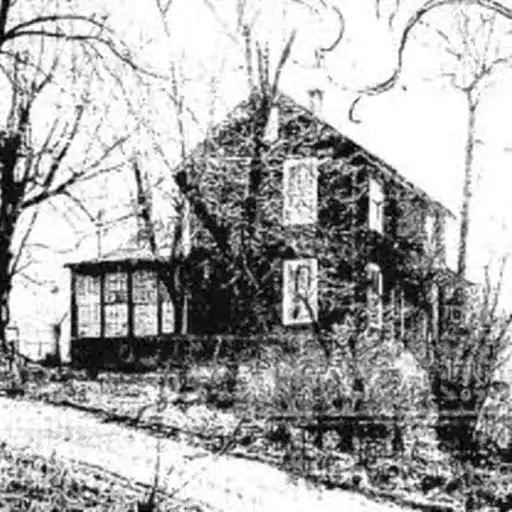
Into this superstitious environment stepped Susan Mummey, a woman whose life had been shaped by raw tragedy, eccentric habits, and bitter isolation. Born in the late nineteenth century, Susan lived in an isolated, weather-beaten two-story home along a winding dirt lane between Shenandoah and Ringtown. Her reputation as an uncanny woman took root decades earlier, back in 1910. According to persistent valley gossip, Susan had woken up one morning overcome with dread, begging her husband Henry not to go to work at the DuPont powder plant in nearby Ferndale. Henry brushed off her tears, walked out the door, and died that very day when the mill violently exploded.
Her horrifying premonition came true with pinpoint accuracy. From that moment forward, neighbors looked at the grieving widow with a blend of reverence, unease, and genuine terror. Susan retreated inward, developing a sharp tongue and a fierce defense of her property boundaries. She gathered wild herbs, brewed pungent tonics, and kept to herself, sharing her drafty home with only her semi-invalid niece, twenty-eight-year-old Tevilla Mummey, and an elderly, ailing boarder named Jacob Rice.
Locals began whispering that Susan possessed the sight. If an estranged relative got sick or a neighbor lost livestock after an argument with her, valley gossips connected the dots in the darkest possible way. They stopped calling her Mrs. Mummey and started calling her “Old Suze,” or more ominously, “The Witch of Ringtown Valley.” Did Susan lean into the rumors to keep trespassers off her land, or was she simply an aging, eccentric widow who became the unwilling screen for everyone else’s anxieties? History suggests a tragic mix of both.

Seven miles south, in the bustling coal town of Shenandoah, lived a twenty-four-year-old youth named Albert Shinsky. Albert had grown up around the farms of Ringtown before his family relocated to East Lloyd Street in Shenandoah. He was a quiet, impressionable young man whose mental stability had begun fracturing during his late adolescence. When he was around seventeen years old, a petty boundary dispute erupted near the Mummey homestead. Albert’s family cows had wandered into Susan’s fields, trampling her crops. Susan stormed outside, shouted at the teenagers, and locked eyes with Albert in a moment of blistering anger.
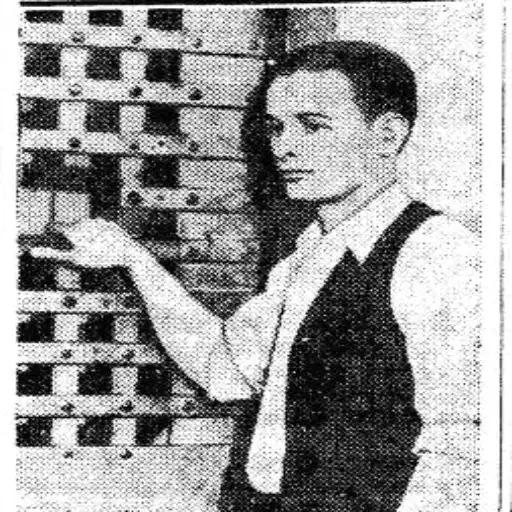
That single glare destroyed the young man’s reality. Albert became convinced that Susan Mummey had placed a demonic curse on his body and soul. Over the next seven years, his mind descended into a terrifying spiral of chronic pain, paranoid delusions, and hallucinations.
Albert described feeling invisible, icy hands pressing down on his shoulders like lead weights. Sharp, phantom needles seemed to stab his ribs whenever he tried to work. At night, sleep brought no peace. He suffered from severe sleep paralysis, waking up paralyzed with terror as a gigantic black cat with luminous, fiery green eyes crouched on his chest, growing so massive that it filled the entire bedroom and slowly suffocated him. Whenever he looked into the dark corners of his room, he swore he saw Susan Mummey’s face sneering back at him.
Desperate for relief, Albert sought help everywhere he could think of. He went to medical doctors, who prescribed nerve tonics and instructed him to take ice-cold baths to calm his frayed nerves. Albert scoffed at the prescription, later telling police that cold water could never wash away the devil. He visited Catholic priests, seeking blessings and confession, but the shadows in his bedroom refused to leave.
When mainstream medicine and the church failed to cure his agony, Albert turned to the shadow economy of rural Pennsylvania Dutch mysticism: the regional hex doctor. Instead of treating Albert’s symptoms as a psychiatric breakdown, the folk practitioners he consulted confirmed his worst fears. They told him he was under the influence of an exceptionally powerful, malicious witch. They handed him written amulets, taught him protective chants invoking the Holy Trinity, and told him to repeat mystical words to ward off the evil eye.
Nothing worked. The voice in his head only grew louder, eventually whispering a chilling command from the sky: Shoot that woman, or you will never be free.
Folk superstition dictated that an ordinary lead pellet could never harm a practicing witch. Believing he had no other option to save his own life, Albert prepared what historical newspapers termed a “magic bullet.” He took a shotgun shell, emptied its contents, and packed it with a bizarre concoction of materials designed to pierce occult armor — combining custom powder loads with a blue glass marble, snipped bits of copper wire, and a defaced coin. He was no longer just a troubled young man holding a firearm; in his warped mental landscape, he was a warrior preparing to slay a monster.
On the evening of Saturday, March 17, 1934, Albert drove his car out of Shenandoah, navigated the dark country roads, and parked roughly a half-mile from Susan Mummey’s home. Snow still dusted the ground, and freezing air whipped across the valley ridges. Armed with his shotgun, Albert crept through the barren apple trees and slipped into the front yard of the dark farmhouse.
Inside the small sitting room, an ordinary domestic scene was playing out under the warm glow of a kerosene lamp. The elderly boarder, Jacob Rice, sat in a rocking chair nursing a painful, infected foot. Susan Mummey was kneeling on the wooden floor right beside him, gently applying homebrewed herbal salve and wrapping a clean bandage around his toes, with her niece Tevilla standing nearby to assist.
Albert peered through the window glass, watching Susan lean over the injured foot. He raised the shotgun, aligned the barrel directly with her back, and pulled the trigger.
The weapon discharged with a deafening roar. The heavy charge shattered the windowpane and blasted through Susan’s back, tearing directly through her heart and lungs. She collapsed instantly onto the floorboards without speaking a single word. Outside, Albert racked another shell and fired a warning shot into the night air to deter anyone from chasing him, before sprinting back through the dark woods to his vehicle. Inside the farmhouse, terror froze the survivors. Tevilla and Jacob crouched beside the dying woman, too terrified of another gunshot to move or step near the broken window until daylight broke on Sunday morning.
As Albert sped away down the dirt road toward Shenandoah, he felt an astonishing physical sensation. He later told investigators that the instant his car crossed the valley boundary, an overwhelming lightness washed over his shoulders. The invisible hands let go. The suffocating weight vanished. For the first time in seven years, he could draw a clean breath of air. In his mind, the witchcraft murder was an undeniable success.
The discovery of Susan Mummey’s corpse sparked an immediate sensation. County Detective Louis Buono and District Attorney LeRoy Enterline rushed to the isolated crime scene, finding the shattered window glass, the homemade projectile remnants, and tire tracks left in the mud down the road. Within forty-eight hours, detectives traced the vehicle movements and zeroed in on Albert Shinsky.
When detectives brought Albert in for questioning, they expected a hardened criminal who would lie, invent an alibi, or demand a lawyer. Instead, Albert smiled, leaned back in his chair, and gave a complete, detailed confession. He recounted every detail of the seven-year hex, the spectral green-eyed cat, his visits to the hex doctor, and the magic charge he loaded into the shotgun.
When detectives warned him that Pennsylvania law punished first-degree murder with the electric chair, Albert remained completely unbothered. He looked the officers in the eye and said, “I had to kill her. The electric chair will be better than the suffering I went through.”

The chilling confession turned the Susan Mummey case into a massive media sensation. Reporters from across the country flooded Schuylkill County, eager to exploit the story of a backwoods witch slaying in modern twentieth-century America. The press drew immediate parallels to the infamous 1928 York County “Hex Murder,” where John Blymire and two accomplices murdered a powwow doctor named Nelson Rehmeyer to steal his spell book and break a family curse. The country was stunned: how could an ancient superstition killing happen in 1934, in an era of radio broadcasts, airplanes, and industrial power?
Behind the sensational headlines lay a tragic psychiatric reality. When alienists examined Albert Shinsky in his cell, they quickly realized the young man was not an evil criminal mastermind, nor was he possessed by demons. Medical specialists diagnosed him with dementia praecox, the historical term for severe schizophrenia. His terrifying visions of cats, phantom needles, and sky voices were textbook auditory and somatic hallucinations produced by a shattered mind, filtered through the only cultural language his rural community understood.
Because of his severe psychosis, the court declared Albert legally incompetent to stand trial. Rather than heading to death row at Rockview State Penitentiary, he was transported to the Farview State Hospital for the Criminally Insane in Waymart, Pennsylvania.
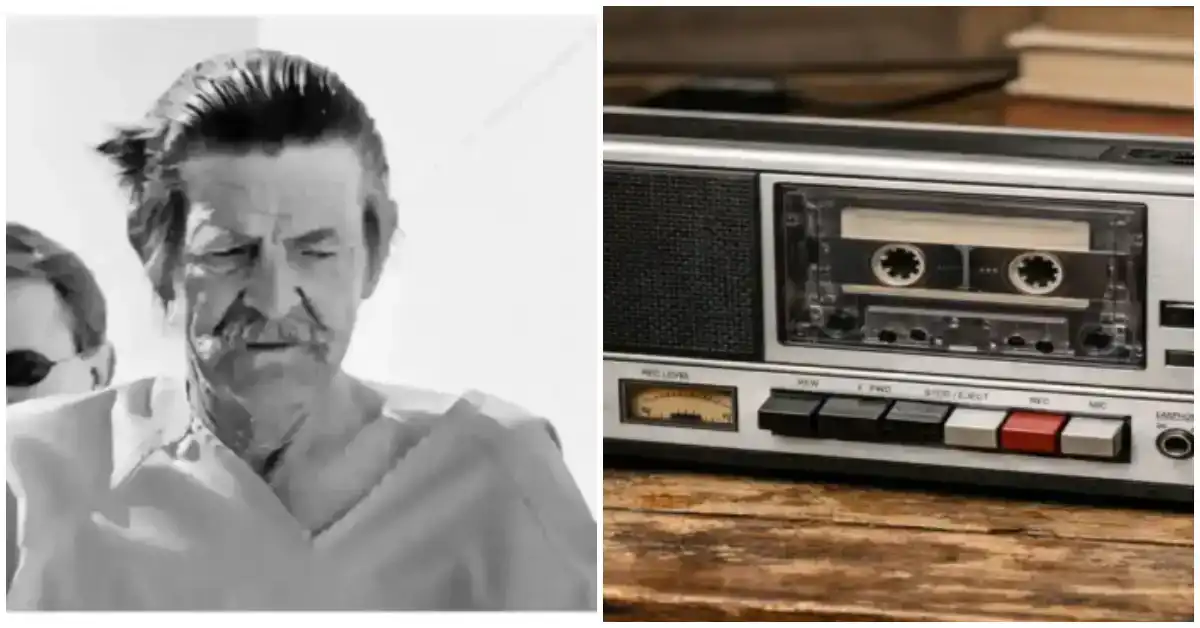
Albert’s confinement at Farview stretched across decades. While the outside world survived the Great Depression, fought World War II, landed on the moon, and entered the television age, Albert remained locked behind institutional walls. Over the years, with consistent psychiatric care, regular medication, and the slow aging process, his terrifying delusions gradually burned out.
In 1975, after forty-one long years inside Farview, doctors evaluated Albert Shinsky and made an extraordinary determination: he was finally sane, lucid, and legally fit to face his 1934 murder indictment.
Albert, now a frail, gray-haired man in his mid-sixties, stood before a Schuylkill County judge. When asked about that fateful night in Ringtown Valley four decades earlier, he bowed his head with genuine sorrow. He told the courtroom, “I was just an ignorant youth at that time that I shot that poor woman.” Recognizing that four decades in a maximum-security asylum had more than satisfied the demands of justice, the court quietly dismissed the charges and granted him his freedom. Albert returned home to Schuylkill County and lived out his final years in quiet obscurity before passing away in May 1983 at age seventy-three.
Looking back, the murder of Susan Mummey stands as a powerful case study in how unchecked folklore and untreated mental illness can form a lethal alliance. Susan was never an evil sorceress spinning dark spells in the woods; she was an eccentric, grieving widow navigating a harsh rural landscape. Albert was not a villain from a ghost story; he was a terrified young man experiencing severe schizophrenia in a society that lacked modern psychiatric resources.
When community folklore validates a paranoid mind’s darkest terrors, tragedy is almost inevitable. Ringtown Valley’s hex murder reminds us that the scariest monsters in American history rarely lurk in spell books or haunted woods — they live in the vulnerable spaces where fear, superstition, and human isolation collide.
