

Ever wonder why you get pinched for not wearing green on March 17th? Or why we feast on corned beef that most people in Ireland wouldn’t touch with a ten-foot pole?
St. Patrick’s Day is one of those holidays that everyone celebrates, but hardly anyone actually knows. It’s become a global party of green beer, plastic shamrocks, and “Kiss Me, I’m Irish” t-shirts. But strip away the commercial fluff, and you find a history that is weirder, darker, and infinitely more interesting than a box of lucky cereal.
We’re talking about kidnapping, pirates, ancient shapeshifters, and a saint who wasn’t even Irish.
Whether you’re planning a party or just want to be the smartest person at the pub, here is the guide to St. Patrick’s Day.
Who Was St. Patrick? (The Real Deal)
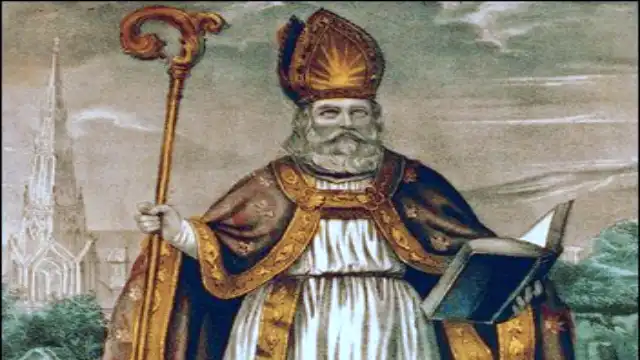
First things first: St. Patrick was not Irish.
If you want to be technical, he was a Roman-British citizen named Maewyn Succat. Born around 385 AD in what is now Great Britain (likely Wales or Scotland), his life didn’t start with prayers and miracles. It started with a horror story.
From Slave to Saint
At age 16, Maewyn was kidnapped by Irish pirates. They dragged him across the Irish Sea and sold him into slavery. For six miserable years, he tended sheep on the chilly slopes of Slemish Mountain in County Antrim. It was there, alone and freezing, that he turned to Christianity for comfort.
Eventually, he escaped. He walked 200 miles to the coast, talked his way onto a boat, and made it home. But then, he had a dream. The people of Ireland were calling him back. So, he became a priest, changed his name to Patricius (Father of the Citizens), and voluntarily returned to the land of his captors to spread the gospel. That takes some serious guts.
The Snake Myth vs. Reality
You’ve heard the legend: St. Patrick stood on a hill, waved his staff, and banished all the snakes from Ireland.

Great story. totally false.
Ireland never had snakes. It’s an island that was covered in ice during the last Ice Age. It was too cold for reptiles to migrate there before the sea levels rose. The “snakes” in the stories were actually a metaphor for the Druids and Pagan religions that Patrick drove out to make way for Christianity.
Why Do We Wear Green? (It Used to Be Blue!)
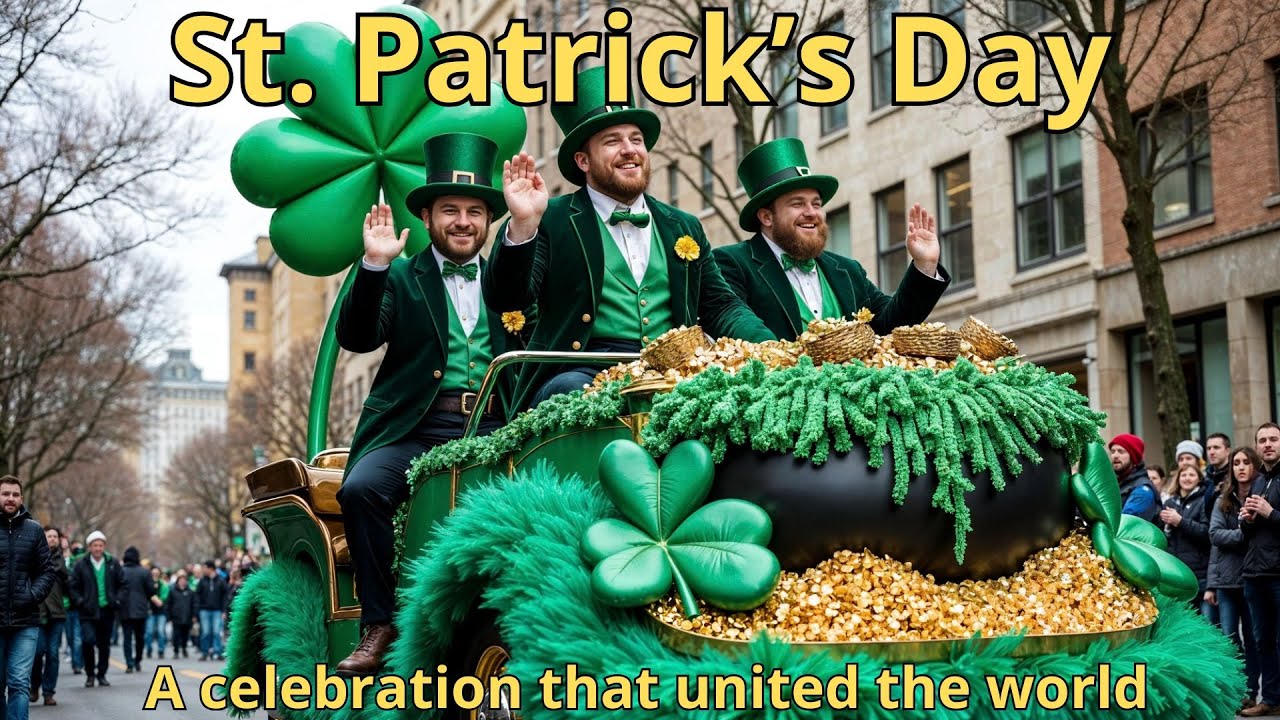
If you traveled back in time to the 1700s and decked yourself out in lime green, people would look at you like you were crazy.
St. Patrick’s original color was blue. Specifically, “St. Patrick’s Blue,” a shade of sky blue that you can still see on ancient Irish flags and the President of Ireland’s standard.
So, when did the green takeover happen?
- The Shamrock: Patrick supposedly used the three-leaf clover to explain the Holy Trinity (Father, Son, Holy Spirit) to the Irish kings.
- The Rebellion of 1798: During the Irish Rebellion against British rule, Irish soldiers wore green uniforms to differentiate themselves from the British redcoats. The song “The Wearing of the Green” became a symbol of liberty and nationalism.
The “Pinch” Rule
This is purely an American invention tied to folklore. The superstition says that wearing green makes you invisible to Leprechauns. If you aren’t wearing green, they can see you—and they’ll pinch you for not showing Irish pride. People started pinching each other to “remind” them of the rule.
Leprechauns: Cute or Creepy?
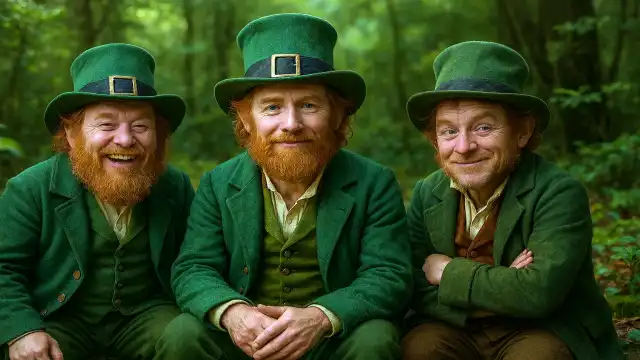
Forget the smiling little guy on the cereal box. In original Irish folklore, leprechauns (from the Old Irish luchorpán, meaning “small body”) were cranky, solitary shoe-makers.
They were the bankers of the fairy world. They didn’t wear green suits; they actually wore red jackets and three-cornered hats. And they weren’t exactly friendly. If you caught one, he might grant you three wishes, but he was more likely to trick you into looking away so he could vanish.
They are part of the Aos Sí (people of the mounds), remnants of the ancient gods of Ireland, the Tuatha Dé Danann, who were said to retreat underground when humans took over.

Dark Myths & Irish Folklore
Irish mythology isn’t all rainbows and pots of gold. It’s actually quite goth.
- The Banshee (Bean Sídhe): A female spirit whose wail foretells the death of a family member. She doesn’t kill you; she just screams to let you know the Grim Reaper is en route.
- The Púca: A shapeshifter that can take the form of a black horse with golden eyes. If you’re stumbling home drunk from the pub, the Púca might offer you a ride, only to take you on a terrifying sprint through thorns and briars before dumping you in a ditch.
Food: The Corned Beef Conspiracy

Here is a truth bomb that might ruin your dinner plans: Corned beef and cabbage is not a traditional meal in Ireland.
If you go to Dublin on March 17th, you’re more likely to find lamb stew or roast chicken.
The Jewish-Irish Connection
In the 19th century, Irish immigrants living in the slums of New York City couldn’t afford their traditional “back bacon” (a lean, smoked pork loin). But their neighbors were often Jewish immigrants who sold a salt-cured brisket called corned beef.
It tasted similar to the salty pork they loved back home and was much cheaper. They threw it in a pot with the cheapest vegetable available (cabbage), and voila—an “Irish-American” classic was born.
Real Irish Food Ideas
Want to eat like a true local? Try these:
- Soda Bread: No yeast, just flour, baking soda, salt, and buttermilk.
- Colcannon: Mashed potatoes mixed with kale or cabbage and loads of butter.
- Boxty: A potato pancake that is crispy on the outside and fluffy on the inside.
Fun Facts for Trivia Night
Want to impress your friends? Drop these stats:
- The First Parade: It wasn’t in Ireland. It wasn’t even in Boston or New York. The first recorded St. Patrick’s Day parade was held in St. Augustine, Florida, in 1601, organized by a Spanish priest!
- Guinness Galore: On a normal day, 5.5 million pints of Guinness are sold globally. On St. Patrick’s Day? That number jumps to 13 million pints.
- River Dye: Since 1962, Chicago has dyed its river green. The recipe is a secret, eco-friendly vegetable dye (orange powder that turns green when it hits the water).
- Dry Holiday: For most of the 20th century, pubs in Ireland were legally closed on St. Patrick’s Day because it was a strict religious holiday. The law was only repealed in the 1970s.
How to Celebrate Like a Pro (Without the Cringe)
You don’t need to get blackout drunk to celebrate. Here is how to do it with style:
- Attend a Local Parade: Whether it’s the massive procession in NYC or a small town gathering, the energy is infectious.
- Listen to Trad Music: Put on a playlist of The Chieftains or The Dubliners. The fiddle and bodhrán (Irish drum) will get anyone dancing.
- Learn a Cúpla Focail (Couple of Words):
- Sláinte (Slawn-cha) = Cheers / Good Health.
- Lá Fhéile Pádraig sona duit! (Law ay-luh Paw-drig sun-a ditch) = Happy St. Patrick’s Day to you!
Frequently Asked Questions (FAQs)
When is St. Patrick’s Day 2026?
St. Patrick’s Day falls on Tuesday, March 17, 2026. Since it’s a weekday, most major parades in cities like Chicago, New York, and Boston will likely take place on the preceding weekend (March 14-15), while pub celebrations will happen on the day itself.
Is it “St. Paddy’s Day” or “St. Patty’s Day”?
It is strictly St. Paddy’s Day. This is a massive pet peeve in Ireland. “Paddy” comes from the Irish spelling of Patrick, Pádraig. “Patty” is a nickname for Patricia (or a hamburger). If you want to sound authentic, drop the “t”s and use the “d”s.

Is St. Patrick’s Day a federal holiday in the USA?
No, St. Patrick’s Day is not a federal holiday in the United States. Schools, banks, and government offices remain open. However, it is a public holiday in the Republic of Ireland and Northern Ireland, as well as in Suffolk County, Massachusetts (due to Evacuation Day) and Savannah, Georgia.
What is the difference between a Shamrock and a Four-Leaf Clover?
They are not the same thing! A Shamrock (the symbol of Ireland) has only three leaves. It represents the Holy Trinity. A four-leaf clover is a genetic mutation representing luck, but it has no official connection to St. Patrick. Using a four-leaf clover to represent Ireland is a common tourist mistake.
What is the famous “Irish Blessing” used for toasts?
The most traditional toast is: “May the road rise up to meet you. May the wind be always at your back. May the sun shine warm upon your face; the rains fall soft upon your fields and until we meet again, may God hold you in the palm of His hand.”
Why do Americans celebrate St. Patrick’s Day more than the Irish?
The massive celebrations are largely an immigrant invention. During the Potato Famine (1840s), millions of Irish fled to America. Facing discrimination, they used parades and the color green to assert their political strength and cultural pride. It transformed from a solemn religious feast day in Ireland to a celebration of heritage in America.
Can you drink alcohol on the street on St. Patrick’s Day?
In most of the US and Ireland, open container laws still apply, meaning you cannot drink on the street. However, specific zones in cities like Savannah, Georgia, or Butte, Montana, may have relaxed rules during the festival. Always check local laws before leaving the pub with a pint.
Final Thoughts
St. Patrick’s Day is more than just an excuse to party. It’s a celebration of resilience. It’s about a people who survived famine, war, and displacement, yet still managed to spread their culture, music, and humor to every corner of the globe.
So this March 17th, wear your green (so the leprechauns don’t get you), eat your corned beef (even if it’s American), and raise a glass.
Ready to bring the luck of the Irish into your home? Share this article with your party-planning crew or drop a comment below with your favorite St. Paddy’s tradition!
Sources help

