

It’s May 2001, in Delhi. And it is hot, I’m not talking “oh, it’s a bit warm” hot. I’m talking the kind of thick, 108°F (42°C), “I-hate-everything” heat that makes the air feel like soup. And to make matters worse, the bijli-gayi—the power is out. Rolling blackouts plunge the city’s crowded neighborhoods into suffocating darkness.
This is the tinderbox. Now, all we need is a spark, That spark came in the form of a whisper. A scream. A creature.
For a few terrifying weeks, India’s capital city a sprawling metropolis of 13 million people was held hostage by a monster. They called it the Kala Bandar, or “The Monkey Man.”
But this isn’t a simple monster story. This is a story about us. It’s a case study in how fear can travel faster than any virus, how a collective nightmare can jump from one mind to the next until it spills into the streets and gets people killed.
This is the real, verified story of the mass panic that choked a city.
The Summer of the “Kala Bandar”

The first reports trickled in from East Delhi, a dense, working-class part of the city. The story was always the same: people, driven from their sweltering homes by the heat and power cuts, were sleeping on their flat rooftops.
In the dead of night, they’d be woken by a sound. A scratch. A shadow.
Then, the “attacks” began. People reported being scratched, bitten, and shoved by something in the dark. The descriptions were frantic, chaotic, and terrifying.
The story hit the newspapers. The “Monkey Man” was born. And all hell broke loose.
What Was This Thing? (The Monster That Made No Sense)
So, what did this monster look like? Good luck getting a straight answer.
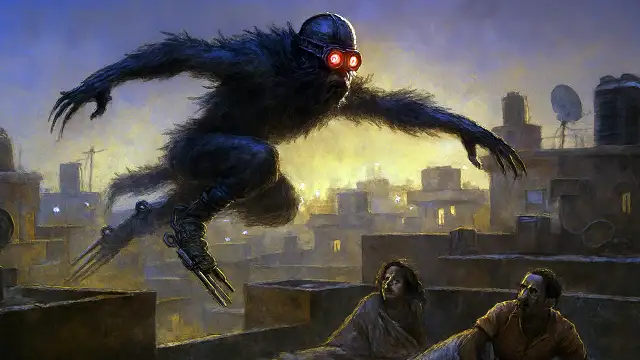
This is the first sign that something was “off.” The creature was a bizarre, contradictory mess. It was a “build-a-bear” of pure terror.
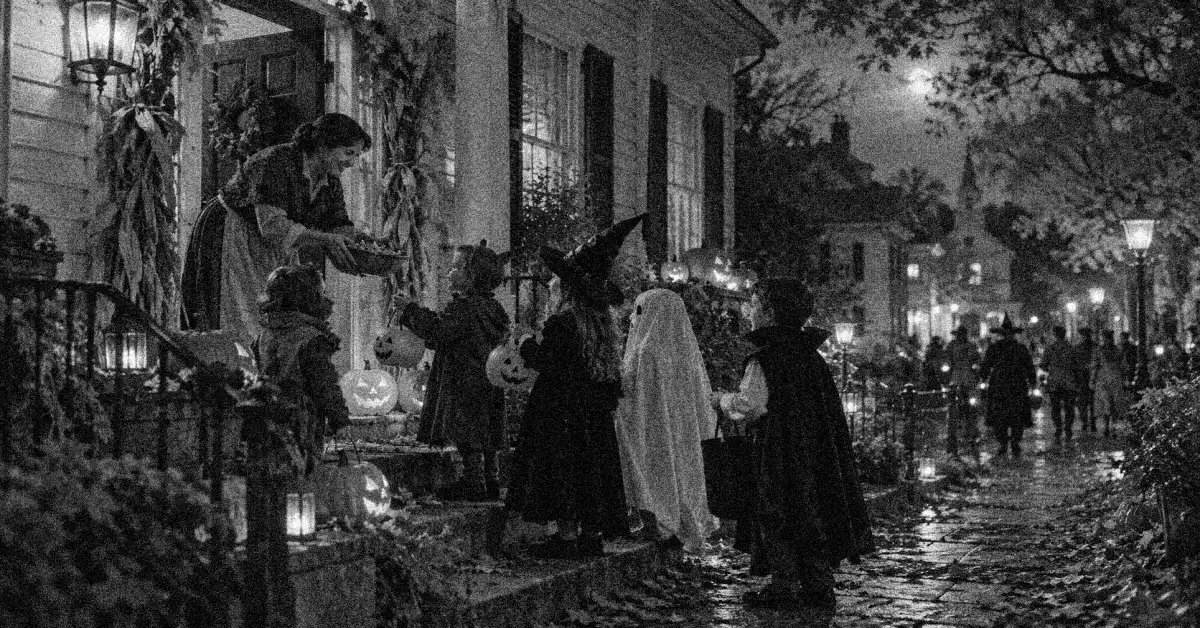
Witnesses and victims variously described the Monkey Man as:
- 4 feet tall: Small, fast, and monkey-like.
- Over 5 feet tall: Large, muscular, and man-like.
- Covered in thick black hair.
- Wearing a metal helmet and goggles.
- Possessing metal claws (like a real-life Wolverine).
- Having glowing red eyes.
- Wearing “springs” on its feet, allowing it to leap 10-20 feet from one rooftop to another.
Let’s pause. We’re talking about a 4-foot-tall, helmet-wearing, hairy monkey-robot with spring-loaded feet and Freddy Krueger claws. It makes no sense.
The Delhi Police were completely overwhelmed. They were flooded with thousands of calls. drew up artist’s sketches based on the wild descriptions, and the results looked like something from a comic book. They even offered a 50,000 rupee reward (a huge sum at the time) for its capture.
It didn’t matter. The creature was a phantom. It left no blood, no fur, no fingerprints. It was a ghost with claws.
When the Legend Drew Real Blood

This is the part of the story that isn’t fun. This is where the legend becomes a real-world tragedy.
The Monkey Man never killed anyone.
The panic did.
As the hysteria peaked, the city went out of control.
- Vigilantes: Neighborhoods formed “suraksha samitis” (protection committees). Men armed with lathis (heavy sticks), knives, and whatever else they could find patrolled the streets, overly suspicious and jumpy.
- Mistaken Identity: These vigilante groups, in their terror, began attacking anything that moved. Several innocent people were beaten, mistaken for the Monkey Man in the dark.
- The Deaths: The real tragedy struck. In the chaos, a pregnant woman fell down a flight of stairs and died. Another man, thinking he was being chased, leaped from his rooftop and died. A stampede in a narrow lane, sparked by a shout of “He’s here!”, left dozens injured.
According to reports from India Today and The Times of India at the time, at least two, and by some counts three, people were dead not from a monster, but from fear of a monster.
The “urban legend” had just claimed its first real victims.
Deconstructing a Modern Mass Hysteria
When the dust settled, there was no monster. No one was ever caught. No “Kala Bandar” was unmasked.
So what the hell happened?
This wasn’t a hoax. The fear was real. The injuries were real. The deaths were real. What the people of Delhi experienced was a textbook case of mass hysteria, also known as social panic. It was a perfect storm of social, environmental, and psychological factors.
Heat, Darkness, and Anxiety
Remember the heat and the power cuts? This isn’t just a random detail—it’s the key.
You have an entire population, already stressed, sleep-deprived, and on edge from the relentless heat. Then, you plunge them into total darkness. You force them to sleep in the most vulnerable place possible: their flat, open-air rooftops.
In a dense city, rooftops are a highway. They are all connected. A cat, a real monkey (Delhi has plenty), or even just a neighbor moving in the dark can sound terrifying when you’re half-asleep.
The Monkey Man was simply the name they gave to that pre-existing anxiety. He was a physical manifestation of their fear of the dark.
The “Monster” in Your Bedroom: Sleep Paralysis?
This is the most compelling psychological theory. Have you ever woken up but been unable to move? That’s sleep paralysis.
It’s a common, terrifying phenomenon where your brain is “awake” but your body is still in sleep mode.
- You are totally paralyzed.
- You feel a heavy pressure on your chest.
- You often “see” a dark, menacing figure in your room.
Now, imagine this. You’re a man in Delhi. You wake up on your roof at 3 AM. It’s pitch black. You can’t move. You feel a presence… a “monkey-like” shadow, crushing your chest. filled with a primal, agonizing terror.
When you finally snap out of it, you don’t tell your family, “I had a fascinating neurological episode.”
You run inside and scream, “The Monkey Man attacked me!”
Your neighbor hears. He tells his friend. The friend tells the media. The virus is loose.
Spring-heeled Jack’s Indian Cousin
This kind of panic isn’t new. It’s a pattern of human behavior.
In the 1830s, Victorian London was terrorized by “Spring-heeled Jack.”
- He had “claws of steel.”
- He had “eyes like red fireballs.”
- He could leap impossible distances (sound familiar?).
He was the 19th-century’s Monkey Man. In both cases, a society under stress (industrial London, modern Delhi) invented a supernatural bogeyman to explain their fears.
The media, of course, fanned the flames. Every new, sensationalist headline sold more papers and added more fuel to the fire. It’s what sociologists call social contagion—an “emotional virus” where fear and belief are passed from person to person.
What Happens When the Monster Vanishes?
And then… it just stopped.
As suddenly as it began, it was over. The media moved on. The police, exasperated, closed their files. The Monkey Man, having never been found, simply… vanished. He dissolved back into the heat and the night, as if he’d never been.
The people of Delhi were left to treat their injuries, mourn their dead, and collectively ask, “What in the world was that?”
The legacy of the Monkey Man is a powerful, disturbing lesson. It’s a reminder that the scariest monsters aren’t the ones with claws and red eyes. The scariest monsters are the ones we create in our own heads.
The Monkey Man of Delhi was a shadow. He was a rumor. He was a shared nightmare. But for a few weeks in 2001, he was the most real and dangerous thing in the city, He was the perfect, terrifying shape of fear itself.
Call to Action
This kind of mass panic seems wild, but it’s a deeply human thing. What’s the wildest urban legend from your city? Did people ever truly panic? Share your local legends in the comments below!

