

10 Pieces of Evidence That Linked Bryan Kohberger to the Idaho Murders
In November 2022, a horrifying crime permanently shattered the quiet, tight knit college town of Moscow, Idaho. Four innocent University of Idaho students, Kaylee Goncalves, Madison Mogen, Xana Kernodle, and Ethan Chapin, were brutally stabbed to death in their off campus rental home. For nearly two agonizing months, the entire country wondered if the phantom killer would ever be caught. Who could possibly commit such a terrifying, intimate act of violence and vanish into the night?
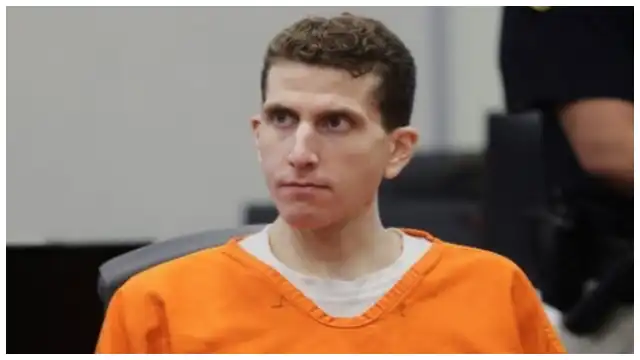
Eventually, law enforcement arrested a 28 year old Washington State University criminology Ph.D. student named Bryan Kohberger. For years, true crime followers anxiously awaited a massive, dramatic trial. However, a stunning twist occurred in the summer of 2025. Specifically, Kohberger abruptly took a plea deal on June 30, 2025, to avoid the death penalty. Consequently, a judge sentenced him to four consecutive life sentences without the possibility of parole on July 23, 2025. He will literally never see outside prison walls again.
Because the case never went to a full jury trial, many people still ask: How exactly did investigators corner him? Thankfully, lead prosecutor Bill Thompson laid out a comprehensive evidentiary summary during the July 2025 plea hearings. Unquestionably, the police built a massive, undeniable mountain of scientific and circumstantial proof.
Physical and Forensic Evidence
First, detectives desperately needed hard, physical proof connecting a complete stranger to the gruesome crime scene. Without a murder weapon left behind, things looked bleak. Here is how forensic scientists cracked the puzzle.
1. The Ka-Bar Knife Sheath and “Touch DNA”
Undeniably, the biggest mistake the killer made was leaving a piece of his gear behind. Beside Madison Mogen’s bed, police discovered a tan leather Ka-Bar knife sheath. Naturally, investigators rigorously tested this item for microscopic clues. They ultimately found a single source of male “touch DNA” resting on the metal button snap.
Touch DNA happens when someone leaves microscopic skin cells on an object simply by handling it. Later, a direct cheek swab taken from Kohberger proved to be a near exact genetic match to that exact profile. This was the ultimate smoking gun. You cannot easily explain away your DNA sitting right next to a murder victim.
2. The Late Night Pennsylvania Trash Raid
Of course, police could not just guess who that mysterious sheath DNA belonged to. Therefore, they needed a secret comparison sample before securing an arrest warrant. In late December 2022, investigators stealthily tracked Kohberger across the country to his parents’ home in Albrightsville, Pennsylvania.
During the dead of night, federal agents dug through the family’s garbage cans. Shockingly, they plucked out a discarded Q tip containing his father’s DNA. Because genetic profiles are inherited directly from parents, the lab confirmed the knife sheath DNA belonged to the biological son of the man who threw away that trash. Instantly, detectives knew they had the right guy in their crosshairs.
3. The Stealthy March 2022 Amazon Purchase
Where did the murder weapon actually come from? During the sprawling investigation, detectives subpoenaed Kohberger’s online shopping history. Unsurprisingly, they struck absolute gold. Amazon records showed that an account operating under his name bought a Ka-Bar knife, a sheath, and a sharpener in March 2022.
Interestingly, this purchase happened eight entire months before the fatal attacks. Furthermore, he had these specific, military grade items shipped directly to his parents’ house in Pennsylvania. This heavily proved premeditation. He was preparing for something violent long before November rolled around.
Next, law enforcement had to prove Kohberger was actually at the King Road house when the crime happened. How do you place a suspect at a specific location without actual video of the murder? You rigorously track their car and their digital footprint.
4. The White Hyundai Elantra Footage
Surveillance cameras from nearby residential houses and local gas stations captured a white sedan suspiciously circling the victims’ neighborhood. Initially, it passed the house multiple times in a highly predatory manner. Then, it fled the area rapidly at roughly 4:20 a.m.
Video experts from the FBI identified the vehicle as a 2011-2016 Hyundai Elantra. Conveniently, Kohberger drove that exact make and model. Even worse for his defense, Washington State University campus cameras filmed his Elantra leaving Pullman, Washington, and heading toward Moscow right before the murders took place.
5. The “Disassembled” and Bleached Getaway Car
Once police finally seized the white Elantra in Pennsylvania, they noticed something incredibly bizarre. The vehicle was stripped absolutely clean. According to the prosecutor’s July 2025 evidentiary summary, the interior was “essentially disassembled”.
Clearly, the suspect went to extreme, obsessive lengths to bleach, scrub, and destroy any lingering blood evidence inside the cabin. In fact, Pennsylvania officers even witnessed him wearing surgical gloves while cleaning the car and taking out the trash at his parents’ house. However, this frantic cleaning effort only made him look significantly guiltier in the eyes of the law.
6. The Suspicious Cell Phone Blackout
Usually, our cell phones constantly ping nearby cellular towers, creating a map of our daily lives. However, Kohberger’s phone records showed a highly suspicious, deliberate gap. On the night of the murders, his phone totally disconnected from the network at exactly 2:47 a.m.
It mysteriously stayed off the grid until 4:48 a.m.. Why would someone manually turn off their phone at almost 3 a.m. and turn it back on two hours later? Investigators successfully argued he deliberately disabled his location tracking during the exact window of the killings to avoid detection.

7. 23 Prior Visits to the King Road House
Did Kohberger randomly choose this house, or was he intentionally stalking the victims? Phone records answered that terrifying question with chilling clarity. Prosecutors revealed that his cell phone connected to the tower covering the King Road residence 23 separate times in the months leading up to November 13.
Almost all of these alarming visits happened late at night or extremely early in the morning. He lived in a completely different town eight miles away. There was zero logical reason for him to hang around that specific Moscow street. He was watching them.
Finally, police needed to establish a precise timeline and understand the killer’s dark mindset. These last few puzzle pieces tied the entire devastating case together, leaving the defense with no room to breathe.
8. The Late Night DoorDash Timeline
Establishing exactly when the murders happened was utterly critical for the prosecution. Luckily, digital delivery records provided a flawless exact timestamp. A DoorDash driver delivered fast food to Xana Kernodle at approximately 4:00 a.m.
Because of this delivery, police knew Xana was likely still awake when the intruder broke in through the kitchen sliding door shortly afterward. Additionally, phone forensics showed she was actively scrolling on TikTok at 4:12 a.m. Consequently, this placed the murder window tightly between 4:12 a.m. and 4:20 a.m., perfectly matching the car footage.
9. The Masked Eyewitness Encounter
Perhaps the most terrifying detail of the entire tragedy involves surviving roommate Dylan Mortensen. After hearing crying and strange noises, she tentatively opened her second floor bedroom door. Suddenly, she locked eyes with a tall stranger clad entirely in black clothing.
Crucially, she noted he wore a mask covering his mouth and nose, but she clearly remembered his distinct, “bushy eyebrows”. She stood frozen in absolute shock as the killer walked right past her and out the sliding glass door. Later, Kohberger’s physical appearance perfectly matched her horrifying, nightmare inducing description.
10. Disturbing Web Searches and the Master’s Essay
Lastly, what was the actual motive? While prosecutors never officially locked down a singular reason, they found deeply disturbing psychological evidence. In 2025 court filings, leaks revealed Kohberger had recently searched the internet for information on notorious serial killer Ted Bundy.
Additionally, he searched for highly concerning pornography using dark keywords like “drugged”, “sleeping”, and “passed out”. On top of that, the judge allowed his 12 page criminology master’s essay to be admitted as evidence. Before attending Washington State, he literally studied under a prominent serial killer expert. Ultimately, this academic background painted a terrifying picture of a man obsessed with the psychology of criminals, desperately trying to commit the “perfect” crime to prove his own intelligence. He failed completely.

How It All Ended: Guilty Plea
For years, Kohberger fiercely maintained his innocence. His defense team fought aggressively to throw out the DNA, the Amazon records, and the phone evidence. Yet, the sheer weight of these 10 distinct puzzle pieces proved absolutely insurmountable.
Realizing a jury would almost certainly sentence him to death, he finally surrendered. On July 2, 2025, he stood quietly before Judge Steven Hippler and officially pleaded guilty to four counts of first degree murder and one count of felony burglary. During his official sentencing hearing on July 23, 2025, he cowardly declined to address the court or apologize to the grieving families.
Did the victims’ families finally get justice? Honestly, opinions remain deeply split. Some relatives understandably wanted him to face a firing squad or lethal injection. Conversely, others felt relieved that they never have to endure a traumatic, drawn out trial filled with gruesome autopsy photos. At the very least, Bryan Kohberger will spend the rest of his natural life trapped in a small concrete box, completely erased from society.
The justice system worked. Dedicated police officers, brilliant forensic scientists, and relentless prosecutors ensured this monster never walked free again.
A Quick Recap of the Evidence
To quickly summarize, here is exactly what put Kohberger away forever:
- DNA Matching: A near perfect genetic match from the bloody knife sheath to his personal cheek swab.
- Vehicle Tracking: Extensive video footage of his specific white Elantra fleeing the murder scene.
- Digital Footprint: His phone intentionally shutting off during the murders, paired with 23 prior stalking visits to the neighborhood.
- Prior Purchases: Buying the exact military grade murder weapon online months in advance.
What Do You Think?
The Idaho murders captivated and horrified the entire globe for years. Looking back at the massive investigation, what piece of evidence do you think was the absolute most damning for Bryan Kohberger? Was it the undeniable touch DNA on the knife sheath, or his bizarre, stalking like phone activity?
Drop your thoughts in the comments below! Also, if you found this breakdown helpful and informative, please share this article with your fellow true crime community. Let’s keep the beautiful memory of Kaylee, Maddie, Xana, and Ethan alive.
Sources help:
- https://www.foxnews.com/category/us/bryan-kohberger
- https://www.pbs.org/newshour/nation/the-key-evidence-that-linked-bryan-kohberger-to-the-murders-of-4-idaho-students
- https://www.theguardian.com/us-news/2025/may/31/idaho-murder-suspect-trial
- https://www.cbsnews.com/news/idaho-student-murders-bryan-kohberger-arrest-timeline/
- https://en.wikipedia.org/wiki/2022_University_of_Idaho_murders

