

A hammer bought for fifteen cents. A boulder rolled onto a corpse. A smiling woman who told her husband she’d cook him dinner right after. This is the story of Clara Phillips, the woman 1920s Los Angeles called the “Tiger Woman” — and she earned that name the hard way.
Who was Clara Phillips?
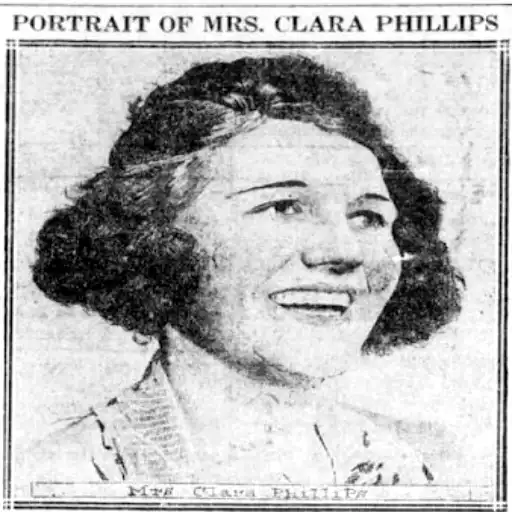
Born Clara Anne Weaver on June 23, 1894, in Waco, Texas, she didn’t grow up dreaming of infamy. She wanted the stage. Clara worked as a showgirl, a chorus girl, and picked up bit parts as a movie extra — the kind of glamorous, restless life a lot of young women chased in the early 1900s.
She met Armour L. Phillips, an oil stock salesman with a famous last name (he was a distant, less-wealthy branch of the Mellon family) but none of the family fortune. They married in 1918 and settled in Los Angeles. By most accounts, Clara had a temper — quick to jealousy, quick to fight, quick to invent stories about herself. That temper would define the rest of her life.
The murder of Alberta Meadows
In July 1922, Clara became convinced her husband was having an affair with 19-year-old bank teller Alberta Meadows. Was it true? Historians still argue about it. But true or not, Clara believed it, and that belief turned deadly.
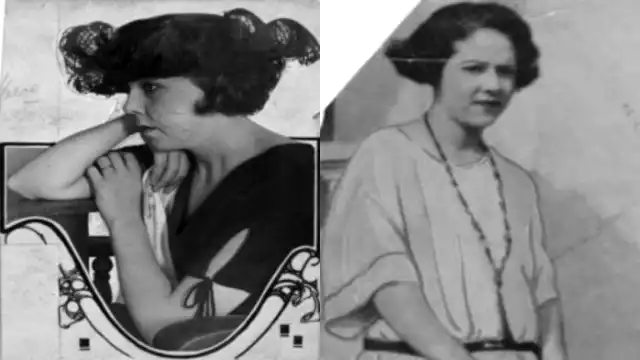
On July 10, she walked into a Los Angeles five-and-dime and bought a claw hammer for fifteen cents. She reportedly asked the clerk if it was heavy enough to kill someone. He thought she was joking. She wasn’t.
The next day, Clara and her friend Peggy Caffee tricked Meadows into a car ride under the pretense of needing a lift. They drove her to a secluded stretch of road in Montecito Heights, on the northeast side of the city. There, Clara beat Meadows to death with the hammer — striking her so many times the weapon broke — and then, in one final, brutal act, rolled a 50-pound boulder onto her chest.

Peggy watched the whole thing and said nothing. She was too scared to move.
“I Guess It’s Murder”
Here’s the detail that still makes people’s jaws drop. Clara went home covered in blood and told Armour, flat out, “I guess it’s murder.” Then she smiled and offered to cook him the best dinner he’d ever had — because, in her words, she was happy.
Armour put her on a train the next morning, planning an escape. But guilt (or fear) got the better of him. He went to the police and confessed everything. Clara was arrested in Tucson, Arizona, days later, and brought back to Los Angeles to face a media circus that hadn’t seen anything like her in years.
How she became the “Tiger Woman”
The nickname wasn’t a headline writer’s flourish. It came straight from investigators. When police found Alberta Meadows’ body, the injuries were so severe that a detective on the case said she looked like she’d “been mauled by a tiger.” That comparison stuck, and Los Angeles newspapers ran with it — “Tiger Girl,” “Tiger Woman,” take your pick.
And here’s the thing about 1920s tabloid journalism: it loved a pretty defendant. Clara was young, photogenic, and knew exactly how to work a courtroom. She’d throw her arms around Armour during hearings, bury her face in his shoulder, play the devoted wife for the cameras. One reporter covering the trial practically swooned over her “class.” Readers couldn’t get enough.
The trial and conviction

Clara’s defense strategy at trial? Blame Peggy Caffee. She testified under oath that it was Peggy who bought the hammer and did the killing. Nobody believed her — least of all the jury, who watched a visibly terrified Peggy Caffee testify against her.

The jury deadlocked on first-degree murder, then unanimously convicted Clara of second-degree murder. The sentence: ten years to life at San Quentin State Prison.
She never made it there right away, though. That’s where the story gets even wilder.
The escape to Honduras
On December 5, 1922, just weeks after her conviction, Clara vanished from the Los Angeles County jail. Officers initially claimed she’d sawed through her cell bars, climbed to the roof, and shimmied down a drainpipe using a rope. The real story, which came out later, was less cinematic but arguably more scandalous: a smitten admirer named Jesse Carson had bribed a guard and helped Clara walk right out the door.
Carson wasn’t just some lovestruck fan, either. He was reportedly a gun runner and soldier of fortune. The two fled south through Mexico and eventually landed in Tegucigalpa, Honduras, where — according to breathless newspaper reports at the time — they planned to arm a revolution and crown themselves rulers of the country.
It sounds absurd today. It sounded absurd then, too. But for four months, Clara Phillips was an international fugitive, and papers across the U.S. and beyond couldn’t print enough about her.
Capture and return
Authorities finally caught up with her in Honduras in April 1923. She was brought back to the United States by ship to New Orleans, then transported by train to California — a journey that turned into its own spectacle. Crowds gathered at stations along the route (Orange, Texas, among them) just hoping to catch a glimpse of the infamous “hammer murderess” as her train passed through.
Back in Los Angeles, there was nowhere left to run. Clara finally began serving her sentence at San Quentin.

Life behind bars — and after
Prison didn’t slow Clara down entirely. She reportedly took up dentistry training and got involved in music and theater programs while incarcerated. She also started a relationship with a fellow inmate, which led to her divorce from Armour in 1934.
In 1932, she was transferred to the newly opened women’s prison in Tehachapi. On June 17, 1935 — nearly thirteen years after the murder — Clara Phillips walked free on parole. A crowd was waiting for her outside the gates, chanting “Tiger Woman!” She asked reporters, simply, to leave her alone.
She moved to San Diego and reportedly worked as a dental assistant for decades, using the skill she’d picked up behind bars. She later relocated to Texas. Clara Phillips died on June 21, 1969, just two days shy of her 75th birthday — a quiet ending for a woman who once headlined newspapers around the world.
So why does a nearly forgotten 1920s murder case deserve a second look a hundred years later? A few reasons, honestly.
- It’s a snapshot of tabloid culture in its infancy. Clara Phillips’ trial shows exactly how far newspapers were willing to go to turn a defendant into a celebrity — good looks and courtroom drama sold papers then just like clickbait sells clicks now.
- It’s a rare female-led headline in a genre dominated by male killers. Women accused of violent crime in this era were treated as a novelty, and the press coverage reflects that — equal parts fascination and moral panic.
- It says something about how we still cover crime. Swap “newspaper” for “true crime podcast” or “YouTube documentary,” and the pattern barely changes.
Clara Phillips isn’t a household name like some of her contemporaries. But her story — the hammer, the boulder, the jailbreak, the jungle hideout — reads like fiction. It wasn’t. It happened, in Los Angeles, almost exactly a century ago, and it’s stuck around in true crime circles precisely because it’s stranger than most of what gets invented.
References: Wikipedia — Clara Phillips | Calisphere — Escape of Clara Phillips

