

Riding the New York City subway past midnight feels completely different from a bustling midday commute. empty platforms and quiet cars can unnerve first-time riders, but millions navigate the late-night tracks without incident every single week. getting through the system safely comes down to knowing how night service shifts and where to position yourself.
Does the NYC Subway run 24 hours?
The New York City Subway runs 24 hours a day, 7 days a week, 365 days a year. You can always catch a train home, no matter how late the clock strikes. What trips up most nocturnal riders is not whether the trains are running, but how they run between 11:30 PM and 5:30 AM.
Late-night service operates under a different playbook:
- Express lines go local: Trains like the A, D, N, and Q that zip past smaller stops during daytime rush hours typically switch to local tracks late at night, stopping at every single station along the corridor.
- Longer headways: Daytime trains arrive every 3 to 6 minutes.After midnight, wait times stretch anywhere from 12 to 20 minutes.
- Route reroutes and maintenance closures: The MTA schedules most track maintenance, tunnel cleaning, and signal upgrades during overnight windows. A train that normally goes down 8th Avenue might get pushed over to 6th Avenue.
- Service suspensions: A few lines (like the B, C, and W) do not operate at night at all; their routes are fully covered by their local counterparts (like the D, A, and N).
Always check real-time updates on the MTA app or station countdown clocks before steping down the stairs so you do not get caught waiting on a dead platform.
The conductor’s car: spot the zebra board
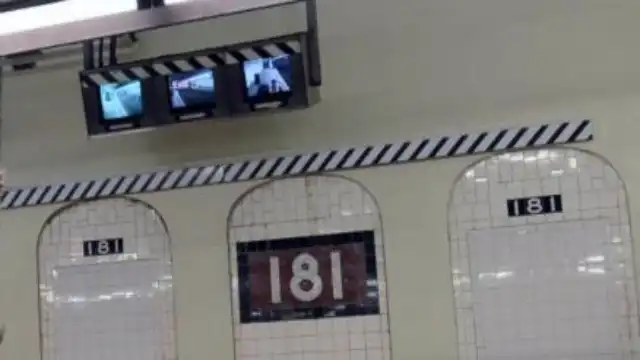
If you take only one safety tip from this guide, make it this one: always board the train car carrying the conductor.

Subway trains are operated by two crew members: the train operator in the front cab driving the train, and the conductor located roughly in the middle of the train operating the doors.Sitting in the conductor’s car gives you immediate access to a transit worker who can call the police, notify dispatch, or intervene during an emergency.
How do you find the middle car before the train arrives? Look up at the ceiling.
Suspended above the center of every station platform is a black-and-white striped wooden panel known as the zebra board.Train operators align their cab window with this marker to ensure the full train is safely docked within the platform.
When the train halts, the conductor will open their window and physicolly point at the zebra board before popping the doors open. Stand directly underneath that sign while waiting. When the train pulls up, step into that exact middle car.
Use the designated off-hours waiting areas
Standing on an isolated, dim corner of a platform at 2:00 AM makes you an easy target. That is why the MTA built designated Off-Hours Waiting Areas across the system.
These zones are typically located on the mezzanine level or in the most well-lit section of the platform. They are specifically positioned within direct line of sight of the station agent booth, heavy surveillance cameras, and a Customer Assistance Intercom (CAI) or emergency call box.

- Look for the bright yellow overhead signs reading “Off Hours Waiting Area”.
- Wait on the benches inside this zone until you hear the automated arrival announcement or see the train headlights approaching.
- Avoid walking down long, deserted corridors or hiding behind tiled support pillars while waiting.
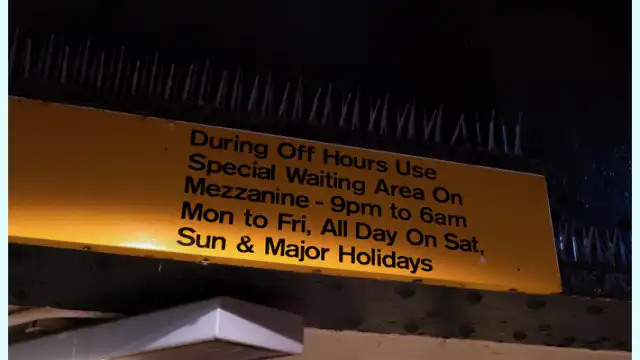
Staying visible is half the battle. If a station agent can see you, trouble rarely follows.
Is the NYC Subway safe late at night? essential street rules
Statistical violent crime on the subway remains statistically low relative to the millions of daily riders, but late-night travel requires active situational awareness. Keep these core street-smart rules locked in your routine.
1. Beware the “Empty Car” trap
You step onto the platform, a train pulls in, and every car is packed except one. It looks like your lucky day, right? Never get into an empty car on a populated train.
In New York, an empty car on an otherwise busy train is empty for a reason. Either the air conditioning is broken in the dead of summer, someone made a bio-hazard mess, or an erratic individual has cleared the entire car. Trust the crowd. If New Yorkers are avoiding a car, walk right past it.
2. Stand clear of the yellow platform edge
Platform pushes are rare, but keeping physical distance from the tracks is basic transit survival. Never pace along the tactile yellow warning strip. Instead, stand with your back against a tiled structural pillar or a wall while keeping a 360-degree view of your surroundings.
3. Keep one ear open
Noise-canceling headphones are amazing for flights, but they are a liability on a 3:00 AM subway platform. Lower your audio volume or keep one earbud out. You want to hear footsteps, track announcements, and sudden shifts in energy long before someone enters your personal space.

4. Pocket your valuables near the doors
Snatch-and-grab thefts happen right as the subway chimes ring to close the doors. A thief grabs your smartphone straight out of your grip and darts through the closing door, leaving you stuck inside as the train pulls out of the station. Keep your phone zipped up or gripped firmly with both hands, especially if you are seated near the doors.
5. Switch cars if the vibe turns sour
Did someone enter the car acting aggressive, unpredictable, or intimidating? Do not make eye contact, challenge them, or film them with your phone.
Wait until the train pulls into the next station, calmly exit through the sliding doors, walk a few paces down the platform, and enter an adjacent car. Do not walk through the emergency doors between moving cars — it is illegal, dangerous, and can catch you between trains on high-speed track curves.
Fares & Tap-to-Pay: The OMNY 7-day cap
Forget scrambling with paper MetroCards or feeding bills into a clunky vending machine late at night.The entire subway system operates on OMNY, the contactless tap-and-go fare system.
| Feature | Fare Rule / Cost | Details |
| Standard Subway Fare | $3.00 per ride | Tap with phone, smartwatch, contactless credit card, or OMNY card. |
| 7-Day Fare Cap | $35.00 maximum weekly spend | Pay for 12 rides in a 7-day rolling window; all subsequent subway/local bus rides that week are free. |
| Free Transfers | 2 Hours | One free transfer between subway and local bus within a 2-hour window. |
Using your phone wallet or contactless card lets you bypass turnstile lines instantly. You never have to stand around in an empty entrance fumbling with your wallet.
Daytime commuting vs Late-night riding
| Transit Factor | Daytime Transit (6 AM – 11 PM) | Late-Night Transit (11:30 PM – 5:30 AM) |
| Train Frequency | Every 3 to 6 minutes | Every 12 to 20 minutes |
| Service Route | Standard local and express routing | Most express trains convert to local stops |
| Ideal Waiting Spot | Anywhere on the platform | Off-Hours Waiting Area or under the Zebra Board |
| Staff Presence | Heavy station staff and police patrols | Concentrated near turnstiles and middle conductor cabs |
| Best Car Choice | Any car with open seats | Middle car with the active conductor |
Staying safe on the night train is not about fear; it is about deliberate habits. Position yourself under the zebra board, keep your eyes up, and let the system bring you home.

