

The Nutty Putty Cave Incident: A Step-by-Step Breakdown & Rescue Diagram
Have you ever experienced severe claustrophobia? Just imagine being trapped in complete darkness. Your body is wedged tightly inside a narrow rock tube. Furthermore, you are hanging upside down. Sadly, this isn’t just a scene from a horror movie. For a 26-year-old medical student named John Edward Jones, this absolute nightmare became reality in 2009.
Caving is an inherently dangerous sport. People willingly crawl into the earth’s crust just for the thrill of exploration. Most of the time, adventurers emerge completely fine. Yet, the Nutty Putty Cave incident serves as a chilling reminder that nature holds zero mercy. When things go wrong underground, they go wrong catastrophically. Consequently, the horrific death of John Jones remains one of the most famous and deeply tragic rescue failures in modern history.
Are you ready to explore the terrifying mechanics behind this disaster? Let’s break down exactly what happened inside that infamous Utah cave.
Key takeaways;
- The Victim: John Edward Jones was a 26-year-old father, husband, and medical student.
- The Mistake: He accidentally crawled into an unmapped, highly dangerous section near “Ed’s Push” instead of the popular “Birth Canal.”
- The Trap: He became permanently wedged upside down at a 70-degree angle inside a fissure measuring just 10 by 18 inches.
- The Failed Rescue: Over 137 rescuers spent 27 grueling hours trying to free him. Tragically, a critical rock anchor holding a pulley system shattered.
- The Aftermath: The cave was permanently sealed with concrete. Today, it serves as John’s official grave.
1. A fun holiday outing turns into a nightmare
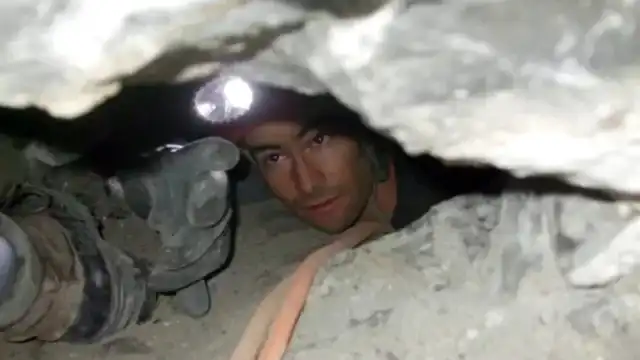
To understand the sheer tragedy of this event, we must look at the context. It was November 24, 2009. Thanksgiving was right around the corner. Therefore, John Edward Jones traveled back home to Utah to spend the holidays with his extended family.
John was currently in the prime of his life. He was a loving husband to his wife, Emily, and a doting father to a one-year-old daughter. Moreover, he was attending medical school in Virginia. He desperately needed a break from heavy textbooks. So, he decided to reconnect with his brother, Josh. As kids, the two boys loved spelunking with their father. Consequently, they planned an evening trip into the local Nutty Putty Cave, located just west of Utah Lake.
The history of nutty putty cave
First discovered in 1960, this hydrothermal cave was wildly popular among local Boy Scouts and college students. Unlike massive caverns with wide walking paths, Nutty Putty was famous for its slick, clay covered walls and extremely tight squeezes. Honestly, it was not a place for the faint of heart.
Interestingly, the cave possessed a prior reputation for danger. Several inexperienced explorers had gotten stuck there previously. In 2004, rescuers spent 14 intense hours extracting a 16 year old Boy Scout from a tight spot. As a result of mounting safety concerns, officials actually closed the site in 2006. However, they reopened it in May 2009 with a strict online reservation system. Tragically, John visited just six short months after the gates officially unlocked.
2. Fatal wrong turn (Visualizing the Cave Diagram)

At around 8:00 PM, a group of 11 friends and family members entered the cave entrance. Initially, everything went exactly as planned. They successfully navigated the larger, well-known rooms near the top. Eventually, John and Josh split off to find a famous challenge known colloquially as “The Birth Canal.”
The Birth Canal is a notoriously tight but completely navigable passageway. If you follow the correct route, it eventually opens up into a larger room where you can easily turn around. However, cave systems are effectively pitch-black mazes. There are absolutely no street signs underground.

Entering the unknown
Instead of finding the Birth Canal, John accidentally ventured into an unmapped, highly dangerous finger of the cavern. Early news reports mistakenly called this area “Bob’s Push.” However, official rescue diagrams later confirmed he actually entered a dead-end section near “Ed’s Push.”
Imagine a massive, underground plumbing system. John crawled forward into a tunnel that aggressively began shrinking. Because he was a tall guy standing 6 feet tall and weighing 200 pounds the space quickly felt incredibly restrictive. Yet, he pushed forward. He wrongly assumed the tight squeeze was the infamous Birth Canal. He believed a wide turnaround room was waiting just ahead. Unfortunately, he was entirely mistaken.
3. Grueling Step-by-step breakdown
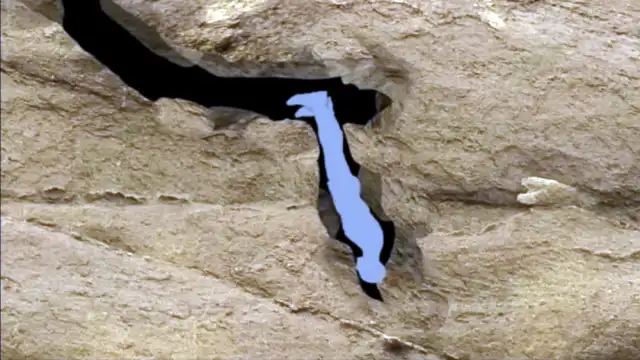
Eventually, John saw a tiny vertical drop ahead of him in the darkness. Thinking this was the final turnaround point, he sucked in his chest. He then shimmied forward, sliding headfirst into the steep, downward fissure.
Suddenly, the tunnel sharply narrowed to completely impossible dimensions. Specifically, the gap measured just 10 by 18 inches. That is roughly the size of the opening on a standard front-loading washing machine. John was entirely stuck. He couldn’t move forward because the hole violently closed up. Furthermore, he couldn’t back out because his body was firmly wedged against the jagged limestone.
The ultimate trap
To make matters significantly worse, the tunnel didn’t just go straight down. It twisted slightly, locking his frame solidly in place. Let’s look at the anatomical diagram of his terrifying entrapment:
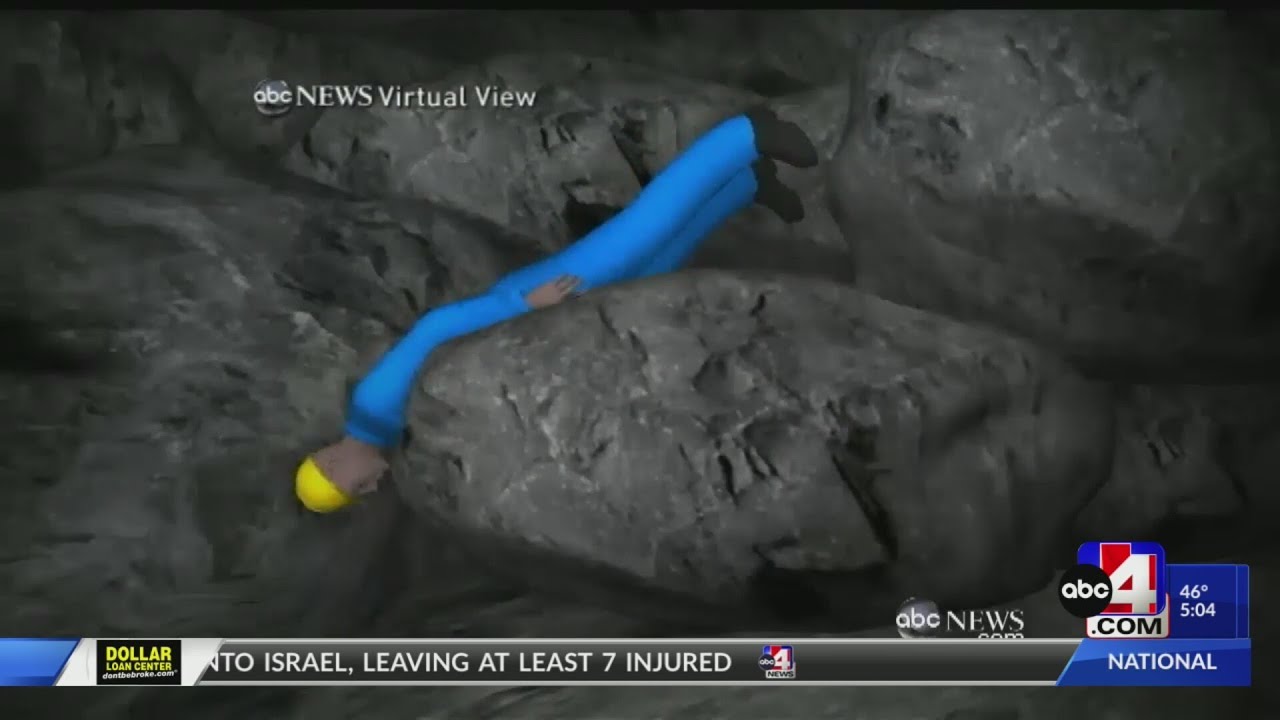
- The Extreme Angle: He was suspended almost entirely upside down at a brutal 70-degree angle.
- The Compressed Torso: His chest was squeezed so tightly that taking a full, deep breath was nearly impossible.
- The Pinned Arms: One arm was trapped underneath his torso. Meanwhile, the other arm was forced backward behind his head.
- The Depth: He was located 400 feet away from the cave entrance and roughly 100 feet below the earth’s surface.
When his brother Josh finally found him, all he could see were John’s feet poking out of the narrow crack. Josh desperately grabbed his brother’s calves and pulled with all his might. Miraculously, he managed to lift John an inch or two. However, as soon as Josh lost his grip, John slid even deeper into the V-shaped wedge. It was completely hopeless without heavy rescue equipment. At this point, Josh rushed back to the surface to call 911 immediately.
4. The 27-hour rescue mission and the pulley disaster
By late Tuesday night, a massive, highly coordinated rescue operation had kicked off. Eventually, over 137 dedicated first responders arrived at the remote site. These teams included elite cavers, advanced paramedics, and heavy equipment operators.
However, physically getting to John was half the battle. The rescue teams had to navigate a twisting, turning obstacle course just to reach his exposed feet. Because the tunnel was unbelievably cramped, only one or two rescuers could safely reach him at a time. Therefore, they had to work in exhausting, rotating shifts.
The complex rope system
Rescuers quickly realized that raw human strength wouldn’t work. The heavy friction of his clothes against the rock was simply too great. Consequently, they decided to construct an elaborate mechanical pulley system.

Building this apparatus underground was incredibly tedious. Volunteers spent hours carefully drilling heavy metal bolts into the surrounding rock ceiling. They threaded strong static ropes through these anchors, creating a 4 to 1 mechanical advantage. Basically, this meant that for every four pounds of pulling force applied, the ropes would lift one pound of dead weight. They meticulously tied the complex ropes around John’s feet and legs.
By Wednesday afternoon, the grim atmosphere briefly shifted toward hope. The massive team synchronized their efforts. “Heave! Heave!” they shouted in unison. Slowly, the system actually worked. They pulled John upward through the dirt. They lifted him just enough to pass him an IV line, warm food, and water. He was even able to speak to his terrified wife over a two way police radio.
The catastrophic failure
Then, the unthinkable suddenly happened. The climbing equipment itself did not break. Instead, the actual cave fought back.
The inner walls of Nutty Putty Cave are highly composed of soft, flaky clay. Suddenly, one of the primary anchor points experienced entirely too much strain. The rock violently gave way. The metal bolt tore cleanly out of the cave ceiling with explosive, terrifying force.
The heavy metal carabiner shot backward like a loaded bullet. It struck a rescuer named Ryan Shurtz directly in the face, causing a severe laceration. Instantly, all the life saving tension left the rope. John plummeted backward, sliding violently down into the narrow crevice. Because of the sudden drop, he was now wedged even tighter than before. The rescue team was absolutely devastated. All of their grueling progress was completely erased in a single second.
5. Why gravity was the real killer
Why was time such a critical factor during this incident? Ultimately, starvation or dehydration didn’t kill John. Basic human biology did.
The human body is a genuinely amazing machine, but it evolved to operate mostly upright. Gravity assists our circulatory system continuously. When you stand up, your powerful heart pumps blood up to your brain. Then, gravity naturally pulls that heavy blood back down.
The nightmare of positional asphyxiation
When a person is hung upside down for extended periods, the entire bodily system completely breaks down. This fatal condition is medically linked to positional asphyxiation.
- Fluid Buildup: Because John was inverted at a steep 70 degree angle, gravity forced blood and fluid to pool aggressively inside his brain and lungs.
- Severe Heart Strain: His heart had to work at double its normal capacity. It was fighting intense gravity to pump blood downward to his legs while desperately trying to pull it away from his swelling brain.
- Breathing Restriction: The sheer weight of his own internal organs pressed violently against his diaphragm. Coupled with the tight rock constricting his ribs, his lungs absolutely could not expand properly.
By Wednesday night, John’s breathing became a deep, horrifying gurgling sound. Fluid was rapidly filling his lungs. He was slowly losing consciousness. Despite the agonizing physical pain and pure terror, he remained incredibly polite to his rescuers. He frequently thanked them out loud for trying to save his life.
At approximately 11:56 PM on November 25, 2009 after spending 27 brutal hours trapped underground John Edward Jones suffered massive cardiac arrest. A medical professional who was able to squeeze down to his feet quickly confirmed that he had passed away.
6. The aftermath
Following his incredibly tragic death, the massive rescue operation immediately transitioned into a grim recovery mission. However, extracting a deceased body proved even more impossible than rescuing a living person.
Rigor mortis sets in very quickly. Because John’s body was stiffening, bending his frame through the twisting, jagged tunnel was structurally impossible. The only viable option involved heavily fracturing his bones just to pull him out. Moreover, the risk to the exhausted rescue workers remained incredibly high. They couldn’t safely use explosives to widen the tunnel without collapsing the entire heavy ceiling on top of themselves.
Painful agreement
Ultimately, the local sheriff’s department, the cave’s private landowner, and the grieving Jones family held a deeply emotional meeting. They made the agonizing, heartbreaking decision to simply leave John inside the cave.
To prevent this horrific tragedy from ever repeating, officials decided to close the area permanently. About a week later, heavy construction crews arrived at the desert site. They poured massive amounts of wet concrete directly into the entrance of the cave. Furthermore, they used specialized explosives to collapse the inner ceiling near “Ed’s Push” to completely block off the passage forever.
Nutty Putty Cave was officially transformed into a permanent, sealed tomb. Today, a touching commemorative bronze plaque sits near the sealed entrance. It explicitly honors the brief, beautiful life of John Edward Jones and praises the heroic, tireless efforts of the brave men and women who tried so hard to save him.
7. Lessons learned from the deep darkness
The Nutty Putty Cave incident fundamentally changed the entire caving community. It sparked massive global debates regarding safety protocols, online mapping accuracy, and the true, hidden dangers of amateur spelunking. Today, modern caving organizations strictly emphasize the buddy system. Furthermore, they aggressively mandate exploring only well mapped, safely established routes.
This true story is incredibly tough to read. It taps directly into our deepest, most primal fears. Nature simply does not care about our college degrees, our loving families, or our exciting future plans. When humans push into extreme environments where we simply don’t belong, the consequences are often brutally unforgiving.
For the resilient Jones family, the raw grief remains immeasurable. Yet, they continue to passionately remember John not for how he tragically died, but for the compassionate, loving, and fighting spirit he proudly displayed throughout his entire life.
Does the Nutty Putty Cave incident absolutely terrify you? Would you ever consider going cave diving after reading about these extreme underground dangers? Drop your thoughts down in the comments below! If you found this step-by-step breakdown informative, please share this article with your friends and fellow true crime or disaster survival enthusiasts. Stay safe out there!

