

Jane Elliott’s Blue Eyes/Brown Eyes Experiment: History, Psychology, and Why It Still Matters for DEI Training
A third-grade teacher in a tiny Iowa town divided her class by eye color and told half of them they were better than the other half. Within fifteen minutes, sweet kids turned mean. Confident kids turned timid. And a piece of classroom theater from 1968 ended up shaping how American companies train employees on race, more than fifty years later.
That’s the short version. Here’s the longer one — and why it still comes up in psychology classrooms and corporate DEI debates alike.
Need to know
- Jane Elliott created the exercise on April 5, 1968, the day after Martin Luther King Jr.’s assassination, using eye color as a stand-in for race.
- Kids labeled “inferior” started performing worse academically within hours; kids labeled “superior” got bossy fast.
- The exercise isn’t a controlled scientific study — researchers and Elliott’s own biographer have flagged real ethical and methodological problems with it.
- It became one of the founding templates for corporate diversity training, used by companies like GE, IBM, and AT&T.
- Amid today’s DEI backlash, the debate over whether confrontational exercises like this one actually change behavior is more relevant than ever.
How the Exercise Started
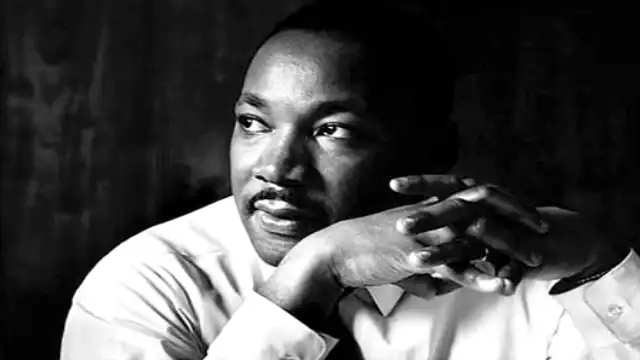
Picture a Friday morning in Riceville, Iowa. A student walks in and asks his teacher why someone “shot that King.” It’s April 5, 1968 — the day after Martin Luther King Jr. was assassinated — and Jane Elliott’s third graders are confused and upset. King had been their class’s “Hero of the Month” just weeks earlier.
Elliott decided talking about discrimination wasn’t enough. She asked her all-white class how they thought it would feel to be a Black boy or girl, suggested it would be hard to understand without experiencing it, and asked if they wanted to find out. They said yes.
Since her students were white, she needed a different marker than skin color. So she split the class by eye color instead — blue eyes versus brown eyes — to simulate what racial segregation actually felt like. When the brown-eyed kids resisted the idea that blue eyes made you better, Elliott told them a flat-out lie: that melanin, the stuff that gives eyes their color, also controlled intelligence. Kids believe their teacher. That’s kind of the whole point, and also the whole problem, depending on who you ask.
What Actually Happened in the Classroom
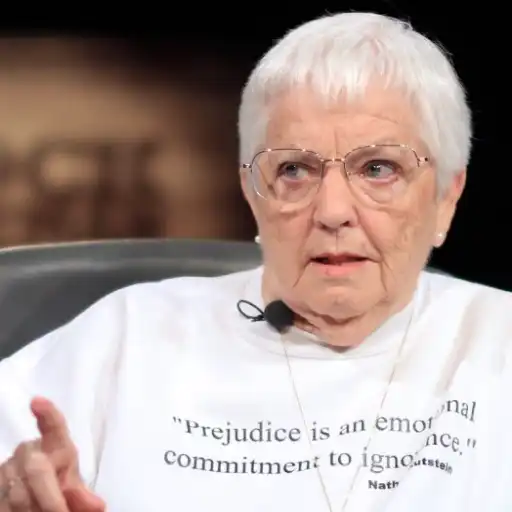
The blue-eyed kids got the royal treatment that first day. They were praised, told they were smarter and nicer, and given perks like a longer recess and first place in the lunch line. Brown-eyed students, meanwhile, had to skip the jungle gym, couldn’t get second helpings at lunch, and had to drink from paper cups instead of the water fountain. The brown-eyed children also had to wear collars around their necks so everyone could tell at a glance who was “inferior.”
Here’s where it gets uncomfortable. This wasn’t subtle peer pressure — it took hold almost instantly. A girl who’d never struggled with multiplication suddenly started making mistakes and slumping in her seat. At recess, kids who’d been her friends ganged up on her, demanding an apology for “getting in their way.” Elliott later said she watched “marvelous, cooperative, wonderful, thoughtful children turn into nasty, vicious, discriminating little third-graders in a space of fifteen minutes.”
The next Monday, she flipped it. Brown-eyed kids became the superior group, and while they did taunt the blue-eyed kids in similar ways, Elliott reported the intensity wasn’t quite as sharp the second time around. One theory: the blue-eyed kids had just felt what it was like to be on the receiving end, and maybe that softened how hard they pushed back. Make of that what you will — it’s one of the more human details in the whole story.
Not every kid went along quietly, either. According to people who were in the room, one student, Paul Bodensteiner, pushed back against Elliott’s premise at every turn. Worth remembering: compliance wasn’t universal, even among eight-year-olds.
The Aftermath — In Class and Out of It
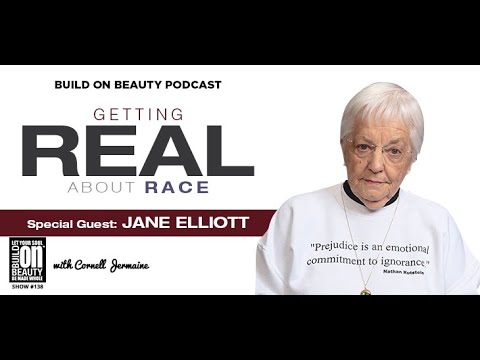
When the exercise wrapped up, Elliott had the kids write about what they’d learned. Those compositions ran in the local paper under the headline “How Discrimination Feels,” got picked up by the Associated Press, and landed Elliott a spot on The Tonight Show Starring Johnny Carson. The audience reaction wasn’t exactly warm. Hundreds of calls flooded the switchboard, and most of them were angry. One oft-quoted letter simply asked how she dared try “this cruel experiment” on white children.
Back home, things got worse. Riceville, a town of fewer than a thousand people, didn’t take kindly to the national attention or to what Elliott had implied about the community. Her own kids paid a price — her daughter was taunted in the hallway, her son got beaten up at school, and her oldest daughter once found a slur scrawled in lipstick on a bathroom mirror.
When a documentary crew later filmed her work, the town reportedly organized an informal boycott of the bed and breakfast Elliott ran with her husband. She kept teaching the exercise anyway. She ran it with her third graders for nine more years, then with seventh and eighth graders for eight years after that, before leaving the classroom in 1985 to take the exercise on the road full-time.
And the exercise did go on the road. Elliott has trained employees at General Electric, Exxon, AT&T, and IBM, and has lectured the FBI, the IRS, the U.S. Navy, the Department of Education, and the Postal Service. She’s widely considered the forerunner of modern diversity training — the Blue Eyes/Brown Eyes exercise is essentially the prototype a lot of corporate DEI work grew out of.
What Psychology Actually Says About It
This is the part students writing papers on this topic need to get right: the Blue Eyes/Brown Eyes exercise is not a controlled scientific experiment. It’s a classroom demonstration, run by one teacher, on one group of kids, with no control group and no informed consent process. That distinction matters if you’re citing it academically.
That said, it lines up neatly with established theory. Psychologists often connect it to social identity theory, developed by Henri Tajfel and John Turner, which argues that people naturally favor their own group and look down on outsiders once group lines get drawn — even when those lines are completely arbitrary. The experiment is frequently cited as supporting the idea that prejudice is made, not born — group membership alone, with zero prior history of conflict, was enough to generate real discrimination.
There’s also a confirmation bias angle worth knowing. Once kids accepted the eye-color hierarchy, they interpreted everything afterward through that lens — when the “superior” group did well, it confirmed their superiority; when the “inferior” group struggled, it confirmed their inferiority, even though the struggling was caused by the discriminatory treatment itself, not anything innate. That’s a tidy, slightly chilling illustration of how stereotypes become self-reinforcing once they’re in place.

But here’s the catch that often gets left out of summary articles: a peer-reviewed piece in the journal Human Development states plainly that Elliott’s exercise isn’t a scientific study, that it raises real ethical issues, and that academic research doesn’t actually support some of her interpretations — like the claim that it produces lasting “personality change.” The same researchers point out that Elliott chose a highly visible trait (eye color, marked with colored collars) rather than something less obvious, and that less visible distinctions tend to produce weaker in-group bias in children. In plain terms: she picked a setup almost guaranteed to work dramatically. That’s good for daytime TV. It’s shakier ground for drawing firm scientific conclusions.
Stephen G. Bloom, who wrote Elliott’s biography after she personally asked him to, dug into still more problems. He documented criticism that the exercise risked real psychological harm — leaving some kids humiliated or anxious — and that it happened without informed consent or any real safeguards. He also noted it oversimplifies racism by reducing it to eye color, sidestepping the deeper systemic and historical layers of actual discrimination.
Bloom went further in his own reporting, arguing the exercise was less an empirical demonstration and more “a sadistic exhibition of power and authority” — levers that Elliott herself controlled. One adult who went through Elliott’s corporate version decades later described being singled out, nicknamed “Barbie,” and accused publicly of using her sexuality to get ahead — all in front of 75 coworkers. Whatever this teaches, it isn’t gentle.
So where does that leave students writing about it? Probably here: the exercise is a genuinely useful illustration of social identity theory and in-group bias in action. It’s not, by modern research standards, a clean scientific test of those theories. Both things are true at once, and a good paper says so.
Why this matters for DEI training today
Here’s the part that makes this more than a history lesson. Elliott’s exercise became the rough blueprint for decades of corporate diversity training — and right now, that whole industry is under more scrutiny than it’s been in years.
Elliott herself has noticed the shift. She’s said the backlash against DEI and anti-racism teaching in schools has cut into her speaking invitations on college campuses — though she’s also been clear she has no plans to stop. “It started in 1968 and it will not finish until after I’m long gone,” she told CNN in 2024.
That backlash is bigger than one speaker’s calendar. Between November 2022 and November 2023, job postings mentioning DEI dropped more than 23% after climbing nearly 29% the year before, and one analysis found a 40% decrease in DEI-focused job postings from January 2022 through the end of 2024. Companies like Goldman Sachs have scaled back diversity programs, and the pullback hasn’t stayed confined to the U.S. — Unilever in the U.K. trimmed equity commitments in 2024 after investor pushback against what critics called “woke” policy.
So is any of this training actually backed by evidence? It’s complicated — which, frankly, is a more honest answer than most headlines give you. A 2016 meta-analysis of 260 of the most methodologically rigorous studies on diversity training set out to answer exactly that question. Other researchers have pushed back harder, arguing the field still lacks solid empirical evidence and that whatever gains training produces tend to fade fast. Patricia Devine, a psychology professor at the University of Wisconsin-Madison, put it bluntly: there’s more enthusiasm for diversity training than actual proof it works, partly because organizations rarely analyze the problem before throwing training at it.
The research that does hold up tends to point away from confrontational, Elliott-style exercises and toward something gentler. One study found that simply asking people to write a few sentences imagining the specific challenges faced by an LGBT person or a racial minority improved pro-diversity attitudes and behavior — and the effect was still measurable eight months later. Interestingly, that effect crossed over: taking the perspective of one marginalized group improved attitudes toward a completely different one. Compare that to Elliott’s method, which doesn’t ask anyone to imagine anything — it forces a lived (if simulated) experience of humiliation. Both approaches aim at the same target. They could not feel more different in execution.

That contrast is really the heart of why this 1968 classroom exercise keeps showing up in 2026 conversations. Should DEI training make people feel discrimination to understand it, or is that confrontational shock-value approach exactly what’s fueling today’s backlash? Reasonable people land in different places on that question, and a strong academic paper on this topic should probably explore both sides rather than pick a side for the writer.
A Quick Comparison: Then vs. Now
| 1968 Classroom | Modern DEI Training | |
|---|---|---|
| Format | Forced, live discrimination | Often perspective-taking, written reflection |
| Consent | None — students were eight years old | Typically required for adult employees |
| Goal | Make discrimination felt, viscerally | Mix of awareness-building and skill-building |
| Evidence base | Anecdotal, one classroom, no control group | Mixed; some rigorous meta-analyses exist |
| Current reception | Praised by some, called unethical by others | Facing political and legal backlash in 2025-2026 |
Frequently Asked Questions
Was the Blue Eyes/Brown Eyes experiment a real scientific study?
No. It was a classroom exercise designed and run by a teacher, not a controlled experiment with a control group or peer-reviewed methodology. Psychologists use it as an illustration of social identity theory, not as primary research evidence.
Did Jane Elliott have informed consent from the children or their parents?
Reporting on the exercise consistently notes the absence of informed consent or built-in safeguards — one of the most common ethical criticisms leveled against it.
Is Jane Elliott still doing this work?
Yes. As of 2026, she was still speaking publicly against racism, despite saying that DEI backlash had reduced her college speaking invitations.
Final Thoughts
There’s a reason this one classroom exercise from a small Iowa town never quite fades out of the conversation. It’s vivid, it’s uncomfortable, and it captures something true about how fast humans sort each other into “us” and “them” — even over something as meaningless as eye color. But vivid doesn’t always mean valid, and the same exercise that made for unforgettable television also raises real questions about consent, harm, and what actually changes minds long-term.
If you’re writing about this for a class project, that tension is your thesis. Don’t just retell the story — interrogate it. What does it prove, and what does it merely dramatize?
Got a stake in this debate? Drop a comment with your take: does confrontational, Elliott-style training still have a place in 2026, or has the evidence moved on? And if you’re working on a related paper, share what angle you’re taking — there’s a lot more to dig into here than one blog post can cover.
Sources cited include Wikipedia’s Jane Elliott entry, Smithsonian Magazine, NPR, PBS Frontline, CNN, The Conversation, the Society for U.S. Intellectual History, the journal Human Development (Karger Publishers), the Kim Center for Social Balance, ScienceForWork, The Chronicle of Higher Education, the Journal of Sustainable Business, and the Harvard Law School Forum on Corporate Governance.

