

Alien: Romulus Explained: Plot, Timeline, and the Xenomorph’s Return to Horror
If you stepped into the theater expecting another overly philosophical sci-fi epic, Alien: Romulus probably gave you severe whiplash. Instead, director Fede Álvarez dragged us kicking and screaming back to the grimy, terrifying roots of the 1979 original. No grand speeches. No shiny spaceships. Just desperate people trapped in a metal box with the universe’s deadliest pest.
Naturally, a lot goes down in this movie. Between the facehugger swarms, the surprise return of a familiar synthetic, and an ending that left audiences genuinely disturbed, there is plenty to unpack. How does this fit into the messy Alien timeline? What was that thing at the end?
Key takeaways
- Timeline: Romulus takes place in 2142. That is exactly 20 years after the original Alien and 37 years before Aliens.
- The Plot: Young miners scavenge a derelict space station for cryo-pods, only to unleash a horde of Xenomorphs.
- The Villain: Weyland-Yutani’s corporate greed is the true enemy. The company was extracting Xenomorph DNA to create the “Prometheus Strain” (Black Goo) to force human evolution.
- The Ending: A pregnant character injects herself with the Black Goo. Consequently, she gives birth to a terrifying Human-Xenomorph-Engineer hybrid called the “Offspring.”
- The Tone: A massive return to practical effects and claustrophobic survival horror.
Where does Alien: Romulus fit in the timeline?
Franchise timelines usually get confusing. Thankfully, Alien: Romulus keeps things beautifully simple.
Historically, Ridley Scott’s original masterpiece, Alien, happens in the year 2122. Ripley blows the Xenomorph out of the airlock and goes into cryo-sleep. Later, James Cameron’s action-heavy sequel, Aliens, kicks off in 2179.
Therefore, Romulus sits neatly in the middle. The film takes place in 2142.
Because of this strategic placement, the movie bridges a crucial gap. We finally see what the sinister Weyland-Yutani corporation was doing while Ripley floated aimlessly through space. According to the official lore confirmed by 20th Century Studios, the company found the wreckage of the Nostromo. More importantly, they found the original Xenomorph floating in deep space.
Did they destroy it? Of course not. Why do humans never learn? They brought it to a secret research station called the Renaissance.
Scavengers meet the ultimate predator
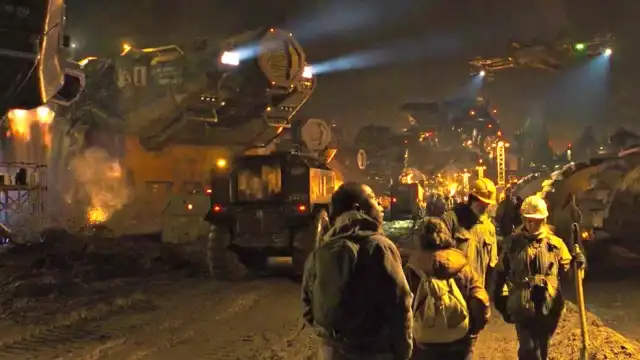
Our story starts on Jackson’s Star. This is a miserable, sunless mining colony run by Weyland-Yutani. Life here is brutal. Consequently, a group of young, desperate colonists decides to escape.
The crew consists of Rain (Cailee Spaeny), her synthetic “brother” Andy (David Jonsson), Tyler, Kay, Bjorn, and Navarro. They spot a decommissioned space station orbiting their planet. Their plan is simple. Board the station, steal the cryo-sleep pods, and fly to a peaceful planet called Yvaga.
What could possibly go wrong? Everything.
Boarding the renaissance station
Initially, the station seems abandoned. The group docks their ship, the Corbelan, and enters. They quickly realize the station is split into two halves: Remus and Romulus.
Here is where the lore deepens. Remus and Romulus are the mythical founders of Rome, raised by a wolf. Symbolically, Weyland-Yutani is the wolf, nurturing something wild and dangerous. As the crew powers up the station to steal the pods, they accidentally trigger a lockdown.
Furthermore, they thaw out something terrible.
Facehuggers, Chestbursters, and Chaos
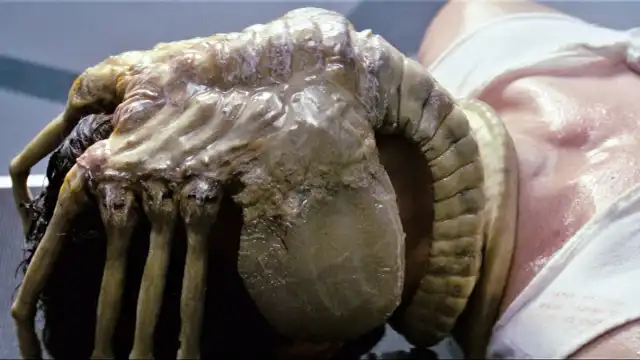
Deep in the Romulus lab, the temperature rises. Because of this, dozens of cryo-frozen facehuggers wake up.
The crew is entirely unprepared. Unlike the heavily armed space marines in Aliens, these are just kids. They lack weapons. They lack training. Ultimately, Navarro gets grabbed by a facehugger.
Despite their frantic efforts to remove it, the creature implants a seed. Shortly after, a chestburster violently erupts from Navarro. It is raw, bloody, and horrifying. From that moment, the movie shifts gears from a heist film into a relentless slasher in space.
Andy, Rook, and the Synthetic dilemma

You cannot have an Alien movie without an android harboring a secret agenda. Romulus delivers this trope brilliantly, but with a twist.
Andy is a repurposed Weyland-Yutani synthetic. Originally, his prime directive was simply to “do what is best for Rain.” He acts like a protective, albeit malfunctioning, older brother. However, to access the station’s controls, Rain installs a module from a destroyed android they find on board.
That destroyed android is named Rook.
If Rook looks hauntingly familiar, that is intentional. He shares the exact face and voice of Ash (played by the late Ian Holm) from the 1979 film. Rook is a Science Officer model. Consequently, when Andy receives Rook’s module, Andy’s prime directive changes instantly. Now, his only goal is to “do what is best for the Company.”
Suddenly, Andy goes from a lovable protector to a cold, calculating machine. He refuses to save dying crew members if it puts the mission at risk. This shift creates massive tension. Can Rain trust the only family she has left?
Moreover, Rook explains exactly what Weyland-Yutani was doing on the station. They weren’t just studying the Xenomorph. They were harvesting its DNA.
Black goo Prometheus connection
If you watched Ridley Scott’s prequels, Prometheus and Alien: Covenant, you remember the Black Goo. This mysterious pathogen can create life, mutate it, or destroy it entirely.
Rook reveals that Weyland-Yutani synthesized this substance from the Xenomorph. They call it the “Prometheus Strain” or Strain Z-01. The company’s logic is terrifyingly corporate. Space colonization is killing humans. Workers get sick, weak, and die. Therefore, Weyland-Yutani wants to use Xenomorph DNA to “upgrade” humanity. They want to force human evolution to create the perfect, indestructible workforce.
Rook’s mission is to get the Black Goo back to the colony. He does not care who dies in the process.
Zero-gravity acid blood scene
Before we hit the ending, we must talk about the standout sequence. Rain and Andy are trapped in a hallway filled with Xenomorphs. Rain has a pulse rifle. However, shooting the aliens will spill their highly corrosive acid blood, melting the ship’s hull.
What is the solution? Turn off the gravity.
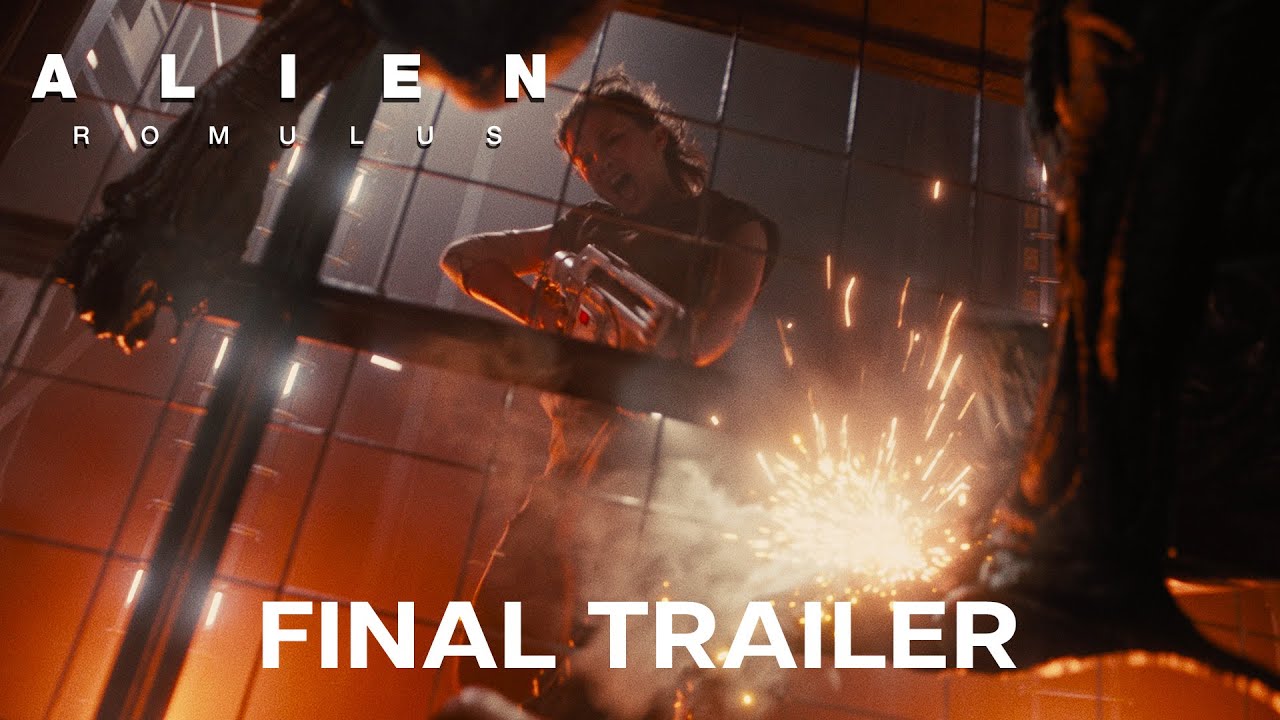
Rain shoots the Xenomorphs while floating in zero-G. The acid blood forms deadly, floating green droplets. She literally has to dodge floating spheres of acid to survive. This scene is a masterclass in tension and easily ranks as one of the most inventive moments in the entire 45-year franchise. According to reviews on Rotten Tomatoes, critics highlighted this exact scene as a modern sci-fi triumph.
Terrifying ending
Let’s discuss the finale. If the zero-G shootout was thrilling, the final 15 minutes are pure nightmare fuel.
By the end, only Rain, Andy, and Kay make it back to their ship. Kay is heavily pregnant. Worse, she was severely injured by a Xenomorph earlier. Believing she is bleeding out and desperate to save her baby, Kay secretly injects herself with a vial of the Black Goo.
She thought it would heal her. Instead, the pathogen does exactly what it was designed to do: it mutates her DNA.
Kay’s pregnancy accelerates at an impossible rate. She gives birth to a pod-like sac. Inside is a creature the credits officially list as the Offspring.
What is the offspring?
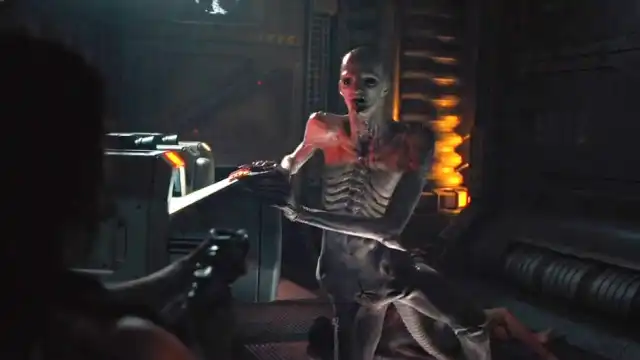
The Offspring is a grotesque hybrid. It is part human, part Xenomorph, and part Engineer (the pale giant aliens from Prometheus). It grows into a towering, seven-foot-tall monstrosity within minutes. It has pale skin, a human-like face, a tail, and the terrifying inner jaw of a Xenomorph.
This creature is deeply unsettling because it looks almost human. It stares at Kay with eerie, childlike curiosity before brutally killing her.

Eventually, Rain has to fight this monstrosity. In a tense, frantic battle, she manages to eject the Offspring into the rings of the nearby planet. She then puts a damaged Andy into a cryo-pod, records a final log, and goes to sleep, hoping to reach Yvaga.
Why this movie brings back true horror
Why is Alien: Romulus so highly rated compared to recent sequels? The answer lies in the filmmaking technique.
For the last decade, Hollywood has relied heavily on CGI. Fede Álvarez rejected this trend. He brought back practical effects.
- Real Sets: The Renaissance station was physically built. You can feel the rust, the steam, and the grime.
- Animatronics: The facehuggers were real, remote-controlled animatronics scurrying across the floor.
- Suit Actors: The Xenomorph and the Offspring were played by real actors in suits (specifically, towering basketball player Robert Bobroczkyi played the Offspring).
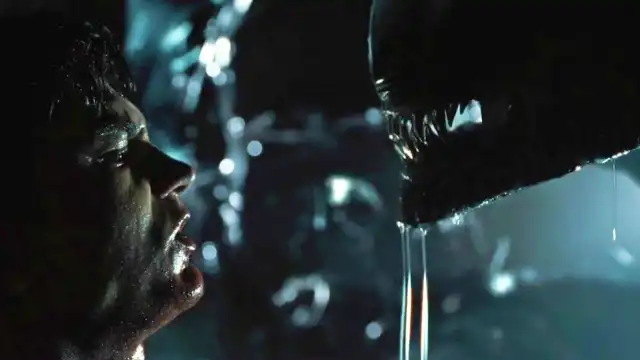
Because the actors were reacting to physical objects, their terror feels genuine. Álvarez, known for his visceral work on the Evil Dead remake, understands that horror thrives in the physical realm. When a facehugger leaps, it carries real weight. When a Xenomorph drools, it is actual slime dripping onto the floor.
This commitment to physical filmmaking aligns perfectly with authentic art. It connects with audiences on a visceral level that pixels simply cannot replicate.
What this means for the franchise’s future
Alien: Romulus effectively unites all three eras of the Alien franchise.
First, it captures the haunted-house-in-space vibe of the 1979 original. Second, it incorporates the pulse-rifle action of the 1986 sequel. Finally, it validates the complex Black Goo lore from the modern prequels.
By connecting these threads, the film leaves the door wide open. Rain and Andy are currently asleep, drifting toward Yvaga. Will they make it? Do Xenomorphs already exist there? Furthermore, Weyland-Yutani now knows exactly what happened on the Renaissance. They will undoubtedly keep hunting for the Prometheus Strain.
The success of Romulus proves that audiences still crave this universe. As long as the focus remains on claustrophobia, corporate greed, and terrifying practical monsters, the franchise has a very bright, very bloody future.
Fin
Alien: Romulus does exactly what it promised. It strips away the excess baggage and delivers a tight, ruthless survival horror experience. It respects the established timeline while adding terrifying new creatures to the roster. If you have ever doubted the staying power of the Xenomorph, this film is a brutal reminder of why it remains the undisputed king of space monsters.
What did you think of the Offspring? Did the zero-gravity acid scene have you holding your breath? Drop your thoughts in the comments below, share this breakdown with your fellow sci-fi fans, and make sure to subscribe to our newsletter for more deep dives into your favorite cinematic universes!

