

Wendigo vs. Skinwalker: Key Differences in Lore and Origin
You’re scrolling through a horror thread or watching a “caught on camera” compilation at 2 AM, and you see it: a gaunt, antlered figure stalking the woods. The comments section is a war zone. Half the people scream “Wendigo!” while the other half swear it’s a “Skinwalker.”
Here’s the cold, hard truth: They are not the same thing. Not even close.
While pop culture loves to throw these two into the same “scary monster in the woods” bucket, they come from entirely different worlds, geographically, culturally, and spiritually. One is a spirit of starvation from the frozen North; the other is a taboo shape-shifter from the desert Southwest. lets cut through the internet noise and get to the real, terrifying lore.
The Wendigo: The Spirit of Starvation
Origin: Algonquian-speaking tribes (Ojibwe, Cree, Naskapi, Innu)
Region: The Great Lakes, Canada, and the Northern US Woodlands
Core Concept: Insatiable Greed and Hunger
The Wendigo (or Windigo) isn’t just a monster; it’s a tragedy. In the harsh, freezing winters of the North, starvation was a very real threat. The Wendigo represents the ultimate loss of humanity: resorting to cannibalism.
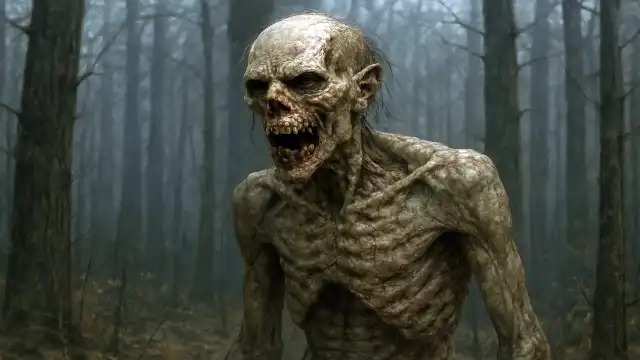
What It Actually Looks Like
Forget the deer-skull-headed monster you saw in movies (we’ll get to that later). According to renowned Ojibwe scholar Basil Johnston, the Wendigo is gaunt to the point of emaciation. Its skin is desiccated and pulled tight over its bones. It smells of death and decay.

- The Size: It is often described as a giant, growing in size with every human it devours, meaning it can never be full.
- The Heart: Legends say it has a heart made of ice.
- The Vibe: It embodies cold, isolation, and selfishness.
The Lore & “Wendigo Psychosis”
Historically, the fear of the Wendigo was used to reinforce community taboos against greed. If you hoarded food while your tribe starved, you were acting like a Wendigo.
There is also a fascinating, documented medical condition known as Wendigo Psychosis. This culture-bound syndrome involved an intense craving for human flesh and a fear of becoming a cannibal. While rare today, historical accounts from the 19th and early 20th centuries document legitimate cases where individuals were treated (or executed) for “turning Wendigo.”
“The Wendigo was gaunt to the point of emaciation, its desiccated skin pulled tightly over its bones. With its bones pushing out against its skin, its complexion the ash gray of death, and its eyes pushed back deep into their sockets…” – Basil Johnston, Ojibwe Teacher and Scholar.
The Skinwalker: The Navajo Witch
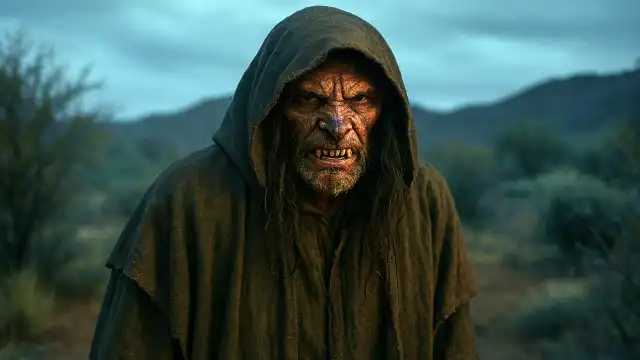
Origin: Navajo (Diné) culture
Region: The American Southwest (Four Corners: Arizona, Utah, New Mexico, Colorado)
Core Concept: Corruption of Power and Betrayal
If the Wendigo is a monster of circumstance (starvation), the Skinwalker is a monster of choice.
Known in the Navajo language as yee naaldlooshii (translating roughly to “by means of it, he goes on all fours”), a Skinwalker is not a creature in the traditional sense. It is a human being, specifically a ‘medicine man’ or witch, who has corrupted sacred rituals for evil.

The Taboo
We need to pause here. In Navajo culture, this is not a campfire story. It is a deeply serious, active belief. Talking about Skinwalkers is strictly taboo. The belief is that speaking their name attracts their attention. If you are ever in the Navajo Nation, you do not ask about this.
Powers & Appearance
A Skinwalker is a shapeshifter. They can turn into any animal, but usually, they choose predators like coyotes, wolves, bears, or owls.
- The Tell: In animal form, they may move unnaturally fast or have eyes that “don’t look right” (e.g., human intelligence in a coyote’s eyes).
- The Cost: To become a Skinwalker, the witch must commit an unspeakable act to sever their ties with humanity, traditionally, killing a close family member.
- The Goal: They don’t just eat people. They cause sickness, misfortune, and terror. They are agents of chaos.
Head-to-Head: The Key Differences
If you’re writing a script or just arguing with a friend, here is your cheat sheet.
| Feature | Wendigo | Skinwalker |
| Identity | A cursed spirit or monster (formerly human) | A living human witch/shapeshifter |
| Motivation | Insatiable hunger (Cannibalism) | Malice, revenge, power |
| Geography | Frozen North (Forests/Ice) | Arid Southwest (Desert/Canyons) |
| Appearance | Emaciated giant, rotting flesh, ice heart | Normal human OR animal (wolf/coyote) |
| Transformation | Caused by eating human flesh (Involuntary/Curse) | Caused by ritual murder (Voluntary/Choice) |
Busting the Pop Culture Myths
Why does the internet get this so wrong? You can thank Hollywood and “creepypasta” writers for muddying the waters.
Myth #1: The Wendigo Has Antlers
False. This is the biggest misconception out there. The “deer-headed” Wendigo was largely popularized by the 2001 film Wendigo and later solidified by games like Until Dawn (though Until Dawn actually leans closer to the “humanoid” movement, other media drifted). Traditional lore never mentions antlers. The creature is a human wasted away by hunger, not a deer-man.
Myth #2: Skinwalkers look like “The Rake”
False. Modern internet stories often describe Skinwalkers as pale, hairless, humanoid monsters that crawl on all fours. That is actually closer to a modern “creepypasta” monster like The Rake. A real Skinwalker looks like a regular animal (a coyote, a wolf) or a regular person. That is what makes them scary, they blend in.

Myth #3: They fight each other
Highly Unlikely. Geographically, they are thousands of miles apart. An Algonquian spirit from the snowy woods of Ontario is not going to bump into a Navajo witch in the Arizona desert.
The “So What?”
Why should you care about the difference?
- Respect: These aren’t just movie monsters. They are part of living, breathing spiritual systems. The Wendigo teaches the importance of community and sharing resources. The Skinwalker warns against the corruption of power and betraying one’s family.
- Accuracy: If you’re a creator, writer, or just a fan of folklore, getting the details right adds a layer of depth and realism that generic “scary monsters” lack.
- Survival (Hypothetically!): Knowing your lore might save you. You don’t whistle at night in the Southwest (attracts Skinwalkers), and you definitely don’t get greedy in the North (invites the Wendigo).
Thoughts
The Wendigo is the horror of hunger, what happens when we consume each other to survive.
The Skinwalker is the horror of betrayal, what happens when we hurt the ones we love for power.
Both are terrifying, but they scare us for different reasons. One eats your flesh; the other eats your soul.
Have you ever heard a strange noise in the woods that you couldn’t explain? Or maybe you’ve seen something that just looked… wrong? Drop a comment below (but maybe don’t say the name out loud).
Stay curious, stay respectful, and keep the lights on.
References & Further Reading
- Johnston, Basil. The Manitous: The Spiritual World of the Ojibwe. (Authoritative source on Algonquian legends).
- Kluckhohn, Clyde. Navajo Witchcraft. (A seminal anthropological text on Navajo spiritual beliefs).
- Smallman, Shawn. Dangerous Spirits: The Windigo in Myth and History. (Historical analysis of the Wendigo lore).
- The Jesuit Relations. (17th-century historical documents recording early encounters with Algonquian tribes and “Wendigo” accounts).

